How Vacuum Hose Size Impacts Evacuation Speed, Micron Levels, and System Performance
Vacuum pumps get most of the attention in HVAC evacuation, but experienced technicians know the hose setup is often where performance is won or lost. The wrong hose size can choke airflow, slow evacuation, and make a perfectly good pump feel underpowered.
This is why understanding the difference between 3/8" vacuum hoses and 1/4" vacuum hoses matters in real-world HVAC work. It directly affects how fast you reach target micron levels, how well moisture is removed, and how reliable your final system performance will be.

Why Hose Size Matters More Than Pump Size
Many technicians upgrade pumps before fixing hose restrictions. In reality, airflow limitation often comes from the hose, not the pump. Even a high-CFM pump will struggle if it is pulling through narrow or restrictive hoses.
Evacuation is about moving volume efficiently. If airflow is restricted, evacuation slows dramatically as you approach deeper vacuum levels. This is where larger hoses make the biggest difference.
If your evacuation slows down dramatically below 2000 microns, your hose setup is often the bottleneck—not your pump.
Understanding 3/8" vs 1/4" Vacuum Hoses
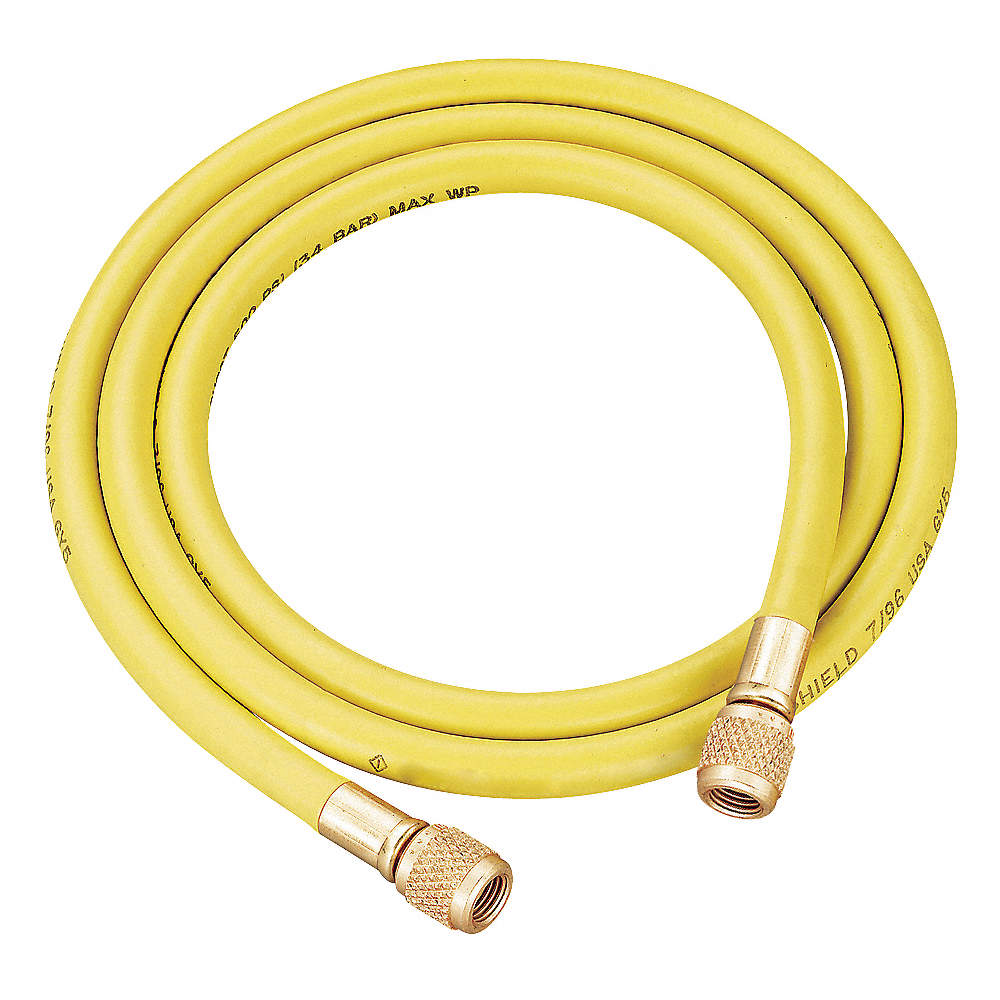
The key difference between 3/8" hoses and 1/4" hoses is internal diameter, which directly impacts flow rate.
A 3/8" hose has significantly more internal volume than a 1/4" hose. This allows more air and moisture to move through the system at once, reducing restriction and speeding up evacuation.
Flow Physics: Why Bigger Is Faster
Vacuum evacuation follows basic flow principles. As pressure drops, resistance becomes more significant. Smaller hoses increase friction and restriction, which slows evacuation during the most critical phase.
This is why a 3/8" hose can outperform a 1/4" hose by a noticeable margin, especially when trying to reach deep vacuum levels below 500 microns.
Doubling hose diameter can increase flow capacity by more than double, depending on system resistance and setup conditions.
3/8 vs 1/4 Vacuum Hose Comparison
| Factor | 3/8" Hose | 1/4" Hose |
|---|---|---|
| Flow Rate | High | Moderate |
| Evacuation Speed | Faster | Slower |
| Flexibility | Moderate | High |
| Best Use | Evacuation | Service work |
Real-World HVAC Setup: Why Technicians Mix Hose Sizes
Most professionals use a hybrid setup. A larger 3/8" vacuum hose runs from the pump, while adapters connect to smaller system ports.
This reduces restriction while maintaining compatibility with standard fittings.
When to Use 3/8" Vacuum Hoses
A 3/8" hose is ideal for:
Large split systems and ducted systems
Long pipe runs
Faster evacuation requirements
Deep vacuum targets
This setup improves efficiency and reduces job time significantly.
When to Use 1/4" Vacuum Hoses
A 1/4" hose is better suited for:
Small systems
Quick service jobs
Tight spaces
Standard manifold connections

Common Mistakes That Slow Down Evacuation
Many technicians unknowingly slow down evacuation with poor setups.
Long hoses increase resistance
Multiple connections introduce leaks
Small diameter hoses restrict flow
Kinked hoses reduce efficiency
Upgrading to a proper 3/8" hose setup often fixes these issues instantly.
Cluster Insight: Hose Size + Micron Gauge Accuracy
Hose size directly affects micron readings. Poor flow creates unstable readings and longer stabilisation times.
For best results, pair correct hose sizing with proper measurement practices. See our full guide on micron readings here:
Micron Gauge Vacuum Measurement Guide
Cluster Insight: Hose Setup + Vacuum Pump Performance
Your hose setup determines how effectively your vacuum pump performs.
For a deeper breakdown, refer to:
Single vs Two Stage Vacuum Pump Guide
How to Choose the Right Setup
The best approach depends on your workload.
If you mainly service small systems, 1/4" hoses may be enough.
If you want faster evacuations and better performance, upgrading to 3/8" hoses is one of the easiest improvements you can make.
Final Thoughts
Vacuum hose size is one of the most overlooked performance factors in HVAC work. A larger hose improves flow, reduces restriction, and helps your pump reach deeper vacuum levels faster.
If you are serious about improving evacuation efficiency, upgrading your hose setup is one of the simplest and most effective changes you can make.
👉 Browse vacuum hoses and adapters here
FAQ
Is 3/8 always better than 1/4?
Not always, but it is better for evacuation speed and larger systems.
Can I mix hose sizes?
Yes, using adapters is common and recommended.
Why is my vacuum slow?
Most commonly due to hose restriction or poor setup.
Do hoses affect micron readings?
Yes, poor flow and connections can cause unstable readings.