Vacuum Pumps for HVAC & Refrigeration – Javac, Wipcool, Fieldpiece & More
20 products
Showing 1 - 20 of 20 products
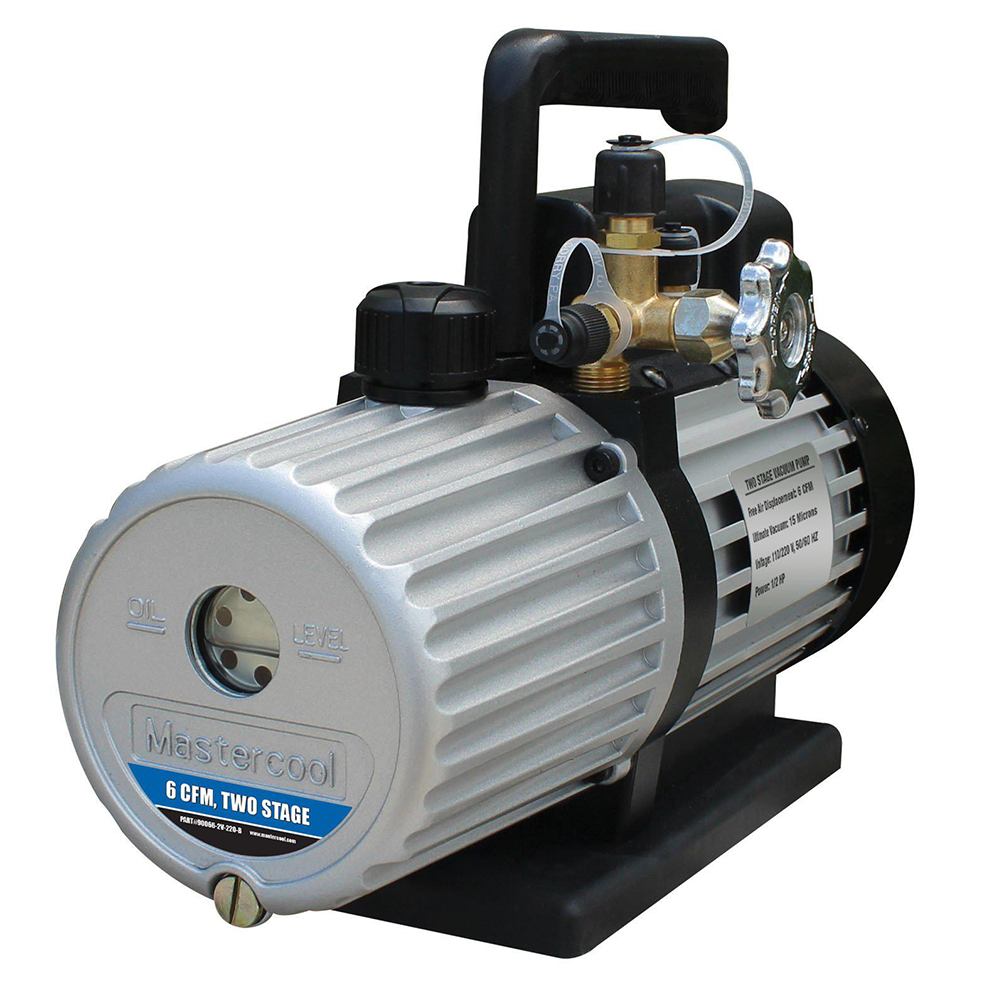
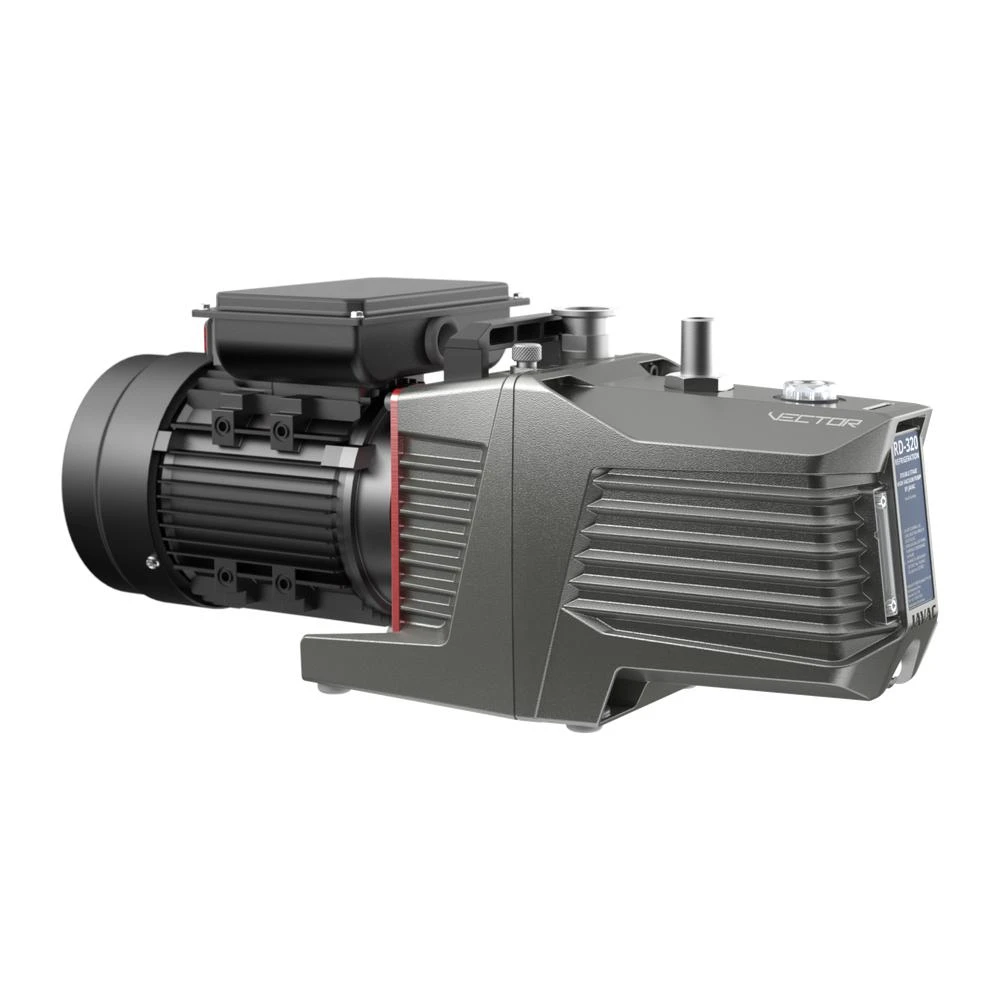
A 2-stage vacuum pump is the standard tool for HVAC/R system evacuation in Australia. Licensed refrigeration and air conditioning technicians use them to remove moisture, air, and non-condensable gases from a refrigerant circuit before charging — a mandatory step in any ARCtick-compliant commissioning or repair. HVACShop stocks 2-stage vacuum pumps from Robinair, Javac, Mastercool, Bradley, and Fieldpiece, ranging from compact 40 L/min units for residential split systems through to 320 L/min high-vacuum pumps for large commercial VRF and chiller work.
✓ ARCtick-compliant trade supply — for licensed HVAC/R technicians
Why Proper Evacuation Matters
Skipping or rushing evacuation is the leading cause of premature compressor failure in HVAC/R systems. Residual moisture inside a refrigerant circuit reacts with the refrigerant and compressor oil to form acid — a process that corrodes copper, clogs expansion valves, and degrades compressor internals over thousands of operating hours. Non-condensable gases (mostly nitrogen and air) that remain in the system raise head pressure, reduce efficiency, and cause high-pressure lockouts.
A deep evacuation to 500 microns or below, verified with a digital micron gauge, removes both moisture and non-condensables to a level where the refrigerant circuit is chemically stable. On R32 and other A2L refrigerant systems, proper evacuation also reduces the risk of residual flammable gas — making technique a safety requirement, not just a quality one.
How to Choose the Right Vacuum Pump
| Application | Flow Rate | Ultimate Vacuum | Best Setup | Typical Models |
|---|---|---|---|---|
| Residential split system (1–5 kW) | 40–100 L/min (2–4 CFM) | ≤500 microns | 2-stage pump + digital micron gauge | Robinair 15151, Javac CC-81, Bradley solenoid pump |
| Multi-head / ducted system (5–20 kW) | 100–160 L/min (4–6 CFM) | ≤300 microns | 2-stage pump + 3/8" evacuation hose + core removal tool | Mastercool 90066, Javac CC-141, Robinair 15501 |
| Large commercial / VRF (20 kW+) | 160–320+ L/min (6–12 CFM) | ≤200 microns | High-flow pump + 1/2" wide-bore hoses + core removal tools | Javac Vector VRD320, Robinair 15801 |
| Cordless / on-roof / tight access | 40–80 L/min (2–3 CFM) | ≤500 microns | Battery vacuum pump — no power cable required on roof or in ceiling void | Javac cordless range [CONFIRM model numbers in Shopify] |
| Automotive A/C | 40–80 L/min | ≤500 microns | Compact 2-stage pump; no manifold set needed for dedicated evacuation | Javac AASPAK-1, AASPAK2 |
Vacuum Pump Comparison — Key Specs
| Model | SKU | Stages | Flow (L/min) | Ultimate Vacuum | R32 / A2L Safe | Best For |
|---|---|---|---|---|---|---|
| Robinair 15151-S2 | 15151-S2 | 2-stage | 35 L/min (1.2 CFM) | 75 microns | No [CONFIRM] | Light residential splits |
| Robinair 15501A-E (A2L) | 15501A-E | 2-stage | 128 L/min (4.5 CFM) | 75 microns | Yes — A2L rated | R32 residential & light commercial |
| Robinair 15701-S2 | 15701-S2 | 2-stage | 170 L/min (6 CFM) | 75 microns | No [CONFIRM] | Commercial multi-head systems |
| Robinair 15801-S2 | 15801-S2 | 2-stage | 212 L/min (7.5 CFM) | 75 microns | No [CONFIRM] | Large commercial / VRF |
| Javac CC-81 | VCQ822A | 2-stage | 80 L/min (2.8 CFM) | 100 microns [CONFIRM] | No [CONFIRM] | Residential splits, everyday use |
| Javac CC-141 | VCQ1422 | 2-stage | 140 L/min (5 CFM) | 100 microns [CONFIRM] | No [CONFIRM] | Mid-range residential & light commercial |
| Javac CAL-141 (R32) | VCL1422 | 2-stage | 140 L/min (5 CFM) | 100 microns [CONFIRM] | Yes — R32 rated | R32 residential & light commercial |
| Javac Vector VRD320 | VRD320-2 | 2-stage | 320 L/min (11.3 CFM) | 50 microns [CONFIRM] | No [CONFIRM] | VRF systems, large commercial |
| Mastercool 90066 (Spark-Free) | 90066-2V | 2-stage | 141 L/min (5 CFM) | 75 microns | Yes — spark-free motor | R32 & A2L refrigerant systems |
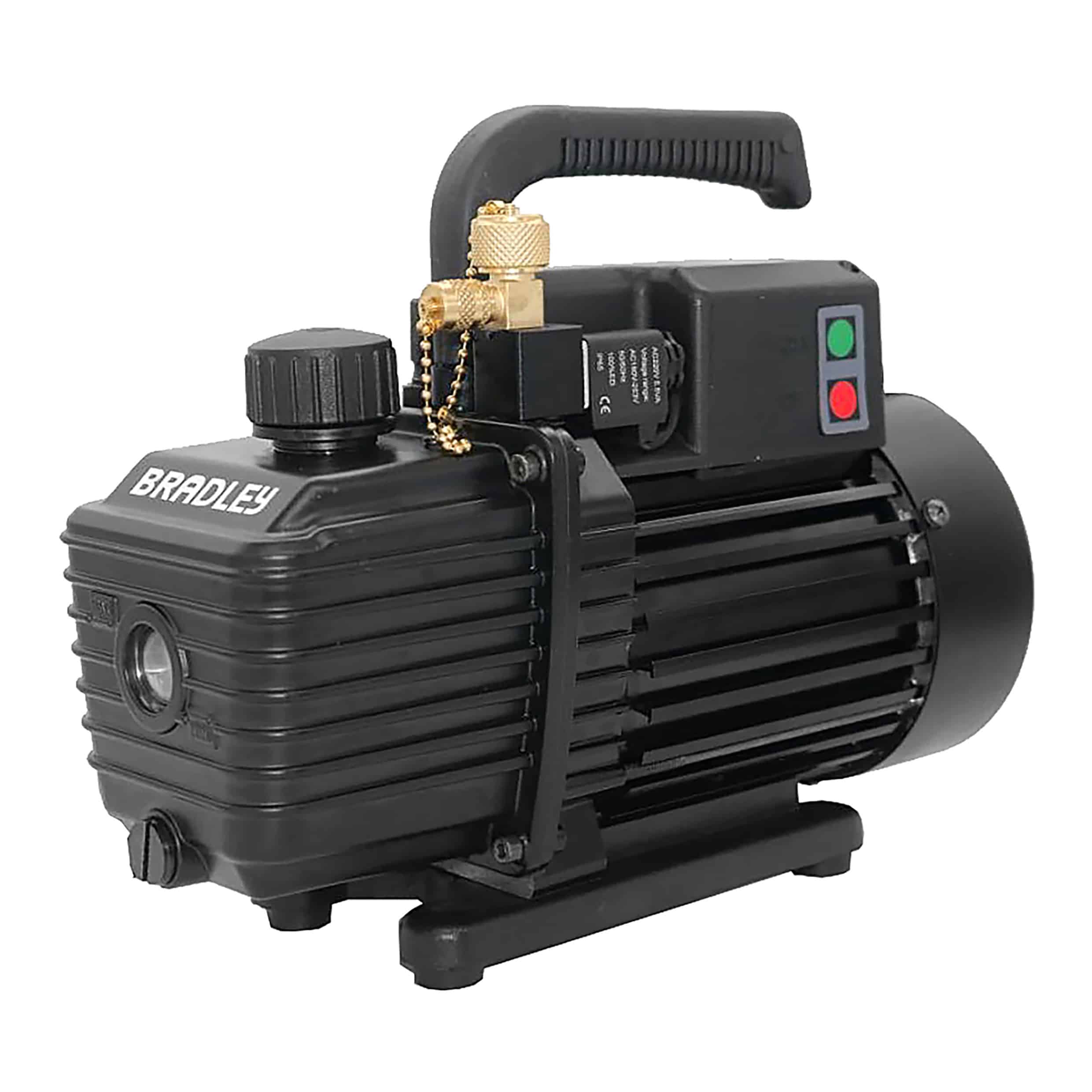
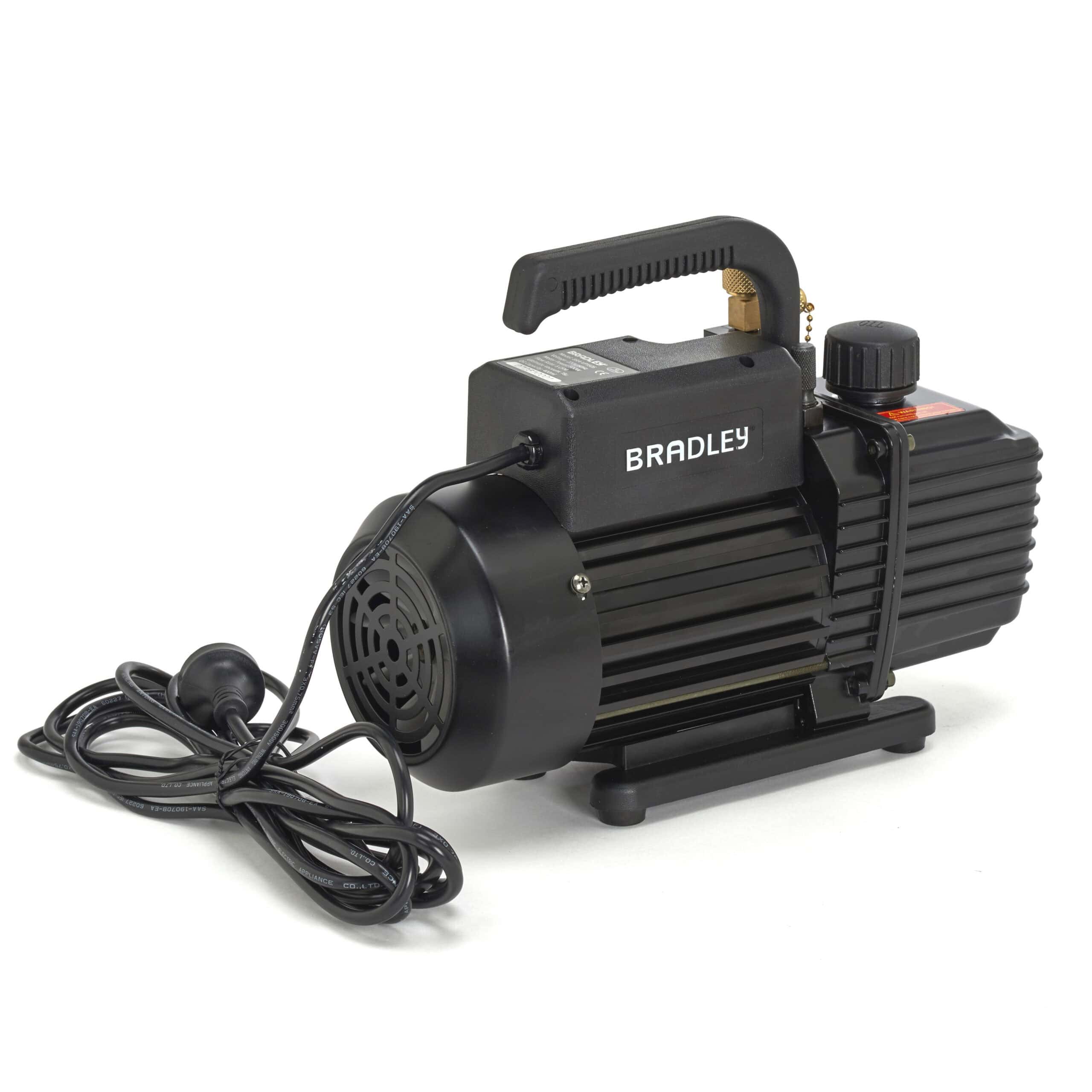
| Bradley (solenoid valve) | BRA-solenoid | 2-stage | [CONFIRM] L/min | [CONFIRM] microns | [CONFIRM] | Auto-isolation; prevents oil backflow |
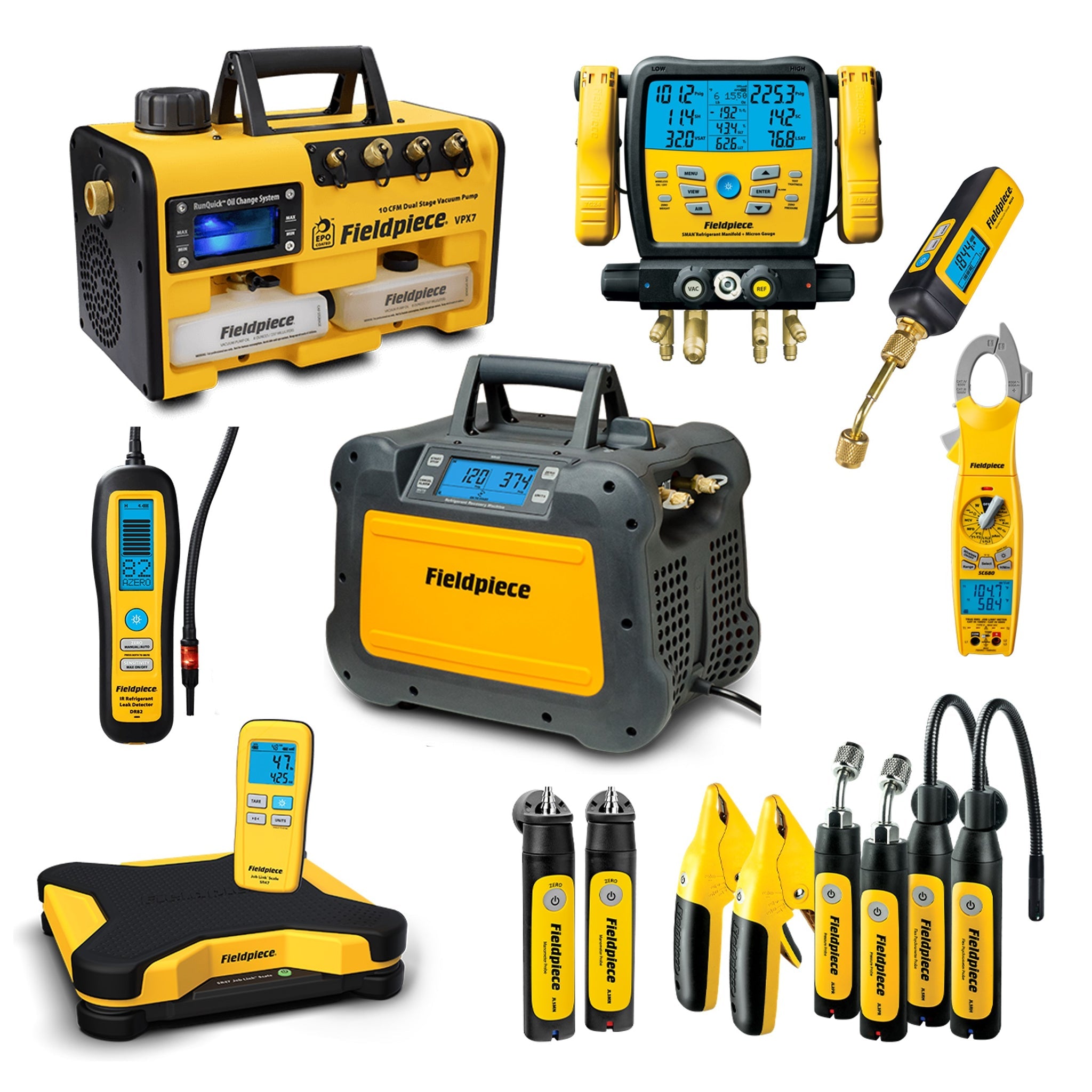
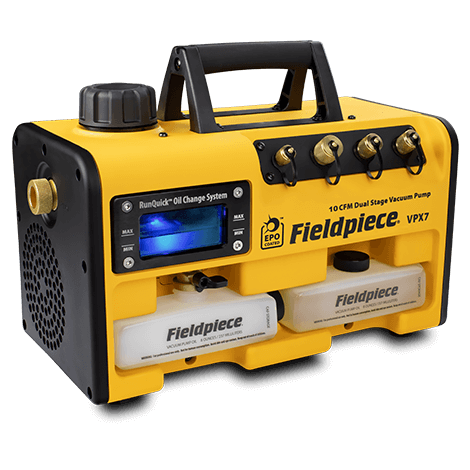
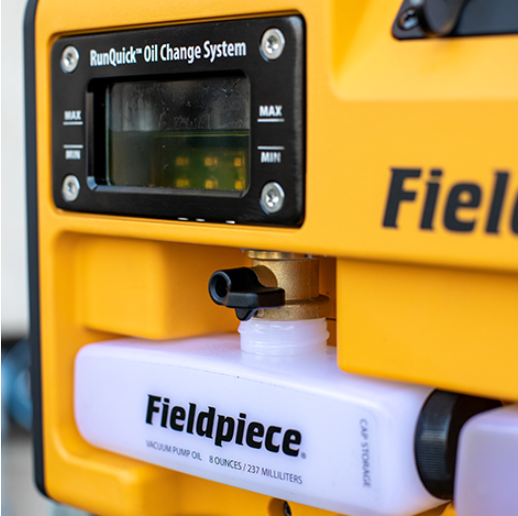
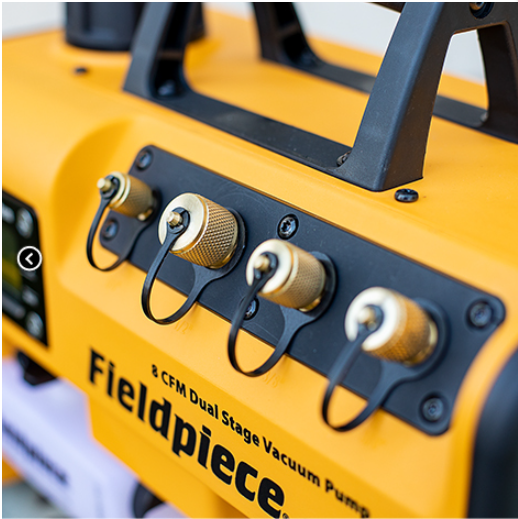
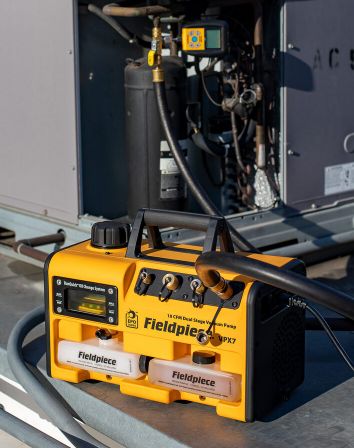
| Fieldpiece VPX7 | VPX7 | 2-stage | 198 L/min (7 CFM) | 15 microns | [CONFIRM] | Commercial; deep vacuum performance |
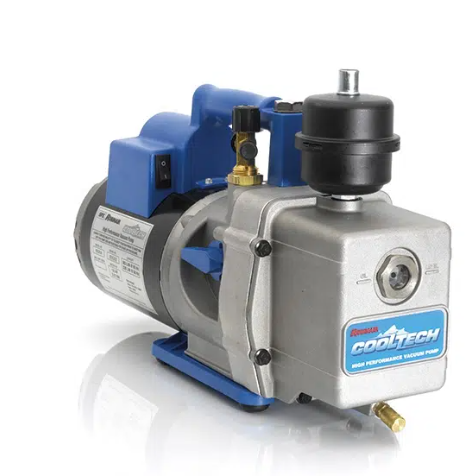
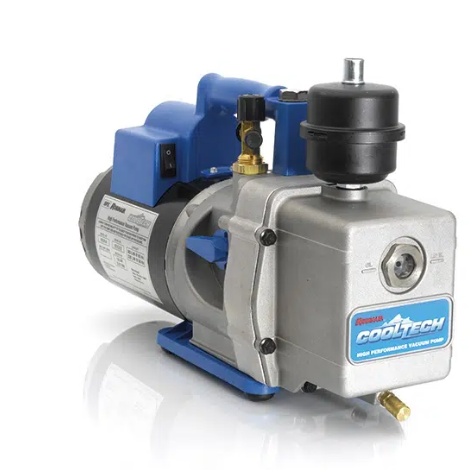
| Cooltech CT15401 | CT15401 | 2-stage | 93 L/min (3.3 CFM) | [CONFIRM] microns | [CONFIRM] | Residential; value-tier option |
ⓘ [CONFIRM] fields require verification against product listings before publishing.
The Fast Evacuation Method
A correctly sized pump alone will not achieve a fast, deep vacuum. In practice, the four variables below have a larger combined effect on pull-down time than the pump's CFM rating. Technicians who apply all four consistently report 40–50% faster evacuation times on residential jobs.
|
🔧 1. Remove Schrader cores Valve cores restrict system flow by up to 90%. Use a core removal tool under vacuum to eliminate this bottleneck before starting your pull-down. |
🔳 2. Use 3/8" or 1/2" hoses Standard 1/4" charging hoses restrict flow. Switch to 3/8" or 1/2" evacuation hoses — the larger bore dramatically increases flow at low pressure. |
📊 3. Verify with a micron gauge Analogue manifold gauges cannot measure vacuum accurately. Use a digital micron gauge to confirm you have reached 500 microns before isolating and charging. |
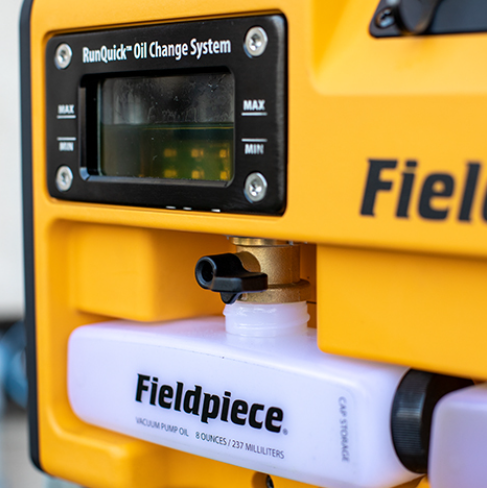
🪟 4. Change oil frequently Milky or cloudy oil kills pump performance. Change vacuum pump oil between jobs and whenever the sight glass shows discolouration. |
Vacuum Pump Maintenance
The single most important maintenance task is regular oil changes. Vacuum pump oil absorbs moisture from every job — once contaminated, it cannot produce the low partial pressures required for a deep evacuation. Change the oil after every wet or dirty job, or at minimum every 20–30 hours of pump operation. Use manufacturer-approved vacuum pump oil (ISO 46 or ISO 68 grade depending on the pump model — check your manual). Using cheap or incorrect oil voids most manufacturer warranties.
Between jobs, run the pump for 30 seconds with the inlet open to atmosphere and the gas ballast valve open — this purges residual moisture from the oil. Store pumps with fresh oil loaded and the inlet capped to prevent ambient moisture entry.
Frequently Asked Questions
What is the difference between a single-stage and 2-stage vacuum pump?
A single-stage pump compresses gas in one pass. A 2-stage pump runs two compression stages in series, allowing it to reach significantly lower ultimate vacuum levels — typically 75–150 microns vs 500–1,000 microns for single-stage. This is why 2-stage pumps are the industry standard for HVAC/R evacuation. Single-stage pumps are only suitable for rough vacuum applications where deep vacuum is not required.
How many CFM do I need for a residential split system?
For a standard single-head residential split system up to 8 kW, a 40–100 L/min (1.5–3.5 CFM) 2-stage pump is sufficient. CFM rating has less impact on pull-down time than hose diameter, core removal, and oil condition. For multi-head or ducted systems with longer line sets, step up to 100–160 L/min (4–6 CFM). The critical outcome is reaching 500 microns or below before isolating, regardless of which pump you use.
Do I need a spark-free or A2L-rated vacuum pump for R32 systems?
R32 is classified as an A2L (mildly flammable) refrigerant under AS/NZS ISO 817. Models designated as R32-safe or A2L-rated — such as the Robinair 15501A-E and Mastercool 90066 spark-free — use sealed or spark-suppressed motors and are the conservative choice for any system containing A2L refrigerants. [CONFIRM whether a spark-free motor is a regulatory requirement or a best-practice recommendation for R32 evacuation in Australia.]
What vacuum level do I need to reach before charging a system?
The industry-standard target for HVAC/R evacuation in Australia is 500 microns (0.067 mbar) or below, verified with a digital micron gauge. After reaching 500 microns, isolate the pump and observe for 10–15 minutes. If the vacuum rises above 1,000 microns, the system has a leak or still contains moisture. Do not charge until the vacuum holds stable at or below 500 microns. For critical commercial systems, many technicians target 250–300 microns.
How often should I change vacuum pump oil?
Change oil after every wet or contaminated job, and as a routine minimum every 20–30 operating hours. Indicators that oil needs changing: milky or cloudy appearance (water contamination), dark discolouration, or reduced pump performance. Use the grade specified in your pump's manual — typically ISO 46 for most HVAC pumps, ISO 68 for larger commercial units. See our vacuum pump oils for compatible options.
Can I use my manifold gauge to measure vacuum?
No. Standard analogue manifold gauges are not accurate enough for HVAC/R evacuation. Most compound gauges read a full vacuum at 25–30 inHg, which corresponds to roughly 0–25,000 microns — far too coarse to verify the 500-micron target. A digital micron gauge is required. Wireless options such as the Accutools BluVac Pro let you monitor vacuum remotely via a smartphone app.
What is oil backflow and how do I prevent it?
Oil backflow (suckback) occurs when a running vacuum pump is suddenly shut off under vacuum — the pressure differential pulls pump oil back into the refrigerant circuit. Prevent it by always closing service valves before switching off the pump, using a pump with a built-in solenoid valve (such as the Bradley solenoid pump) that automatically seals the inlet on shutdown, or fitting an external vacuum valve between the pump and manifold hoses.
Does vacuum pump use require an ARCtick licence in Australia?
Vacuum pump operation is part of the refrigerant handling process, which requires a current ARCtick refrigerant handling licence under the Australian Refrigeration Council (ARC). Working on systems containing refrigerants — including evacuation after recovery and before charging — requires either a full refrigerant handling licence or a restricted licence appropriate to the refrigerant type. HVACShop supplies to licensed trade professionals only. [CONFIRM specific licence category requirements with ARC guidelines.]
Guides & Resources
|
Guide How to Set Up a Vacuum Pump — Step by Step Full evacuation procedure for Australian HVAC technicians including hose connections, micron targets, and isolation test. |
Guide Single-Stage vs 2-Stage vs Cordless Vacuum Pumps Which pump type suits your workload — residential splits, commercial VRF, or tight-access roof jobs. |
Guide How to Measure Vacuum with a Digital Micron Gauge Target micron levels, isolation test procedure, and how to read decay to diagnose leaks vs moisture. |
|
Brand Guide Mastercool Vacuum Pumps — Model Selection Guide CFM selection, spark-free R32 options, and evacuation technique for the Mastercool range. |
Brand Guide Fieldpiece VPX7 Vacuum Pump — Australian Review Performance, oil capacity, and how the VPX7 handles Australian climate conditions. |
Guide Vacuum Pump Oil — ISO Grades, Change Intervals, and Brands How to choose the right oil for your pump model and how often to change it for peak performance. |
Related Collections
- Digital Micron Gauges — verify your vacuum to 500 microns before charging
- Evacuation Hoses & Couplings — 3/8" and 1/2" bore hoses for faster pull-down
- Valve Core Removal Tools — eliminate the 90% flow restriction at the Schrader valve
- Vacuum Pump Oil — ISO 46 and ISO 68 grades for all major pump brands
- Digital Manifold Gauges — transition from evacuation to charging without breaking connections
- Recovery & Evacuation Equipment — full refrigerant recovery and evacuation category