
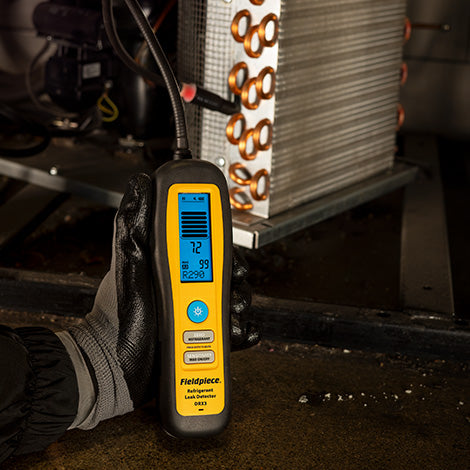
If you have ever lost half an arvo chasing a slow refrigerant leak, you already know the problem. The cheapest detector on the shelf often misses the most expensive leaks on the job. That means wasted labour, more refrigerant lost to atmosphere, annoyed clients, and the sort of call-back that eats into profit fast. This guide is written for Aussie fridgies, service techs, facilities teams, apprentices, and business owners who want a clear path through the noise. There are plenty of models out there, plenty of claims on the box, and plenty of confusing specs that look good until you are standing in a humid ceiling space in Brisbane QLD or on a windy rooftop in Melbourne. The goal here is simple. Give you a no-nonsense leak detector buying guide Australia professionals can actually use, with practical buying advice, plain-English explanations, and real jobsite thinking.
👉 Browse leak detectors built for Aussie conditions
Buying a refrigerant leak detector sounds easy until you start comparing models. One says ultra-sensitive. Another says workshop grade. Another talks up sensor life, flexible probes, heated tips, auto-zero, visual alarms, ppm ratings, grams per year, and battery hours. By the time you have opened a few tabs, it is easy to feel like every unit sounds the same. That is where people get caught. They buy on price alone, then wonder why the tool struggles to find a tiny evaporator leak, gives false alarms in a damp plant room, or drains its battery before the day is done. In the field, specs only matter if they help you find leaks faster and avoid coming back to the same site next week.
A proper leak detector buying guide Australia techs can trust needs to do more than repeat brochure lines. It has to explain what the specs mean on real jobs, what matters for R32 and R410A systems, where budget units can still be useful, and where going too cheap becomes expensive. A missed leak on a supermarket cold room or a ducted split in summer is not just a small annoyance. It can mean repeat labour, wasted refrigerant, unhappy clients, and a knock to your reputation. There is also the Aussie context. Coastal salt in Sydney and Perth can be rough on tool tips and connectors. Darwin and North Queensland humidity can affect how some sensors behave. Regional service work means you may need strong battery life, a tough case, and local parts support more than flashy extras.
Don’t Buy Blind
The first trap in buying a leak detector is assuming every detector is doing the same job. They are not. Some tools are meant to help you quickly scan common leak points on residential systems. Others are better suited to more stable commercial diagnostics. Some are cheap enough to make sense as backup units. Others are the sort of detector you buy when you want less mucking around, fewer false alarms, and faster fault isolation across a full year of service work.
That is why price on its own tells you very little. A cheap detector that misses one hard-to-find coil leak can cost more than a mid-range unit the first time it sends you back to site. On the flip side, a premium detector can be overkill if your work is mostly simple domestic servicing and occasional confirmation checks. A fair dinkum buying decision starts with the jobs you actually do, not with the biggest spec number on the product page.
It also helps to remember that leak detection is not a stand-alone task. It sits inside a bigger service workflow. You locate the likely area, confirm the exact point, repair the fault, then retest. If your detector is slow, unstable, or hard to trust, every step after that gets dragged out too. A tool that helps you work in a clean, repeatable way is usually the better long-term buy than one that only looks good on paper.
Sensitivity, response time, battery life, stability, and replacement sensor cost all matter together. A detector that looks cheap upfront can cost more over time if it is slow to use, easy to contaminate, or hard to keep running.
Why Australian Conditions Change What Matters
Australian HVAC work is not one environment. Brisbane QLD humidity, Darwin heat, Perth dust, Sydney coastal air, and Melbourne cold snaps all change how pleasant or painful leak checking feels on the day. In hot and humid areas, sweating your way through a ceiling space already makes patience harder. In coastal areas, salt can be rough on exposed metal, tool connections, and system components. In commercial work, wind, fan wash, and crowded plant spaces can make a highly sensitive detector harder to trust unless it also has good stability and recovery.
That is why the phrase built for Aussie conditions actually matters here. You want a detector that survives van life, does not feel flimsy in the hand, and is simple enough to operate properly when you are tired late in the day. A clever feature set means very little if the tool feels delicate, the controls are fiddly, or the support parts are hard to source locally. No worries if that sounds basic. Basic is exactly what matters when a tool is used for real work rather than bench-top comparisons.
There is a refrigerant angle too. R32 is now part of normal life for installers and service techs on many newer systems. R410A is still everywhere on existing residential and light commercial equipment. R22 may still show up on older sites or legacy equipment history. R134a and newer blends may matter depending on your refrigeration mix. The point is simple: refrigerant compatibility is not an optional detail. It is part of choosing a detector that makes sense for the jobs you will actually do this year and next year.
Key Specs to Understand Before you Buy
The first thing most buyers notice is sensitivity. That is fair enough, because if a detector cannot find a small leak, the rest does not matter much. Sensitivity is often shown in ppm or grams per year. The exact figure can vary by model and by how the manufacturer tests it, so treat it as a guide, not gospel. In practical terms, better sensitivity usually means the unit can respond to smaller leaks sooner. That matters on split systems with very slow losses, on coils tucked into tight spaces, and on repeat service jobs where the system still runs but slowly drops charge over time.
The trap is thinking higher sensitivity is always better no matter what. A very sensitive tool in the wrong hands or the wrong environment can be twitchy and hard to trust. On a windy rooftop or in a packed plant room with background contamination, a stable detector can save more time than a super-sensitive unit that chirps at everything. Accuracy in the field depends on sensor type, filtering, recovery speed, and how calmly the detector behaves once it picks something up.
Response time is the next big one. A fast response sounds minor until you are checking multiple joints along a pipe run or tracing around bends, service valves, distributor tubes, and evaporator corners. If the detector reacts too slowly, you can easily move past the leak point before the alarm catches up. Fast recovery matters for the same reason. Once the detector has responded, you want it to clear quickly enough that you can keep working without second-guessing where the actual source is.
Alarm style matters more than many buyers realise. Audible alarms are useful when your eyes are on the probe and the pipework rather than the display. Visual alarms help in noisy commercial settings where fans and compressors make audio less useful. A detector that gives both tends to suit the widest range of work. Battery life is another boring spec that suddenly becomes very important at the wrong moment. A portable leak detector HVAC Australia techs rely on needs to last through real service days, not just short bench tests.
Build quality, IP protection, and sensor replacement cost are where ownership gets real. If the tool lives in a van, gets used in dust, moisture, roof spaces, and awkward outdoor conditions, you want it to feel solid. If replacement filters, sensors, or O-rings are expensive or hard to find, your “cheap” purchase may not stay cheap for very long. That is why a buying decision should always include day-two ownership, not just day-one price.
For a straightforward mid-range example, a lot of techs look at the Javac Tek-Mate refrigerant leak detector when they want a practical electronic unit without stepping straight into premium spend. The point is not that one model suits everyone. It is that the right buying choice starts by matching the spec sheet to the work you actually do.
Refrigerant Compatibility Guide
Refrigerant compatibility is where too many buying guides go vague. Let’s keep it simple. If you mainly service residential splits, your buying priorities will differ from someone doing mixed-site refrigeration or large commercial service. R32 matters because it is common on newer residential equipment and is classed as mildly flammable. That means you do not want to guess. If you are shopping for an R32-compatible leak detector, you need to confirm the manufacturer’s intended refrigerant coverage and any safety notes before use.
R410A remains common across Australian split and ducted systems. For many service businesses, a dependable electronic detector is enough for everyday R410A work. R22 is legacy refrigerant territory now, but older sites and older equipment histories have not disappeared. If you still maintain legacy equipment, it is worth checking how well your detector choice fits older refrigerant service needs rather than buying only around newer system trends.
R134a and various blends can matter depending on whether your work crosses into refrigeration or mixed service environments. HFO-related future-proofing is also part of some buying decisions, especially for businesses that want a detector with broader long-term usefulness. In plain language, match the detector to the refrigerants you see most often, then sense-check whether it still makes sense for the refrigerants you expect to see more of over the next few years.
Leak detector suitability is not only about whether the sensor can detect a refrigerant. It is also about intended use, safe operation, and how stable the tool remains in real service conditions.
As a practical compliance reminder, refrigerant handling in Australia sits inside a broader safety framework. Safe Work Australia provides a useful reference through its hazardous chemicals guidance. Keep that as the one external compliance reference here, then always confirm exact refrigerant suitability and use conditions through the detector manufacturer’s documentation and normal licensed work practices.
Sensor Types and What They Mean on Real Jobs
Sensor type matters because it shapes how the detector feels to use. Heated diode detectors are popular because they are practical, familiar, and often a strong fit for general HVAC service work. For many Aussie techs doing routine residential and light commercial jobs, that makes them the everyday starting point. Infrared detectors are usually the next step up when a buyer wants stronger stability, broader refrigerant coverage, or less annoyance from nuisance alarms in busier service environments.
The buying mistake is assuming premium always means better for every person. A tech servicing common residential splits all day may get better value from a strong mid-range electronic detector and good confirmation habits than from a more expensive detector whose main strengths are only noticed on harder commercial jobs. A business running multiple vans, dealing with mixed refrigerants, or wanting more standardised fleet performance may come to the opposite conclusion.
It also helps to separate the detector’s job from the rest of the workflow. An electronic detector is usually helping you locate the likely area first. It is not always the final proof on its own. Once you narrow the point, you often still want visual confirmation at accessible joints, valves, or service points. That is one reason why plenty of experienced techs keep a good bubble solution in the kit even when they already own a solid electronic detector.
Price vs Performance Comparison Table
| Tier | Typical features | Who it suits | Aussie price range | Applications | Aussie availability reality |
|---|---|---|---|---|---|
| Budget | Basic electronic sensing, simple alarm, entry-level build | Apprentices, backup kits, occasional use | Low hundreds or less depending on model | Simple domestic checks and backup use | Often easy to buy, but long-term parts support can vary |
| Mid-range | Better stability, flexible probe, clearer alarms, stronger ergonomics | General HVAC service techs | Mid hundreds depending on brand and sensor type | Residential and light commercial service work | Often the sweet spot when local stock and support are available |
| Professional | Premium sensing, faster response, better filtering, stronger build | High-volume service techs and commercial contractors | Higher hundreds and up depending on kit | Trickier diagnostics, mixed refrigerants, repeat fault work | Worth more when the supplier has local support parts |
| Fleet | Standardised models, spare consumables, easier training | Businesses with multiple vans or technicians | Varies by supplier support and quantity | Large service operations and planned equipment replacement | Best value often comes from support and consistency, not just price |
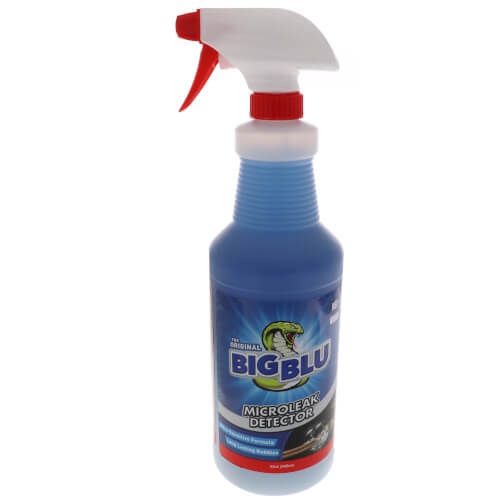
For visual confirmation work, many techs keep Viper Big Blu in the kit because a good bubble solution still has a real place in leak diagnosis. It is not a replacement for a strong electronic detector, but it is excellent for confirming a joint, valve core, or braze once the likely area has been narrowed down.
At the premium end, many buyers compare a kit such as the Fieldpiece SRL2K7 infrared leak detector kit when they want higher-end infrared capability. That tends to suit contractors who value speed, broader refrigerant coverage, and steadier performance in busy service environments. If leak detection sits alongside wider diagnostic work, it also makes sense to pair the decision with solid refrigerant gauges so the whole workflow stays consistent from diagnosis through repair and final verification.
Electronic vs UV dye: What Should you Actually Buy First?
The electronic versus UV dye question comes up all the time, and the honest answer is that they do different jobs. Electronic detection wins on speed. You can start scanning straight away, move along pipe runs, valves, coils, and service points, and get immediate feedback without introducing anything into the system. That makes an electronic detector the usual first purchase for most service techs.
UV dye is slower but useful for stubborn faults. Once the dye circulates and escapes at the leak point, the UV light can make the source easier to confirm. That can help on awkward evaporators, hidden sections, or repeat slow leaks where scanning keeps pointing you in roughly the right area but not the exact point. The trade-off is that dye is not the cleanest first-line method for every call. It is usually better as a targeted secondary method than as a default habit.
A practical buying plan for most Australian service teams is simple. Buy the electronic detector first. Use bubble solution for visual confirmation. Bring UV dye into the workflow only when the job justifies it. That layered approach is practical, cost-aware, and closer to how good tradies actually work on-site.
For most service teams, electronic detection should do the heavy lifting. Use bubble solution for confirmation and reserve UV dye for hard-to-pinpoint repeat faults rather than every routine service call.
Top Features Aussie techs actually use
There are plenty of features that look nice in a sales listing, but only some truly matter on-site. Auto-zeroing is one of the good ones. It helps the detector settle into the background environment so changes become easier to notice as you move toward the leak source. A flexible probe is another feature that earns its keep fast because HVAC jobs rarely present the leak in a neat, easy-to-reach straight line.
Heated tip designs remain popular because, on the right refrigerants and in the right applications, they can be quick and practical for everyday service work. Volume control also matters more than many buyers expect. In a quiet home, a clear audible alarm is handy. In a noisy plant room, visual feedback becomes more important. Warranty and local support deserve a place high on the buying checklist too. Even a good detector becomes frustrating if replacement consumables are hard to source.
That is why it helps to look beyond the detector body and check whether service parts are easy to get. For example, when you compare long-term ownership cost, it is worth checking whether replacement items such as Fieldpiece RFL2 replacement filters & O-rings are easy to source. That small detail can keep a good detector in service instead of sitting dead in the van.
Buying by use-case instead of hype
If your bread and butter is normal residential service work, you usually want a dependable mid-range electronic detector with good stability, decent battery life, clear alarms, and local parts support. That setup covers a huge amount of day-to-day work without wasting money on features you may rarely use. If your jobs lean more commercial, include trickier diagnostics, or involve a wider refrigerant mix, premium infrared performance may make more sense.
If you run multiple vans, consistency matters almost as much as spec. Standardising models can make training easier, simplify spare parts, and reduce downtime when something needs replacement. For a business owner, the best buying question is often not “Which is the cheapest?” but “Which gives my team the most reliable, repeatable workflow across the most jobs?”
That is also where return on investment becomes clearer. A stronger detector that prevents even one or two extra call-backs can pay for itself faster than many people expect. Labour, travel time, wasted refrigerant, and customer frustration all cost money. A detector that saves time quietly saves money too.
Ready to choose? Shop the range today
By this point, the buying path should be much clearer. Start with the refrigerants you service most. Think hard about whether you need everyday general-purpose detection, more stable commercial-focused performance, or a practical mix of electronic screening and visual confirmation. Then compare sensitivity, response time, battery life, build quality, sensor replacement cost, and support. That is the foundation of a solid leak detector buying guide Australia decision.
The shortest summary is simple. Match the detector to your refrigerants. Do not buy on sensitivity alone. Check parts support. Think about how the tool will behave in Brisbane humidity, Sydney coastal air, Melbourne cold snaps, Perth dust, or long regional days where charging options are limited. Ownership cost matters just as much as shelf price. The best detector is not always the fanciest one. It is the one that helps you find leaks properly, confirm them cleanly, and move on with confidence.
👉 Shop leak detectors Australia-wide with fast shipping
If you are comparing options right now, that collection page is the easiest place to separate a basic backup tool from a serious daily detector. For many buyers, that is the cleanest way to match budget, workload, and refrigerant coverage without buying blind. No worries.
Reviewed by: the HVAC Shop Technical Team
Published: April 2026
Last reviewed: April 2026