Vacuum Gauges for HVAC Pros – Accurate & Reliable
7 products
Showing 1 - 7 of 7 products
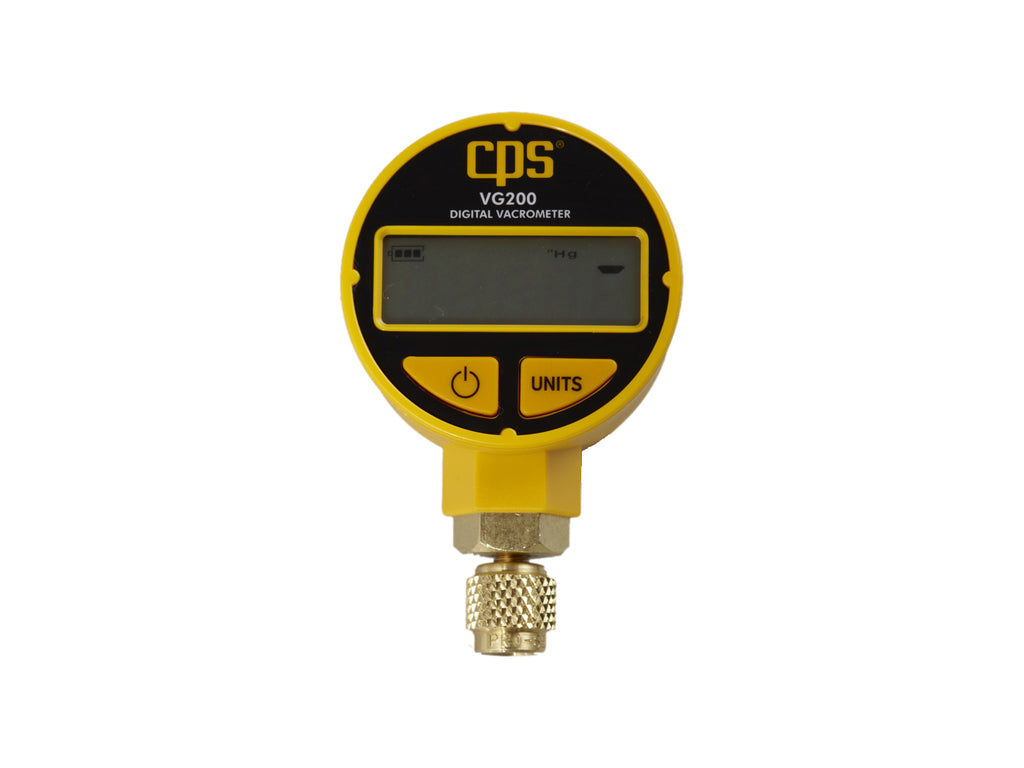
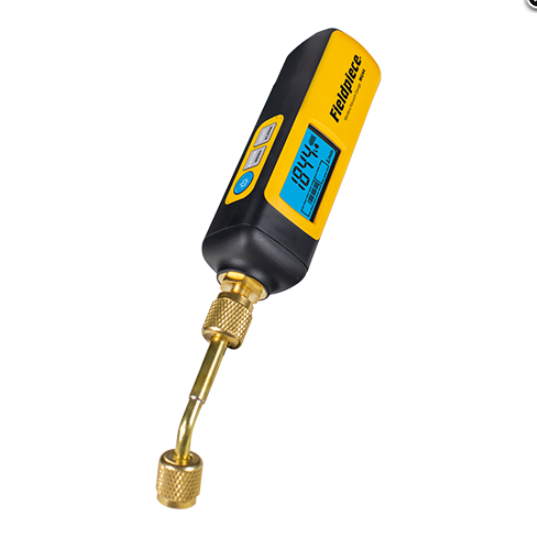
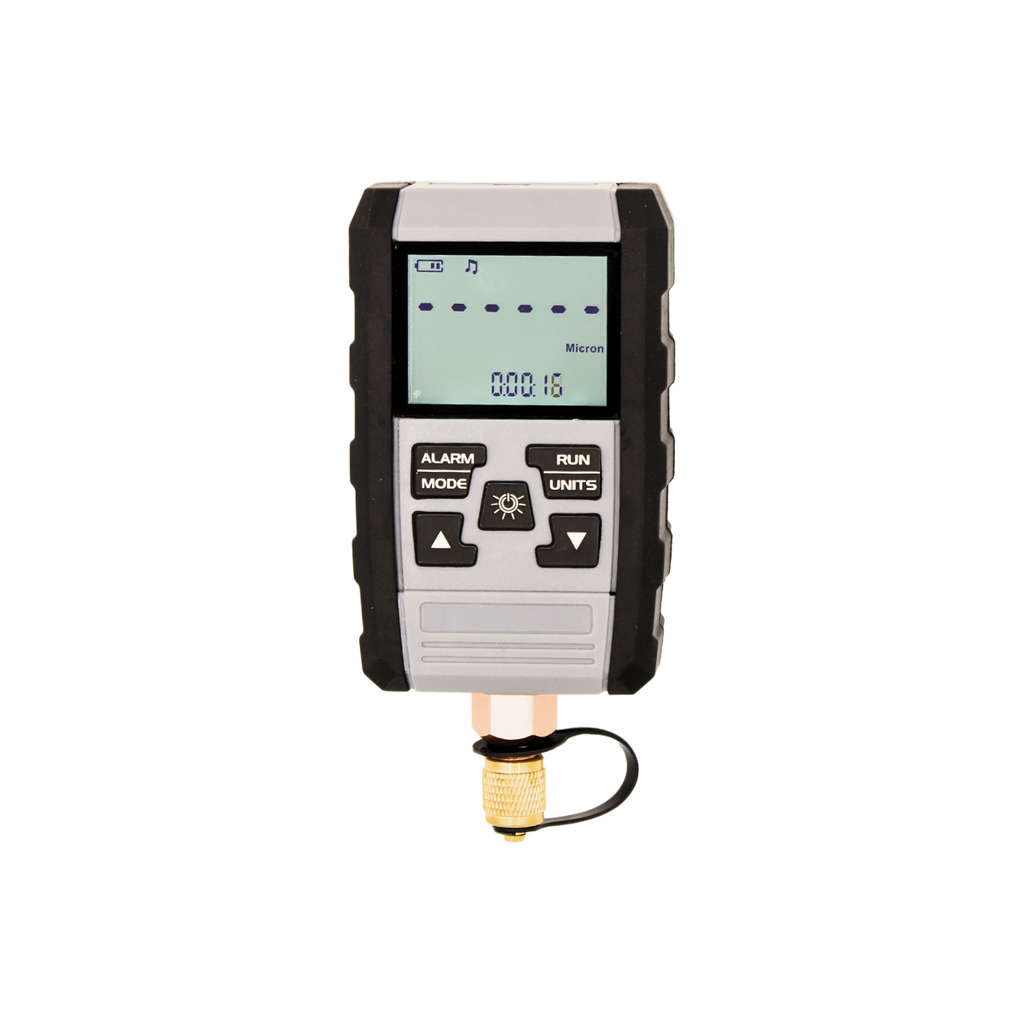
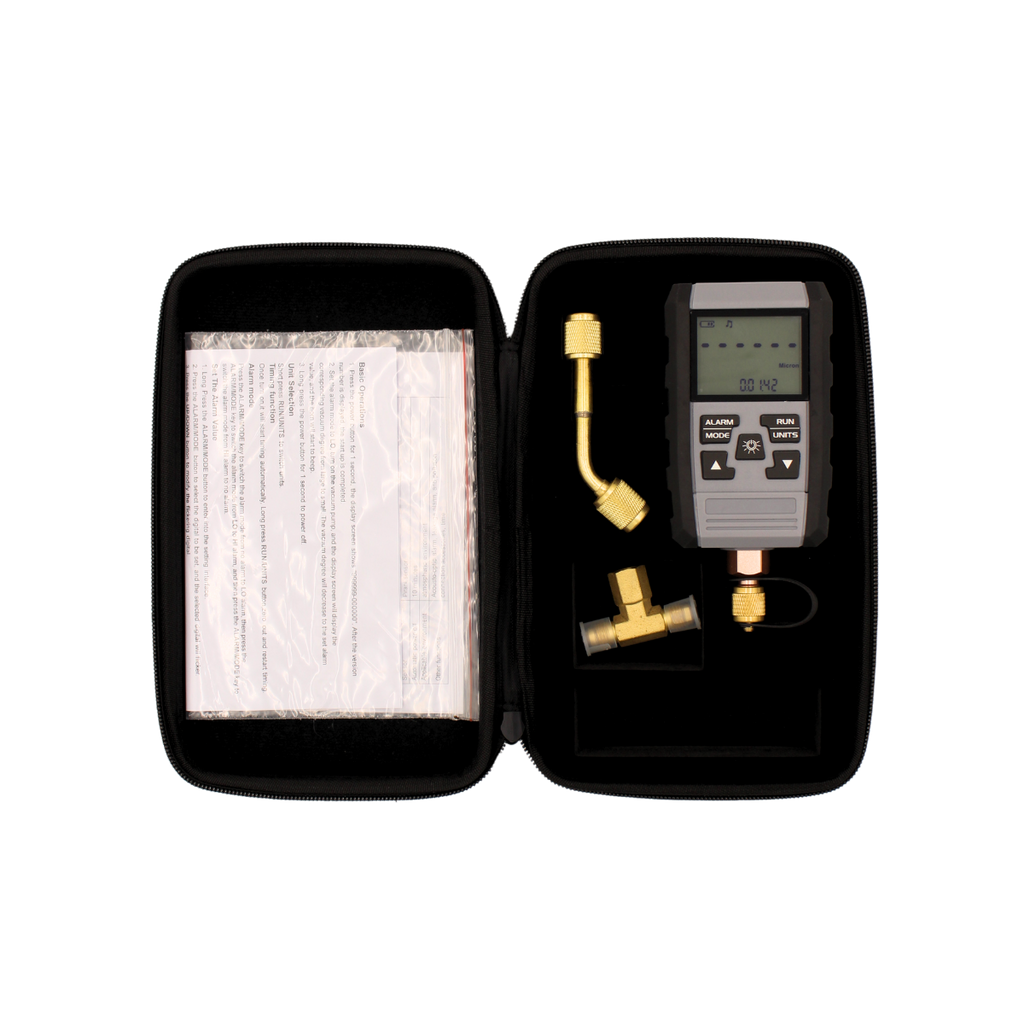
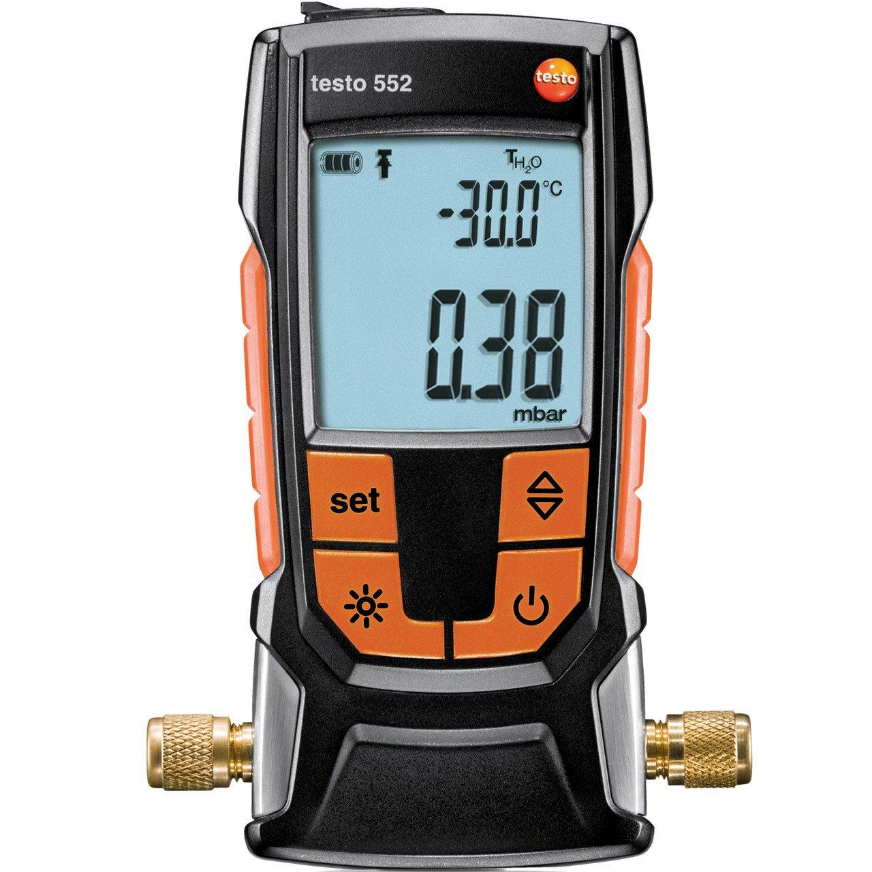
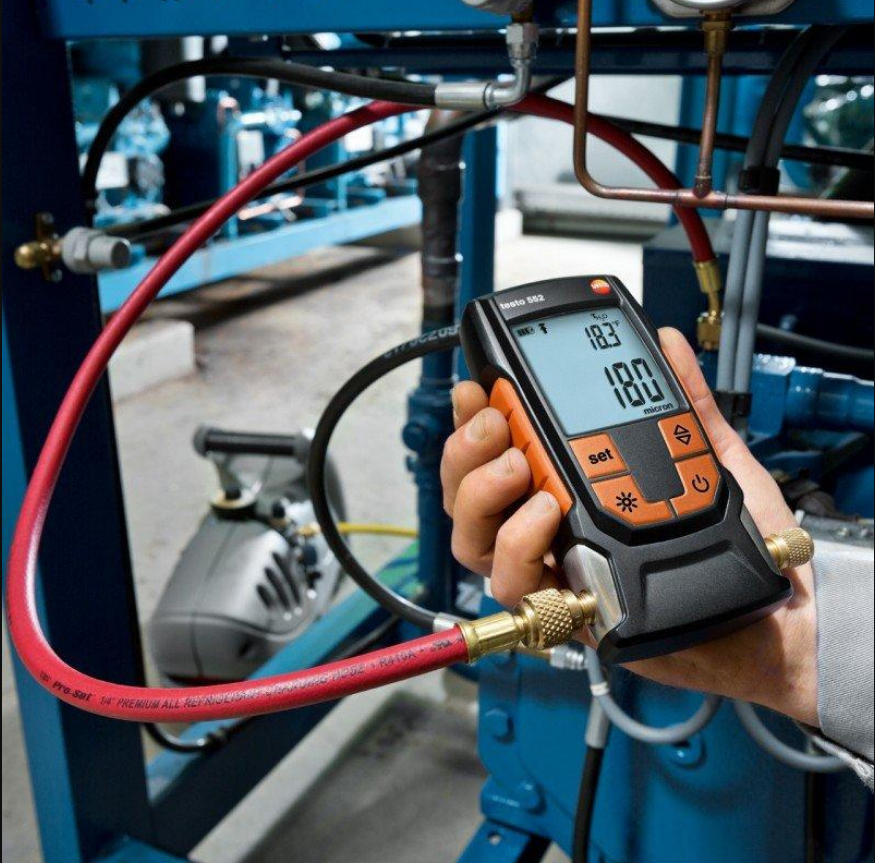
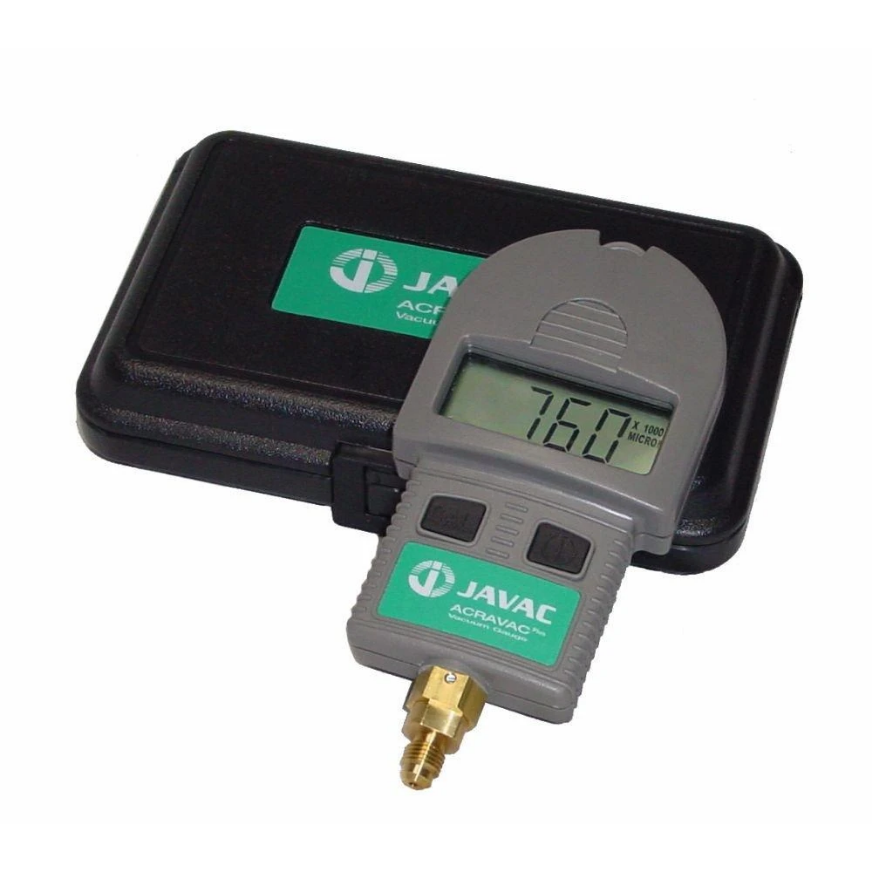
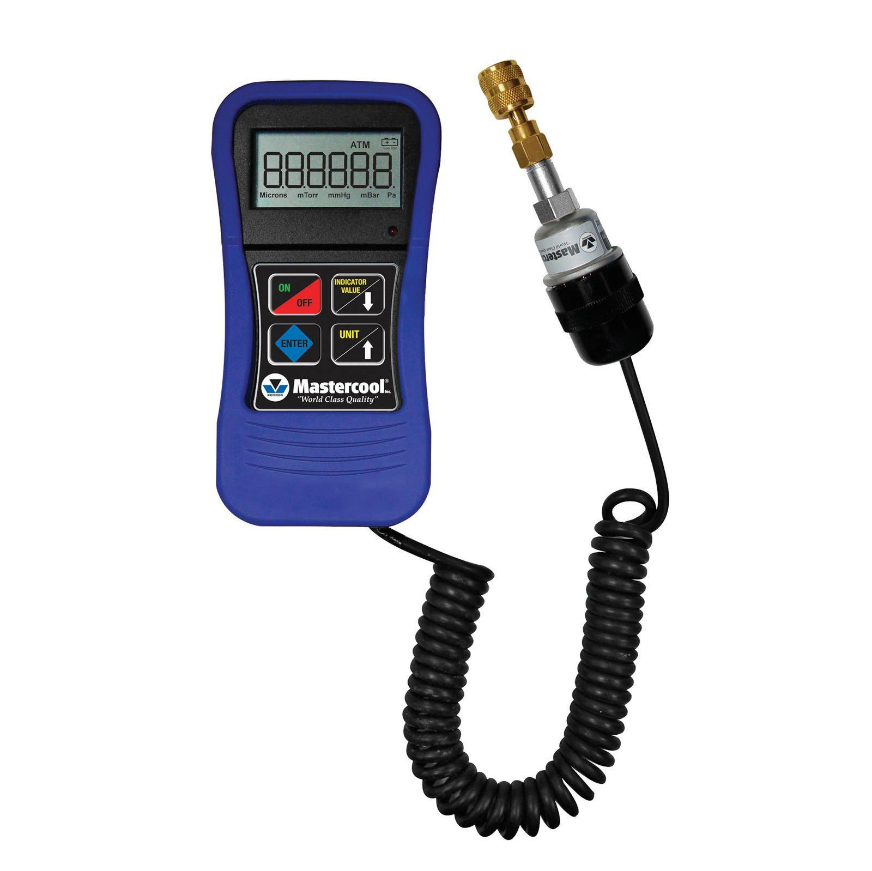
A vacuum gauge (also called a micron gauge) measures the depth of vacuum inside a refrigerant circuit during HVAC/R evacuation. Unlike analogue manifold gauges — which cannot read below roughly 25,000 microns — a dedicated digital micron gauge confirms whether the system has reached the 500 micron target required before charging, and whether it holds that vacuum through a decay test. HVACShop stocks digital and wireless micron gauges from Accutools, Fieldpiece, JAVAC, Hilmor, CPS, Inficon, and Imperial — covering everyday residential evacuation through to Bluetooth-connected wireless gauges for commercial commissioning and app-based reporting.
Why You Need a Dedicated Micron Gauge
The most common evacuation mistake in Australian HVAC/R is using time — or the sound of the pump — as the measure of a completed evacuation. A pump that runs for 30 minutes on a dry, leak-free system will pull to deep vacuum. The same pump on a system with residual moisture may run for hours and never get below 2,000 microns because it is continuously removing water vapour. Without a micron gauge you cannot tell the difference.
A digital micron gauge gives you three things an analogue manifold gauge cannot: a real-time vacuum reading below 1,000 microns, confirmation of the 500 micron target before you isolate the pump, and a decay test result — the most reliable way to confirm the system is both dry and leak-free before charging. Charging a system that has not passed a decay test is the most common cause of early compressor failure on new installs.
How to Choose the Right Vacuum Gauge
| Type | Best For | Connectivity | Reporting | Typical Products |
|---|---|---|---|---|
| Standard digital | Everyday residential installs and service calls — reliable vacuum reading at a practical price | Screen only | Visual check only | JAVAC Digital Vacuum Gauge, Imperial 4501, CPS VG200, Hilmor CVG1200 |
| Wireless Bluetooth | Commissioning reports, commercial jobs, monitoring from a distance while the pump runs | Bluetooth to smartphone app | PDF reports for clients and warranty records | Accutools BluVac Pro, Accutools BluVac LTE, Hilmor 1950217 Wireless |
| Integrated manifold + micron | Single-tool solution for evacuation and charging — removes the need for a separate gauge | Bluetooth to app | Full commissioning report | Fieldpiece SM480V (4-valve manifold with integrated micron gauge) |
| Thermistor / thermocouple | Lab or deep vacuum applications requiring measurement below 1 micron | Screen only | Visual check | Imperial 4501 Thermistor Vacuum Gauge |
Vacuum Gauge Comparison — Top Models
| Model | Type | Range | Resolution | Wireless | Best For |
|---|---|---|---|---|---|
| Accutools µBluvac | Digital micron | 1–20,000 microns | 1 µm | No | Everyday residential and commercial evacuation |
| Accutools BluVac Pro | Wireless Bluetooth | 1–20,000 microns | 1 µm | Yes — TruBlu app | Commissioning reports, remote monitoring |
| Accutools BluVac LTE | Wireless Bluetooth | 1–20,000 microns | 1 µm | Yes — 300hr battery | Long jobs, leak rate indicator, field calibration |
| JAVAC Digital Vacuum Gauge | Digital micron | [CONFIRM] microns | [CONFIRM] | No | Everyday service, compact and practical |
| Hilmor CVG1200 | Digital micron | [CONFIRM] microns | [CONFIRM] | No | Compact, everyday residential use |
| Hilmor Wireless Vacuum Gauge | Wireless Bluetooth | [CONFIRM] microns | [CONFIRM] | Yes — Hilmor app | Wireless monitoring, app logging |
| Inficon Pilot Plus | Digital micron | 1–760,000 microns | 1 µm | No | Professional HVAC/R, wide measurement range |
| Imperial 4501 Thermistor | Thermistor | 1–760,000 microns | 1 µm | No | Deep vacuum, wide range measurement |
| CPS VG200 | Digital micron | [CONFIRM] microns | [CONFIRM] | No | Value-tier daily use |
ⓘ [CONFIRM] fields require verification against product listings before publishing.
How to Use a Micron Gauge Correctly
|
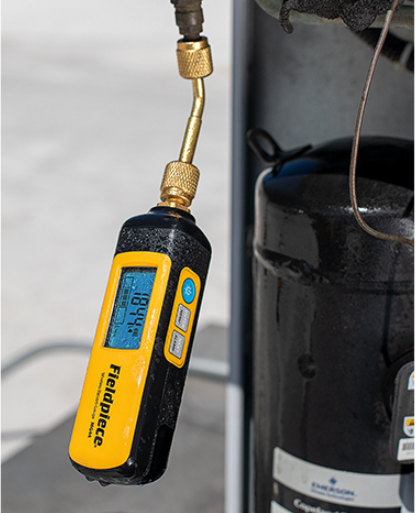
📍 Connect at the system Always connect the micron gauge at the system service port — not on the pump. Placing it on the pump shows the pump's inlet pressure, not the actual system vacuum. |
🎯 Target 500 microns 500 microns is the accepted industry standard before charging. Many technicians target 250–350 microns for additional confidence on new installs and commercial work. |
⏳ Run a decay test Once 500 microns is reached, isolate the pump and watch the reading. A stable reading over 5–10 minutes confirms the system is dry and leak-free. A rising reading means moisture or a leak — do not charge. |
🧹 Protect the sensor Oil mist from the vacuum pump is the most common cause of sensor failure. Use a micron gauge coupler or isolate the gauge before shutting off the pump to prevent oil backflow into the sensor. |
Frequently Asked Questions
What is a micron gauge and why do I need one for HVAC?
A micron gauge is a digital instrument that measures vacuum pressure in microns (also called millitorr) — a unit of measurement that analogue manifold gauges simply cannot read accurately. For HVAC/R evacuation, the target is 500 microns or below, which corresponds to a pressure of 0.067 mbar. Standard compound manifold gauges read vacuum as a rough full-scale deflection but cannot distinguish between 5,000 microns (not acceptable) and 200 microns (well evacuated). A dedicated micron gauge is the only reliable way to confirm the system has reached the required depth and to verify it through a decay test before charging.
What is a good micron reading for HVAC evacuation?
500 microns or below is the widely accepted industry standard for HVAC/R evacuation in Australia before charging. Most manufacturers specify this in their installation and commissioning documentation. Many experienced technicians target 250–350 microns as a preferred range, particularly on new installations or commercial systems where long-term reliability is critical. The reading alone is not enough — once the target is reached the pump must be isolated and the vacuum must hold stable for 5–10 minutes (the decay test). A reading that rises rapidly after isolation indicates moisture still present in the system, a leak, or both.
What is the difference between a standard digital and a wireless Bluetooth micron gauge?
A standard digital micron gauge displays the vacuum reading on its own screen and requires the technician to be physically present to read it during pull-down. A wireless Bluetooth micron gauge connects to a smartphone app and transmits readings in real time, allowing the technician to monitor the evacuation from elsewhere on site — useful when the indoor unit is in a ceiling void or the outdoor unit is on a rooftop. Wireless gauges from Accutools (BluVac Pro, BluVac LTE) and Hilmor also generate PDF commissioning reports directly from the app, which can be sent to the client or kept for warranty records. For straightforward residential work, a standard digital gauge is sufficient. For commercial jobs or where documentation is required, wireless is the practical choice.
Where should I connect the micron gauge during evacuation?
Always connect the micron gauge at the system service port — not at the vacuum pump inlet. Connecting at the pump inlet shows the pump's own vacuum performance, not the actual vacuum level inside the refrigerant circuit. Because hoses, fittings, and valve cores all add restriction between the pump and the system, the vacuum at the pump is always deeper than the vacuum inside the system. Measuring at the system gives you the real number that matters for charging decisions. Use a micron gauge coupler or a valve core removal tool at the service port for the best connection point.
How do I protect my micron gauge sensor from damage?
The most common cause of micron gauge sensor failure is oil contamination from the vacuum pump. Oil mist can travel back through the hoses — particularly when the pump is shut off under vacuum — and coat the sensor element, causing inaccurate readings or complete sensor failure. Prevent this by always closing the system valves before shutting off the pump, using a micron gauge coupler with an isolation valve, and cleaning the sensor port regularly with isopropyl alcohol. If the gauge consistently reads higher than expected or gives erratic readings, oil contamination is usually the cause — most sensors can be cleaned but some may need replacement.
Guides & Resources
|
Guide How to Measure Vacuum with a Micron Gauge — Step by Step Target micron levels, decay test procedure, and how to read a rising vacuum to diagnose leaks vs moisture. |
Guide The Role of Vacuum Gauges in AC Maintenance Why a micron gauge is essential for every commissioning job and how to interpret the readings. |
Guide Understanding the Accuracy of Digital Vacuum Gauges How sensor technology affects reading accuracy and what to look for when comparing models. |
Related Collections
- Vacuum Pumps — pair with a micron gauge for a complete verified evacuation setup
- Valve Core Removal Tools — remove Schrader cores to eliminate flow restriction and connect the micron gauge directly at the system port
- Evacuation Hoses & Couplings — 3/8" and 1/2" bore hoses for faster pull-down times
- Vacuum Pump Oil — regular oil changes protect both pump performance and micron gauge sensor life
- Digital Manifold Gauges — transition from evacuation to charging without breaking connections
- Bluetooth Smart Tools — app-connected instruments for wireless monitoring and commissioning reports
Business: Stella Aquatics Pty Ltd trading as HVACShop.com.au — ABN 98 351 143 900
Support: 0412 333 115 | support@hvacshop.com.au | Mon–Fri 9:00am–5:00pm AEST
Last updated: September 2026