Precision Tightening Matters
If you are searching for a bradley torque wrench, you are usually chasing one thing: leak prevention you can repeat. In HVAC work, most flare leaks are not “mystery leaks”. They come from two problems that keep showing up on real installs and service calls.
Over-torque can crush or distort the flare and damage sealing faces. Under-torque can leave a tiny gap that holds on day one, then shows up later after vibration, temperature cycling, or a few hard starts. Either way, the outcome is the same. You lose time, you lose confidence, and you risk a call-back that should never have happened.
The bigger issue is guesswork. A flare nut can feel “tight” and still be wrong. A short spanner can feel “safe” and still be overdone. When you are tired, rushing, working awkward access, or training an apprentice, the “by feel” method becomes inconsistent. And inconsistency is what turns a good install into a leak waiting to happen.

This guide explains how Bradley torque wrenches fit HVAC work in Australia, with a clear focus on OEM compliance and real-world technique. We will cover the Bradley torque wrench set options, how pre-set torque wrenches differ from adjustable tools, where TW4 and TW8 fit, and how to use torque wrenches correctly so your connections stay clean and repeatable.
In real Aussie conditions, tools also take a beating. Brisbane humidity creeps into tool bags and encourages corrosion if storage is sloppy. Sydney coastal air does the same to threads and fittings over time. Melbourne cold snaps can make seals and flare joints less forgiving if the connection was borderline to begin with. A torque wrench does not replace skill, but it helps keep your skill consistent when conditions are rough.
If you want the broader brand context around Bradley before you choose a torque setup, start with the Bradley HVAC tools overview so you can see how torque, flaring, and testing gear fit together in a complete workflow.
And if you want to see what’s in the range locally, browse Bradley professional tools and use this article to filter what suits your actual job mix.
One last point before we get into models. Tightening is only one half of leak prevention. The other half is proving the system. Many techs pair torque control with stable pressure testing gear such as the Bradley NR1000 nitrogen regulator, because a perfect tighten is still a guess until you pressure test and confirm the result.
Bradley Torque Wrench Range
When people say “Bradley torque wrench”, they are usually talking about two different styles of tool. The first is pre-set. The second is adjustable. Both are valid. The best choice depends on the work you do most often and how much flexibility you need on the day.
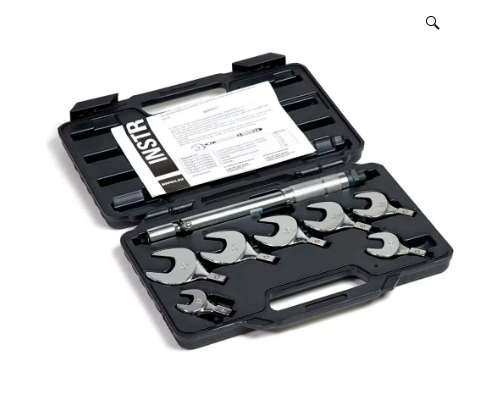
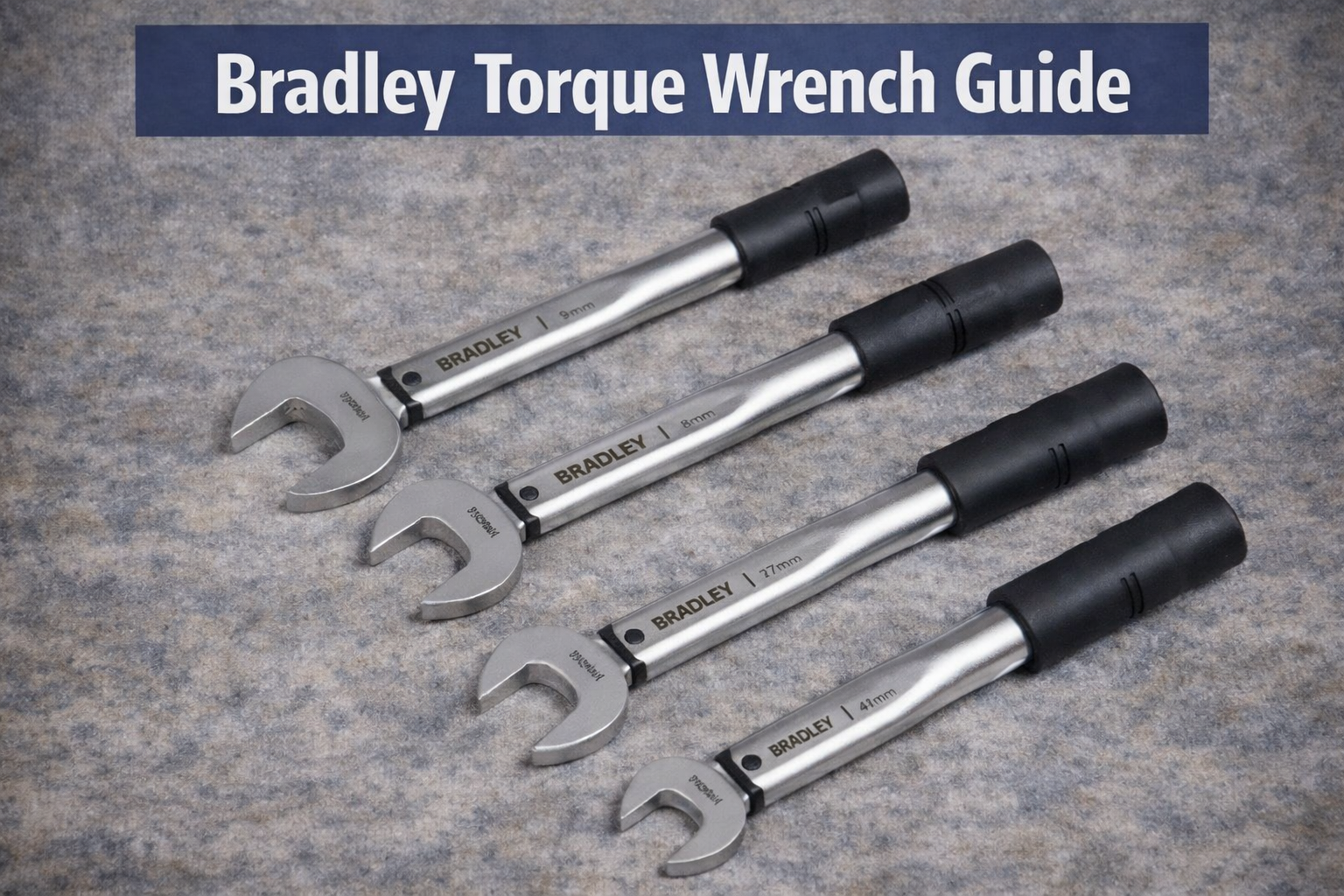
In the Bradley range, you will commonly see the TW4 style described as a pre-set torque wrench set for fast, repetitive flare work. You will also see the TW8 described as a metric adjustable set aimed at broader versatility. The names matter because they hint at the job fit. TW4 is about speed and repeatability. TW8 is about range and flexibility.
Before we talk model-by-model, it helps to set one ground rule. Torque tools are only as good as the process around them. If the flare is poorly formed, torque will not save it. If the flare faces are scratched, torque will not fix it. If the copper is not prepared cleanly, torque will not change that. What torque does do is remove one big variable: the “how tight is tight” guess.

TW4 pre-set torque wrench set
A pre-set torque wrench Bradley option is built to click at a fixed torque for a specific connection type. In job terms, that means you pick the correct tool for the flare nut size, tighten smoothly, and stop when it clicks. There is no dial setting to adjust and no worry that someone bumped the setting in the van.
Pre-set tools are popular on split system installs because the same flare sizes show up over and over. When you are doing multiple connections in a day, speed matters. But quality matters more. TW4 style tools fit that space because they support a clean, repeatable tighten without slowing you down.
Pre-set tools also help with team consistency. If you have multiple installers, or you are training apprentices, pre-set tools reduce the chance that “everyone tightens differently”. When everyone tightens differently, you get random results. When everyone follows the same click-stop routine, you get stable results.
TW8 metric adjustable set
A Bradley TW8 style adjustable set is aimed at techs who want more range. In the real world, adjustable tools can be helpful when you do mixed work. You might do splits one day, then move into service work, then do a commercial job where fittings and access change. An adjustable tool can reduce how many single-purpose tools you carry.
The trade-off is simple. Adjustable tools require correct setting. That means you must follow the tool instructions, set the torque you need, and make sure it stays set. If the tool is handled roughly or stored badly, settings can get knocked. The solution is not fear. The solution is process. Set it, confirm it, and store it properly.
Adjustable tools are also sensitive to “habit drift”. If you set the tool once and then you keep using it without re-checking, it is easy to apply the wrong torque value on a different fitting. In mixed work, that’s a common cause of leaks. The tool did its job. The process didn’t.
Pre-set vs adjustable advantages
Pre-set tools are about speed and fewer decisions. You match the wrench to the connection and you tighten until the click. That is helpful when you are working fast or when access is awkward. It is also helpful when you want to standardise a crew process so everyone tightens the same way.
Adjustable tools are about coverage. They can suit mixed fleets and mixed job types. They can reduce how many separate tools you carry, especially if your work changes day to day. The cost of that flexibility is discipline. You need to set the tool correctly, and you need to keep it calibrated and looked after.
A practical way to decide is to look at your calendar. If your week is mostly the same connection sizes, pre-set often wins on speed and reliability. If your week is mixed, adjustable can be more practical, as long as your setting routine is solid.
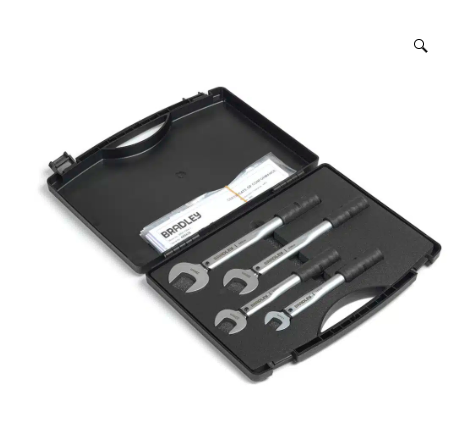
Certificate of conformity included
Torque tools are measurement tools. That means documentation matters. Bradley torque wrench kits are often described as coming with a certificate of conformity. Treat that as “commonly supplied”, and confirm what is included with the exact kit you buy, because packaging can change over time.
In trade terms, the certificate matters for two reasons. First, it supports confidence that the tool was checked at the point of supply. Second, it helps you run a cleaner maintenance and calibration routine because you have a starting reference for how the tool should behave.
It is also useful for business systems. If you do commercial work where documentation is part of the job, having the paperwork that comes with your measuring tools makes life easier. You can show that you are using controlled methods, not “tighten until it feels right”.
Professional-grade construction
Professional tools are not only about a brand name. They are about how the tool holds up to real van life. A torque wrench that loses accuracy or gets “notchy” in feel becomes a risk tool. The whole point of torque is to reduce variables, not to add a new one.
Construction quality matters in the boring places. It matters in the drive mechanism. It matters in the handle feel. It matters in how the tool survives being bumped in a tool bag. It matters in whether the wrench clicks consistently over time.
If you are building a full “tighten + test” routine, it helps to understand the testing side too. The basics in nitrogen regulator fundamentals explain what matters in pressure control so your torque work is backed up by proof, not hope.
Bradley TW4: Pre-Set Precision
The TW4 is best understood as “fast, repeatable flare tightening”. It is aimed at techs who do a lot of flare connections and want consistent results without spending brain space on settings.
For many installers, the TW4 becomes the daily torque tool because it matches the reality of split system work. You are doing the same sizes over and over. You want a tool that makes the process calm. And you want fewer chances for someone to set the wrong torque by mistake.

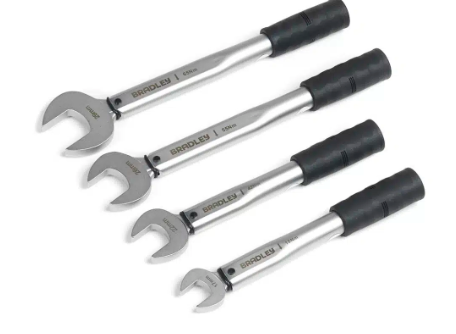
Four pre-set wrenches for flare nuts
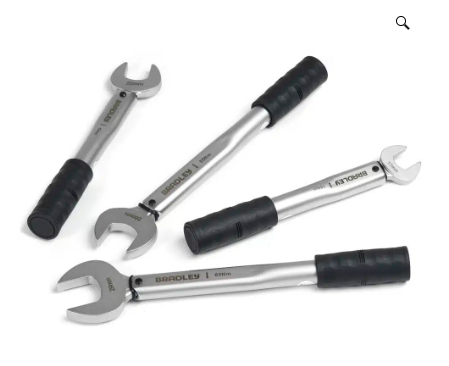
The TW4 is commonly described as a set of four pre-set wrenches used for flare nuts. The key word is “pre-set”. That means each wrench is designed to deliver a specific torque value without adjustment.
In trade use, that reduces two common failure modes. The first is “too much hand strength” on a small spanner. The second is “too little confidence” where the nut feels tight but never fully seats. With a click-type pre-set tool, the stop point is clearer.
It also reduces the urge to “double tighten”. A lot of over-torque happens because someone tightens, then comes back ten seconds later and adds more “just in case”. With a click tool, your process becomes: tighten smoothly, click, stop, move on.
17 mm, 22 mm, 29 mm, 35 mm sizes
TW4 sets are often referenced with flare nut sizes like 17 mm, 22 mm, 29 mm, and 35 mm. Those sizes matter because they line up with common flare nut hardware used in HVAC connections.
The practical habit here is matching the wrench to the flare nut size, not matching it to what “seems close”. If the tool does not seat cleanly, you increase the risk of rounding or slipping, especially in awkward access. A correct fit is safer and faster.
On real jobs, the “wrong fit” problem often shows up when you’re using a shifting spanner or a worn open-end spanner. It can slip, chew the nut, and then the job becomes harder than it should. A dedicated wrench sized correctly reduces that risk.
1/4", 3/8", 1/2", 3/4" applications
HVAC copper sizes are often talked about in imperial sizes like 1/4", 3/8", 1/2", and 3/4", even when the rest of the job is metric. The key point is not the number. The key point is that different sizes and different fittings can require different torque targets.
This is where many leaks begin. People assume one “tightness” fits all. It does not. Small tube sizes can be damaged by over-torque. Larger fittings can be under-torqued if you stop early because the nut felt “firm”. A pre-set tool helps you treat each size properly, without needing to guess where the safe stop point is.
It also helps you work consistently across days. The same installer can tighten differently on a Monday compared with a Friday afternoon. Pre-set tools reduce that human variability.
No adjustment needed
No adjustment is a big deal in real trade life. It means you do not have to remember a setting. It means an apprentice can learn a repeatable process faster. It also means you reduce the risk of using the wrong torque because you left the tool set from last job.
It does not mean you can skip thinking. You still need to confirm you are using the right wrench for the connection. You still need to make sure the flare is formed correctly. And you still need to tighten using proper technique so the click is meaningful.
Fast repetitive work
On repetitive work, speed comes from a stable process, not from rushing. A pre-set torque set supports that. You tighten, you feel the click, and you move on. You stop second-guessing. You stop doing “just one more tiny tweak” that often becomes over-torque.
This matters on busy install days. It also matters when you are working in heat or awkward roof spaces. When you are uncomfortable, your consistency drops. Tools that reduce decision load help quality stay stable when your day is not ideal.
It also helps you with quality handover. When you leave site, you want to feel confident that the tightening step was controlled. That confidence reduces “mental load”, which reduces errors elsewhere in the job.
Heavy-duty construction
“Heavy-duty” is a simple phrase that usually means the tool is meant to handle regular trade handling. For TW4 style pre-set tools, the practical test is how the click feels over time. Does it stay consistent? Does it feel clean? Or does it become vague and inconsistent after months in the van?
This is where storage habits matter. If your torque tools live loose in grit and moisture, they will feel older faster. If they live protected and clean, they hold their feel longer. It is not glamorous, but it is how you extend tool life in Australian conditions.

Did You Know?
A torque wrench can’t “save” a bad flare, but it can stop a good flare being ruined. A lot of leaks happen when a clean flare is over-tightened “just to be safe”. With a click wrench, “safe” becomes a repeatable stop point.
If you are reading this as a “Bradley TW4 review” style check before you buy, the simplest buyer question is this: do you do a high volume of the same flare sizes each week? If yes, pre-set speed and consistency usually suits you. If your job mix is broader, TW8 style versatility may fit better.
Bradley TW8: Metric Versatility
The TW8 is best understood as “more range, more flexibility”. It is aimed at techs who want one tool approach that can adapt across different jobs, provided the setting process is handled correctly.
In Australian HVAC work, that versatility can matter because many techs do mixed work. You might do residential splits, then do a heat pump service, then do a commercial job where fittings and access change. An adjustable set can reduce how many separate tools you need to carry.
At the same time, adjustable tools need routine. You need to set the correct torque value. You need to apply the tool correctly. You need to store it so the mechanism stays clean and consistent. If you do those things, an adjustable tool can be a strong daily option. That’s the real “Bradley TW8 specifications” story in the field: not just what it can do, but how repeatable it is when you run a clean process.

Tech Specs
For any adjustable torque wrench, the most important “spec” is not the maximum number. It is accuracy across the range you actually use, plus a setting method you can repeat without error. Always set torque to OEM requirements and confirm your tool’s calibration pathway.
To make the TW4 vs TW8 decision easier, here is a simple comparison. Treat it as a workflow guide, not a hard spec sheet. Exact settings and included pieces can vary by kit and supplier, so always confirm what you are buying and what your OEM requires for each connection type.
| Comparison point | TW4 (pre-set) | TW8 (metric adjustable) |
|---|---|---|
| Main advantage | Fast and consistent for common flare work | Versatile across different torque needs |
| Best fit workflow | High volume, repeat sizes, installation-heavy weeks | Mixed job types, varied fittings, broader service work |
| Common risk if used poorly | Using the wrong pre-set tool for the nut size | Incorrect torque setting or setting drift from poor storage |
| Speed on repetitive work | Very fast because there is no setting step | Good once set, but setting must be done correctly |
| Australian HVAC reality check | Great for common split installs and standard flare sizes | Great for techs who move between residential, heat pump, and commercial |
| Comparison mindset | You are choosing repeatability and fewer decisions | You are choosing flexibility with a stricter routine |
The best choice is usually obvious when you look at your calendar. If you do split installs most days, a pre-set torque wrench set can be the cleaner daily tool. If you do mixed work and need one tool approach to cover varied fittings, an adjustable set can make sense.
And if you are asking “best torque wrench HVAC Bradley”, the answer depends on where your leaks come from. If your leaks come from speed and fatigue errors, pre-set tools often help. If your leaks come from mismatch and mixed fittings, adjustable tools can help when used correctly.
One common comparison buyers ask is Bradley vs Hilmor torque wrench. Both are recognized names in HVAC tools, and the better pick is the one that fits your workflow and support needs. In practice, compare three things: how easy it is to apply correct torque in tight access, how your team handles settings and storage, and how simple it is to keep the tool in service through calibration and parts support. If you are installation-heavy and want fewer setting decisions, pre-set style tools can feel calmer. If you are mixed-work and need broad coverage, adjustable tools can be practical, provided your setting routine is disciplined. Either way, you should always match torque to OEM requirements and verify the system with pressure testing, because the goal is a sealed result you can prove.

Using Bradley Torque Wrenches Correctly
Most torque wrench problems are not “tool problems”. They are technique and process problems. A torque wrench is a control tool. If you use it like a normal spanner, you miss the whole point.
The goal is simple. Tighten to the correct value for that exact connection, using a consistent method, and stop when the tool tells you to stop. Then verify the system with testing. That is how you create a workflow that is repeatable, not just “good on a good day”.
Selecting the correct torque value
The correct torque value comes from the OEM specification for the connection you are tightening. That sounds obvious, but it is where most people get lazy. Different fittings and different connection types can require different torque targets, even if they look similar on the outside.
If you are using pre-set tools, the decision is mainly about selecting the correct wrench for the nut size and application. If you are using an adjustable wrench, the decision includes selecting the correct torque value and setting the tool correctly.
A professional habit is to treat “OEM torque” like you treat refrigerant charge requirements. You do not guess it. You confirm it. Then you apply it consistently. If you cannot confirm it on site, you should be cautious about relying on memory alone.
Proper wrench technique
Torque wrenches work best when the force is applied smoothly, in line with the handle, and without “extra help” at the end. Jerky tightening can cause false clicks or inconsistent results. Over-speed tightening can also make the click hard to feel properly, especially in awkward access.
Another key technique point is tool alignment. If the wrench is at a strange angle because access is tight, you can introduce side load. Side load can change how the tool behaves and can also damage the fitting. If access is poor, it is often worth repositioning your body or your line set for a clean tightening approach.
One simple habit that helps is to slow down for the last part of the tighten. Many over-torque mistakes happen right at the end because the installer is trying to “finish quickly”. Smooth pressure at the end makes the click clear and prevents accidental extra force.
OEM specifications compliance
OEM compliance is not a paperwork obsession. It is how you avoid failures that are predictable. When a flare connection fails, the customer does not care if you were “close”. They care that it leaked.
Keeping your work aligned with specifications is part of professional risk management. SafeWork Australia’s guidance on workplace risk management is a useful reminder that good outcomes come from controlled hazards and controlled processes, not from hope.
In practical terms, compliance means you tighten correctly, you support the line so it is not twisted, and you pressure test so you can prove the outcome. That is how you prevent the “it was fine when I left” call-back.
Common torque mistakes
The most common mistake is tightening a flare nut as if it is a steel bolt. Copper and flare faces are more sensitive. Over-torque can damage the sealing faces and create a leak path that shows up later.
The second common mistake is using torque to “fix” a poor flare. If the flare was formed unevenly, torquing harder does not make it better. It often makes it worse by crushing the flare in the wrong way.
The third mistake is clicking and then continuing. People sometimes hear or feel the click and then add “a bit more”. That defeats the whole purpose of using torque. If you are going to use a torque wrench, commit to stopping at the click.
The fourth mistake is using a torque wrench when the connection is dirty or cross-threaded. Torque should be applied to a correctly seated connection. If the nut is binding because threads are damaged, the wrench can click while the joint is not properly seated. That is not the wrench’s fault. That is a setup problem.
Quality control checks
Torque is not the end of the quality routine. It is one step. A simple quality check habit is to slow down after tightening. Look at the connection. Make sure the line is not under stress. Make sure the flare nut seats cleanly and the line is not twisted into a bad position.
Then do what professional commissioning always does. Prove the system. This is where nitrogen testing becomes the other half of the story. A torque wrench reduces leak risk. A nitrogen pressure test confirms you actually achieved a sealed system.
For a practical step-by-step on the test side, use how to use nitrogen regulators as your workflow reference, then match fittings and hoses properly using regulator safety and compatibility so your own setup doesn’t create false leaks during testing.
Australian standards
Australia has workplace safety expectations and industry standards that shape how work is done, but the simplest practical takeaway is this. Use the correct method for the connection, follow OEM requirements, and keep your workflow controlled and documented inside your business process.
The point of torque tools is to reduce variability. Standards and OEM specs exist for the same reason. They aim to prevent failures that are predictable.
Pro Tip
If you get a leak after using a torque wrench, don’t crank harder. Step back. Check flare quality, check alignment, and check whether the torque target was correct for that exact fitting. Most “torque failures” are really “wrong setup” failures.
Applications for HVAC Work
Torque wrenches matter because HVAC work is full of connections that can leak. Some leaks are instant. Some take weeks. Some show up only when conditions change. The whole point of a Bradley torque wrench approach is to reduce those variables and keep results consistent.
It is also why torque tools are so often discussed in the same breath as pressure testing. Tightening is the craft. Testing is the proof. When you put them together, you get fewer call-backs and fewer “it should be fine” moments.
Refrigerant line connections
Flare connections on refrigerant lines are one of the most common leak points in split systems and many service workflows. A torque wrench helps you tighten to a repeatable target so you reduce both under-tightening leaks and over-tightening damage.
It also helps when you are doing multiple installs in a week. Fatigue makes “feel” inconsistent. Torque tools keep you consistent even when your day is not. That’s where they earn their keep.
Another real-world benefit is confidence. When you tighten correctly, you stop “checking with your hands” later. Over-checking often leads to over-torque. Controlled tightening prevents that spiral.
Manifold gauge ports
Service work often involves connecting and disconnecting gear repeatedly. It is easy to overdo fittings when you are in a hurry, especially if a connection is slightly awkward. A torque mindset helps you stop treating every fitting like it needs “more force”. It often doesn’t.
The goal is secure, sealed connections without damage. Damage creates future leaks and future headaches. If you repeatedly over-tighten service port hardware, you can create failures that show up later as slow leaks or damaged valve cores.
Service valve packing
Service valves and packing nuts are another area where “just tighten it more” can cause problems. Some seals respond to correct snugging. Some respond to correct adjustment and component condition. Over-force can create damage, especially when parts are already worn or dry.
Torque tools are not always used for every packing adjustment, but the mindset is the same. Controlled force is better than brute force. If the packing continues to weep after correct adjustment, the next step is not “more force”. It is checking component condition and following the correct repair process.
Heat pump fittings
Heat pump work often sees frequent temperature cycling. That cycling can reveal weak connections over time. A consistent tightening process helps reduce the chance of micro-leaks developing as the system expands and contracts through seasons.
In Australia, that seasonal swing is real. Hot summers, cold snaps, and constant on/off cycles on some systems can expose weak installs. Torque consistency is one of the simplest ways to reduce those avoidable failures.
It also helps on service calls when you are re-making a connection. If you are replacing a component or re-flaring a line, torque control helps you avoid turning a repair into a fresh leak problem.
R32 system requirements
R32 and other modern refrigerant systems have specific handling and safety requirements, and your workflow should always follow the manufacturer instructions and your licensing and workplace process.
The torque side of the story is still the same. Sealed connections reduce leak risk. Reduced leak risk reduces call-backs and reduces safety concerns. Torque tools are one part of doing the job properly, alongside correct installation, correct testing, and correct documentation.
Preventing leak callbacks
Most call-backs cost more than you want to admit. Travel, time, rescheduling, and customer trust all get hit. Torque tools reduce the chance of leaks caused by inconsistent tightening. But the full professional routine also includes testing.
If you want to see how nitrogen fits across HVAC workflows, our guide to nitrogen HVAC applications explains why pressure testing and purging are so common in professional commissioning.
When you combine controlled tightening with controlled testing, the result is simple. You spend less time chasing problems you created accidentally, and more time finishing jobs cleanly the first time.
Calibration and Maintenance
A torque wrench is a measuring tool. That means calibration and care are part of the deal. If you ignore calibration completely, you may still feel “professional” using a torque wrench, but you can be applying the wrong force without knowing it.
This becomes more important the more you rely on the tool. If torque is your main method to control flare tightening quality, it deserves a simple routine. The routine does not need to be complicated. It needs to be consistent.
Certificate validity
When a torque wrench kit is supplied with a certificate of conformity, it helps establish a baseline. It does not mean the tool stays perfect forever. It means it was checked at supply, and you should treat it as the starting point for your care routine.
The practical question is simple. Does your tool still behave the way it should? Does the click feel consistent? Has the tool been dropped or knocked hard? Has it been stored dirty? Those things change how much trust you should place in it.
Calibration frequency
Calibration frequency depends on use, handling, and how critical your work is. A torque wrench used daily in harsh conditions may need attention sooner than a torque wrench used occasionally and stored carefully.
The safest habit is to follow a routine that matches your business. If you use torque tools as your main quality control method for flares, treat Bradley torque wrench calibration as a scheduled check, not an emergency fix after a leak appears.
Also be honest about handling. If tools are constantly being thrown into a bag with heavy gear, the calibration risk is higher. If tools are stored properly and handled carefully, they tend to stay trustworthy longer.
Australian calibration services
Calibration support options vary by region and supplier. A good approach is to ask about calibration pathways when you buy, not after you have a problem. That way you know what to do if you need checks or service down the track.
For broader context on service pathways and what to ask suppliers about, the discussion around regulator calibration services includes helpful prompts you can apply to torque tools as well. The buyer mindset is similar. You are looking for support, not only a box on a shelf.
Storage best practices
Storage is where tool life is won or lost. In Brisbane humidity, moisture in tool bags accelerates corrosion. In Sydney coastal air, salt exposure does the same. In dusty regions, grit gets into moving parts and threads. If your torque wrench lives loose in the van, it will age faster.
A simple routine is to wipe tools down before storage and keep them in a protective case or dedicated storage position. That reduces knocks and keeps dirt out of the mechanisms that affect feel and accuracy.
Storage also matters for “setting discipline” on adjustable tools. If your adjustable wrench is stored in a way that knocks the setting, you can end up applying the wrong torque next job. If you store it locked and protected, your process is safer.
Inspection procedures
Before using a torque wrench, check for visible damage. Check that the tool feels smooth. Check that the head and drive look clean. If something feels wrong, don’t push through. The whole point of a torque wrench is trust. If trust is gone, stop and fix the reason.
This is also why many techs standardise their commissioning gear as a system. Torque tools for tightening, and stable testing gear for verification. When both sides are controlled, your results are easier to trust.
Invest in Bradley Torque Precision
A Bradley torque wrench is not about being fancy. It is about making your tightening step repeatable. Repeatable tightening reduces flare leaks. Reduced flare leaks reduces call-backs. And fewer call-backs is one of the easiest ways to protect your time and your reputation.
If your work is install-heavy and repetitive, TW4 style pre-set tools are often the cleanest workflow choice because they remove the setting step and support fast, consistent tightening. If your work is mixed and you need broader coverage, TW8 style adjustable tools can suit, as long as you set and care for them properly.
The most important thing to remember is that torque is one part of leak prevention, not the whole story. Good flare preparation matters. Correct alignment matters. And pressure testing is how you confirm your result before you leave site.
If you want to tighten like a pro and test like a pro, build your process as a “two-step proof”: controlled tightening, then controlled pressure testing. If you are fitting out a commissioning kit and want a low-pressure next step, talk to our team to confirm compatibility with the flare sizes and fitting types you see most often, and contact us for a quote if you want help building a staged setup from the Bradley professional tools range.