
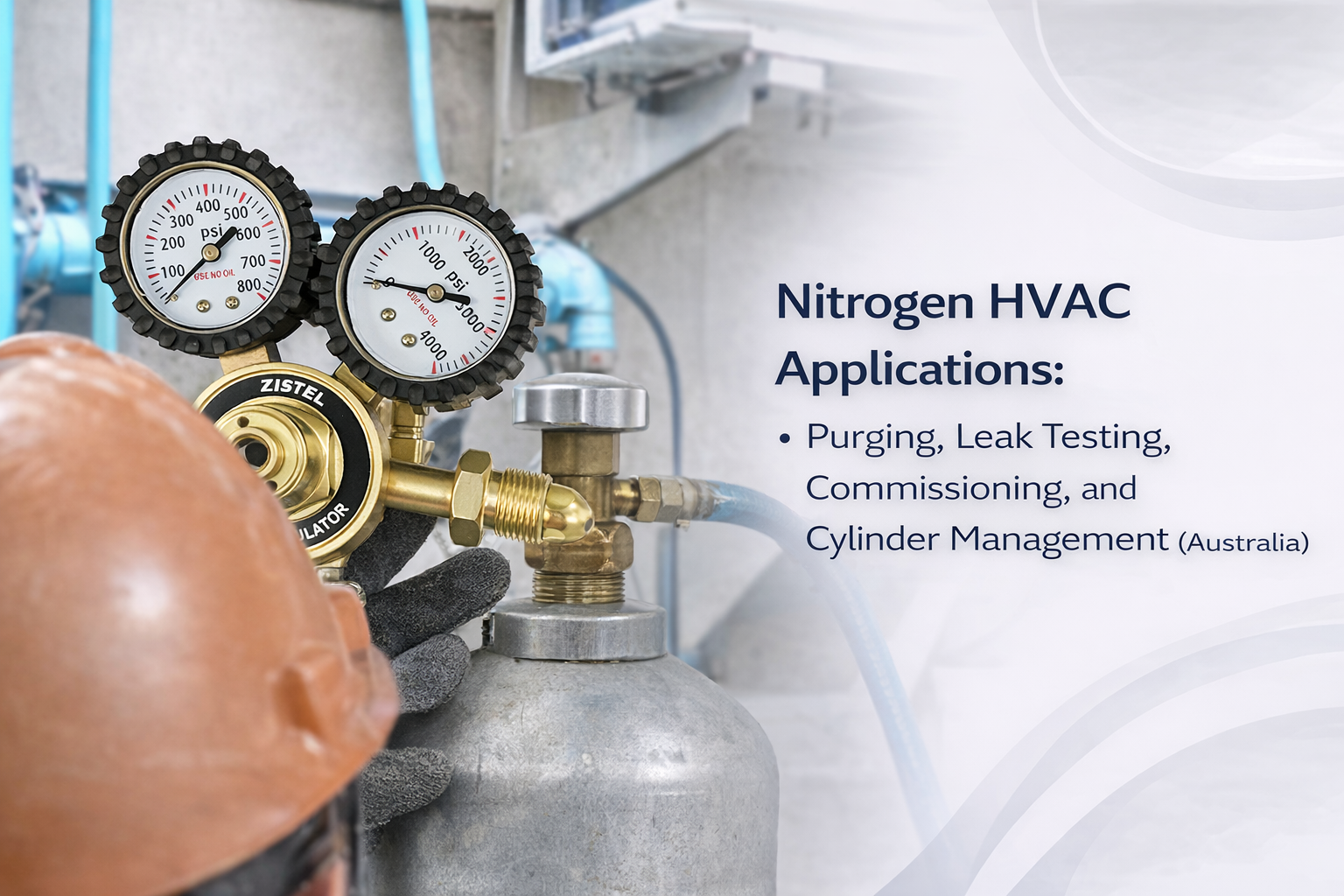
Why Nitrogen Matters in HVAC
If you work in HVAC, you have probably seen jobs that looked fine on the day of install but came back months later with restrictions, unstable valves, noisy compressors, and strange performance faults that are hard to pin down. A lot of those problems start the same way: oxygen, moisture, and debris were allowed into the copper pipework during installation or repair.
This is exactly where nitrogen earns its place. Nitrogen is dry, inert, predictable, and extremely useful when handled properly. In practical HVAC work, it helps keep the inside of the system clean during brazing, lets you pressure test joints before charging, and supports a more controlled commissioning workflow.
If you are searching for nitrogen use in HVAC, the key thing to remember is this: nitrogen is not just for one task. It is used for purging, leak testing, system preparation, and disciplined cylinder-based workflow. That is why good technicians treat it as a core service practice rather than a box-ticking exercise.
The catch is that plenty of people still use nitrogen badly. Too much pressure during purging. No proper vent path. Pressure testing without allowing the system to stabilise. Or trying to do precision work with an unstable setup. That is how you end up with black oxide, false leak readings, and wasted time chasing problems that should have been prevented on day one.
This guide is written for real Australian HVAC work. It covers nitrogen purging, leak testing, commissioning support, and cylinder handling in a way that is practical, not fluffy. If you want to compare the gear category tied to this workflow, start with the approved range of nitrogen regulators. That same collection is also the approved destination here for broader nitrogen testing kit references.
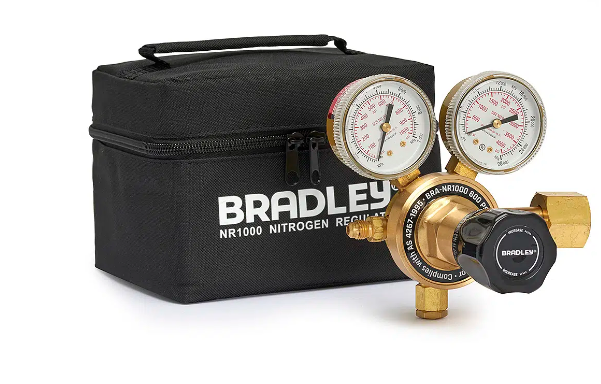
Nitrogen work is only as safe as the control gear connected to the cylinder. For controlled purging and pressure testing, use a stable nitrogen regulator and build your setup around a clean, properly managed nitrogen testing kit rather than guessing at pressure control.
Nitrogen Purging: Preventing Oxidation Inside the Copper
Nitrogen purging during brazing is about preventing oxidation inside the tubing. When copper is heated in the presence of oxygen, black oxide forms on the inside walls of the pipe. That material does not stay stuck forever. Once refrigerant and oil start circulating, the scale can break free and move through the system.
Where does it end up? Strainers, capillary tubes, TX valves, and other restriction-sensitive components. That is why a system can look perfect during install and still become a headache months later. The contamination was already built into the pipework before the unit was ever commissioned.
Purging with nitrogen while brazing solves that problem by displacing oxygen inside the copper. It is not a glamorous step, but it is one of the biggest quality differences between a rushed install and a professional one.
Setting Up Nitrogen Flow for Purging
During purging, you are not pressure testing the system. You are just flowing gas gently through the pipe to push oxygen out. The aim is a low, steady flow, not force. In practical terms, many technicians work around 2 to 5 PSI, which is roughly 15 to 35 kPa, depending on the setup and job conditions.
If the flow is too high, you can disturb the brazing process and create a messy joint. If the flow is too low or there is no true through-flow, then you are not really purging. You are just introducing nitrogen into a line without actually displacing the oxygen properly.
Tech Specs: For nitrogen purging, think low pressure and continuous flow. Nitrogen must enter one end of the pipe and leave the other safely. If both ends are closed, you are not purging the line. You are building pressure in it.
This is also where regulator quality matters. A stable nitrogen regulator makes it much easier to set and hold a clean low-flow purge. An unstable setup makes a simple job feel harder than it should.
Nitrogen Leak Testing Procedures
Once brazing is complete and the joints have cooled, nitrogen becomes the preferred gas for pressure testing. The logic is straightforward: pressurise the pipework, isolate it, and watch whether it holds. But while the concept is simple, the quality of the result depends on how the test is done.
| Test Type | Typical Pressure | How It’s Done | What a “Pass” Looks Like |
|---|---|---|---|
| Initial Pressure Test | 150–450 PSI (check OEM guidance) | Raise pressure slowly, isolate, let temperature settle, then observe. | No meaningful drop once the system has stabilised. |
| Standing Pressure Hold | Set to job target | Monitor the isolated system over time after stabilisation. | A stable reading that does not drift once ambient effects are accounted for. |
| High Pressure Test | Up to system-specific target (check OEM guidance) | Increase in stages using rated hoses, regulator, and cylinder setup. | A steady pressure with no sign of leakage after normal thermal settling. |
The biggest mistake in nitrogen leak testing is misreading temperature movement as a leak. When you charge the system quickly with nitrogen, the gas and copper warm up. Once isolated, they cool back down. Pressure drops as a result. That does not automatically mean the system leaks.
The opposite can also happen. If the copper gets hotter because the sun hits it or ambient temperature rises, the pressure can climb even when the system is tight. This is why temperature stabilisation is not optional. It is part of the test.
Did You Know? Not every pressure change is a leak. Copper temperature, ambient conditions, and how quickly the system was pressurised all affect the gauge reading. Stabilisation is part of proper commissioning, not dead time.
Using a proper nitrogen testing kit helps here because consistency matters. Stable fittings, a decent regulator, and an organised pressure test setup reduce false alarms and make the result easier to trust.
Nitrogen for System Commissioning
Nitrogen also plays a role in commissioning beyond simple pressure testing. It does not replace vacuum evacuation, but it supports clean commissioning practice. One common example is using dry nitrogen to break a vacuum between evacuation stages during a triple evacuation process. This can help carry out residual moisture and non-condensables more effectively than pump time alone.
In other words, nitrogen is not the drying tool by itself. The vacuum pump still does the deep drying work. But nitrogen supports the process by helping the system start cleaner and by assisting evacuation practices where moisture is stubborn.
This is why good commissioning is rarely about one tool. It is about a full workflow. Brazing with nitrogen purge, leak testing with controlled pressure, then evacuating properly. Each step makes the next one more reliable.
Nitrogen Cylinder Management
Good nitrogen technique falls apart fast if cylinder handling is poor. Cylinder choice, transport, storage, and valve protection all matter. In Australian field work, many technicians use cylinder sizes that suit their install volume and travel patterns. The exact size matters less than the discipline around how the cylinder is handled.
Cylinders should be secured properly during transport, protected from impact, and never allowed to roll loose in a vehicle. A high-pressure gas cylinder is not just another piece of cargo. If the valve is damaged badly enough, it becomes a serious hazard.
It also pays to think practically about gas usage. If you are doing repeated installs every week, running out halfway through a day because the cylinder is too small is not efficient. Nitrogen setup is not only about safety. It is also about workflow and reliability.
Treat your nitrogen bottle, regulator, and test connections as one system. A great regulator on a messy, poorly secured setup still creates poor results in the field.
Common Nitrogen Mistakes That Cause Problems
Most nitrogen-related HVAC problems are not caused by the gas itself. They come from bad habits. No purge flow while brazing. Excessive purge pressure. No stabilisation period during leak testing. Poorly managed cylinders. Guessing the regulator setting instead of controlling it properly. Each one creates avoidable risk.
The most dangerous mistake is forgetting that nitrogen is stored at high pressure. The most expensive mistake is pretending pressure movement automatically equals a leak. The most frustrating mistake is skipping purge flow and then wondering why restrictions appear later in the system.
Professional nitrogen technique is not complicated, but it is disciplined. That is why the right gear category here is still the approved range of nitrogen regulators, because stable control is one of the most important parts of the job.
Apply Professional Nitrogen Techniques
Nitrogen is not just something you wheel out to satisfy a procedure. It is a practical tool for cleaner pipework, tighter pressure testing, and better commissioning discipline. Purge while brazing to stop internal oxidation. Pressure test in a controlled way. Let the system stabilise. Use nitrogen sweeps sensibly where they support evacuation practice. And manage cylinders like the high-pressure equipment they are.
If you are building or upgrading your setup, start with the approved range of nitrogen regulators. If you want to think about your setup more broadly, that same approved collection is also the right destination for a nitrogen testing kit buying path.
Frequently Asked Questions (FAQ)
What is nitrogen purging in HVAC and why does it matter?
Nitrogen purging means flowing a small continuous stream of nitrogen through the copper while brazing to displace oxygen. This prevents black oxide from forming inside the pipe and helps protect the system from later restrictions and contamination.
What pressure should I set for nitrogen purging while brazing?
Purging is normally done at very low pressure, often around 2 to 5 PSI, because the goal is flow rather than pressurisation. Too much pressure can interfere with brazing and create unnecessary mess.
How do I know I have purge flow and not just pressure build-up?
You need a clear exit path. Nitrogen must enter one end of the pipe and safely vent from the other. If both ends are capped, you are not purging the system. You are simply building pressure in it.
Why can pressure move during a nitrogen test even if there is no leak?
Because gas pressure changes with temperature. If the pipework cools after pressurisation, the pressure drops. If the system warms up in the sun, the pressure rises. That is why stabilisation time matters before judging the result.
How is nitrogen used in commissioning before charging?
Nitrogen is used to confirm that the pipework is tight before refrigerant is added, and in some commissioning workflows it is also used to break the vacuum between evacuation stages to help move out residual moisture and non-condensables.