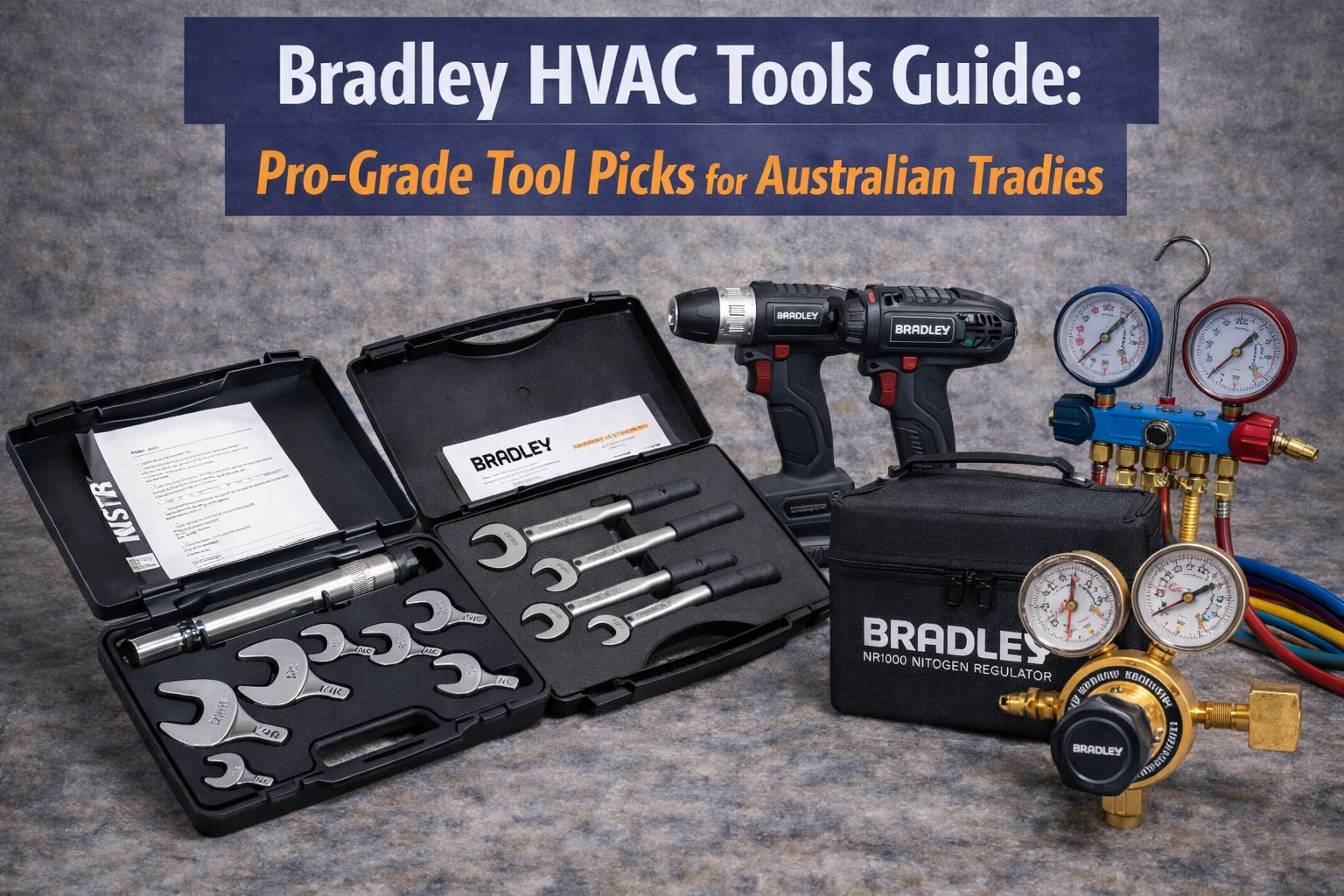
Professional Tools for Australian Tradies

If you are searching “bradley hvac tools”, you are probably not shopping for a shiny gadget. You are trying to solve a real trade problem: you want tools that feel precise, hold up to daily use, and help you avoid the small mistakes that turn into leaks, call-backs, and wasted hours.

On HVAC jobs, generic tools often look fine on day one. Then you hit the reality of Australian work conditions. Brisbane humidity creeps into tool bags and starts corrosion. Sydney coastal air accelerates rust on threads and fittings if storage is sloppy. Melbourne cold snaps make seals and metal tolerances feel less forgiving when the tool is already borderline. That is when “cheap and cheerful” starts costing you time.

This guide is built to help Australian tradies understand the Bradley range in plain terms. We will explain who Bradley is, what the core product categories are, where each tool fits in real HVAC and refrigeration work, and how to build a Bradley kit that makes sense for your stage of trade life.

If you want to see the brand range first so you can match this guide to what is actually available locally, start with our collection of Bradley professional HVAC tools.

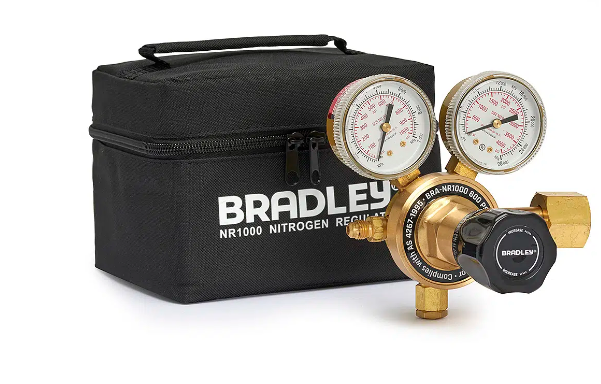
Bradley NR1000 nitrogen regulator kit used for pressure testing HVAC systems in Australia

We will keep this educational and practical. No hype. No invented specs. No “buy now” language. Just the real decision points: what each tool does, what it helps you control, and how to choose it so your work stays clean and repeatable.

And because good tools only matter when the job is safe, you want a simple rule for every purchase: can you use it predictably, can you store it properly, and can you get support when something wears out. That mindset is what turns “tools” into a dependable workflow.

Who is Bradley? (Brand Background)

Bradley is positioned as a professional-grade HVAC tool brand built for trade use, not occasional DIY. The reason people look for a brand like this is simple: in refrigeration and air conditioning work, small inconsistencies cause big outcomes. A slightly off flare, a fitting that is over-tightened, a pressure test done with a regulator that drifts, or a tool that feels different each day can lead to leaks and repeat visits.

When we talk about “precision and durability” in HVAC tools, we are not talking about fancy features. We are talking about tools that feel predictable in the hand and behave the same way every time you use them. That matters because repeatable technique is what keeps your results repeatable. If your tool behaves differently, your hands change. If your hands change, your connections change.

Bradley also lines up with daily professional workflows: commissioning, pressure testing, flaring, and controlled tightening of flare nuts. In Australia, that matches how many technicians actually work. You want a tool that can live in the van, get used on real sites, and still feel accurate when it matters.

When people say Bradley is “trusted by Australian technicians”, treat that as a starting point, not the final proof. The smarter way to judge any professional Bradley tools purchase is practical: does it solve a repeat problem in your week, does it reduce rework, and can you verify the model you need for your job. If a tool needs to match a process, confirm the model name, the included parts, and the intended use from the product listing and supplier notes, instead of assuming two similar-looking tools behave the same.

Quality assurance standards are often part of how pro tool brands talk about their products, but the safest buyer move is to focus on what you can confirm in use. Does the tool feel consistent? Does it hold up to regular handling? Can you get local support and parts when something wears out? And if you need an exact performance claim for a specific job, confirm it against the product information and supplier guidance rather than guessing.

Did You Know?

A lot of “mystery leaks” are not mystery at all. They come from repeatable small errors: uneven flares, inconsistent tightening, or pressure tests done with gear that drifts day to day. A consistent tool setup often fixes the issue without changing your whole process.

If your search is “bradley tools australia”, the practical question is usually supply and support. A pro tool is only “pro” if you can keep it in service. That means you can get the right replacement parts, or you can replace the tool quickly if it gets damaged. That is a big part of why tradies prefer to buy from a supplier that understands HVAC workflows, not a general hardware shelf that cannot help when you need the exact part.

Bradley HVAC Tool Range Overview

The Bradley tool range is easiest to understand by grouping it the way you actually work on the job. Most techs do not think in “catalogue categories”. They think in tasks: pressure test, leak check, flare and connect, tighten to the right feel, commission, and service.

Below is a practical overview of the key Bradley categories referenced most often in HVAC work, along with the common “why” behind each category. This is also where “bradley tools range” searches land, because techs want to see what sits inside the brand, not just one product page.

Nitrogen regulators (NR1000 series)

Pressure testing and leak checking is one of those “quiet” steps that saves hours later. A nitrogen regulator matters because it controls how you introduce pressure and how stable that pressure stays while you inspect a system. If the regulator is inconsistent, the test becomes harder to trust, and you can waste time chasing false alarms or missing small issues.

A common Bradley product in this category is the Bradley NR1000 nitrogen regulator. The practical value of a regulator like this is control. Stable control helps you avoid over-pressurising, helps you run a cleaner leak detection routine, and helps you trust what you are seeing when you check for pressure drop.

If you are comparing across brands or trying to understand why different regulators exist in the first place, our nitrogen regulator brand comparison is a helpful way to understand the market without guessing.

And if you want the Bradley-specific context before you commit, the Bradley NR1000 complete guide is the best place to understand where that regulator fits into real HVAC workflows and what to confirm before you put it into daily use.

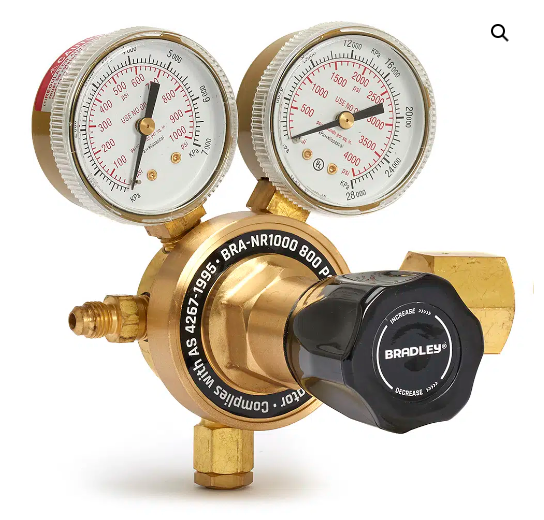
Close-up of Bradley NR1000 nitrogen regulator used for stable pressure control in HVAC testing

Where this matters most is commissioning confidence. If your leak test process is calm and controlled, you move into evacuation and charging with less uncertainty. If your leak test process is messy, the whole job feels shaky. That is why nitrogen tools are often a first “professional” upgrade for techs who are sick of second-guessing their own results.

Torque wrenches (TW4, TW8 series)

Torque tools matter because flare connections fail for predictable reasons. Under-tightening can leave a micro-leak that shows up after vibration and temperature cycling. Over-tightening can damage the flare, distort the fitting, or create a problem that looks sealed on day one but fails later.

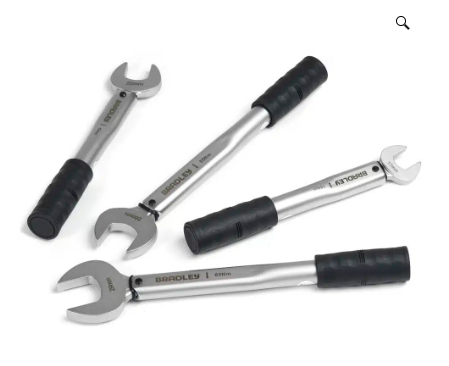
A popular example in this category is the Bradley TW4 torque wrench set, which supports consistent tightening habits where flare nuts are a daily reality. The goal is not to replace skill. The goal is to remove guesswork, especially when you are tired, rushing, or training an apprentice.

If you want broader trade context for torque tools, including why pros use them and where they fit in commissioning quality, our article on professional torque wrenches is a useful read.

For Bradley-specific setup and workflow guidance, the Bradley torque wrench guide helps you choose a torque approach that matches the way you work, rather than “guessing by feel” and hoping it holds.

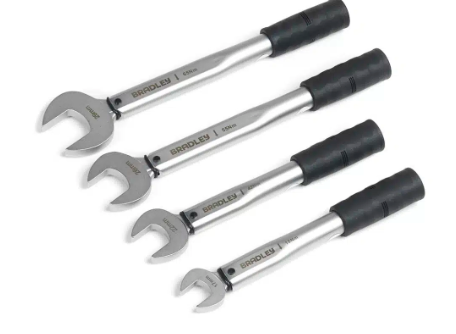
Bradley TW4 pre-set torque wrench set used for consistent flare nut tightening on split installs

Torque wrenches become even more valuable when you factor in real-life job pressures. You might be working in heat, in cramped access, or on a job where the customer is hovering. Consistency tools reduce the “mental load” because you do not have to second-guess every connection afterwards. That is why “best bradley hvac tools” lists often include torque tools near the top, especially for split system installers.

Flaring tools (RF100 eccentric)

Flaring is one of the most common points where quality either holds or fails. A flaring tool is not just “a flaring tool”. The flare quality depends on how the tool forms the flare, how consistently it does it, and how well it handles real copper preparation.

In the Bradley range, flaring tools like the RF100 eccentric style are built around the idea of repeatable, clean copper connections. The practical benefit is not a marketing claim. It is the reduction of variability. If your flare quality varies, your leak rate rises. If your flare quality is consistent, your call-back risk drops.

Flaring quality also affects torque results. A torque tool cannot “fix” a flare that was formed poorly. That is why the best setup is a paired approach: clean prep, consistent flare formation, then consistent tightening. That pairing is what makes your work feel professional, because the connection behaves like it should.

Hand tools and accessories

Hand tools and accessories are the day-to-day items that make your workflow faster and safer. In HVAC work, that typically means tools that reduce damage to fittings, improve access in tight spaces, and hold up to the constant “in and out of the van” routine.

The biggest decision point here is not brand loyalty. It is durability and fit. A hand tool that slips or rounds a fastener is not just annoying. It can create a repair job where there should not be one. It can also cause you to rush, and rushing is where you damage copper, insulation, and surrounding components.

When people write a “bradley tools review”, the hand tool story often comes down to feel. Does it grip well? Does it stay accurate in adjustment? Does it survive being thrown in a tool bag every day? That is the test that matters in Australian tradie life.

Precision measurement tools

Precision measurement is where professional HVAC work separates itself from “it seems fine”. Whether you are checking pressure test stability, confirming system behaviour during commissioning, or troubleshooting performance issues, your tools need to give you readings you can trust.

The safe way to talk about measurement tools is simple: use them to support decisions, not to replace judgement. And if you need exact performance claims, confirm the tool’s documentation and calibration expectations rather than assuming. Good tools help you spot patterns. Your experience helps you interpret them.

Complete kits available

Many tradies prefer complete kits because they reduce compatibility surprises. When a kit is built as a system, the pieces tend to fit together in a way that supports the workflow: the storage makes sense, the accessories are the right ones, and the setup is designed around real use.

If you want a full view of how the range hangs together, the complete Bradley tool range guide helps you plan a kit like a tradie, not like a catalogue.

Pro Tip

When you are choosing between “more tools” and “better tools”, start with the steps that create call-backs when they go wrong: flares, torque consistency, and pressure testing. Improving those three areas usually saves more time than adding extra gear.
Bradley Tool Categories Comparison

This table is a simple way to match Bradley categories to the job they support. It is not a full specification list, because specs vary by model and because the practical value is in how the tool is used on real jobs.

Use the table as a buyer guide: start with what you do most weeks, then choose the category that reduces your highest-risk mistakes first. That is the cleanest way to build a Bradley HVAC equipment setup without wasting money.

Bradley torque wrenches laid out for common flare nut sizes used in Australian split system installs

Tech Specs

Torque targets, pressure test targets, and tool ratings vary by system and manufacturer guidance. Use tools to improve consistency, then confirm your exact job requirements from the system documentation and safe work procedures.

Category Typical Bradley products Best for Why it matters on the job
Nitrogen tools NR1000 series regulators Pressure testing, leak checking, commissioning prep Stable pressure control makes leak checks faster and results easier to trust
Torque tools TW4, TW8 torque wrench sets Flare nut tightening and repeatable connections Consistent tightening reduces flare leaks and prevents over-tightening damage
Flaring tools RF100 eccentric flaring style Copper connections for split systems and refrigeration work Better flare consistency reduces rework and call-backs from micro-leaks
Hand tools Trade hand tools and accessories General service work, access, daily handling Durability prevents rounding, slipping, and damage that creates extra repair work

The main takeaway is not “buy everything”. It is “buy the category that reduces your biggest risk first”. For many installers, that is torque control and flare consistency. For many service techs, that is reliable pressure testing and leak checking gear. For commercial and refrigeration work, it is often both, because the costs of rework are higher and the time pressure is real.

If you are trying to choose “best Bradley HVAC tools for 2025” for your own workflow, start by asking a boring but powerful question: what causes the most call-backs in your work. If your answer is flare connections, put torque and flaring at the top. If your answer is commissioning uncertainty, put nitrogen testing control at the top. If your answer is “tools keep failing”, start with durability and storage habits, because even great tools die early if they live in grit and moisture.

Why Australian HVAC Techs Choose Bradley

When people ask “why choose Bradley tools”, they are usually asking one question: what do I get that I do not get from generic tools? The answer is not a single magic feature. It is the combination of precision, durability, and repeatability.

In plain terms, Bradley tools are usually chosen by techs who want a calmer day. They want tools that behave predictably so they can focus on the joint, the system, and the diagnosis, not on fighting gear that slips, drifts, or feels different each week.

Precision engineering

In HVAC work, precision shows up as predictable results. A torque tool that behaves consistently helps you tighten flare nuts the same way across multiple jobs. A regulator that behaves predictably helps you run pressure tests with less drama. A flaring tool that forms consistent flares helps you reduce the “one job leaks, the next job doesn’t” frustration.

Precision is also about how a tool feels. If you have to fight a tool to get a clean result, your technique becomes inconsistent. If a tool supports the technique, you get repeatable outcomes faster. That is why “professional Bradley tools” is less about the logo and more about the repeatability the tool creates in your hands.

Durable construction

Durability matters because trade tools live a hard life. They get knocked around in vans. They get used in dusty plant rooms. They get exposed to humidity and salt air. A tool that holds up is not just “nice”. It protects your workflow.

When durability is poor, the tool fails in ways that waste time: threads become rough, parts loosen, adjustments drift, and the tool becomes unpredictable. That is usually when people say “this tool is rubbish”. The real pain is not the break. It is the lost trust. Once you stop trusting a tool, you start second-guessing every result.

Consistent performance

Consistency is the biggest value in professional tools. When a tool behaves the same way every time, your technique stabilises. When your technique stabilises, your job outcomes stabilise. That reduces call-backs and reduces the mental load of wondering whether today’s connection will hold.

This is also why many techs prefer to standardise on a tool brand once they find something that works for their workflow. Standardisation makes training easier and makes team quality more predictable. If you run a crew, consistency tools are not only for the job. They are also for quality control across people.

Professional warranties

Warranty terms vary by product and supplier, so the correct approach is to confirm the warranty details at the point of purchase. The practical point here is not the warranty brochure. It is whether you can get support when you need it, and whether replacement parts and service pathways exist when something wears out.

A useful buyer habit is to treat the listing as the source of truth. Confirm the model code, confirm what is included, and confirm what the support pathway looks like if the tool gets damaged. That is how you avoid surprises.

Local support availability

Local support matters in Australia because downtime costs money. If you cannot get a part or a replacement quickly, you lose time and you end up improvising. Improvising is where mistakes happen, especially with pressure testing and flare connections.

If you want brand-specific context on the “why”, you can read our Bradley overview article on why choose Bradley tools, which is built around trade decision points rather than marketing fluff.

Value for money

Value is not “lowest price”. Value is what the tool saves you in time, rework, and stress. If a tool reduces leak risk, reduces fitting damage, and helps you finish jobs cleanly the first time, it can pay for itself in practical trade terms.

From a safety mindset, better tools also support safer habits because they reduce the temptation to “make it work” with sloppy setups. If you want a simple external reminder on hazard control thinking, SafeWork Australia’s guidance on workplace risk management is a useful baseline for how pros plan hazards before they become incidents.

Bradley Tools by HVAC Application

Tools make the most sense when you match them to the jobs you do most. A tool that is perfect for one workflow can be unnecessary for another. This section is designed to help you match Bradley categories to real HVAC and refrigeration application types.

Think of this as the “bradley hvac” reality check. If your week is mostly split installs, your priorities will be different to a tech who spends most of the week in supermarket plant rooms. The brand can be the same, but the kit order changes.

Split system installations

Split installs are where flare quality and consistent tightening show up immediately. If a flare leaks, you lose time, you lose trust, and you often end up redoing work that should have been simple. This is why torque tools and flaring tools are common “first upgrades” in many Bradley kits.

For split installs, torque tools are a common quality step because they support repeatable tightening habits. Instead of guessing by feel, you can tighten with consistency, which reduces the risk of under-tightening or crushing the flare. That matters even more when you are training apprentices, because it gives them a stable process to follow.

Flaring quality matters here too. If your flares vary, your results vary. A more consistent flaring setup reduces variability, which reduces the “this one leaks, that one doesn’t” frustration. Over time, that is not just quality. It is mental health on a busy week.

Commercial refrigeration

Commercial work is where downtime and rework costs rise fast. The systems are larger, access is often harder, and a failure can have bigger consequences for the customer. If a supermarket rack has issues, it is not a “come back next week” problem.

Nitrogen pressure testing and leak detection becomes even more important here, because you want to prove your pipework is sound before you waste time on later commissioning steps. A stable regulator setup supports that routine. It also helps you feel confident in your results when the job is under pressure.

Commercial work also tends to expose tool weaknesses sooner. If a tool does not hold up to daily use, you will feel it quickly. That is part of why many commercial techs prioritise durable, consistent tools, even if the upfront cost is higher. The real cost is downtime.

Ducted system service

Ducted service work is often about troubleshooting. You are diagnosing performance issues, checking connections, and making small corrections that have big comfort impacts. On these jobs, access and reliability matter more than “how fancy the tool looks”.

Here, consistent hand tools and measurement tools matter because you are often working in tight spaces and you need reliable access. Durability becomes important because tools get used in awkward angles where cheap tools slip and damage hardware. If you have ever rounded a fastener in a cramped roof space, you already know the pain.

Heat pump work

Heat pump work often includes a mix of installation and service, with an emphasis on clean commissioning and reliable connections. The same core truth applies: reliable flares, consistent tightening, and good leak testing routines reduce call-backs.

When systems see temperature cycling, small connection weaknesses tend to show themselves. That is why consistency tools, like torque tools, can be useful in reducing long-term leak risk. If your process is repeatable, the system is more likely to stay stable over time.

Leak testing and commissioning

This is the step where nitrogen regulators shine. A stable pressure test routine makes the whole job smoother. It reduces uncertainty, and it helps you prove the system is sealed before you move on.

If nitrogen work is part of your regular week, the Bradley NR1000 category is worth understanding in depth. The Bradley NR1000 complete guide is the best place to see how the regulator fits into commissioning habits and what to confirm before you put it into daily use.

One practical reason commissioning-focused techs like dedicated testing gear is speed. Not “rush speed”, but calm speed. When your gear is predictable, you can run a standard routine without stopping to fix leaks at the connection point or wondering if the tool is drifting.

Maintenance and repairs

Maintenance is where tools pay you back. If a tool behaves predictably, you spend less time fighting it. You can focus on the repair and the diagnosis instead of wrestling with rounded fasteners, slipping grips, or unpredictable tightening.

In Australian conditions, maintenance also includes basic tool care: keeping threads clean, protecting tools from salt air exposure, and storing gear in a way that stops grit from turning into leaks and fit issues. Good tools still need good habits. The brand helps, but your storage habits decide the long game.

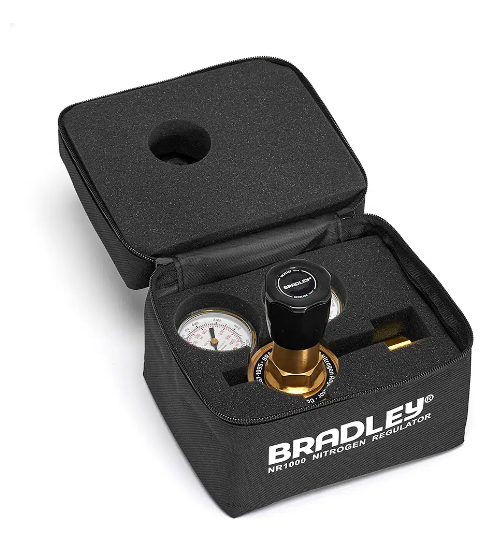
Bradley NR1000 regulator stored in a protective case to keep gauges and fittings safe in the van

Building Your Bradley Tool Kit

This is the section most people actually want: what should I buy first, and what should I add later? The best answer depends on whether you are an apprentice, a working installer, a service tech, or someone moving into heavier commercial work.

The key rule is this: build your kit around your most common failure points. If leaks are your pain, focus on flares, torque consistency, and pressure testing. If access and general reliability is your pain, focus on durable hand tools and workflow accessories that stop damage.

Another practical rule is to build the kit so it is easy to maintain. A tool that is always dirty, always rattling in the van, or always missing a piece will not stay “premium” for long. Good kits are boring because they are organised.

Essential Bradley tools checklist

Because we are keeping this in paragraphs, think of the essentials as three core “control” tools. The first is a stable nitrogen regulator for pressure testing workflows, because it helps you trust the early step that protects everything later. The second is a torque approach for flare nut consistency, because it removes guesswork on a common failure point. The third is a flaring tool that produces repeatable flares, because no torque tool can rescue a bad flare.

Then add the daily support layer: reliable hand tools and accessories that prevent rounded fittings and damaged fasteners. That support layer is what keeps your job moving when access is awkward and time is tight.

If you want to see how the essentials can be built into a sensible staged kit, the complete Bradley tool range guide helps you map essentials versus upgrades without buying the whole catalogue in one hit.

Apprentice starter recommendations

For apprentices, the main goal is building good habits. That usually means learning consistent tightening and learning clean flare preparation. Overpowered, “too fast” tools can actually make bad habits happen faster. A good starter kit supports control first, then speed later.

A sensible apprentice approach is to start with the tools that reduce the most common mistakes: a reliable flaring tool, a torque approach that supports consistent tightening, and basic hand tools that do not slip and damage fittings. Once the apprentice has the process, upgrading becomes safer because the technique is already stable.

If you are a leading hand, a good way to judge an apprentice kit is simple. Does it encourage calm, repeatable steps, or does it encourage rushing. The kit should make it easier to do the right thing, not easier to do the wrong thing quickly.

Professional complete setup

For working pros, a complete kit is about coverage and redundancy. You want the tools that cover your daily jobs, plus the tools that cover your “hard days”: heavier fittings, tighter access, or jobs where quality expectations are higher.

In a Bradley-focused kit, that usually means your nitrogen testing gear is dependable, your torque tools are consistent, your flaring setup is repeatable, and your accessories support storage and workflow rather than creating clutter.

If you are already running torque tools regularly, the Bradley torque wrench guide is a practical way to keep your setup aligned with real field use, especially when you are standardising across multiple job types.

Specialty tools for advanced work

Specialty tools make sense when your job mix demands them. If you do heavy commissioning and leak detection work regularly, upgrading your nitrogen testing workflow can save large amounts of time across a month. If you do high volumes of flare work, improving flare repeatability can save call-backs and reduce rework.

The trick is to add specialty tools when they solve a repeat pain point, not because they look impressive. Your kit should make your day smoother, not heavier. A good specialty tool is one that you reach for without thinking because it solves a problem you actually have.

Budget planning guide

Budgeting for tools is easiest when you link spending to time saved and rework avoided. If a tool upgrade saves you only a few minutes per job, but you do that job every day, that is meaningful over a year. If an upgrade is used once a month, it may still be worth it, but it should not come before your daily essentials.

A good Bradley kit plan is usually staged. Stage one is essentials: flare quality, torque consistency, and leak testing basics. Stage two is upgrades that improve speed and coverage. Stage three is redundancy and specialty tools that support heavier work or higher volumes.

This is also where “buy bradley tools australia” becomes a practical search, not a marketing one. You are not only buying a tool. You are buying the ability to keep that tool working. Plan the kit so you can maintain it, store it, and support it without drama.

Bradley HVAC Tools FAQs

Who is Bradley in HVAC tools? Bradley is positioned as a professional-grade HVAC tool brand focused on repeatable trade workflows like pressure testing, flaring, and controlled tightening, with an emphasis on tools that behave predictably day to day.

What is the Bradley NR1000 used for? The NR1000 is used for controlled nitrogen pressure testing and leak checking. Stable control helps you trust pressure-drop results and reduces commissioning uncertainty before evacuation and charging.

Why use torque wrenches on flare nuts? Because flare failures are often caused by under-tightening or over-tightening. A torque tool reduces guesswork and supports consistent tightening, especially when you are tired, rushed, or training an apprentice.

Can a torque wrench fix a bad flare? No. Torque consistency helps only after the flare is formed correctly. The best workflow is clean prep, consistent flare formation, then consistent tightening.

Conclusion: Invest in Bradley Quality

Bradley HVAC tools are usually chosen for one reason: tradies want consistency. Consistency in flares. Consistency in tightening. Consistency in pressure testing. When those steps are consistent, your work becomes calmer and more repeatable, and you spend less time dealing with avoidable leaks and call-backs.

If you are choosing where to start, focus on the steps that create the most pain when they go wrong. For many techs, that is torque consistency and flare quality. For many commissioning-heavy workflows, it is a reliable nitrogen testing setup that makes leak detection easier to trust.

And if you are doing your own “bradley tools review” as you build the kit, judge each purchase by one simple outcome: did it reduce the number of times you had to redo a step. If it did, it is doing its job. If it did not, it might be the wrong tool for your workflow, or it might mean a process issue still needs attention.

If you want to explore the range and match it to your workflow, you can shop Bradley tools Australia-wide. If you are unsure what suits your job mix, talk to our team to confirm compatibility before you commit. Contact us for a quote and we will help you build a staged kit that fits the way you actually work.

Bradley hvac toolsBradley nr1000Bradley tools australiaBradley tw4Bradley tw8Flaring toolHvac tools guideNitrogen regulatorPressure testing toolsTorque wrench hvac

Blog posts

View all

Why Choose Bradley Tools? A Practical HVAC Guide for Australian Tradies

Bradley HVAC ToolsRica Francia Macaspac

If you’re asking “why choose Bradley tools”, you’re really asking one trade question: will this gear make my work more repeatable and reduce call-backs. This guide breaks down what sets Bradley apart in real HVAC use—pressure testing confidence, consistent tightening, durable fit in tight access, and support that matters when tools live in vans, coastal air, dust, and humidity across Australia.

Bradley Tool Range Guide: Build a Complete HVAC Toolkit for Australian Tradies

bradley flaring toolRica Francia Macaspac

If you’re searching the Bradley tools range, you’re probably not chasing one “nice tool” — you’re building a system you can trust on real HVAC jobs. This guide breaks the Bradley range into the job steps that matter most: nitrogen pressure testing (NR1000), repeatable flare tightening (TW4/TW8 torque tools), and flaring + prep tools that keep copper connections consistent. We’ll also show a sensible kit-building order for Australian conditions, so you reduce call-backs, avoid mismatched gear, and keep your workflow calm and repeatable.

Bradley Torque Wrench Guide: TW4 vs TW8 for HVAC Flare Nuts in Australia

Australian HVAC ToolsRica Francia Macaspac

Bradley torque wrenches take the guesswork out of flare nut tightening, helping Aussie HVAC techs reduce leaks caused by over-torque and under-torque. This guide breaks down TW4 pre-set vs TW8 adjustable options, where each one fits on installs vs service work, and the simple technique, storage, and calibration habits that keep your tightening consistent and call-backs low.

Bradley NR1000 Guide: High-Pressure Nitrogen Regulator for HVAC Testing in Australia

bradley nitrogen regulatorRica Francia Macaspac

If you’re looking at the Bradley NR1000, you’re chasing one thing: pressure control you can trust. This guide explains what the NR1000 nitrogen regulator is built to do, how it helps with stable pressure testing and controlled purging, what to check for Australian cylinder and hose compatibility, and how to maintain it so your leak checks stay calm, repeatable, and reliable.

Bradley HVAC Tools Guide: Pro-Grade Tool Picks for Australian Tradies

Bradley HVAC ToolsRica Francia Macaspac

If you’re searching Bradley HVAC tools, you’re probably trying to cut down leaks, call-backs, and wasted hours — not buy another “nice looking” gadget. This guide breaks down the Bradley range in plain Aussie trade terms, including where NR1000 nitrogen regulators, TW4/TW8 torque wrenches, and RF100-style flaring tools fit in real installs, service, and commissioning. You’ll also learn how to build a staged Bradley kit based on the work you actually do, so your tools stay consistent, durable, and job-ready in Brisbane humidity, Sydney coastal air, and Melbourne cold snaps.

Propane Torch HVAC Guide: How to Choose the Right Torch for Copper Work in Australia

Copper brazingRica Francia Macaspac

A practical Propane Torch HVAC Guide for Australian tradies who want reliable heat for copper work without overspending. Learn what propane torch temperature really means on the job, how torch heads and flame shape change performance, when propane is the right daily fuel, and when it makes sense to upgrade to MAP-Pro—plus a clear propane vs MAP-Pro vs butane comparison and troubleshooting tips.