
Best Nitrogen Regulator for HVAC: Australian Buying Guide
If you are searching for the best nitrogen regulator for HVAC work, you are usually trying to solve a practical problem on site. You want stable pressure, accurate control, and gear you can trust when testing or purging a system. The wrong regulator slows you down. The right one makes the job predictable.
This guide breaks down what actually matters when choosing a nitrogen regulator in Australia. No fluff, no overhyped specs — just what works in real HVAC conditions.
If you want to compare real options while reading, review the full range of nitrogen regulators for HVAC work. It helps to see actual gauge layouts, fittings, and build quality before making a decision.
If you are not sure whether your regulator is even the right type for the gas and task, read our gas regulator compatibility guide first. If you are still deciding what to buy, our nitrogen regulator buying guide compares what actually matters for HVAC work in Australia.
If your regulator cannot hold steady pressure during testing, it is not accurate enough for HVAC work — even if it looks good on paper.
What Does a Nitrogen Regulator Actually Do?
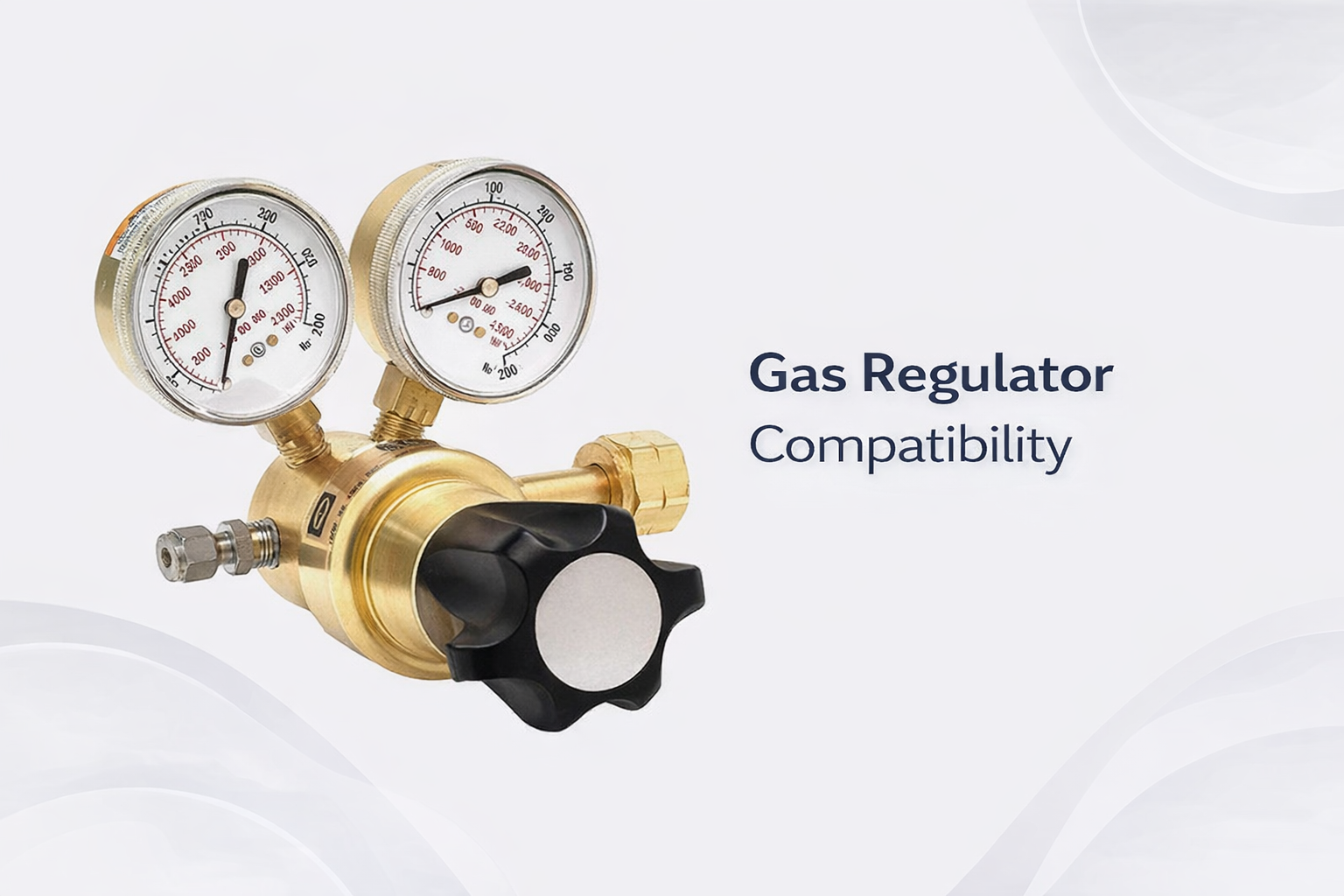
A nitrogen regulator reduces high cylinder pressure down to a controlled, usable output. In HVAC, that output is used for pressure testing, purging during brazing, and system diagnostics.
Nitrogen cylinders store gas at very high pressure. Without a regulator, that pressure would damage system components instantly. The regulator allows you to dial that pressure down precisely and safely.
That precision is what separates a good regulator from a frustrating one. Stable control means accurate leak detection. Poor control means wasted time and unreliable results.
Why Nitrogen Is Used in HVAC
Nitrogen is inert, dry, and stable. It does not react with system components, which makes it ideal for pressure testing and purging. During brazing, nitrogen prevents oxidation inside pipework. During testing, it allows you to safely pressurise a system and monitor for leaks.
This is why regulators designed for nitrogen must handle high pressure while maintaining fine control. Not all gas regulators can do this properly.
Key Features That Matter
The most important feature is pressure control. A regulator should allow smooth adjustment without sudden jumps. This is critical when stepping up pressure during leak testing.
Gauge clarity also matters. You need to read both cylinder pressure and outlet pressure quickly without second guessing. Poor gauge visibility slows you down on site.
Build quality is another major factor. Regulators are used in vans, on roofs, and in plant rooms. They get knocked around. A solid brass body and protected gauges make a difference over time.
Understanding Pressure Requirements
Most HVAC pressure testing is done within a controlled PSI range depending on the system. A good regulator allows you to increase pressure gradually and hold it steady.
If your regulator overshoots or drifts, your readings cannot be trusted. That leads to misdiagnosis or repeat testing.
Even a small pressure drop during testing can indicate a leak. That is why regulator stability is more important than maximum pressure rating.
Single Stage vs Dual Stage Regulators
Single-stage regulators reduce pressure in one step. They are simple and widely used in HVAC. Dual-stage regulators reduce pressure in two steps, offering more consistent output as cylinder pressure drops.
For most HVAC work, a high-quality single-stage regulator is sufficient. Dual-stage becomes more relevant in applications requiring extremely stable output over long periods.
Common Mistakes When Buying
One common mistake is choosing based on price alone. Cheap regulators often have inconsistent control and poor durability. That leads to more cost over time through replacements and lost time on site.
Another mistake is ignoring fittings. If the regulator does not match your cylinder or hose setup properly, you introduce unnecessary complications.
Some users also underestimate the importance of hose condition. Even the best regulator cannot perform properly with leaking or worn hoses.
Compatibility and Safety
Gas regulators are not interchangeable. Nitrogen regulators use specific fittings to prevent misuse. This is a safety feature, not an inconvenience.
If you are unsure about compatibility, refer to a gas regulator compatibility guide before connecting equipment.
For official guidance, refer to Safe Work Australia.
Before buying, it is worth checking whether your planned setup is correct for the gas and job. Our gas regulator compatibility guide explains why oxygen, nitrogen, CO2, and argon regulators should not be treated as interchangeable. Once you have the right unit, our nitrogen regulator setup guide will help you use it properly on site.
Safe gas work also depends on using the correct regulator for the gas involved. Our gas regulator compatibility guide explains why different gases use different regulators and fittings. If your workflow includes nitrogen pressure testing or purging, our step-by-step nitrogen regulator guide is the next practical read.
Real-World HVAC Scenario
A technician performing a pressure test notices inconsistent readings. The system appears to be leaking, but after replacing the regulator with a higher quality unit, the readings stabilise. The issue was not the system — it was the regulator.
This is a common scenario. Poor-quality regulators create false diagnostics.

Comparison Table
| Feature | Basic Regulator | Pro HVAC Regulator |
|---|---|---|
| Pressure Control | Inconsistent | Stable |
| Durability | Low | High |
| Gauge Quality | Basic | Clear & Accurate |
| Best Use | Light tasks | HVAC testing |
Choosing the Right Regulator for Your Work
If you are doing regular HVAC servicing, you need reliability more than anything else. A regulator that holds pressure consistently saves time and improves accuracy.
For occasional work, a basic regulator may be enough. For daily use, investing in a higher-quality unit makes more sense.
The best approach is to match the regulator to your workload rather than chasing features you do not need.
Maintenance Tips
Keep your regulator clean and dry. Avoid dropping it or leaving it exposed in the van. Inspect gauges and fittings regularly.
Check hoses often. Many performance issues come from hose leaks rather than the regulator itself.
If pressure drops during testing, isolate the regulator from the system to confirm whether the issue is the tool or the system.
If you are comparing real-world options after checking compatibility, see our best nitrogen regulator for HVAC buying guide. If you already have a regulator and want to set it up correctly, follow our step-by-step nitrogen regulator setup guide.
Conclusion
The best nitrogen regulator for HVAC is one that gives you stable control, accurate readings, and reliable performance on site. It should match your workflow and handle the conditions you work in daily.
To compare real options, review the full range of nitrogen regulators here .
FAQ
What PSI should I use for HVAC pressure testing?
It depends on the system and refrigerant. Always follow manufacturer guidelines.
Can I use any regulator for nitrogen?
No. Use a regulator specifically designed for nitrogen and HVAC applications.
How do I know if my regulator is faulty?
Unstable pressure or drifting readings are common signs.