
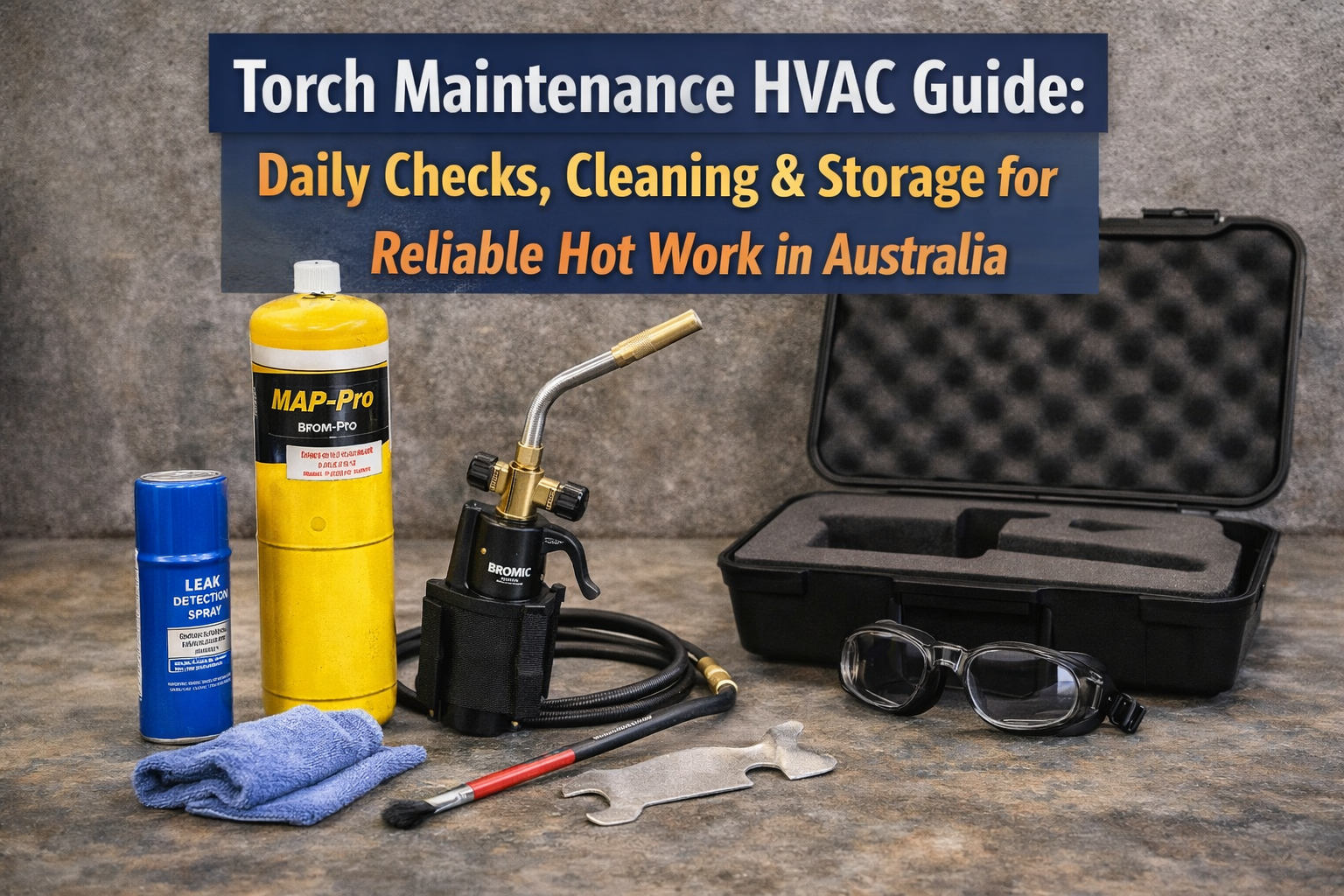
Maintain for Reliability: The HVAC Torch Maintenance Playbook
A torch is one of those HVAC tools that “just works”… right up until it doesn’t. When it fails, it usually fails at the absolute worst time: you’re halfway through a critical braze, balancing on a windy roof, or crammed into a tight plant room where you can’t afford a leak or a misfire.
The good news? Most torch failures aren't random; they are maintenance problems. Dirty tips, worn seals, rough threads, and tired igniters don't break overnight. They give you warnings: slow heat, a weak or sputtering flame, or a trigger that requires a "flick" to light. In Australia, our conditions push gear harder. Brisbane humidity accelerates grime, Sydney salt air eats threads, and Melbourne cold snaps make O-rings brittle.
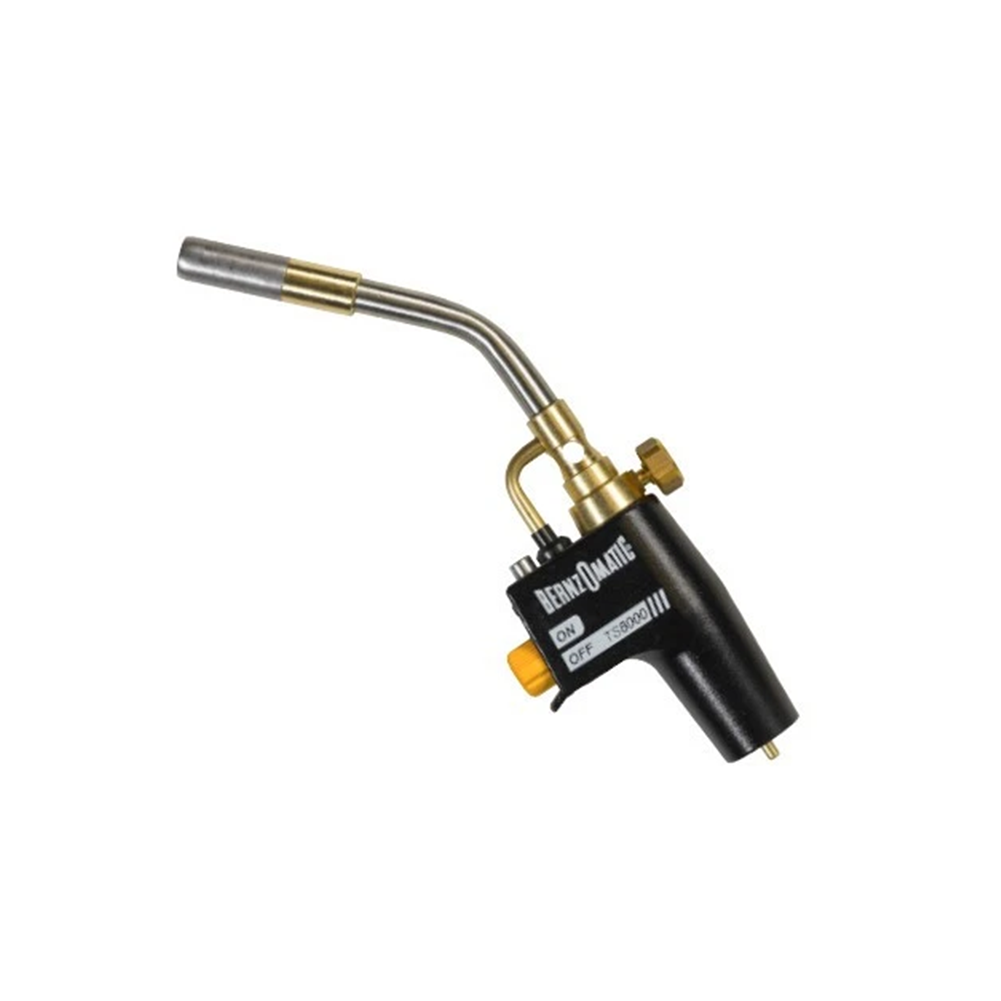
This guide is a practical routine to keep your torch reliable and safe. If you're just starting out, check our Heating Torch Basics to match these habits to your gear. If you need replacement parts now, browse our Quality Torch Equipment range.
Daily Torch Maintenance Checks
Daily checks aren't about being fussy; they're about avoiding safety risks and wasted gas. It's a 60-second routine that prevents a 2-hour headache.
- Pre-use Visual: Look for bent heads, cracked housings, or anything knocked out of alignment in the van.
- Thread Check: Dirty threads cause leaks. If they look gritty, wipe them before connecting the cylinder.
- Leak Testing: If you've just connected a fresh cylinder, hit the joint with a quick spray of leak detection solution.
- Valve Feel: Open and close the valve. It should be smooth and predictable, not sticky or "notchy."
- Ignition Test: Squeeze the trigger before you're on the ladder to ensure a strong, consistent spark.
Tech Specs: Most torch performance issues trace back to three points: tip cleanliness, thread/O-ring sealing, and igniter wear. If your flame shape changes or heat-up time slows, check these three first.
Cleaning Your Torch Properly
Cleaning keeps gas flow stable. A torch can look clean on the outside but be choked with carbon on the inside.
Tip and Nozzle Maintenance
If your flame is sputtering or turning yellow, the tip is likely partially blocked. Use a soft brush or dedicated tip cleaner. Never poke random wires into the orifice, as you'll distort the opening and ruin the flame shape forever.
Common Torch Problems & Solutions
| Problem | Likely Cause | Practical Fix |
|---|---|---|
| Won’t Ignite | Blocked tip or weak Piezo igniter. | Clean the nozzle; check for spark. |
| Weak Flame | Near-empty cylinder or clogged valve. | Swap cylinder; check for pressure drop. |
| Sputtering | Moisture or contaminated fuel. | Purge line; check connection seals. |
| Yellow Flame | Blocked air inlets (poor air mix). | Clean grime out of the venturi inlets. |
Storage Best Practices
Storage is maintenance. A torch rolling around in a grit-filled ute tray will fail prematurely.
- Keep it Cased: Always store your torch in a protective case to keep dust out of the air inlets.
- Valve Safety: Ensure cylinder valves are completely closed and the torch is disconnected if being stored for long periods.
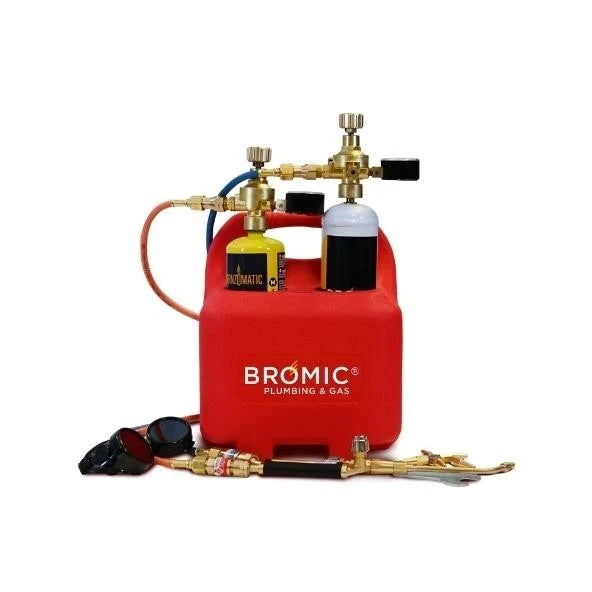
- Hose Care: If using a hose setup, avoid tight kinks. Hard bends under heavy tools will eventually cause internal cracking.

Keep Your Torches Working
The simplest routine is the most effective: quick daily checks on threads and seals, light cleaning after use, and proper storage. When something feels off—trust that signal. A sputtering flame today is a failed joint tomorrow.
Need help matching parts or finding a new setup? Shop our full range of Portable Torches and Accessories. If you're unsure about compatibility, talk to our team to ensure your gear stays safely on the tools.
Frequently Asked Questions (FAQ)
How do I clean a blocked HVAC torch tip?
Use a soft-bristled brush or a dedicated torch tip cleaner. Avoid using hard wires or drills, as enlarging the orifice even slightly will ruin the flame's precision and heat density. If cleaning doesn't work, the tip likely needs replacement.
Why is my trigger-start torch not sparking?
This is usually due to carbon buildup on the igniter electrode or a loose wire. Clean the ignition area with a dry cloth. In humid environments like Brisbane, corrosion can also kill the Piezo spark; if cleaning fails, the igniter unit or the torch head usually needs replacing.
What should I do if I find a leak at the cylinder connection?
Immediately close the valve and disconnect the cylinder. Check the threads for grit or damage and inspect the O-ring. If the O-ring is flattened or cracked, replace it. Never over-tighten a connection to "force" a seal, as this will only chew the brass threads.
How often should I replace my torch hoses?
Inspect hoses daily for cracks, cuts, or bulges. In the Australian sun and van heat, rubber degrades faster. As a rule of thumb, replace any hose that shows signs of "checking" (fine surface cracks) or if you suspect it has been severely kinked or pinched.