
Surface Temperature Measurement in HVAC: Australia Guide
Surface temperature measurement is woven into almost every aspect of HVAC/R service work. Refrigerant charging, compressor diagnostics, coil performance checks and motor overheating detection all depend on measuring the temperature of a physical surface rather than the air around it. That direct contact measurement gives technicians the information they need to confirm system health, identify faults and verify that a job has been completed correctly.
This guide maps the main surface temperature measurement tasks in HVAC work to the probes and techniques that deliver accurate results. It covers pipe temperature measurement for charging, motor and compressor surface monitoring, coil and heat exchanger diagnostics, refrigerant charging workflow, and outdoor environment considerations.
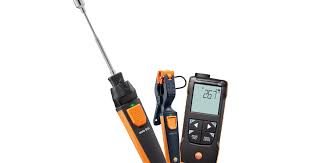
For the full Testo instrumentation range used across these applications, browse Testo HVAC instruments and probes available from HVAC Shop.
Written by Rica Francia Macaspac, HVAC Shop content writer, in consultation with Aussie HVAC tradies and industry experts. Published: May 2026 · Last reviewed: May 2026.

Why Surface Temperature Matters in HVAC
Refrigerant charging accuracy
The most measurement-sensitive task in HVAC service work is refrigerant charging. Both the superheat and subcooling methods require accurate pipe surface temperatures from suction and liquid lines.
An error of 2°C in your pipe temperature reading produces a corresponding error in your superheat or subcooling calculation. Undercharge reduces efficiency and risks compressor overheating. Overcharge risks liquid flood-back to the compressor. Neither outcome is acceptable on a properly completed job.
Contact surface probes measure the actual pipe surface temperature, which is the physical quantity you need for these calculations. Infrared thermometers are unreliable on refrigerant lines because the emissivity of copper and aluminium pipe finishes is inconsistent and often low. The IR gun reads less heat than is actually present at the pipe surface, and that error flows directly into your charge decision.
Motor health monitoring
Electric motor surface temperature is one of the earliest indicators of motor problems. A motor running hot from bearing failure, winding insulation breakdown, incorrect phase balance or blocked airflow will show elevated casing temperatures before other symptoms become obvious.
Monitoring motor surface temperatures at consistent reference points on the motor frame gives a baseline for each unit. That baseline makes trend-based fault detection possible across multiple service visits, and can catch a developing problem weeks before it becomes a breakdown.
Compressor diagnosis
Compressor surface temperature measurement helps diagnose issues that are not obvious from pressure readings alone. A compressor running abnormally hot on its casing may be experiencing excessive heat of compression, loss of internal cooling from insufficient gas flow, oil breakdown or overcharge conditions.
Surface temperature measurement at the compressor body fills in the picture that pressure readings alone cannot provide. This is particularly valuable on older commercial equipment where a single data point rarely tells the full story.
Heat exchanger performance
Coil surface temperature measurements verify that heat transfer is happening as expected. A condenser coil running significantly hotter than ambient-plus-load calculations suggest indicates fouling, airflow restriction or refrigerant distribution problems.
Evaporator coil surface temperatures help identify frost formation and refrigerant distribution issues before they escalate. Catching a progressive frost build-up early saves a service callback and protects the compressor from extended low-suction-pressure operation.
Safety monitoring
Surface temperature monitoring serves a safety function across multiple HVAC applications. Identifying hot spots on electrical components, monitoring bearing temperatures on large equipment, verifying that thermal insulation is performing as specified, and confirming that cooling systems are keeping critical components within safe operating ranges are all tasks where a surface probe is the right tool.
Probe Selection by Application
The right probe type is the foundation of accurate surface temperature measurement. Using the wrong probe geometry for an application introduces systematic error that no amount of technique will fix.
| Application | Recommended Probe | Key Reason |
|---|---|---|
| Suction/liquid line charging | Clamp probe | Hands-free, consistent contact on round pipe |
| Motor and compressor casings | Magnetic surface probe | Attaches to ferrous housings, stays in place during operation |
| Evaporator/condenser coil fins | Angled surface probe | Reaches between fins without stressing the cable |
| General surface diagnostics | Fast-action flat surface probe | Quick response, versatile across flat surfaces |
| Outdoor/rooftop/marine | Waterproof PT100 probe | IP-rated for moisture, stable over long cable runs |
| Tight spaces, confined plant rooms | Angled surface probe | Bent tip navigates clearance gaps without forcing |
Measuring Pipe Surface Temperatures
Pipe surface temperature measurement is the most common surface measurement task in HVAC/R service work. The two main applications are refrigerant line temperature for charging calculations and discharge line temperature for compressor diagnostics.

Suction line temperature (superheat)
The suction line carries low-pressure refrigerant vapour from the evaporator outlet to the compressor inlet. Combining the temperature at this point with the saturation temperature derived from suction pressure gives you the suction line superheat, which tells you whether the evaporator is feeding the compressor correctly.
Measure as close as practical to the evaporator outlet, before the suction line picks up significant ambient heat gain from the surrounding air or the roof space it runs through. On Brisbane and QLD jobs where roof spaces can hit 60°C or more in summer, heat gain on an uninsulated suction line run is substantial. Measurement point placement matters more than many techs realise.
The pipe clamp probe for suction and liquid line temperatures wraps around the suction line and grips in place without needing to be held. Both hands stay free for the manifold gauges while you wait for stable readings. Once the clamp is positioned, insulate it to stop ambient air from pulling the reading toward air temperature.
Liquid line temperature (subcooling)
The liquid line carries high-pressure liquid refrigerant from the condenser to the expansion device. Comparing the temperature at the condenser outlet with the condensing saturation temperature at condensing pressure gives you the liquid line subcooling. That reading confirms the condenser is fully condensing the refrigerant and that adequate subcooling exists to prevent flash gas forming in the liquid line before it reaches the expansion device.
Use the same clamp probe on the liquid line close to the condenser outlet. Liquid line temperatures are typically well above ambient. In a split system condenser, the liquid line might sit at 40 to 55°C on a hot day, so thermal insulation is less critical than on the cold suction line. It is still worthwhile if you want the most accurate reading possible.
Discharge line temperature
Discharge line temperature monitoring is a key diagnostic tool for compressor health. Normal discharge temperatures vary by refrigerant and system design, but values above 120 to 130°C on common refrigerants are generally considered elevated and warrant investigation.
Causes of high discharge temperature include high compression ratio from high condensing pressure and low suction pressure, low suction superheat indicating inefficient evaporation, and refrigerant undercharge. On Darwin and outback WA jobs in peak summer, ambient-driven high condensing pressure is the most common culprit and worth checking first.
Tradie Pro Tip: ARCtick-licensed technicians must handle refrigerant in accordance with Australian regulations. Accurate pipe surface temperature measurement is a core part of doing a compliant, accurate charge. It is not just best practice. If your ARCtick certification needs renewal, visit arctick.org to check your licence status.
Motor and Compressor Surface Monitoring

Motor housing temperature
Electric motor surface temperature measurement requires a probe that maintains consistent contact with a curved, often painted motor casing. A magnetic mounting probe is the most practical solution for motors on ferrous frames. The magnet holds the probe in position on the motor casing and keeps it there during operation, so you can take the temperature reading with the motor running under load.
The magnetic surface probe for motor housings attaches directly to steel motor casings and maintains stable contact during operation. Measure at a consistent reference point on each unit, typically the motor end shield near the drive end bearing and the opposite end shield near the fan end bearing. Taking readings at the same spot each visit makes the trend data meaningful.
Normal operating temperatures for motor surfaces vary widely with motor size, class and loading. As a practical guide, if the motor casing is too hot to touch comfortably at around 60°C, a check of motor current, voltage balance and airflow is warranted alongside the surface temperature reading.
Compressor surface temperature
For compressor casings, measure at the dome (top of a hermetic compressor) and at the suction and discharge tube locations. Elevated dome temperature is one of the earliest signs of refrigerant migration into the compressor during off-cycles, which causes the compressor to run hot on restart as refrigerant boils off.
When suction tube temperature reads significantly higher than suction line temperature, it can indicate the suction gas is being heated inside the compressor housing before reaching the compression chambers. These temperature differentials are easy to miss without a probe placed at the right location on each service visit.
Coil and Heat Exchanger Temperatures

Evaporator coil surface temperature
Evaporator coil surface temperature gives you an indication of refrigerant distribution across the coil, frost formation conditions and the overall heat absorption rate of the evaporator. Measuring at multiple points along the coil face at the inlet, mid-point and outlet helps identify refrigerant distribution problems before they become visible faults.
A cold patch at the inlet with rapid warming toward the outlet suggests the refrigerant is flashing to vapour too quickly and not absorbing heat efficiently across the full coil face. Reaching between coil fins to measure fin surface temperature typically requires a probe built for tight clearance. The angled surface probe for confined HVAC spaces is designed for exactly this kind of access. The angled tip reaches into the fin spacing without forcing the cable through at an angle that would stress the connection.
Condenser coil surface temperature
Condenser coil surface temperature measurement helps verify heat rejection performance. A condenser coil running much hotter than the calculated condensing temperature suggests poor air circulation, fouling on the coil face or refrigerant distribution problems in the circuit.
Measure across the coil face at several points to build a picture of heat distribution. On Sydney coastal installations where salt deposits build up on the coil face over time, a pattern of uneven surface temperatures is often one of the first signs of partial coil fouling, showing up before any visual deposit becomes obvious.
Frost formation monitoring
Evaporator coil frost formation occurs when coil surface temperature drops below 0°C and surface moisture freezes. Monitoring coil surface temperature during operation gives early warning of defrost cycle timing issues, airflow restriction problems and low suction pressure conditions that will lead to progressive frost build-up if left unaddressed.
Refrigerant Charging with Surface Probes
Both charging methods most commonly used in Australian HVAC/R work, the superheat method and the subcooling method, rely on accurate surface temperature measurement. Getting that measurement right is not optional.
Why contact probes beat infrared guns for charging
Infrared thermometers are convenient but systematically unreliable for refrigerant pipe temperature measurement, for three distinct reasons.
First, emissivity errors. Copper and aluminium lines have variable emissivity depending on age, surface finish and oxidation. IR guns calibrated for standard emissivity (typically 0.95) will read incorrectly on reflective metal surfaces, and the error compounds as the pipe surface weathers over time.
Second, angle errors. IR guns are sensitive to measurement angle. At anything other than perpendicular to the surface, the reading picks up reflected radiation from the surroundings rather than heat emitted by the pipe itself.
Third, ambient radiation interference. The gun picks up heat radiating from nearby surfaces such as condenser casings, roof decks and adjacent equipment, and can add it to the pipe reading. On a rooftop job in WA in January, a roof deck reflecting heat at a copper pipe is enough to throw your superheat reading by several degrees.
A contact probe with good thermal coupling removes all of these variables. The reading reflects the pipe surface temperature, not an approximation based on infrared emissions. For the pressure side of the charging calculation, a full set of refrigerant gauges for superheat and subcool checksManifold Gauge, AC Gauges & Air Conditioning Gauges provides the pressure measurements needed to complete the workflow.
Did You Know? The same polished copper suction line can give an IR gun reading that is 5 to 10°C off the true surface temperature depending on oxidation level, measurement angle and surrounding heat sources. Over a charging job, that error feeds into a refrigerant quantity decision that affects long-term efficiency and compressor life. Contact measurement removes that variable entirely.
Outdoor and Harsh Environment Applications
Rooftop and outdoor condenser units
Outdoor HVAC equipment is exposed to sun, rain, condensation and cleaning water. Standard surface probes with no IP rating should not be used where the probe body may be exposed to water. Water ingress can cause measurement errors through leakage currents and will damage the probe over time.

For permanent or semi-permanent measurement points on outdoor equipment, or in any application where the probe will regularly encounter moisture, an IP-rated waterproof probe provides the protection needed. The robust waterproof PT100 surface probe uses a PT100 resistance temperature detector rather than a Type K thermocouple. PT100 sensors are inherently more stable over long cable runs and in wet conditions, and the sealed construction keeps moisture out.
Note that PT100 probes require a meter with a PT100 input and are not compatible with Type K thermocouple meter inputs. Check your instrument before purchasing.
Marine and coastal environments
Marine environments combine moisture exposure with salt air, which is corrosive to standard probe materials over time. Waterproof, sealed probe designs with corrosion-resistant probe bodies are essential for any measurement application in marine HVAC or refrigeration work. Gold Coast marina installations and Sydney harbourside plant rooms are typical cases where a standard probe will degrade quickly without proper IP protection.
Tech Specs: PT100 probes and Type K thermocouple probes use different connectors, different measurement principles and require different meter inputs. They are not interchangeable. Always confirm your meter's input specification before purchasing a probe. Using a PT100 probe on a Type K input, or vice versa, will give incorrect readings with no error indication on the meter display.
Common Surface Temperature Measurement Mistakes
Poor surface contact
The single most common source of error in surface temperature measurement is insufficient or inconsistent contact between the probe tip and the surface. A probe loosely touching a surface rather than making firm contact will read somewhere between the surface temperature and the ambient air temperature, often several degrees away from the true value.
Use spring-loaded probes for consistent contact pressure. On pipe surfaces, use a clamp probe. On ferrous surfaces, use a magnetic probe. Where possible, apply thermal paste to fill micro-gaps between the tip and the surface and improve thermal coupling.
Forgetting insulation over the probe
On cold suction lines, failing to insulate the probe and surrounding pipe section is one of the largest single sources of measurement error. If the probe is left exposed, it will equilibrate toward ambient air temperature rather than pipe temperature. This is particularly significant in Melbourne where cold-snap ambient temperatures sit well below a warm suction line, creating a strong thermal gradient between the probe and the surrounding air.
The fast-action surface probe for rapid stabilisation reduces the time needed to reach a stable reading, but it does not eliminate the need for insulation over the probe on cold surfaces.
Ambient heat interference
Measuring a pipe surface in direct sunlight without shading the measurement point can add several degrees to the reading. Similarly, measuring close to a heat source such as a fan discharge, a combustion appliance or a condenser outlet without accounting for the ambient heat loading on the probe will skew the result.
Using the wrong probe type
Using a surface probe for air temperature measurement, or pressing an air probe against a pipe surface, gives results that are systematically different from what you need. Each probe is geometrically and thermally optimised for its intended application. Refer to the probe selection table earlier in this guide to match each task to the right tool.
Insufficient stabilisation time
Reading too quickly before the probe has reached thermal equilibrium with the surface gives a reading somewhere between the probe's starting temperature, often ambient air, and the true surface temperature. This is a particularly common error when moving between many measurement points quickly. Allow each reading to stabilise fully before recording, and use a temperature measurement tool that displays a stable trend rather than a snapshot value.
Frequently Asked Questions: Surface Temperature Measurement in HVAC