
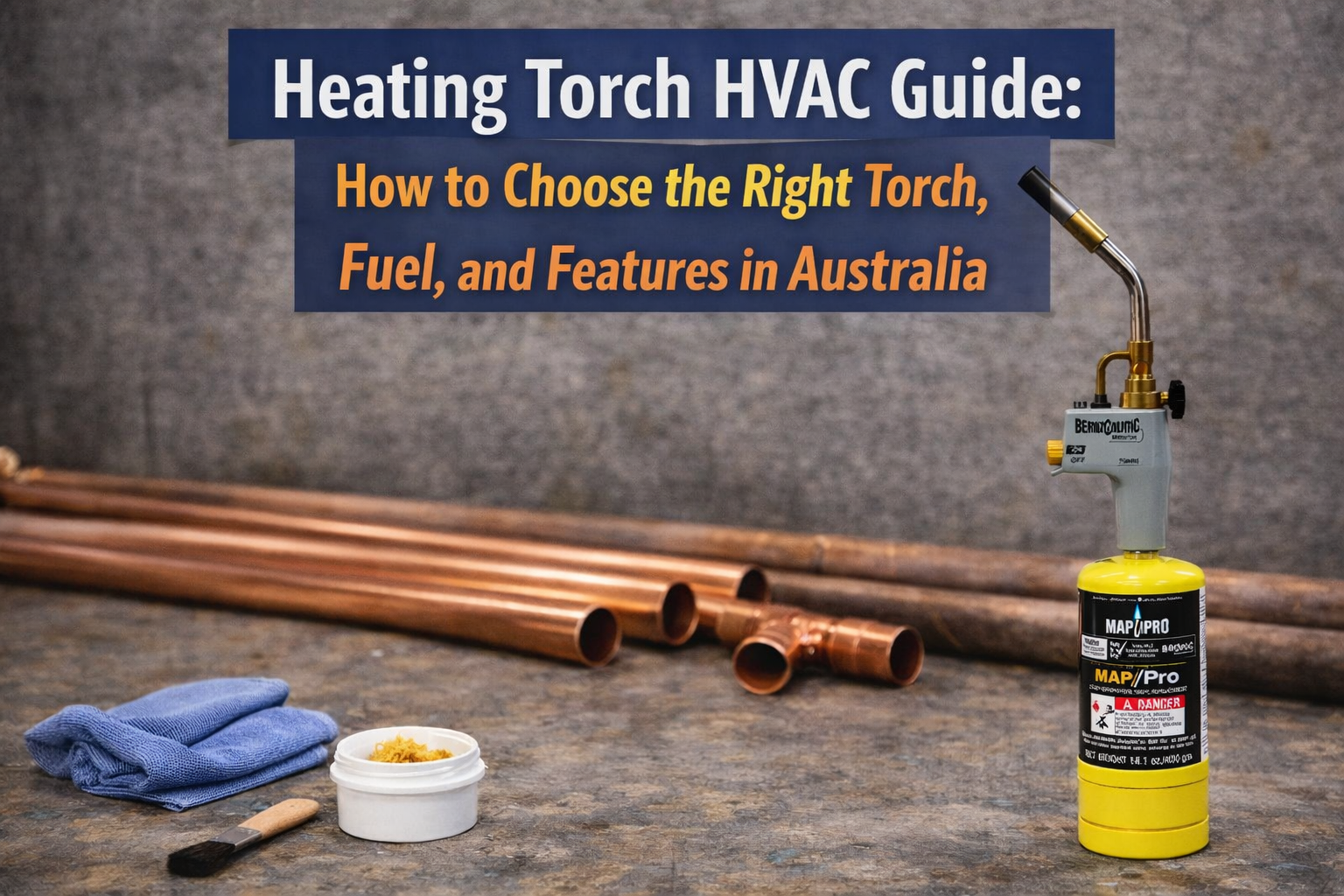
Essential Heat for Professional Work: The Aussie HVAC Torch Guide
In HVAC, a reliable heat source isn’t a “nice to have”—it’s a daily survival tool. Whether you’re brazing copper lines, sweating fittings, freeing a seized valve, or neatly warming shrink tubing, you need a heating torch that does exactly what you tell it to do.
The problem is that treating “a torch as just a torch” is exactly how tradies lose time and money. The wrong torch can make a simple 3/8" joint take forever to heat up. It can mercilessly overheat nearby valves, scorch insulation, or leave you with a cold, weak braze that is guaranteed to leak. On a busy week, that translates directly into unpaid call-backs and blown schedules.
This guide is engineered to answer the real-world questions Aussie tradies ask. Which torch type actually suits copper work? What fuel makes sense for a residential split versus a commercial cool room? What features actually matter when you’re fighting Sydney coastal winds, Brisbane humidity, or a freezing Melbourne morning where your hands are too stiff to use a manual striker?
If you want to skip the reading and see the gear, start with our Portable Gas Torches for HVAC collection.
What is an HVAC Heating Torch?
A heating torch is a portable tool that mixes compressed fuel gas with air (or pure oxygen) to produce a controlled, directional flame. In the HVAC trade, that flame is used almost exclusively for brazing copper refrigeration lines. You need a flame that you can aim precisely, adjust infinitely, and keep stable in a breeze. That is how you get clean heat into the copper, pull your silver alloy deep into the cup of the fitting, and avoid cooking the surrounding area.
Heating vs. Welding: Know the Difference
A heating torch is often confused with a welding torch. The difference is the objective. Welding melts the base metals together. In HVAC brazing, you only heat the base metal (copper/brass) enough to melt the filler alloy (silver solder), drawing it into the joint via capillary action. You aren't trying to melt the pipe; you are trying to heat it evenly.
Types of Heating Torches for HVAC
There is no single “best” heating torch. The right tool depends on whether you spend your days doing light residential soldering, standard split-system brazing, or heavy commercial pipework.
Single-Fuel Torches (MAP-Pro / Propane)
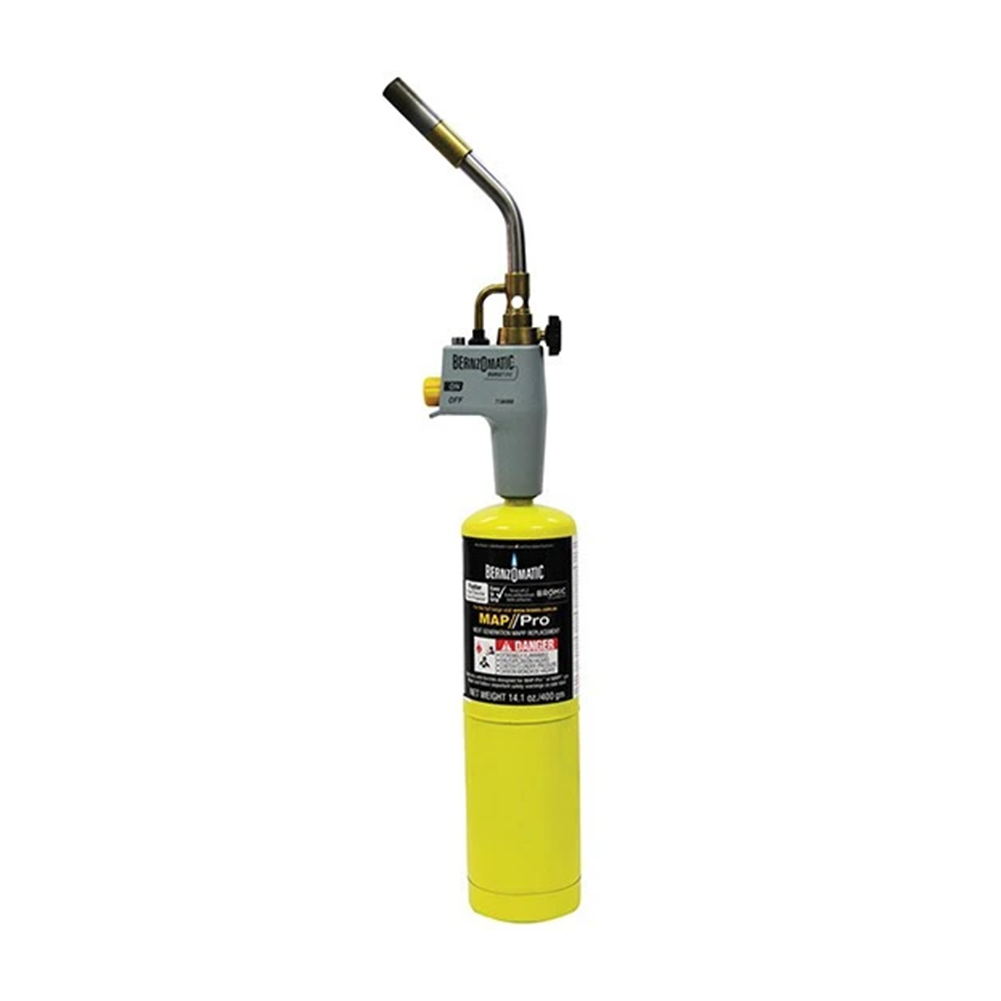
A single-fuel torch screws directly onto a disposable gas cylinder. Because they are lightweight and require zero setup, they are the absolute go-to for service vans. For HVAC brazing, tradies almost universally step up to MAP-Pro style fuel over standard propane. MAP-Pro burns hotter and transfers heat significantly faster, drastically reducing the time spent hovering a flame over the copper.
For a deeper dive into fuel choices, read our guide to MAPP Gas for Professional Work.
Oxy-Fuel Torches (Oxy-MAP / Oxy-Acetylene)
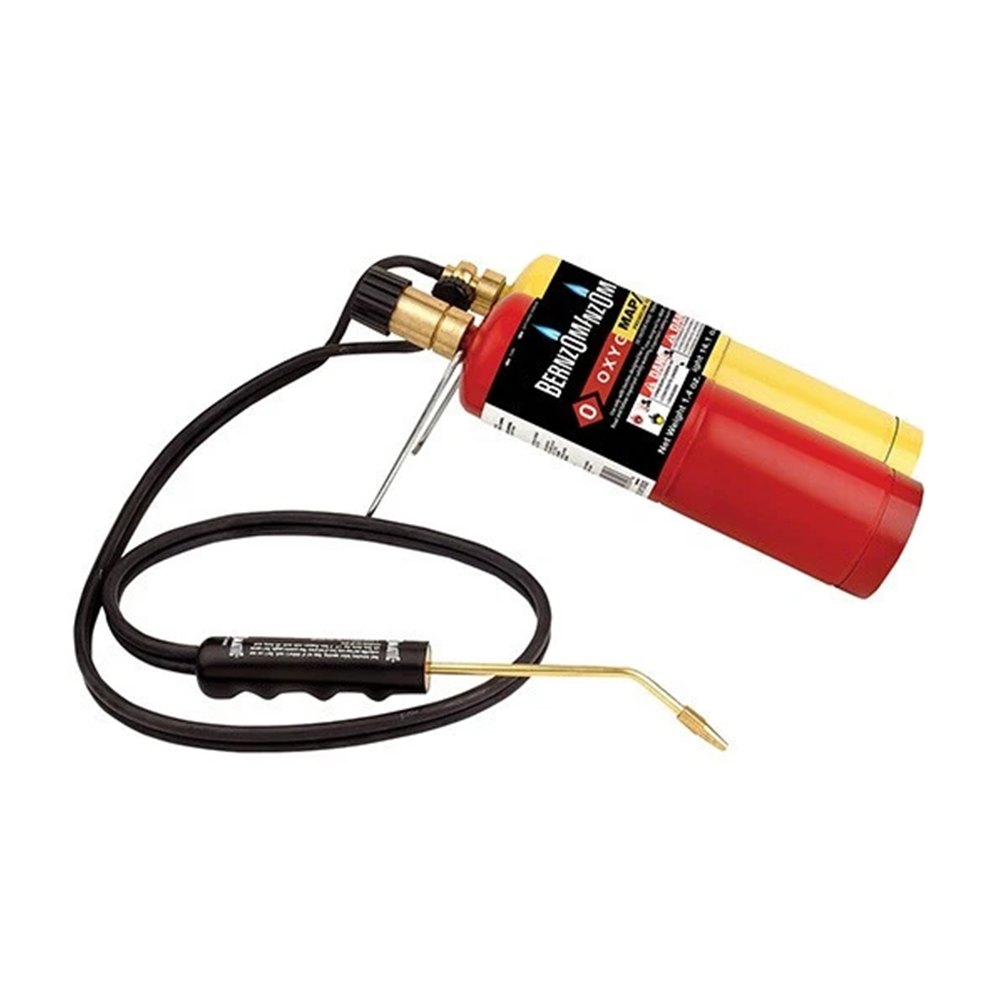
Oxy-fuel systems introduce a dedicated oxygen cylinder to the mix. When you add pure oxygen, flame temperatures skyrocket. If you are brazing thick copper (7/8" and above), working on heavy brass valve bodies, or fighting brutal coastal winds, an Oxy-fuel setup gets the heat in fast before it can bleed away.
Fuel Type Comparison Table
Fuel choice dictates how fast you can work. This table breaks down the common options. (Note: Flame temperatures are maximums in ideal conditions. Real-world heat transfer depends heavily on wind, torch head design, and copper thickness).
| Fuel Type | Approx. Temp | Best Fit Applications | Portability |
|---|---|---|---|
| Propane (Air-Fuel) | ~1980°C | Light heating, small soldering, general site tasks. | Excellent |
| MAP-Pro (Air-Fuel) | ~2020°C | Standard HVAC copper brazing, faster heat transfer. | Excellent |
| Oxy-Fuel (Oxy+MAP) | ~3300°C | Heavy brazing, thick commercial copper, high-wind jobs. | Limited (Requires 2 bottles) |
Tradie Tip: Cost isn't just the price of the cylinder. If a cheaper fuel (like Propane) adds five minutes of heating time to every braze on a massive VRV install, it is actually costing your business a fortune in lost labour hours. Buy MAP-Pro for copper work.
Essential Torch Features
A "professional" torch is separated from a cheap hardware store burner by its features:
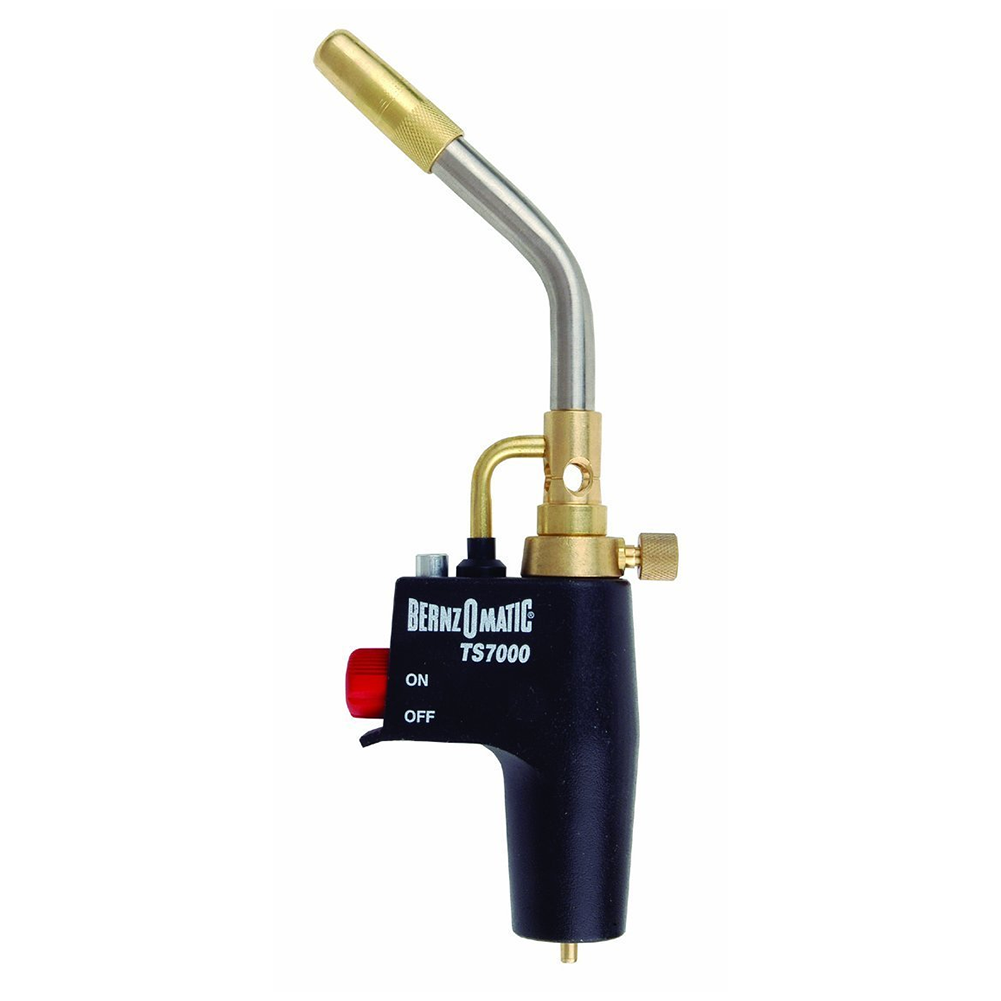
- Trigger-Start Ignition: Saves massive amounts of time and gas. You squeeze the trigger to light it, and release it to extinguish. It frees up your other hand and stops you from fumbling for a striker in a cramped roof.
- Swirl Flame Heads: A swirl flame wraps around the copper pipe, heating it evenly from all sides. A "pencil flame" creates severe hot spots and makes pulling silver solder incredibly difficult.
- Flame Lock Button: If you are brazing a large commercial joint, holding the trigger down will cramp your hand. A flame lock allows for continuous, comfortable operation.
- Adjustable Flame Control: You need a valve that throttles down smoothly for delicate work near sensitive TX valves, and opens up wide for 7/8" suction lines.
Common Brazing Mistakes (And How to Fix Them)
The most common mistake is heating the filler rod instead of the copper fitting. If you melt the rod with the flame, it will ball up on the outside of the pipe and create a weak, ugly joint. You must heat the copper fitting until it is glowing cherry red; the heat of the base metal should melt the silver alloy, drawing it deep into the joint via capillary action.
The second most common mistake is forgetting to purge with nitrogen. Heating copper creates black oxidation scale inside the pipe. That scale flakes off and destroys compressors. Always trickle nitrogen through the lines while brazing.
For a step-by-step breakdown on technique, read our guide on Copper Brazing Techniques.
Popular Torch Brands in Australia
When buying a torch, you are buying into an ecosystem. You need a brand where you can easily source replacement tips, O-rings, and compatible gas cylinders anywhere in Australia.
Bernzomatic
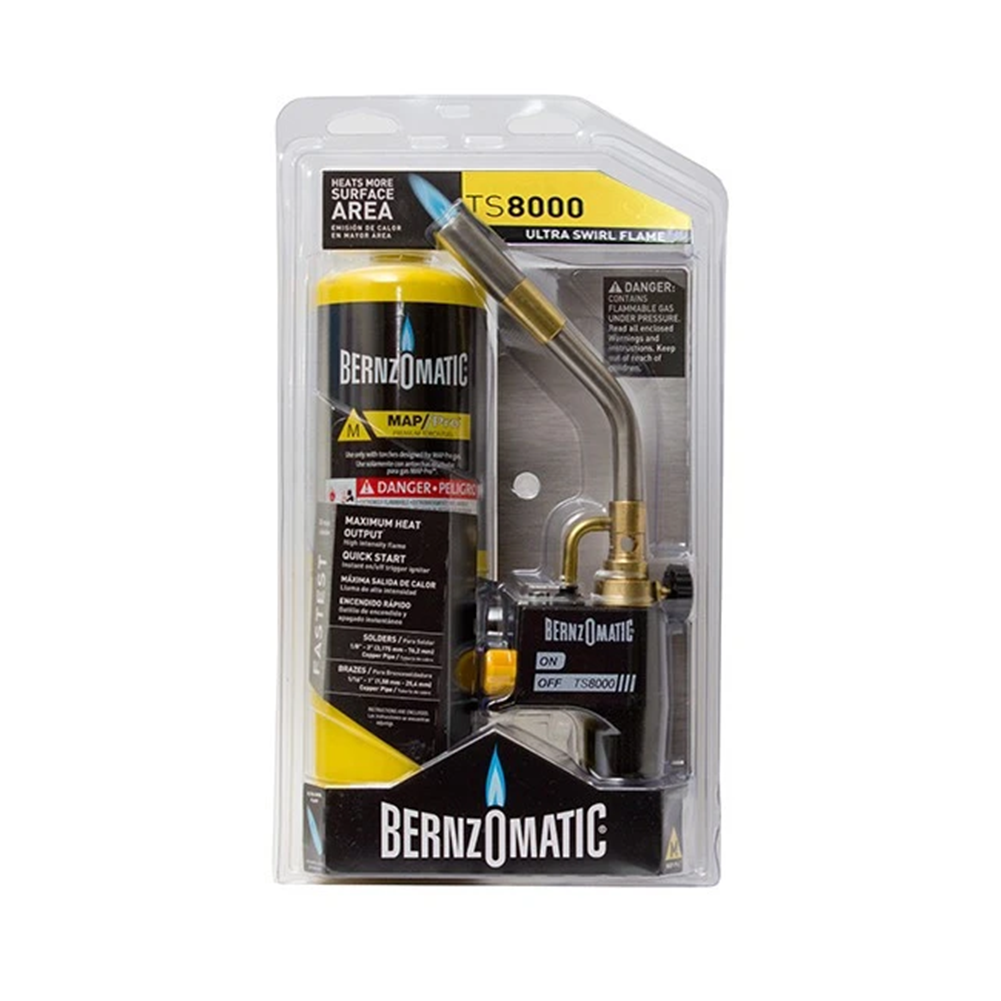
The undisputed king of the trigger-start single-fuel torch. If you need intense heat for rapid split-system installs, the Bernzomatic Oxy MAP-Pro Kit or their standard TS8000 style trigger heads are the industry benchmark for reliability.
Bromic Oxyset
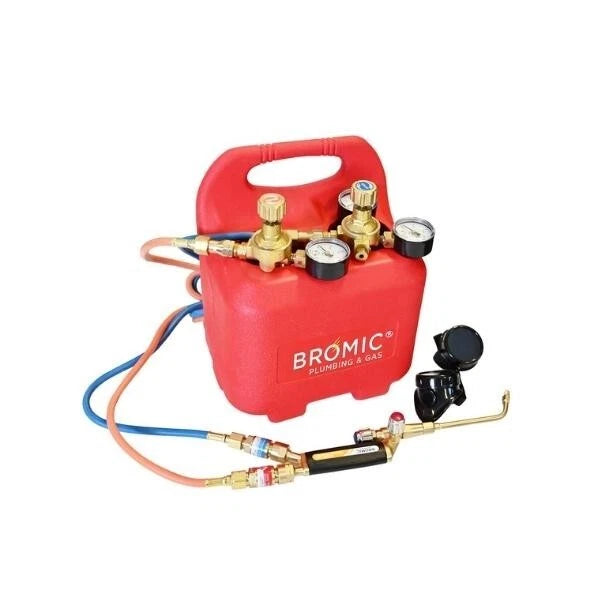
For tradies stepping into heavy commercial refrigeration, the Bromic Oxyset Portable Kit provides true Oxy-fuel heat in a package that is vastly easier to drag onto a roof than traditional massive G-size cylinders.
Choose Your Professional Torch
Your heating torch quietly dictates how smoothly your day goes. If you mainly install standard residential split systems, a high-quality trigger-start MAP-Pro torch is the ultimate balance of speed, heat, and portability. If you are piping up massive commercial VRV systems, you'll want to seriously consider the brute force of a portable Oxy-MAP kit.
Ready to upgrade your hot-work setup? Shop our full range of Portable Gas Torches here. If you aren't sure which kit suits your specific workload, contact our team to ensure you get the right gear the first time.
Frequently Asked Questions (FAQ)
What is the best fuel for HVAC brazing?
For the vast majority of HVAC copper brazing, MAP-Pro is the superior fuel choice. It burns significantly hotter than Propane, meaning it transfers heat into the copper joint much faster. This reduces the time you spend hovering the flame over the pipe, minimizing internal oxidation and preventing damage to nearby valves.
What is the difference between a swirl flame and a pencil flame?
A swirl flame forces the gas to spin as it exits the nozzle, creating a wide, enveloping flame that wraps entirely around a copper pipe. This heats the joint evenly from all sides, which is critical for brazing. A pencil flame is a sharp, narrow point of heat designed for precision soldering, but it will create severe hot-spots if used on HVAC copper.
Why do I need a trigger-start torch?
Trigger-start torches feature a built-in Piezo igniter, allowing you to light the flame instantly with one hand. When you release the trigger, the flame dies immediately. This is a massive safety and efficiency upgrade, saving gas and stopping you from having to fumble for a manual spark striker while balanced on a ladder.
When should I use an Oxy-fuel setup?
You should step up to an Oxy-fuel kit (like an Oxy-MAP setup) when you are regularly brazing thick commercial copper (7/8" and above), working on massive brass valve bodies, or brazing on coastal rooftops where high winds constantly blow out standard single-fuel torches.
Why does my filler rod ball up on the outside of the pipe?
This happens because you are melting the filler rod with the flame instead of the base metal. You must heat the copper fitting until it is glowing cherry red; the heat radiating from the copper is what should melt the silver alloy, allowing capillary action to suck the liquid metal deep into the joint.