
Air Conditioner Recharge Kit for Home: Is DIY Safe or a Costly Mistake?
If your air conditioner is not cooling like it used to, it is natural to wonder if it just needs a quick refrigerant top-up. That is why many homeowners search for an air conditioner recharge kit for home, hoping for a simple DIY fix.
But here is the reality: home air conditioning systems are not like car AC systems. They are sealed systems, and if refrigerant is low, there is usually a leak. Simply adding refrigerant without fixing the cause is not a proper solution.
This guide walks through what recharge kits actually are, when they make sense, when they do not, and what you can actually do at home to improve your system's performance.
What Is an Air Conditioner Recharge Kit?
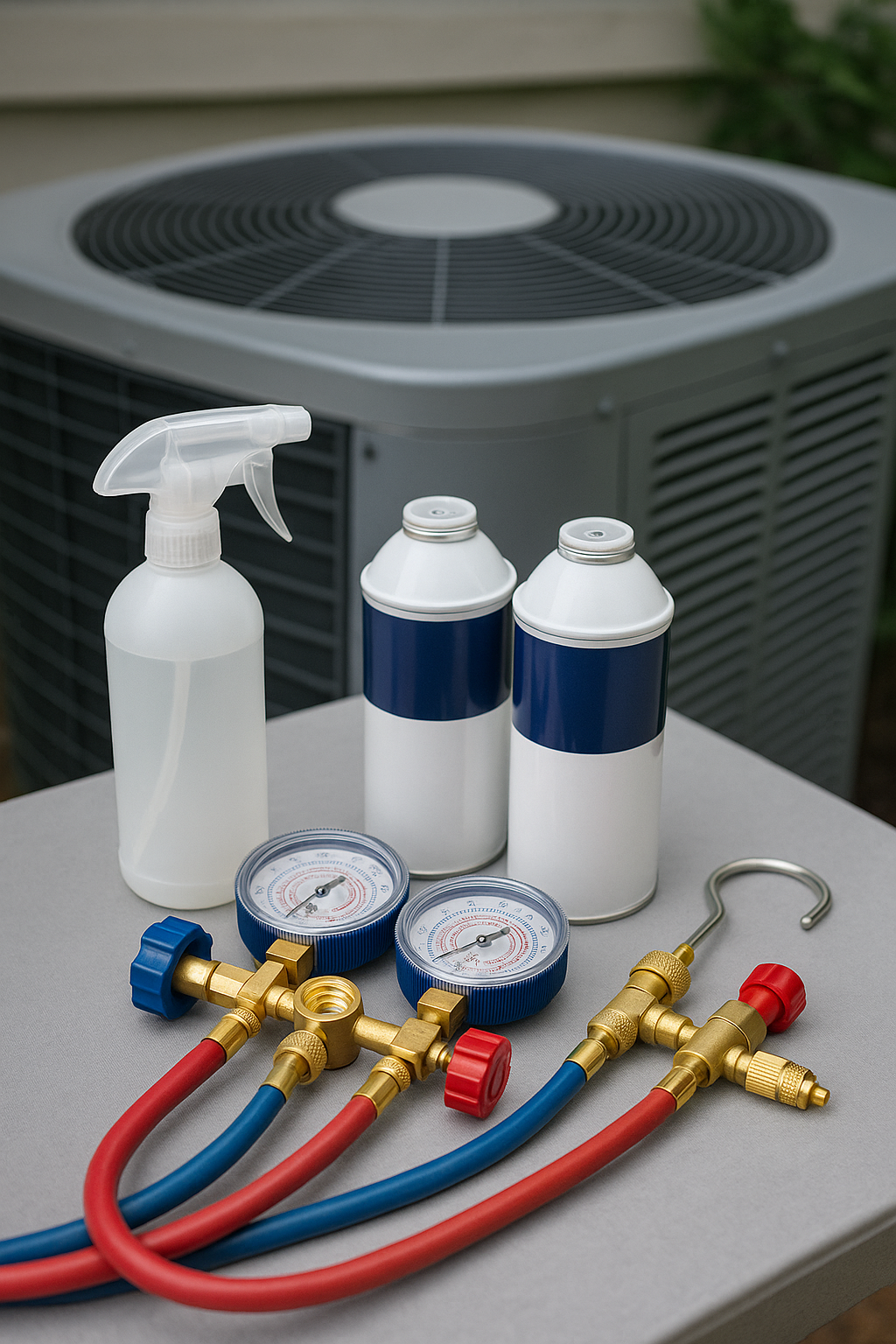
An air conditioner recharge kit typically includes a gauge, hose, and connection fittings designed to add refrigerant into a system. In automotive use, these kits are common and relatively straightforward because car systems use a standardised low-pressure port and a single common refrigerant (R134a or R1234yf).
For home systems, things are different. Residential split systems and ducted units are sealed and designed to operate on a fixed refrigerant charge throughout their service life. They do not "use up" refrigerant like fuel. If levels are low, there is a fault in the system — usually a leak that needs to be found and repaired first.

Can't recharge your own AC — but you can clean it
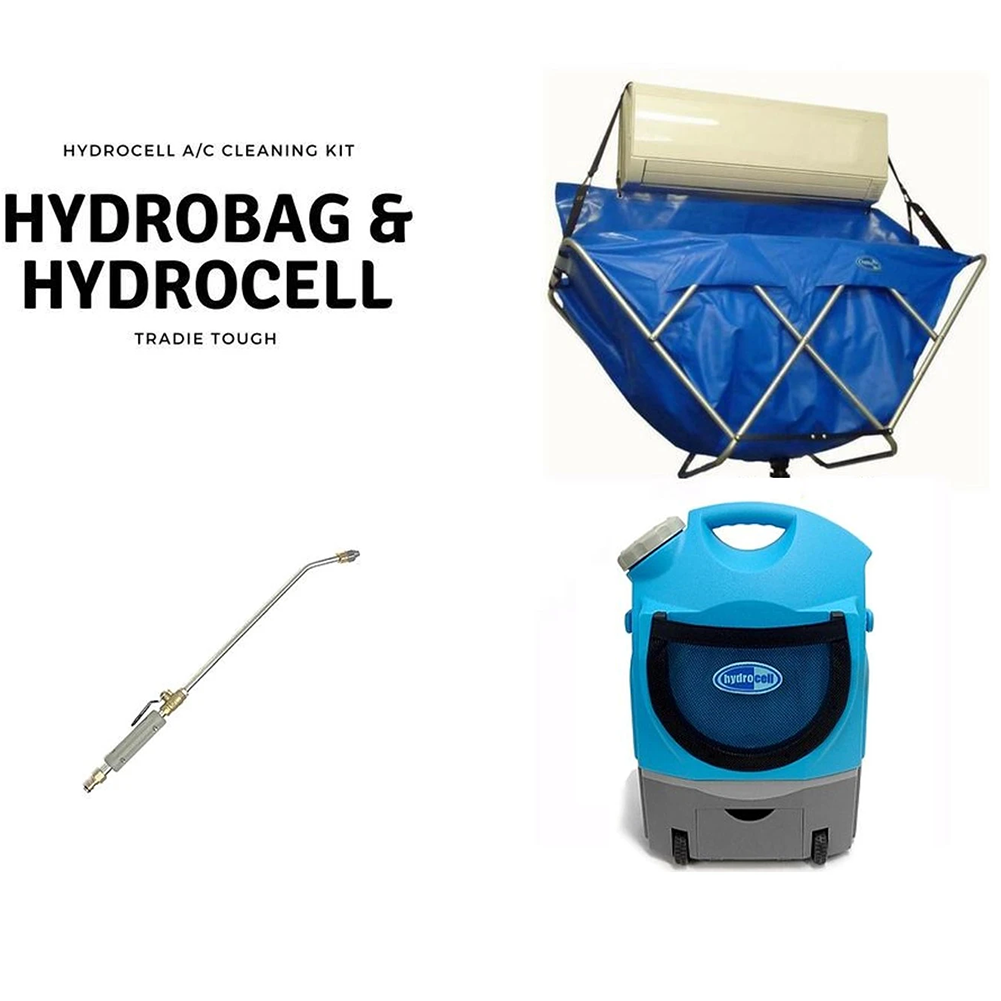
Dirty coils are one of the most common causes of poor cooling, and cleaning is something homeowners can do safely. AIRCONcare and Hydrocell kits include coil cleaner, wash bag and sprayer — no licensing required.
Why Home AC Systems Are Not Designed for DIY Recharging
Unlike car systems, home air conditioners operate under higher pressures and are covered by strict regulations. In Australia, handling refrigerant legally requires an ARCtick Refrigerant Handling Licence. Only licensed technicians can purchase, handle, and recover refrigerants used in residential systems.
There are also safety concerns. Refrigerants can cause frost burns, pressure injuries, and significant environmental harm if released incorrectly. That is why manufacturers, regulators, and service guidelines do not support DIY recharging for residential systems.
Low refrigerant almost always means a leak. Recharging without fixing the leak is a temporary fix at best — and can damage the compressor if the system is overcharged or undercharged.
When a Recharge Setup Might Be Used
There are limited situations where a proper recharge is carried out outside a full commercial service environment — typically by licensed individuals working on their own equipment in controlled circumstances, using professional-grade manifold gauges, vacuum pumps, hoses, and leak detection tools.
For general homeowners, this is not applicable. The right first step is diagnosis, not refrigerant top-up.
Common Signs Your AC Is Low on Refrigerant
Before assuming you need a recharge, it helps to understand the actual symptoms. Weak cooling, ice forming on the indoor coil, hissing sounds near the outdoor unit, and longer-than-usual run times can all indicate refrigerant issues.
However, those same symptoms are also caused by dirty filters, clogged coils, blocked airflow, or a faulty fan. In many cases, poor cooling has nothing to do with refrigerant at all — it is a maintenance issue that a homeowner can address directly.
A coil covered in dust and biological growth cannot transfer heat effectively, no matter how much refrigerant is in the system. Cleaning the indoor coil is often the single most impactful thing a homeowner can do before calling a technician.

Weak cooling? Clean the coil first before calling a tech
The AC2 Cleaning Kit includes 2,000 ml of ready-to-use coating-safe coil cleaner and a reusable wash bag. No disassembly, no licensing required. Covers up to 4 standard coil cleans.
Why DIY Recharging Often Goes Wrong
The biggest issue with DIY recharge attempts is misdiagnosis. Adding refrigerant to a system that does not need it reduces performance rather than improving it.
Overcharging is another common outcome. Too much refrigerant increases high-side pressure and puts direct mechanical stress on the compressor — an expensive component to replace.
Incorrect refrigerant type is also a real risk. Modern split systems use specific refrigerants such as R32, and mixing or substituting the wrong type causes serious problems with the oil circuit and potentially irreversible compressor damage.
Professional vs DIY: What's the Real Difference?
A licensed technician does more than add refrigerant. They measure system pressures, inspect components, locate and repair leaks, evacuate the system to remove moisture, and recharge to the manufacturer's exact specification by weight.
DIY approaches typically skip most of these steps. That is why results are inconsistent, often temporary, and sometimes make the original problem worse.
Tools Required for Proper AC Servicing
Even when refrigerant work is appropriate, the equipment list is substantial: a manifold gauge set rated for the refrigerant type, refrigerant hoses, a two-stage vacuum pump, a digital micron gauge, a refrigerant scale, and a leak detector. Without these, the job is not being done correctly regardless of how much refrigerant is added.
This is the difference between professional trade service and a DIY workaround.
What Homeowners Can Actually Do
There is meaningful maintenance that homeowners can handle safely and legally, and it genuinely improves system performance:
- Clean or replace filters — typically every 1–3 months in normal use
- Clean the indoor coil — with a biodegradable coil cleaner and wash bag; safe for epoxy-coated fins
- Clear the outdoor unit — remove leaves, debris, and any vegetation blocking airflow
- Check drainage — a blocked drain pan causes water damage and can trigger fault codes
Regular coil cleaning every 6–12 months (more often in coastal, dusty, or high-use environments) keeps the system performing at its rated capacity and reduces energy consumption. It also means a technician spends less time on basic maintenance and more time on diagnosis when they do visit.
When You Should Call a Professional
If cleaning and basic maintenance do not resolve the issue, or if there are obvious signs of a refrigerant leak — oil residue around line connections, persistent ice on the coil, or a system that simply stops cooling — a licensed HVAC technician is the right call.
Proper refrigerant service carried out correctly is the most cost-effective long-term option. A temporary DIY top-up that doesn't fix the underlying leak will result in the same call-out a few months later, plus any additional damage that occurred in the meantime.
Final Thoughts: Should You Use a Recharge Kit at Home?
For most homeowners, the answer is no. Residential air conditioning systems are regulated for good reasons — safety, environmental responsibility, and system longevity. DIY refrigerant work without proper licensing, equipment, and training is risky and often counterproductive.
What you can do is maintain the system properly. Clean coils, clear filters, good drainage, and unobstructed airflow solve the majority of "my AC isn't cooling properly" complaints without a technician visit. And if the problem is more serious, you are in a much better position to describe it accurately after ruling out the simple causes.
The right DIY maintenance for home AC owners
Browse split system cleaning kits from AIRCONcare, Hydrocell, and SpeedClean — including coil cleaners, wash bags, and portable pressure washers. Safe to use at home, no licensing required. Ships Australia-wide.
Related HVAC Guides
If you're learning more about air conditioning tools, servicing, and system performance, these guides will help you build a stronger understanding:
How to use a nitrogen regulator step by step
Types of flaring tools for plumbing
Gas regulator compatibility guide