
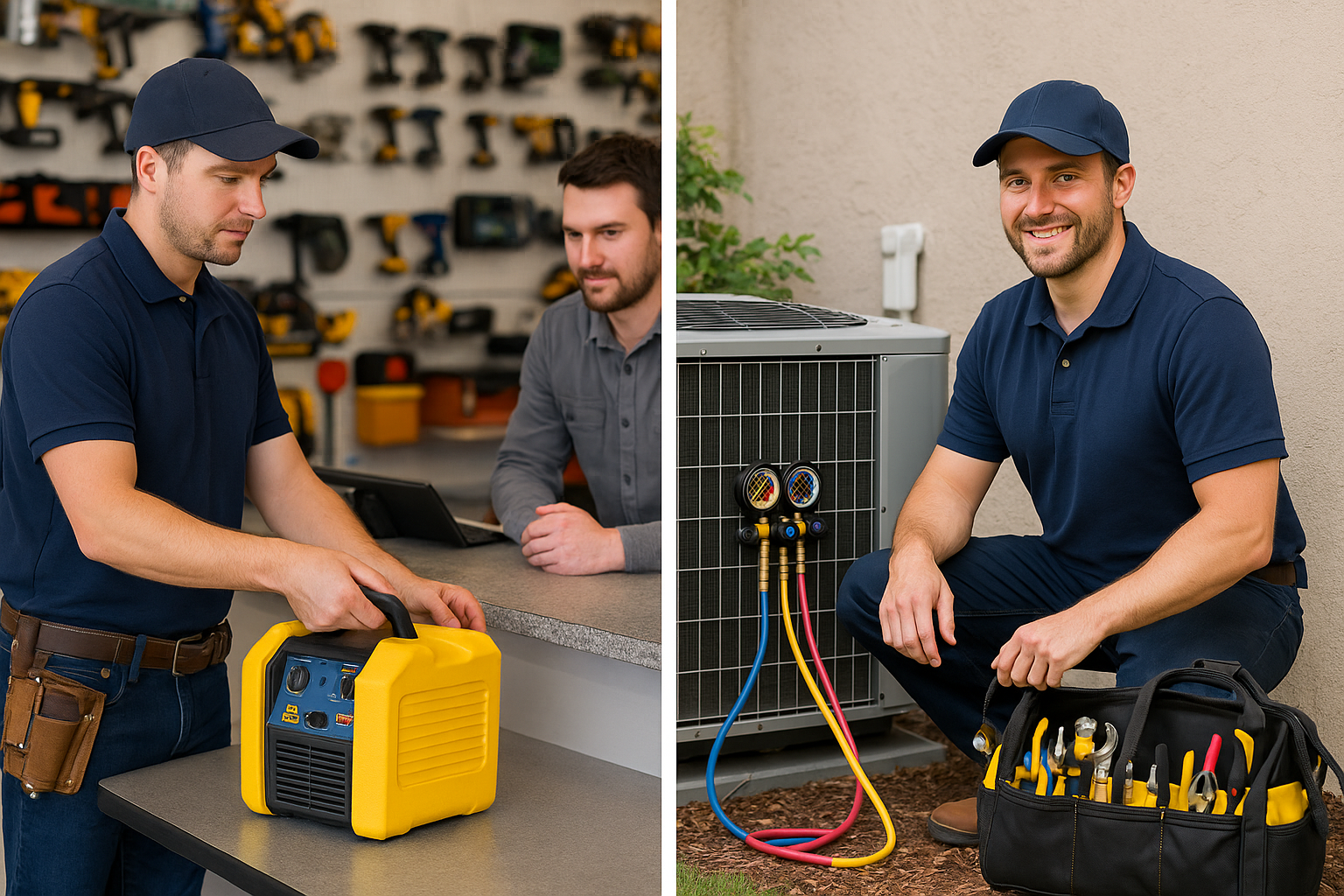
When you're working in HVAC, whether you’re an experienced tradie, a DIY legend, or a facility manager, you've probably asked the golden question: Should I rent or buy my HVAC tools? It’s a decision that impacts your budget, workflow, and even the jobs you can take on.
Let’s break it down like a proper site quote: no fluff, just practical comparisons, examples, and honest advice that suits real work in Aussie conditions.
Why This Matters: Tools Are an Investment
HVAC tools aren't cheap, but they’re also not just a cost—they’re an investment. The right tool can make or break a job. But depending on how often you use a tool or how specialised it is, buying it outright might not always make sense.
For example:
-
A refrigerant recovery machine might cost $900–$1,500 to buy, or around $80/day to rent.
-
A digital manifold gauge may be $400+ to own, but only $40/day to hire.
So what’s smarter: buying the gear up front or renting it when you need it?
Let’s look at the pros and cons.
Pros of Buying HVAC Tools
1. Long-Term Savings
If you’re using a tool regularly, buying saves you money in the long run. After a few jobs, the tool pays for itself.
2. Availability Anytime
Own it, and you can use it whenever you want—no delays, no booking hassles.
3. Tax Deductible
Buying tools is often tax-deductible for sole traders and businesses in Australia. That’s an instant win at tax time.
4. Professional Reputation
Having your own gear shows clients you’re serious. It can boost trust and make you more marketable for higher-end jobs.
Cons of Buying HVAC Tools
1. Higher Upfront Costs
You need to outlay cash or finance the purchase, which can be tough for newer tradies or smaller operations.
2. Maintenance Responsibility
Once it’s yours, you’re responsible for keeping it calibrated, clean, and working.
3. Storage and Transport
Big tools take up space in your van or ute. And delicate gear needs proper protection.
Pros of Renting HVAC Tools
1. Lower Initial Expense
Pay only when you need the tool. Ideal for short-term projects or rarely used gear.
2. Try Before You Buy
Renting gives you the chance to test out brands and models before committing.
3. No Maintenance Hassles
Rental companies handle the servicing. You get gear that’s ready to go.
4. Always Updated
Hire companies often stock the latest tools—so you’re not stuck with outdated tech.
Cons of Renting HVAC Tools
1. Adds Up Over Time
Frequent rentals can get expensive. What starts as a $50 hire can turn into $500+ over a few weeks.
2. Availability Issues
During busy seasons, rental gear can be scarce. You might miss a job because the tool isn’t available.
3. Less Customisation
Rented tools usually come as-is. You can’t always tweak or add custom accessories.
Key Tools to Consider Buying (if You’re in HVAC Long-Term)
1. Refrigerant Scales
Used on nearly every job. Buying models like the Fieldpiece SRS3 saves you time and audit headaches.
2. Digital Manifolds
Crucial for accurate diagnostics. Fieldpiece, Yellow Jacket, and Testo make great long-lasting models.
3. Leak Detectors
You’ll need this more than you expect. Having your own means quick turnarounds on site.
4. Vacuum Pumps
Heavy-duty but essential for installs and servicing. Great ROI if used regularly.
5. Recovery Machines
If you're considering a reliable option, check out the Fieldpiece MR45 Recovery Machine available at HVACShop.com.au. It's a powerful, field-tested solution designed for Aussie job sites.
Rent if you only need it once in a while. Buy if you’re handling lots of installations or repairs.
Aussie HVAC Tradie Example: Jake from Ballarat
“When I started, I hired everything. But I realised I was spending over $400 a month on tools I could’ve bought once. Now I own most of my gear—Fieldpiece manifold, vacuum pump, recovery unit—and jobs run smoother.”
Jake’s not alone. Many Aussie tradies start by renting and slowly invest in gear as their workflow and cash flow grow.
Smart Hybrid Strategy: Buy Some, Rent Some
Here’s a good rule of thumb:
-
Buy tools you use on more than 60% of jobs.
-
Rent high-cost, specialty gear used less than once a month.
This approach keeps your overhead low but ensures you’ve got the essentials when needed.
FAQs: Buy vs Rent HVAC Tools in Australia
Q: Are HVAC tools tax-deductible if I buy them?
Yes. For sole traders and businesses, tool purchases can usually be claimed.
Q: Can I rent tools for emergency jobs?
Yes, but make sure to check availability ahead of time—especially in peak seasons.
Q: What about financing HVAC tools?
Many suppliers offer interest-free options or trade accounts to spread the cost.
Q: Is buying second-hand HVAC gear a good idea?
It can be. Just ensure it’s recently serviced and still meets Australian standards.
Final Verdict: Buying Wins (Most of the Time)
If HVAC work is your trade, owning your tools is a no-brainer for long-term savings, flexibility, and professional edge. Renting is great for short-term needs or one-off projects, but it adds up quickly.
Aussie tradies know—tools aren’t just gear, they’re your livelihood. Invest wisely, and your toolkit becomes your biggest business asset.
Ready to Own Your Setup?
Browse top HVAC tools at hvacshop.com.au and get gear that works as hard as you do.