
If you’ve ever asked yourself, “How do I clean air conditioner coils?” — you’re not alone. It’s one of those maintenance tasks most people don’t think about until their AC stops cooling properly, starts making weird noises, or their electricity bill suddenly spikes.
The good news? Cleaning your air conditioner coils isn’t hard. With a bit of time, the right tools, and a simple step-by-step process, you can get your system running efficiently again and extend its lifespan — all without calling a technician.
In this blog, we’ll walk you through everything you need to know about cleaning both indoor (evaporator) and outdoor (condenser) coils like a pro.
Why Clean Your Air Conditioner Coils?
First, let’s talk about why this matters.
Your AC system works by moving refrigerant through a closed loop. This refrigerant absorbs heat inside your home (evaporator coil) and releases it outside (condenser coil). When either coil gets dirty, the whole system has to work much harder — which means:
- ❌ Poor cooling performance
- ❌ Higher power consumption
- ❌ Increased wear on your compressor
- ❌ Risk of coil freezing or refrigerant issues
- ❌ Shortened unit lifespan
In short: clean coils = cool air + lower bills.
Signs Your AC Coils Need Cleaning
Not sure if it’s time to clean them? Look out for:
- Warm or weak airflow
- Higher than normal electricity bills
- AC runs constantly but doesn’t cool well
- Unusual smells from vents
- Visible dirt, mould, or pet hair on the coils
- You haven’t cleaned them in 6–12 months
If any of these sound familiar, it’s time for a clean.
Types of Coils in Your Air Conditioner
Your system has two main coil types, and both need care:
🌀 Evaporator Coil (Indoor Unit)
- Usually behind the filters on a wall-mounted split system
- Absorbs heat from the air inside your home
- Can collect dust, mould, and dander
🌬️ Condenser Coil (Outdoor Unit)
- Found behind the fan grille or housing fins
- Releases heat to the outside
- Picks up leaves, dirt, and pollution from the air
Both need regular cleaning, especially if you use your AC often or live in a dusty, coastal, or pet-filled home.
Tools & Supplies You’ll Need
Before you start, gather your gear:
✅ Soft brush or coil brush
✅ Fin comb (optional)
✅ Foaming coil cleaner (acid-free for indoor units)
✅ Garden hose (for outdoor unit)
✅ Screwdriver (to open the casing)
✅ Drop cloth or tray (for indoor unit cleanup)
✅ Safety gloves & glasses
✅ A ladder (for high-mounted split systems)
Need a good cleaner? We recommend:
👉 Viper Foaming Evaporator Coil Cleaner – No Rinse
How to Clean Indoor Evaporator Coils (Step-by-Step)
Let’s start inside.
🔧 Step 1: Turn Off the Power
Safety first. Switch off the unit at the main power point or circuit breaker.
🔧 Step 2: Remove the Front Panel
Open the front cover and remove the filters. You may need a screwdriver to get full access to the coils behind them.
🔧 Step 3: Inspect the Coils
Look for visible dirt, mould, or slime. If it’s really gunked up, a deep clean is overdue.
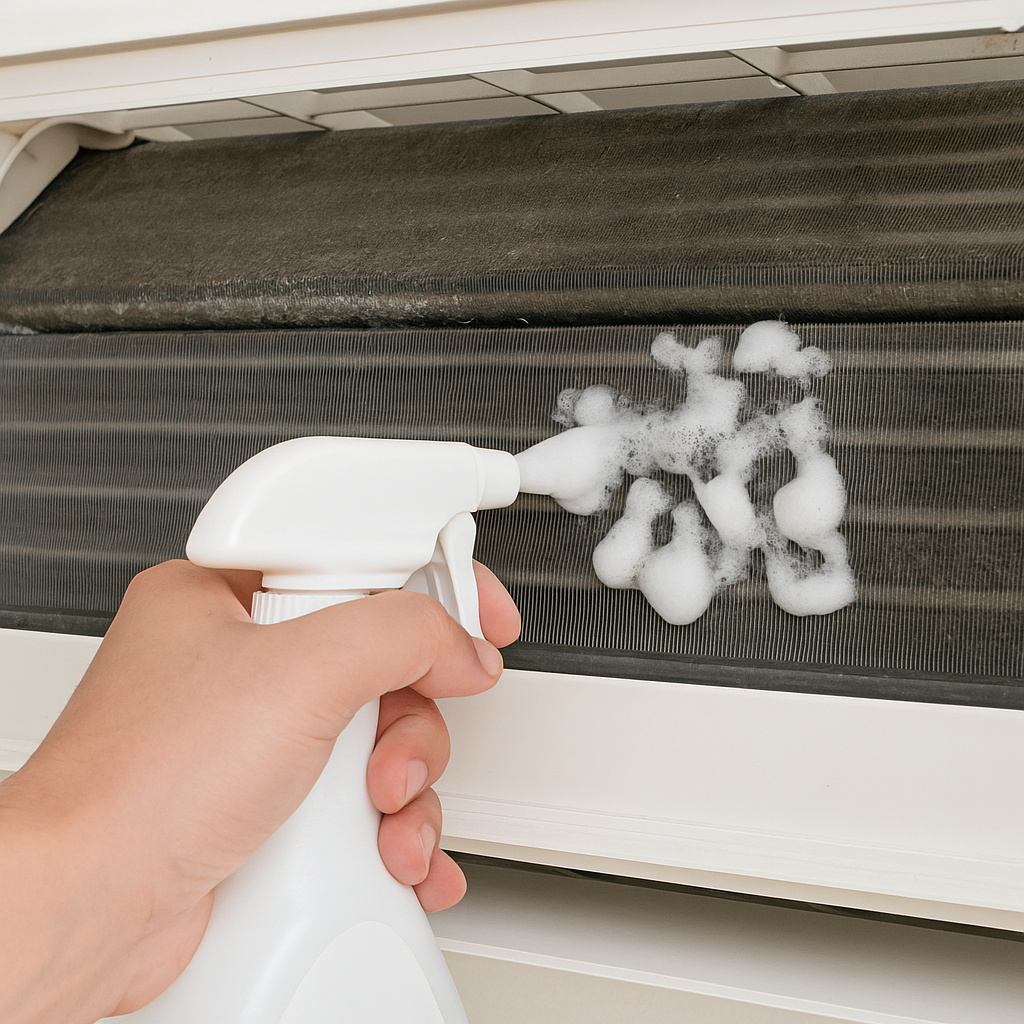
🔧 Step 4: Apply Coil Cleaner
Spray your foam coil cleaner evenly over the coils. Let the foam expand and sit for 5–10 minutes. Most products are “no rinse,” meaning the condensation from the system will wash it away naturally.
If you’re using a rinse-required product, be prepared to rinse it with a light spray and catch any runoff in a tray or towel.
🔧 Step 5: Clean the Filters Too
While you wait, give your filters a rinse under running water. Let them air dry fully.
🔧 Step 6: Reassemble and Restart
Once the coils are dry, reassemble everything and turn the power back on. Let the system run for 15–20 minutes on cool.
You should notice better airflow almost immediately.
How to Clean Outdoor Condenser Coils (Step-by-Step)
Now for the outdoor unit.
🔧 Step 1: Power Down
Turn off the main switch to the outdoor unit for safety.
🔧 Step 2: Remove the Grill or Panel
Use a screwdriver to access the condenser coils and fan blades inside. Clear away large debris (leaves, twigs, etc.) by hand.
🔧 Step 3: Pre-Clean With a Brush
Use a soft coil brush to gently clean dirt off the fins. Brush in the direction of the fins to avoid bending them.
🔧 Step 4: Spray Coil Cleaner
Spray a condenser-safe coil cleaner (alkaline, not acidic) over the coils. Let it sit as directed — usually 5–10 minutes.
🔧 Step 5: Rinse Thoroughly
Use a garden hose with a gentle spray setting to rinse the coils from top to bottom. Avoid high-pressure jets — they can bend the fins or push water into electrical components.
🔧 Step 6: Let Dry and Reassemble
Let everything air dry completely before turning the unit back on.
How Often Should You Clean AC Coils?
Here’s a general guideline:
| Coil Type | Cleaning Frequency |
|---|---|
| Indoor (Evaporator) | Every 6–12 months (or more with pets/dust) |
| Outdoor (Condenser) | Every 6–12 months (more if near trees, coast) |
For best results, clean your filters monthly, and schedule a coil clean once a year — ideally before summer.
Professional Cleaning vs. DIY
🧰 DIY is great for:
- Light to moderate dirt buildup
- Regular maintenance
- Budget-friendly upkeep
🛠️ Call a pro if:
- Your coils are covered in mould or grease
- The unit smells bad even after cleaning
- There are signs of refrigerant issues
- You can’t reach your outdoor unit safely
A professional service includes coil pressure cleaning, refrigerant pressure check, and full system diagnostics.
Can I Use Household Cleaners to Clean Coils?
Technically? Maybe. Should you? Probably not.
Household cleaners like vinegar or soap can leave residue, damage coil coatings, or cause corrosion. Some can release toxic fumes when the AC runs.
Always use coil-specific cleaning chemicals — they’re designed to be safe for aluminum, copper, and system seals.
What If I Don’t Clean the Coils?
Ignoring your coils doesn’t mean they’ll go away — it just means:
- 💸 Higher energy bills
- 🧊 Frozen evaporator coils
- 🌡️ Poor cooling performance
- 🧰 Increased repair costs
- 💀 Shorter lifespan of your AC system
Prevention is always cheaper (and easier) than repairs.
Where to Buy AC Coil Cleaning Supplies in Australia?
Looking for trusted coil cleaners, spray bottles, or service kits?
👉 Head to HVAC Shop Australia — we stock:
- Coil cleaners (non-acidic, foaming, no-rinse)
- Condenser cleaning tools
- Spray wands and protective equipment
- HVAC tools trusted by Aussie tradies
We ship Australia-wide, so you can keep your air conditioner clean — no matter where you live.
Final Thoughts: Clean Coils, Cool Comfort
So, how do I clean air conditioner coils? Hopefully now, you know exactly how — and why it matters.
Whether you're in the middle of an Aussie summer or prepping for the season ahead, keeping your AC coils clean is one of the easiest ways to improve your system’s efficiency, reduce your bills, and make your home more comfortable.
Set a calendar reminder, grab a quality coil cleaner, and give your air conditioner a bit of TLC. It’ll pay off when you’re chilling in a cool, breezy room while everyone else is sweating it out.