
When you walk into a perfectly air-conditioned room — not too cold, not too stuffy — you probably thank the AC. But the real credit might belong to someone you’ve never heard of: the HVAC balancer.
This unsung hero of building performance fine-tunes your HVAC system so every vent delivers the right amount of air, every room hits the right temperature, and energy doesn’t go to waste. Whether you’re managing a commercial office, living in a new home, or running an industrial facility, an HVAC balancer can be the difference between “meh” and “magic” when it comes to comfort.
So, let’s dive in, what exactly is an HVAC balancer, how do they do their job, and why should you care?
What Is an HVAC Balancer?
An HVAC balancer is a trained professional who measures, adjusts, and optimises air and water flow through a building’s heating, ventilation, and air conditioning (HVAC) systems. Their goal is simple: make sure your system is delivering the right amount of conditioned air or water to the right places.
That might sound straightforward, but it's not.
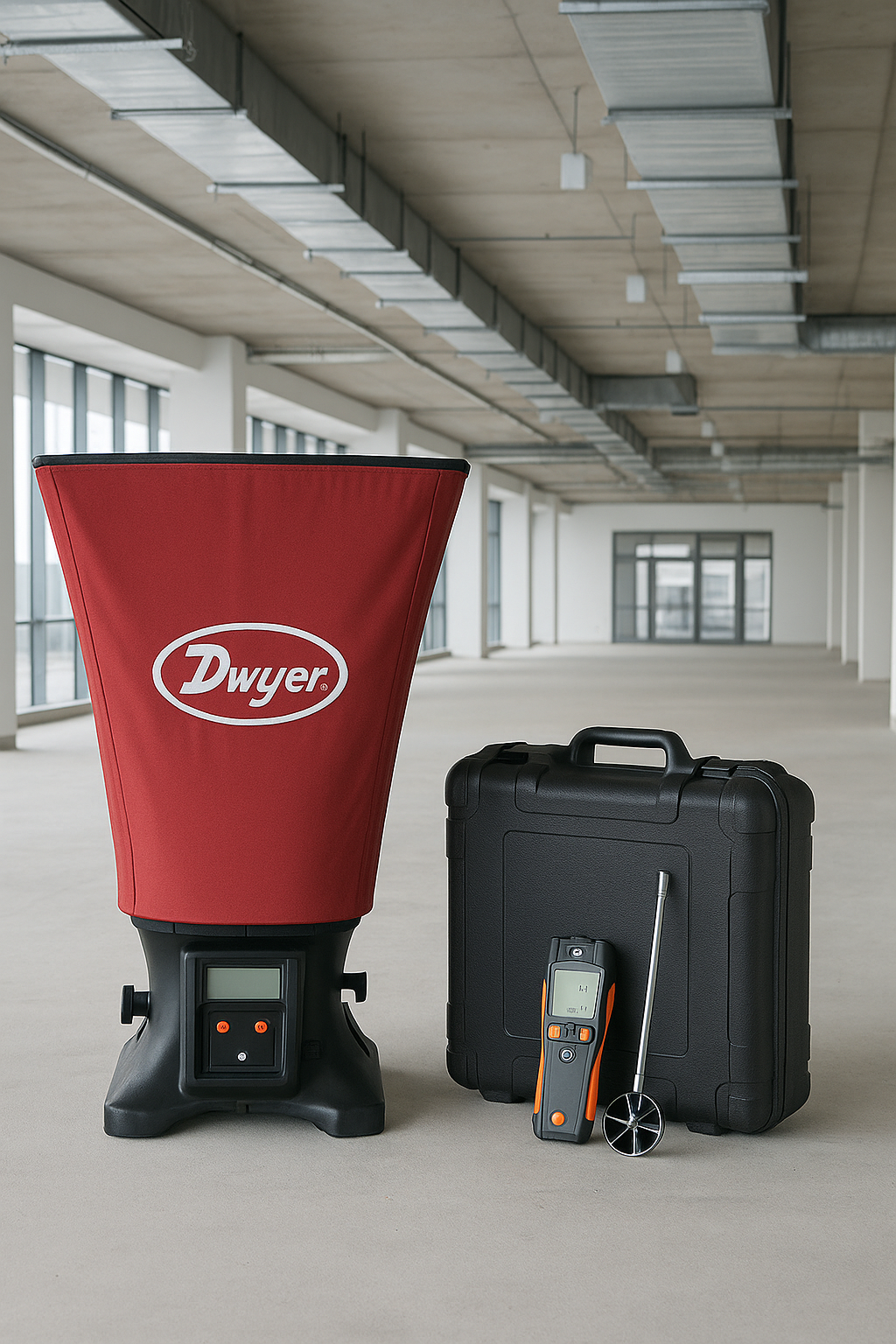
Balancing an HVAC system involves checking ductwork, dampers, fans, diffusers, and more often with the help of specialised tools like:
- Air balancing hoods
- Manometers
- Anemometers
- Flow sensors
- Thermometers and hygrometers
- Pressure gauges
Think of it like tuning a piano. The system might be working, but if it’s not properly tuned, it won’t play in harmony.
Why Does HVAC Balancing Matter?
Let’s put it this way — even a brand-new HVAC system can perform badly if it’s not balanced. Unbalanced systems can result in:
- 🔥 Hot or cold spots in different rooms
- 💨 Noisy vents or whistling airflow
- 🧊 Overworked air conditioners and skyrocketing energy bills
- ❌ Poor indoor air quality
- 😤 Uncomfortable occupants
- ⚙️ Increased wear and tear on equipment
In commercial and industrial buildings, this can impact everything from employee productivity to product storage conditions.
In residential settings, it just means you’re paying more for uneven comfort not ideal.
Who Needs an HVAC Balancer?
HVAC balancing isn’t just for large buildings. It benefits:
🏢 Commercial Buildings
Proper airflow helps maintain consistent temperatures across open-plan offices, meeting rooms, and server spaces.
🏠 Homes
If some rooms are hot while others freeze, a balancer can fix the airflow and return comfort.
🏫 Schools & Hospitals
Air quality and temperature control are critical for health and safety.
🏭 Industrial Sites
Precise ventilation ensures compliance with safety standards and energy efficiency.
🌆 New Construction Projects
Balancers ensure the HVAC systems in new builds meet specifications before handover.
Types of HVAC Balancing
Not all balancing is created equal. There are three main types:
1. Air Balancing
This is the most common and refers to adjusting airflow in ducted systems. The balancer checks each room’s supply and return airflow against design specifications and makes adjustments using:
- Dampers in ducts
- Fan speed settings
- Diffuser placements
- Return air grilles
The result? Even air distribution that meets temperature and pressure targets.
2. Hydronic Balancing
Used in systems with hot water or chilled water circulation, such as radiators or hydronic heating. Balancing involves adjusting:
- Flow control valves
- Pump speeds
- Pressure drop calculations
This ensures every radiator or coil gets the right amount of water flow.
3. Total System Balancing
This is a full system tune-up combining air and hydronic balancing for the ultimate comfort and efficiency. It’s often done in large facilities or after major HVAC upgrades.
What Does the HVAC Balancing Process Look Like?
Here’s a basic walkthrough of how a professional HVAC balancer approaches the job:
🛠️ Step 1: Review Plans & Design Specs
The balancer starts with the system’s blueprint: What airflow should each room receive? What fan speeds and pressure levels were designed?
🧪 Step 2: Test the Current System
Using air balancing hoods and anemometers, the balancer measures:
- Supply air at each vent
- Return air volume
- Static pressure in the ducts
- Temperature and humidity
- Noise levels
⚖️ Step 3: Adjust and Balance
Once problem areas are identified, they’ll adjust:
- Manual or automatic dampers
- Variable speed motors
- Fan belts
- Control systems
- Damaged or restricted ducts
📈 Step 4: Retest and Report
After adjustments, everything is retested to confirm that airflow, temperature, and pressure fall within spec. A final balance report is usually provided for compliance, warranty, or certification purposes.
Common Tools HVAC Balancers Use
Want to geek out a little? Here are some of the tools in a typical HVAC balancer’s arsenal:
| Tool | Purpose |
|---|---|
| Air Balancing Hood | Measures airflow from grilles and diffusers |
| Manometer | Measures air pressure in ducts |
| Anemometer | Measures air speed and direction |
| Temperature Probe | Tracks temp changes at vents and rooms |
| Flow Hood | Provides volume measurements of airflow |
| Micromanometer | Reads very small pressure changes |
👉 Need pro-level tools? Browse HVAC Shop’s Smart Tools Collection for Bluetooth hoods and probes.
What Certifications Should an HVAC Balancer Have?
In Australia, most HVAC balancers come from mechanical services or air conditioning backgrounds. However, many also have certifications from:
- NEBB (National Environmental Balancing Bureau)
- AABC (Associated Air Balance Council)
-
TAB (Testing, Adjusting, and Balancing) training programs
While not legally required in all regions, certified balancers offer a higher standard of documentation and performance testing especially important for commercial jobs.
What Certifications Should an HVAC Balancer Have?
In Australia, most HVAC balancers come from mechanical services or air conditioning backgrounds. However, many also have certifications from:
- NEBB (National Environmental Balancing Bureau)
- AABC (Associated Air Balance Council)
-
TAB (Testing, Adjusting, and Balancing) training programs
While not legally required in all regions, certified balancers offer a higher standard of documentation and performance testing — especially important for commercial jobs.
How Often Should HVAC Systems Be Balanced?
Good question. Here’s a quick breakdown:
| Situation | Recommended Frequency |
|---|---|
| New construction | During commissioning |
| Existing systems | Every 3–5 years |
| After equipment upgrades | Immediately post-install |
| If complaints arise | As needed (troubleshooting) |
If you’re constantly adjusting the thermostat or have unhappy building occupants, it might be time to call in a balancer.
DIY Balancing: Can You Do It Yourself?
For small residential systems, you can try light balancing yourself:
- Close vents in over-conditioned rooms
- Open vents in under-conditioned areas
- Make sure furniture isn’t blocking returns
- Clean filters and vents regularly
- Use a simple anemometer to check airflow
But for precise control or anything commercial, you need a pro.
Cost of HVAC Balancing in Australia
Pricing can vary based on the size of the system, the number of zones, and whether you need a full air + hydronic balance.
| Type of Balancing | Approx. Cost (AUD) |
|---|---|
| Residential (basic) | $300–$600 |
| Light commercial | $1,000–$3,000+ |
| Full commercial project | $5,000+ |
💡 Many HVAC companies include balancing in their commissioning or maintenance packages, so it’s worth checking.
Final Thoughts: The HVAC Balancer Is the MVP of Comfort
It’s easy to overlook airflow when your system is running. But behind the scenes, an HVAC balancer is the one making sure every room gets its fair share of conditioned air — without wasting energy or overworking your equipment.
Whether you’re building new, upgrading your system, or just want to solve that one annoying hot bedroom, balancing your HVAC system is a smart move.