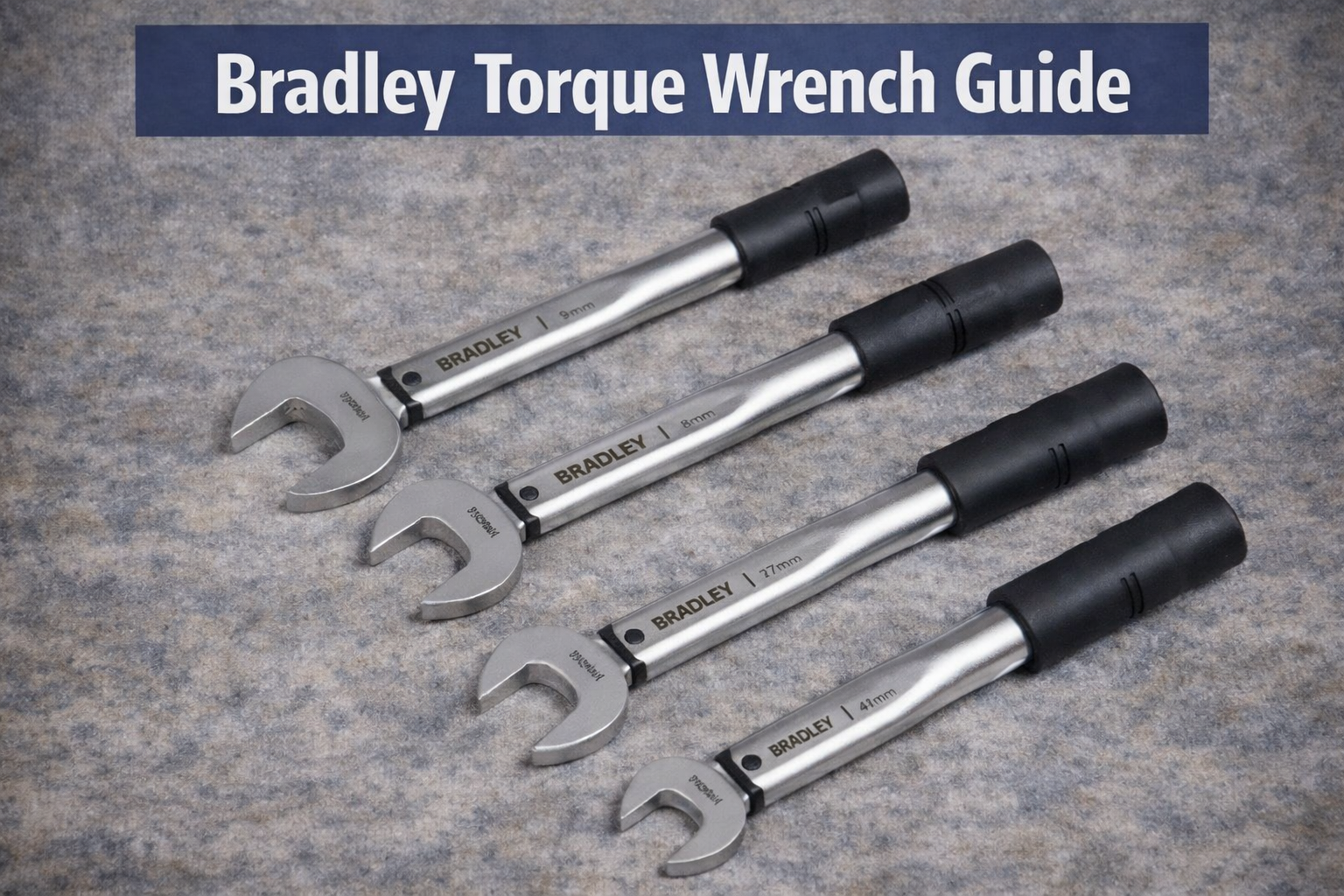
Bradley Torque Wrench Guide: TW4 vs TW8 for HVAC Flare Nuts in Australia
If you're hunting for a Bradley torque wrench, you are usually chasing one specific outcome: leak prevention you can actually repeat. In the HVAC trade, flare leaks are rarely a "mystery". They almost always stem from two very predictable human errors that show up on installs and service calls every single day.
Over-torque crushes the copper flare, distorts the brass fitting, and destroys the sealing face. Under-torque leaves a microscopic gap that might hold pressure on day one, but is guaranteed to leak after a few months of vibration, thermal expansion, or a handful of hard compressor starts. Either way, the result is identical: you lose time, you lose your profit margin, and you risk an embarrassing call-back that never should have happened.
The core issue here is guesswork. A flare nut can feel “tight” to your hand and still be dangerously under-torqued. A short-handled spanner can feel “safe” and still easily crush a 1/4" flare. When you are fatigued, rushing to get to the pub on a Friday, working in an awkward ceiling space, or trying to train a green apprentice, the “tighten by feel” method becomes wildly inconsistent. And inconsistency is exactly what turns a standard install into a slow leak.
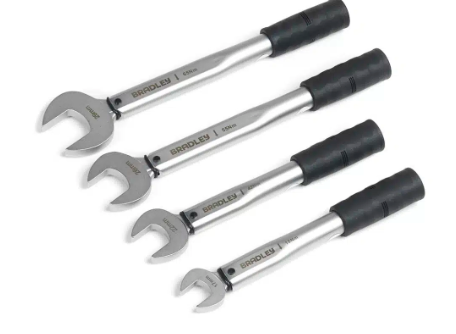
This guide explains exactly how Bradley torque wrenches fit into Australian HVAC work, focusing on OEM compliance and real-world technique. We’ll break down the Bradley torque wrench set options, explain the critical differences between pre-set (TW4) and adjustable (TW8) tools, and show you how to use them correctly so your connections remain clean, secure, and repeatable.
In brutal Aussie conditions, your tools take a serious beating. Brisbane humidity creeps into tool bags and kicks off corrosion. Sydney coastal salt air seizes up threads. Melbourne cold snaps make rubber seals stiff and flare joints totally unforgiving. A torque wrench doesn’t replace your trade skill, but it acts as a safety net to keep your results consistent when the site conditions are working against you.
Bradley Torque Wrench Range Overview
When tradies talk about a “Bradley torque wrench”, they are generally referring to two entirely different styles of tool: Pre-Set and Adjustable. Both are highly valid, but making the right choice depends entirely on the type of work you do most often.
In the Bradley lineup, you will see the TW4, which is a set of pre-set torque wrenches designed for lightning-fast, repetitive flare work. You will also see the TW8, which is an adjustable metric set built for broader versatility. The names hint at their purpose: the TW4 is about Speed and Repeatability. The TW8 is about Range and Flexibility.
Before we dive into the models, let's establish one unbreakable rule: Torque tools are only as good as the copper prep that comes before them. If your flare is poorly formed, scored, or burred, perfect torque will not save it. What torque does do is eliminate the final variable: the “how tight is tight” guessing game.
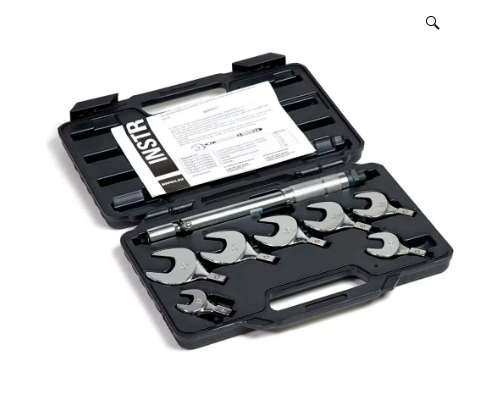
TW4 Pre-Set Torque Wrench Set
A pre-set torque wrench is engineered to "click" at one fixed, unchangeable torque value for a specific flare nut size. In practical terms, this means you grab the correct wrench for the nut, apply smooth pressure, and stop the millisecond it clicks. There is no dial to fiddle with, and zero anxiety that it got bumped onto the wrong setting while rattling around in the back of the ute.
Pre-set tools are massively popular with split-system installation crews because the exact same 1/4", 3/8", 1/2", and 5/8" flare sizes show up on almost every single job. When you are knocking out multiple back-to-back installs, speed is crucial, but quality is paramount. The TW4 set perfectly bridges that gap.
TW8 Metric Adjustable Set
The Bradley TW8 adjustable set is aimed at service technicians who require massive range. Adjustable tools are brilliant when your week is highly mixed—you might be installing a residential split on Monday, servicing a commercial VRV system on Tuesday, and working on a cool room on Wednesday. An adjustable set dramatically reduces the sheer volume of single-purpose spanners you need to carry onto the roof.
The trade-off for this flexibility is strict discipline. You absolutely must follow the tool's instructions, set the torque dial accurately to the OEM spec for that specific fitting, and ensure you reset it to zero before storing it away.
| Comparison Point | TW4 (Pre-Set) | TW8 (Adjustable) |
|---|---|---|
| Main Advantage | Lightning-fast and idiot-proof for common flare work. | Highly versatile across wildly different torque requirements. |
| Best Fit Workflow | High-volume, repetitive split system installations. | Mixed job types, varied commercial fittings, broad service work. |
| Common Risk | Accidentally grabbing the wrong pre-set wrench for the nut size. | Setting the dial incorrectly or letting the calibration drift from poor storage. |
| Speed on Site | Very fast; eliminates the setting/dialling step entirely. | Fast once set, but requires a deliberate setup routine for every new joint size. |
Bradley TW4: Deep Dive into Pre-Set Precision
The TW4 is best summarized as “fast, repeatable flare tightening on autopilot.” It is precision-engineered for techs who do a high volume of standard flare connections and want guaranteed results without expending any brainpower on dial settings.
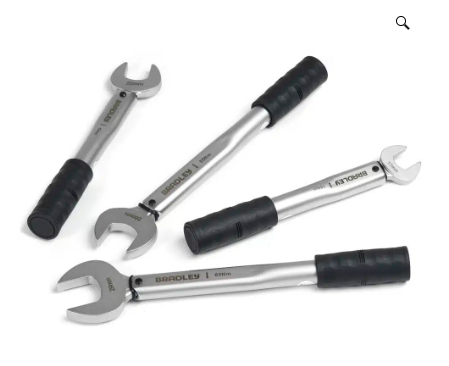
The TW4 kit typically features wrenches sized for 17mm, 22mm, 29mm, and 35mm nuts, which correspond perfectly to standard HVAC copper line sets (1/4", 3/8", 1/2", and 5/8" pipe). Using a dedicated, correctly sized wrench head drastically reduces the risk of rounding off soft brass nuts—a very common issue when techs get lazy and use a loose shifting spanner in a tight ceiling space.
Did You Know? A torque wrench can’t “save” a bad flare, but it absolutely stops a perfect flare from being ruined. A massive percentage of leaks happen when a beautifully formed flare is over-tightened “just to be safe”. With a TW4 click wrench, “safe” becomes a mathematically repeatable stop point.
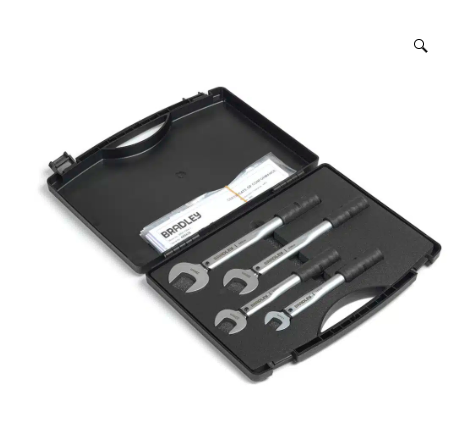
Heavy-duty construction requires proper storage. Keeping your tools in their hard case protects the internal click mechanism from van grit and moisture.
Using Bradley Torque Wrenches Correctly (The Technique)
The vast majority of "torque wrench failures" are actually technique failures. A torque wrench is a precision control instrument; if you swing off it like a rusty breaker bar, you are entirely missing the point.
- Check the OEM Spec: Never guess the torque value. Different brands and different refrigerants (like R32) have highly specific torque requirements for their brass fittings. Check the installation manual.
- Smooth, Steady Pressure: Force must be applied smoothly, at a 90-degree angle to the handle. Jerky, aggressive tightening can cause the internal mechanism to "false click" or cause you to blow right past the click point.
- Stop at the Click. Period: The most infuriating mistake is hearing the click, and then giving it "one more little tweak" for luck. Doing this instantly negates the entire purpose of using the tool. When it clicks, you stop.
- Avoid Side-Loading: If you are cramped in a corner and pulling the wrench at a weird, twisted angle, you are applying side-load. This alters the torque reading and risks cross-threading the fitting. Take the time to align your body properly.
Pro Tip: If a joint leaks after you've tightened it with a calibrated torque wrench, do not just crank it harder! Step back. De-pressurise the system and inspect the flare face for scoring or uneven lips. Over-tightening a leaking flare usually just destroys the brass threads.
Invest in Bradley Torque Precision
A Bradley torque wrench isn't a luxury item; it is an insurance policy for your profit margins. Repeatable tightening eliminates crushed flares. Eliminating crushed flares drastically reduces call-backs. And stopping call-backs is the single fastest way to protect your time and your trade reputation.
If your work is install-heavy and highly repetitive, the TW4 pre-set kit is the cleanest, fastest workflow choice. If you bounce between residential, commercial, and breakdown service, the TW8 adjustable kit provides the massive versatility you need—provided you respect the setting process.
Ready to upgrade your tightening routine? Browse the Bradley professional tools range here and lock in a setup that guarantees you can trust your connections, every single time.
Frequently Asked Questions (FAQ)
Why use torque wrenches on HVAC flare nuts?
Because flare failures are overwhelmingly caused by either under-tightening (which vibrates loose) or over-tightening (which crushes the soft copper face). A torque tool completely removes human guesswork and guarantees a consistent seal, which is critical when handling high-pressure refrigerants like R32.
Can a torque wrench fix a bad flare?
No. Torque consistency only works if the copper flare is formed correctly in the first place. The only foolproof workflow is: clean pipe prep, consistent flare formation (using a quality eccentric flaring tool), followed by consistent tightening with a torque wrench.
What is the difference between the Bradley TW4 and TW8?
The TW4 is a set of "pre-set" wrenches that click at a fixed torque value, making them incredibly fast and idiot-proof for high-volume repetitive split system installs. The TW8 is an "adjustable" wrench set that covers a massive range of torque settings, making it highly versatile for mixed commercial and service work.
How should I store my adjustable torque wrench?
You must always wind an adjustable torque wrench (like the TW8) back to its lowest setting or "zero" before storing it. Leaving the internal spring under high tension for long periods will ruin the calibration of the tool.
Do I still need to pressure test if I use a torque wrench?
Absolutely. A torque wrench drastically reduces your risk of creating a leak, but a high-pressure nitrogen test (using a regulator like the Bradley NR1000) is the only way to scientifically prove the system is fully sealed before you pull a vacuum.