Let’s be honest, most of us don’t give much thought to our air conditioner’s inner workings until it stops doing its job. But here’s the deal: clean AC coils = cool, efficient air. And if you’ve noticed your aircon’s struggling to keep up or your energy bills are creeping up, there’s a good chance dirty coils are to blame.
The good news? You don’t need to be an HVAC technician to solve the problem. With the right chemical to clean AC coils, you can get your system back on track — without breaking the bank or calling in the pros (unless things get hairy).
This guide walks you through why coil cleaning matters, what chemicals actually work, and how to do it yourself safely and effectively.
Why Cleaning AC Coils Is So Important
Both your evaporator coils (inside) and condenser coils (outside) play a major role in cooling your home. They absorb and release heat — and when they’re coated in dust, grime, mould, or even pet hair, they can’t do that job properly.
Dirty coils lead to:
- Reduced cooling efficiency
- Increased energy usage
- Higher electricity bills
- Shorter equipment lifespan
- Risk of system breakdowns in peak summer heat
Think of it like trying to run a marathon while wrapped in a blanket — not ideal.
Signs Your AC Coils Need Cleaning
Before we dive into the best coil cleaners, let’s make sure this is the problem you’re actually dealing with. Here’s what to watch for:
- AC blowing warm air
- System runs continuously
- Strange smells or mustiness from vents
- Visible dirt or mould on indoor unit
- Outdoor unit fins covered in dust or debris
- Increased humidity indoors
- Higher than usual power bills
If you’re nodding yes to any of the above, it’s probably time to give your coils some TLC.
Types of Chemicals to Clean AC Coils
There isn’t just one magical bottle for all coils. Different chemicals suit different jobs — and more importantly, different parts of your system. Here's a breakdown of your options:
🧪 1. Foaming Coil Cleaners (Most Popular)
Best for: Indoor evaporator coils
How they work: Spray-on foam expands on contact, loosens dirt, and breaks down grime. Many are self-rinsing.
Pros:
- Easy to apply
- Requires minimal rinsing
- Excellent for finned coils
- Good for DIYers
Example:
🧪 2. Acid-Based Cleaners (For Professionals)
Best for: Outdoor condenser coils in industrial or commercial systems
How they work: Strong acidic formula eats through heavy buildup and corrosion.
Pros:
- Extremely effective
- Fast results on severe buildup
Cons:
- Not safe for home use
- Can damage coils if misused
- PPE required
- Requires full rinse
⚠️ Only use these if you’re experienced or a licensed technician.
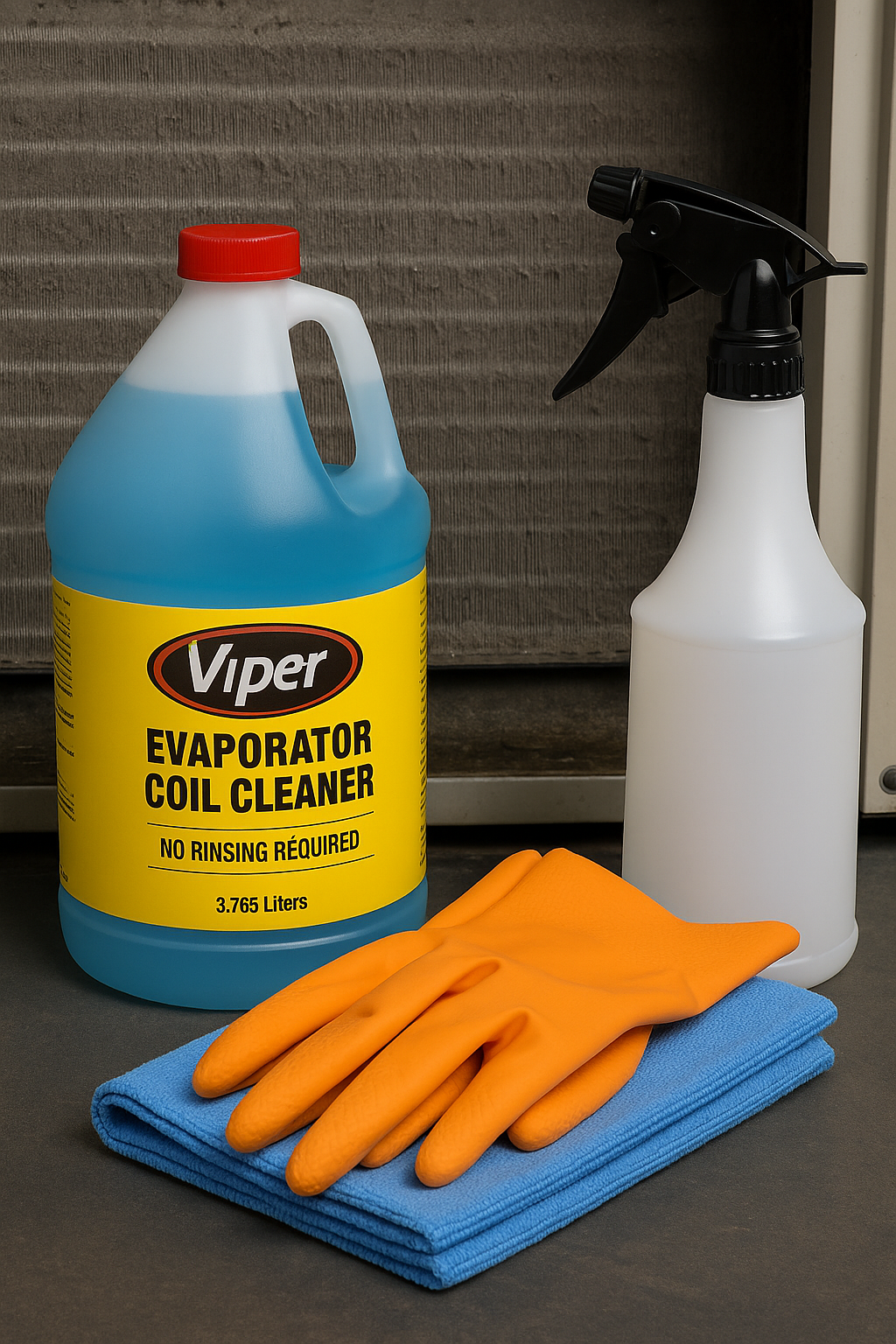
Viper Evaporator Coil Cleaner – 3.785L
✅ Biodegradable
✅ No rinsing required
✅ Safe on all metals
🧪 3. Alkaline Coil Cleaners (Safer, Still Powerful)
Best for: Condenser coils and HVAC fins
How they work: Alkaline solutions break down grease, dust, and organics without harming metal.
Pros:
- Gentler than acids
- Still effective at cutting grime
- Often foaming for better coverage
- Many are biodegradable
🧪 4. No-Rinse Evaporator Cleaners
Best for: Indoor coil cleaning when rinsing isn’t an option
How they work: Spray directly on coils. Evaporator moisture handles the rinsing.
Great for:
- Wall-mounted split systems
- Homes without access to water drain
- Allergy prevention (many are anti-bacterial)
What’s the Best Chemical to Clean AC Coils at Home?
For most Aussie homes with split systems or ducted AC, the safest and most effective option is a non-acidic foaming coil cleaner like:
✅ Viper Evaporator Coil Cleaner (3.785L)
- Safe for use indoors
- No rinse needed
- Foaming action pulls grime from deep inside fins
- Biodegradable and odour-neutral
- Trusted by HVAC pros Australia-wide
This one’s especially great for homeowners because it reduces your need to disassemble units or deal with harsh fumes.
How to Use Chemical Coil Cleaners Safely
Okay, let’s get down to the “how.”
🧼 What You’ll Need:
- The right coil cleaner (choose wisely from above)
- Gloves and safety glasses
- Screwdriver (if opening indoor unit)
- Drop sheet or tray (for indoor units)
- Garden hose (for outdoor units, if rinsing required)
🔧 Step-by-Step: Indoor Coil Cleaning
-
Turn off power to your AC unit at the switchboard.
- Open the front cover and remove filters (clean these too!).
- Locate the evaporator coils (usually behind filters).
- Spray your coil cleaner generously.
- Let the foam expand and sit for 5–10 minutes.
- If required, rinse gently or let the AC run (for no-rinse types).
- Replace filters, close the unit, and power back on.
🔧 Step-by-Step: Outdoor Coil Cleaning
- Power off your system.
- Use a brush or vacuum to remove loose debris.
- Spray coil cleaner from top to bottom across the fins.
- Allow to sit for the recommended time.
- Rinse with a gentle spray from your garden hose (avoid pressure washers!).
- Let air dry before restoring power.
How Often Should You Clean Your Coils?
For residential units in Australia, aim to clean your coils every 6 to 12 months, depending on:
- Dust levels in your area
- Frequency of AC use
- Presence of pets or smokers
- Whether you live near coastal air (salt = corrosion risk)
Can You Use Household Cleaners Instead?
Technically? Yes. But we don’t recommend it.
Vinegar or dish soap might clean the surface, but they won’t cut through the deep grime. Worse — harsh chemicals like bleach can corrode the fins or release toxic fumes into your home.\
Always use chemicals specifically designed to clean AC coils. They’re formulated to be non-corrosive, safe for HVAC metals, and more effective overall.
What Happens If You Never Clean Your AC Coils?
If you let things go too long, here’s what you’re looking at:
- ⚠️ 20%–40% reduction in cooling efficiency
- ⚠️ Higher wear on the compressor
- ⚠️ Risk of ice buildup and water leaks
- ⚠️ Shortened system lifespan
- ⚠️ Indoor air quality drops (hello, mould spores)
- ⚠️ Possibly voided warranty due to lack of maintenance
Long story short: clean coils = cool air and lower bills.
Where to Buy Chemical Coil Cleaners in Australia
Ready to grab the right product?
👉 Check out HVAC Shop Australia — they’ve got:
- Top brands like Viper, DiversiTech, and Javac
- Non-acid, no-rinse options perfect for homeowners
- Bulk coil cleaner bottles for HVAC techs and contractors
- Fast delivery Australia-wide
Final Thoughts: Keep It Clean, Keep It Cool
Using the right chemical to clean AC coils isn’t just a maintenance chore — it’s a smart move that saves energy, extends your aircon’s lifespan, and improves your comfort year-round.
So whether you’re a homeowner doing a quick refresh or a technician deep-cleaning a customer’s system, the right coil cleaner makes all the difference.
Just remember:
- Pick the right type of chemical for your coil (indoor vs outdoor)
- Use safety gear
- Never overdo it or use household sprays
- Stay on a regular cleaning schedule
Your AC will thank you — with better performance, lower bills, and chilly air on demand.