
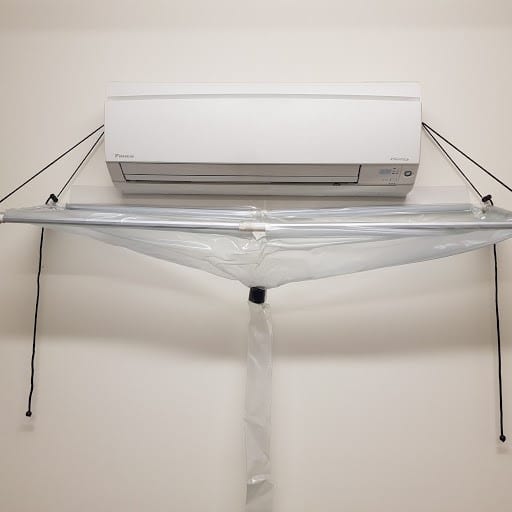
You’ve set aside a Saturday arvo to clean your air conditioner. You grab your wash bag, stretch it over the unit… and it barely fits. The seams strain, water starts pooling, and suddenly you’ve got more mess than maintenance.
Sound familiar? You’re not alone. One of the most common aircon cleaning headaches in Australia is trying to use a wash bag that’s too small for the unit. It might seem like a harmless shortcut, but forcing the wrong size bag can cause leaks, chemical stains, and even damage to both your walls and the AC itself.

In this guide, we’ll tackle the issue head-on. You’ll learn:
-
Why bag sizing matters (especially in Aussie homes and rentals).
-
How AC wash bags work — and where things go wrong.
-
Fixes when your bag is too small.
-
Buyer’s guide tips for getting the right size first time.
-
The best AC wash bag products for different unit widths.
-
Maintenance must-knows to get more life out of your gear.
-
When to stop patching and simply upgrade.
-
A real-life Aussie customer story showing what happens when you size down instead of up.
By the end, you’ll know exactly how to size, fit, and troubleshoot your AC wash bag like a pro.
Why It Matters
Australia’s love affair with air conditioning means we’ve got units of all shapes and sizes hanging off walls in Sydney apartments, Brisbane townhouses, and regional Queensland homes. But here’s the rub: not all wash bags are created equal.
Problems when the bag’s too small
-
Leaks and overspray: When seams are overstretched, they tear. Dirty water runs down the unit instead of draining neatly.
-
Chemical staining: Oversized units in small bags often leave gaps, letting cleaner streak down walls — a rental nightmare in Melbourne.
-
Wasted time: Instead of a 20-minute job, you’re stuck fiddling with buckets and towels.
-
Customer trust issues: For tradies, turning up with the wrong size bag can look unprofessional.
The cost of a wrongly sized bag can be more than a replacement. According to Energy.gov.au, regular maintenance saves money on power bills — but not if you’re damaging paintwork or having to redo the job.
How It Works (Explained Simply)
Think of an AC wash bag like a waterproof poncho for your air conditioner. It wraps around the indoor head unit, creating a funnel that channels all the cleaning water and muck into a drainage hose, which runs into a bucket.

But when the bag is too small:
-
The poncho doesn’t cover properly — gaps appear at the back or sides.
-
Seams stretch, creating weak points where water escapes.
-
Drainage doesn’t flow freely because the funnel angle is too tight.
Instead of a clean, controlled wash, you end up chasing leaks and wiping down walls.
Aussie Tips & Buyer’s Guide (Local Insights)

1. Measure before you buy
Grab a tape measure and note the width of your split system. Aussie homes commonly have 1m, 1.5m, and 2m-wide units, but larger systems are becoming more popular.
2. Always size up
If you’re between sizes, go bigger. A slightly loose fit is easier to secure with painter’s tape than an undersized bag that bursts.
3. Keep a kit if you’re a tradie
For professionals in Brisbane or Newcastle servicing a variety of brands (Daikin, Mitsubishi, Fujitsu), it’s worth having at least two sizes on hand.
4. Don’t push it
If you feel the bag straining, stop. Overstretching seams will shorten the lifespan from 30 uses to three.
Quick 5-Step Guide: How to Measure Your AC for the Right Wash Bag
-
Grab a tape measure – Start with the width of the indoor head unit (end to end).
-
Measure the widest point – Don’t just measure the face panel; include curves or trim if they extend out.
-
Check the manufacturer’s specs – Daikin, Mitsubishi, Fujitsu, and others often list width in cm on the ID plate.
-
Add a small buffer – Go up a size if your unit is close to the bag’s max width (better loose than too tight).
-
Match to product range –
-
Up to 1.2m → Air Conditioner Wash Bag
-
1.2–2.4m → Aircon Cleaning Bag Suits Less Than 2.4m
-
Heavy-duty/tradie jobs → Tradie Hydrobag
-
Best Products to Try
Here’s a quick guide to HVAC Shop’s range:
-
Air Conditioner Cleaning Bag Kit: Great starter pack for small to medium units.
-
Air Conditioner Wash Bag: Reinforced seams, ideal for everyday homeowners in Sydney.
-
Airconcare Split System Wash Bag: Versatile fit for most Aussie brands, especially popular in Melbourne.
-
Aircon Cleaning Bag Suits Less Than 2.4m: Perfect for larger units up to 2.4m.
-
Tradie Hydrobag Split System Aircon Cleaning: Built for heavy-duty jobs in regional QLD, reusable 50+ times.
You can also browse the full Cleaning & Preventative Maintenance Collection.
Maintenance Must-Knows
-
Rinse after use: Prevent cleaner residue breaking down seams.
-
Dry in the sun: Perth tradies swear by it — UV keeps mould at bay.
-
Store flat: Folding creases the seams, shortening lifespan.
-
Rotate bags: If you’ve got multiple sizes, spread the workload.
When to Upgrade
Replace your bag when:
-
Seams start to crack or stretch.
-
Water leaks even when fitted correctly.
-
You’ve upgraded your AC to a larger capacity (common in Sydney renos).
-
Chemical stains appear despite careful cleaning.
Client Story – Brisbane Overspill
Mick, a homeowner in Brisbane, tried to use a small bag on his new 2.2m Daikin. Halfway through the job, the seams popped, sending dirty water down his freshly painted wall. After upgrading to the Aircon Cleaning Bag Suits Less Than 2.4m, he now cleans his system mess-free and reckons the upgrade paid for itself the first time it saved him from repainting.

Key Takeaways
-
Using a wash bag that’s too small risks leaks, stains, and damage.
-
Always measure your unit and size up if unsure.
-
Reinforced models like the Airconcare Wash Bag and Tradie Hydrobag offer reliable fits.
-
Rinsing, drying, and flat storage extend bag life.
-
Upgrading your bag saves money in the long run by preventing repairs or repainting.
Don’t risk leaks or stains by squeezing your AC into the wrong bag. Explore our full range of AC wash bags today and get the perfect fit for your unit.
FAQs
Q: What happens if my AC wash bag is too small?
It can leak, split at the seams, or leave chemical stains on your unit and walls.
Q: How do I choose the right size bag?
Measure your unit width. If unsure, size up — it’s easier to tape a loose bag than risk tearing a small one.
Q: Can I use the same bag for Daikin, Mitsubishi, and Fujitsu units?
Yes, as long as the width matches. Always check specs first.
Q: How long should a wash bag last?
Anywhere from 20 to 50 uses, depending on quality and care. The Tradie Hydrobag is built for maximum reuse.
Q: Do I need different bags for commercial systems?
Yes. Larger ducted or multi-split heads require reinforced, oversized bags like the Hydrobag.
Written by: Rica Francia Macaspac, content writer at HVACSHOP. Rica helps Aussie tradies and homeowners understand HVAC gear without the jargon, working with industry experts to ensure accuracy and local relevance.
Date Updated: Nov 11, 2025