Understanding Single-Stage vs Two-Stage Cordless Vacuum Pumps in HVAC Work
Choosing between a single-stage and a two-stage cordless vacuum pump is not just a spec comparison. It directly affects evacuation quality, moisture removal, and long-term system reliability. Both types are designed to remove air and vapour from a system, but they behave very differently once you push toward deeper vacuum levels.
For technicians working across residential installs, service calls, and commissioning jobs, the real question is not which pump is “better” in theory. It is which pump matches your daily workload. If you want to explore current options while reading, the best starting point is the vacuum pump collection at HVACShop.com.au.
Single-stage pumps focus on simplicity and portability. Two-stage pumps focus on deeper vacuum and better moisture removal. The right choice depends on how critical evacuation quality is in your work.
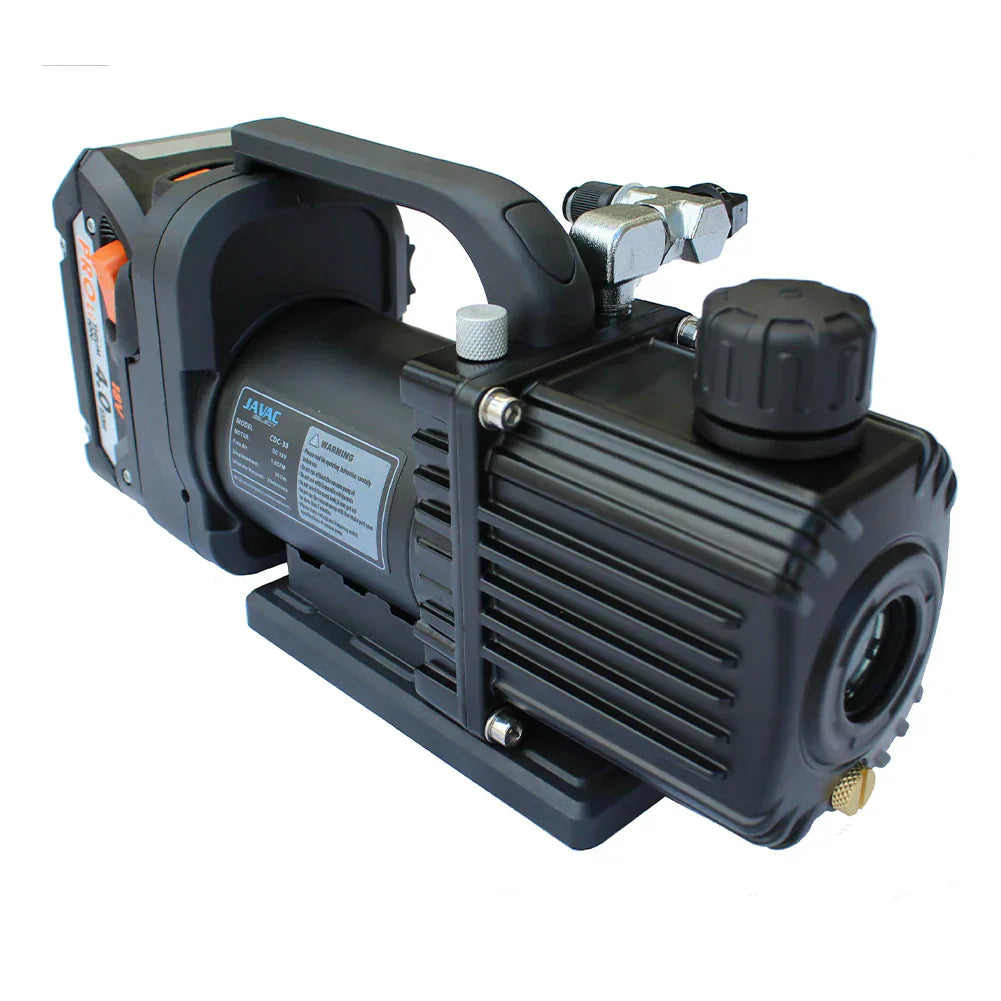
Featured Cordless Two-Stage Buying Path
A cordless two-stage pump is the stronger fit when deeper evacuation and better moisture removal matter more than shaving a little weight off the tool bag.
What Is the Real Difference Between Single and Two-Stage Pumps?
The core difference comes down to how far the pump can pull down a system. A single-stage pump uses one compression cycle. It can evacuate air and vapour effectively, but it tends to struggle as pressure drops toward deeper vacuum levels.
A two-stage pump adds a second compression stage. This allows it to continue pulling down the system even as pressure drops lower. That is where the real advantage shows up. It is not just about speed. It is about achieving a cleaner system with less moisture and fewer contaminants left behind.
In real HVAC work, that difference becomes important during commissioning. Moisture left in the system can affect oil, refrigerant performance, and long-term system reliability. That is why deeper evacuation is often treated as a non-negotiable step on higher-quality installs.
Understanding CFM vs Vacuum Depth
CFM, or cubic feet per minute, measures how quickly a pump can move air. It is useful, especially when working on larger systems. But CFM alone does not tell the full story.
Evacuation is usually a two-part process. First, you remove bulk air quickly. Then, you keep pulling down into lower pressures where moisture removal becomes the real goal. This second part is where two-stage pumps usually outperform single-stage pumps in a noticeable way.
A pump with decent airflow but weak low-pressure performance may look fine at the start, then lose its edge once the system gets closer to a deeper vacuum. That is why experienced technicians do not judge evacuation tools by CFM alone.
Vacuum Pump Types in HVAC
There are several vacuum pump designs out there, but not all are suitable for proper HVAC evacuation. Oil-filled rotary vane pumps remain the most common because they are reliable, serviceable, and capable of reaching the lower vacuum levels needed for system prep.
Other pump styles can work in niche situations, but when it comes to evacuating refrigeration and air conditioning systems properly, rotary vane pumps still dominate because they balance performance, serviceability, and familiarity in the field.
Single-Stage vs Two-Stage Cordless Vacuum Pump Comparison
Side-by-Side Product Comparison Widget
If your work regularly includes commissioning, moisture removal, and deeper evacuation targets, two-stage cordless pumps usually justify the spend more easily than single-stage models.
In practice, the difference is not just about price. A two-stage pump produces a deeper, cleaner evacuation, which directly impacts system longevity and commissioning quality. A single-stage pump still has its place, but it is not usually the first choice when evacuation quality matters.
When a Single-Stage Pump Makes Sense
Single-stage cordless pumps can still be useful in the right situations. If your work mainly involves small systems, quick service jobs, or lighter-duty evacuation tasks, they offer a simpler and often lighter option.
They are also attractive where portability matters most. For technicians moving between several smaller jobs in a day, a lighter pump can reduce fatigue and improve workflow speed.
That said, the limitation is real. They are not the preferred choice when the job demands deeper vacuum performance or stronger moisture removal. If your work regularly needs that level of evacuation quality, a single-stage pump can become the limiting factor.
When a Two-Stage Pump Is the Better Choice
Two-stage pumps are the standard for deeper evacuation work. They are better suited to system commissioning, new installs, repairs where moisture removal matters, and jobs where achieving a lower final vacuum is part of doing the work properly.
They are also more forgiving when field conditions are less than ideal. Longer hoses, warmer ambient conditions, and more complex systems all make evacuation harder. A two-stage pump handles that kind of real-world demand more confidently.
For many professional HVAC technicians, a two-stage cordless pump becomes the default choice because it delivers more consistent results across a wider range of jobs.
Two-Stage Performance Focus
Two-stage cordless pumps suit techs who want deeper evacuation, stronger moisture removal, and more confidence during commissioning.
Real-World Buying Considerations
Choosing the right pump is not only about stages. Battery compatibility, runtime, portability, oil management, and general build quality all play a role.
Many technicians prefer cordless tools that match their existing battery platform. That makes charging simpler, reduces downtime, and helps the pump fit into the same workflow as the rest of the kit. A pump that fits how you already work will usually deliver more value than one that looks better on a spec sheet but slows you down in practice.
If you are comparing options, the smartest starting point is the vacuum pump collection. That gives you a cleaner way to compare what is actually available instead of overthinking one isolated spec.
Final Thoughts
Single-stage and two-stage cordless vacuum pumps both have a place in HVAC work, but they solve different problems. Single-stage pumps offer simplicity and portability for lighter tasks. Two-stage pumps provide deeper evacuation and better moisture removal for more demanding work.
The better choice depends on your workload. If evacuation quality and long-term system performance matter, a two-stage pump is usually the stronger investment. If your work is lighter and prioritises convenience, a single-stage pump can still be useful.
For technicians working across a range of systems, it often makes sense to prioritise flexibility and consistency. A pump that can handle deeper evacuation when needed will usually support a wider range of jobs over time.