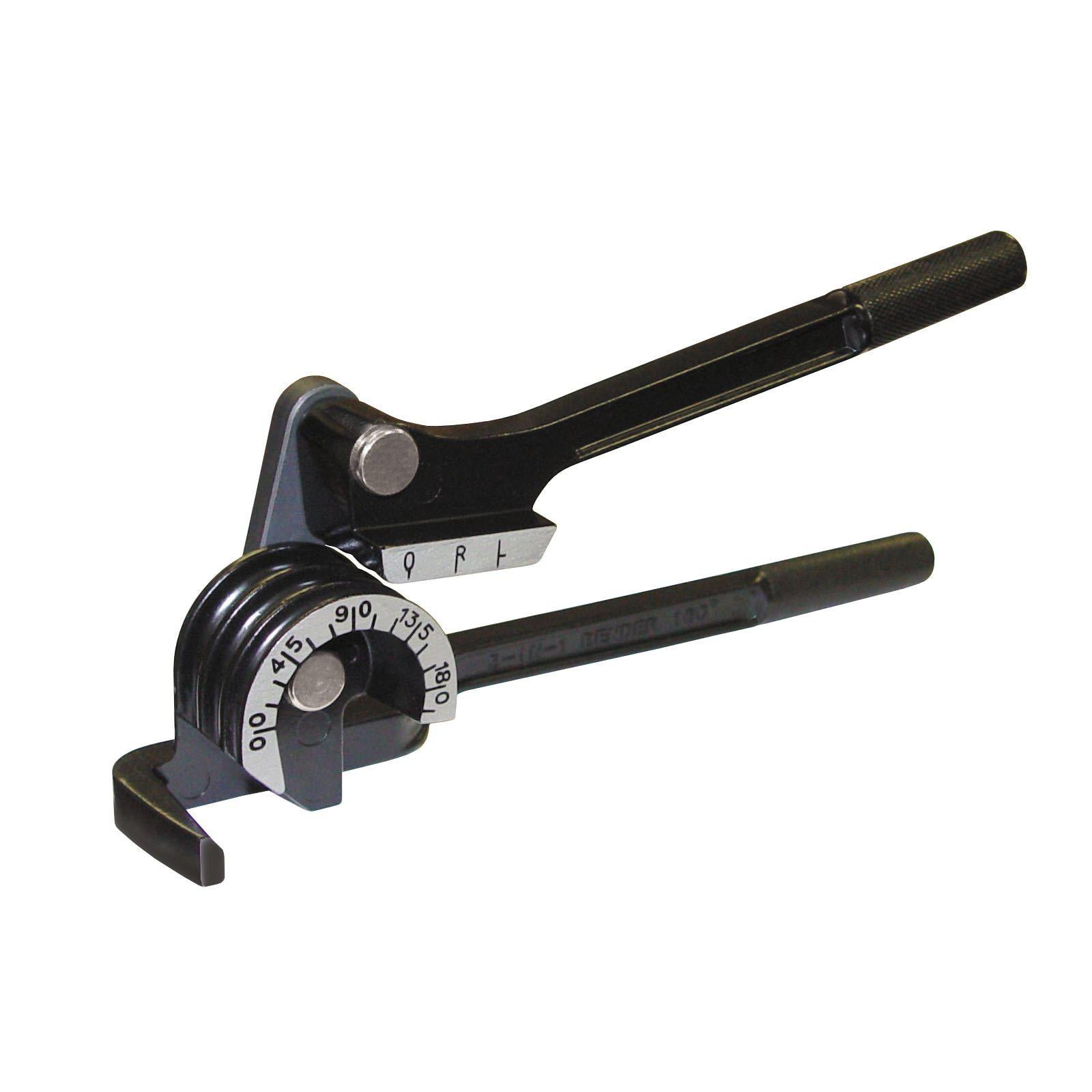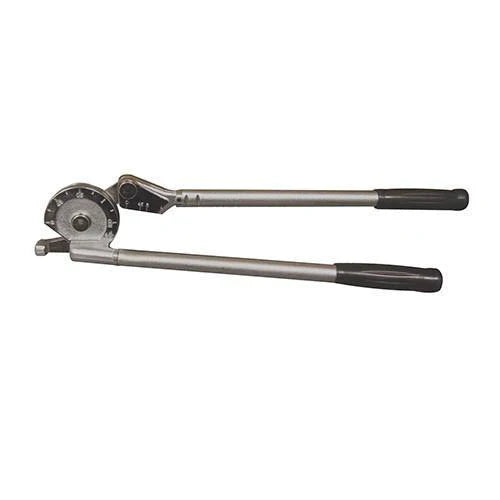
learn how to use a pipe bender effectively


Hey there, DIYers and pros! Ever found yourself scratching your head trying to bend a pipe just right, but instead, it turns into an oddly shaped spaghetti noodle? Fear not! Pipe bending doesn't have to be rocket science (although it might feel like it sometimes). With the right tools and a little know-how, you can master the art of pipe bending like a true pro. Ready to dive in?

Table of Contents

WHAT IS A PIPE BENDER?

Precise Pipe Bender Tool

Pipe benders are tools that are used in the tube bending or pipe bending process. Pipe benders are not required for tube bending. However, they can be quite helpful in terms of comfort and convenience.

HOW DOES A PIPE BENDER WORK?

When using a pipe bender, the process begins by positioning the pipe against the former, a curved part of the bender designed to shape the pipe. The handles are then pulled to apply pressure, causing the pipe to bend gradually around the former. As the pipe is pushed into the curve, it's compressed and stretched at different points along its length, following the precise shape of the former. The tighter the bend, the more pressure is needed, and for larger pipes, a longer handle provides the necessary leverage. This ensures that the pipe maintains its integrity without kinking or distorting, resulting in a smooth, accurate bend.

HOW TO USE PIPE BENDER TOOL (STEP-BY-STEP PROCESS)

Step 1: Die Installation

It's the initial step in the bending procedure. Select a die based on the pipe size and ensure it's properly installed.

Step 2: Prepare The Follower Block

Install the follower block correctly to ensure an accurate and error-free bend.

Step 3: Pipe Placement

Position the pipe in the bender and mark where you want it to bend. Ensure the pipe size matches the die and follower block.

Step 4: Installation of U-Strap

The U-strap holds the pipe securely in place during the bending process. Reinsert the pin after positioning the strap.

Step 5: Insert the Drive Pin

The driving pin secures the pivot arms to the die, allowing the pipe to bend.

Step 6: Pipe Alignment Checking

Use the markers made earlier to ensure the pipe is aligned with the die's edge for a precise bend.

Step 7: Adjusting the Degree Pointer

Set the degree pointer to zero before starting the bend to track how far the pipe bends.

Step 8: Bending

Pull the handles of the bender to gradually bend the pipe, following the degree marker.

Step 9: Pipe Removal Preparation

Release the lever and remove the drive pins to prepare for removing the pipe from the bender.

Step 10: Remove the Pipe

Using reverse engineering, loosen the tensioner bolts and carefully remove the bent pipe from the machine.

PIPE BENDER FORMS

There are several types of pipe benders, including dual pipe, ergonomic, mini pipe, conduit, ratchet, and free-standing benders.
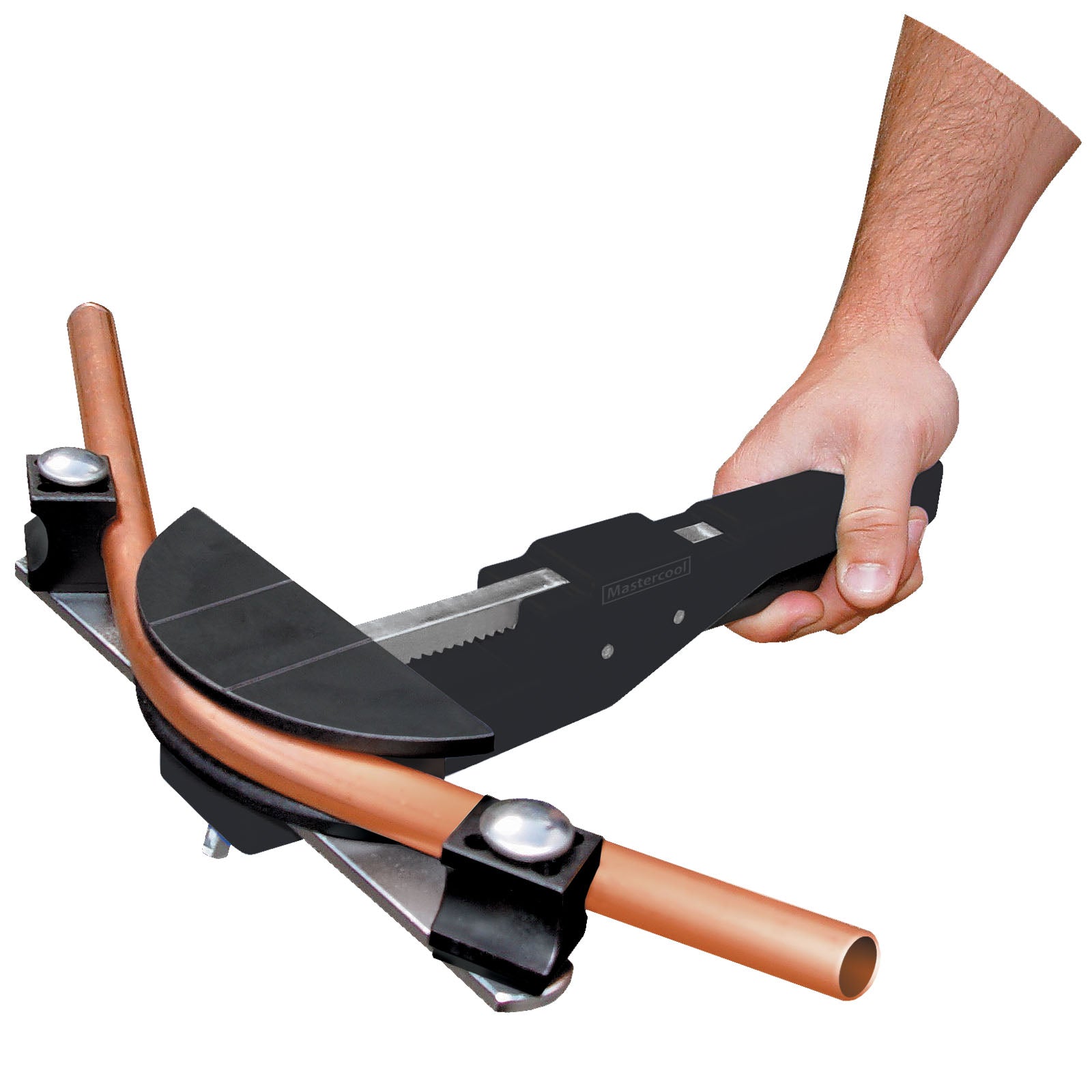
In addition to the common types of pipe benders, there are specialized variations for specific tasks. Hydraulic pipe benders, for example, use hydraulic pressure to bend thicker or larger pipes with minimal manual effort, making them ideal for heavy-duty applications. Electric pipe benders automate the bending process, offering consistent results for repetitive tasks, often used in industrial settings. Mandrel benders, on the other hand, use a flexible mandrel inserted into the pipe to prevent collapse during the bending process, ensuring a smooth internal surface—especially useful for thin-walled or soft materials like copper or aluminum. These types of benders provide additional precision and control depending on the material and bending requirements.

Pro Pipe Bending Equipment

PIPE BENDING TIPS USING A PIPE BENDER

  1. Ensure the former and roller sizes are accurate for the pipe size.
  2. Measure the pipe from the middle for accurate bends.
  3. Practice to achieve a smoother bend.
  4. Over-bend slightly to compensate for spring-back.
  5. For lighter materials, fill the pipe with sand and water to avoid crimping.

COMMONLY ASKED QUESTIONS

What should I take note of in pipe bending?

Pay attention to proper technique to avoid damaging the pipe and ensure longevity and performance.

Can you bend square tubing with a pipe bender?

Yes, square or rectangular tubing can be bent using a pipe bender with the right technique.

MAKE PIPE BENDING EASIER WITH THE RIGHT PIPE BENDER FROM HVAC SHOP
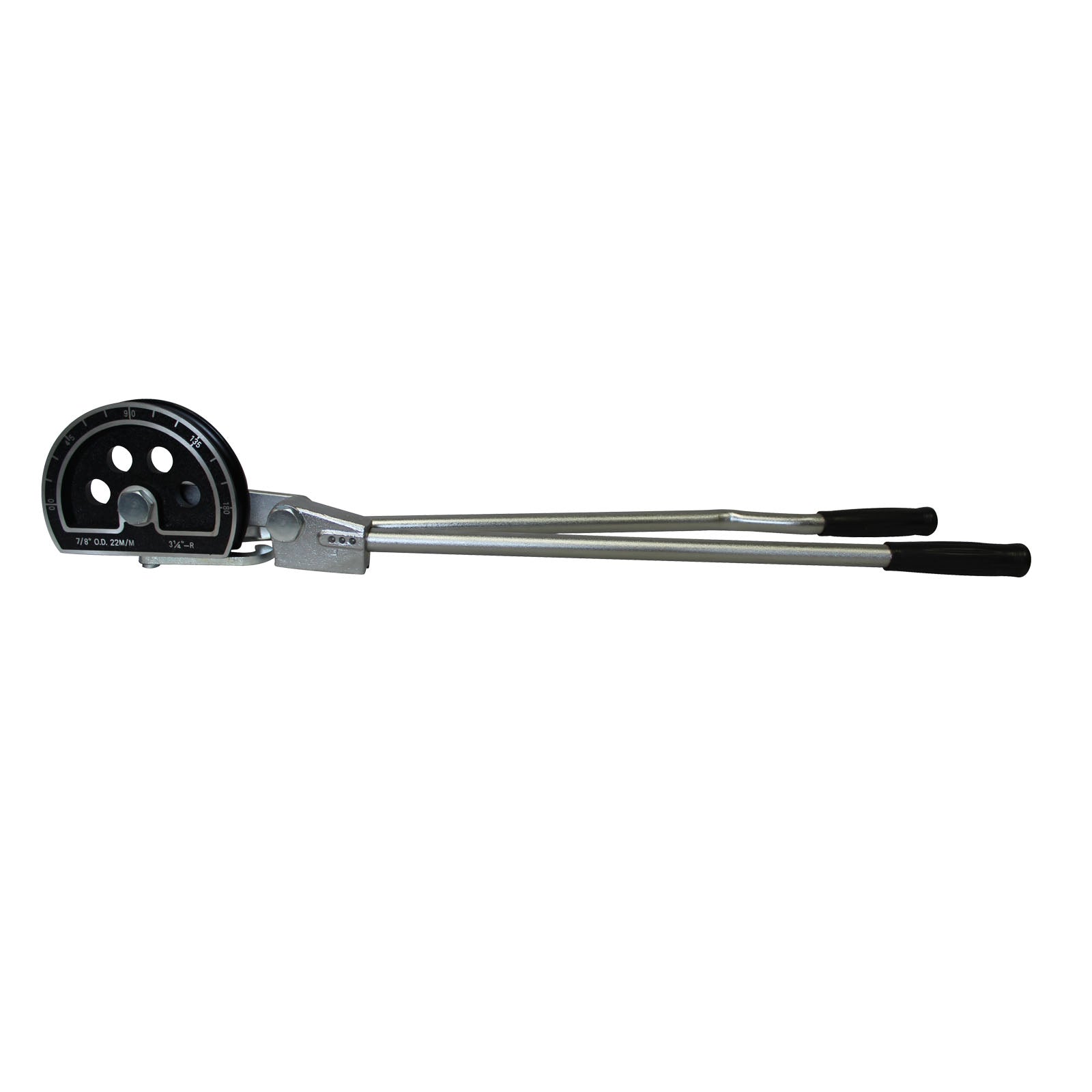
Top-Notch Pipe Bender

Looking for the right tools for your pipe-bending project? Check out HVAC Shop's range of pipe benders, and make pipe bending a breeze!

For those working with lightweight materials like copper or aluminum, our ergonomic and mini pipe benders are perfect for smaller projects or tight spaces, offering ease of use and precision. If you're handling larger pipes made of tougher materials, like steel, our free-standing or hydraulic benders provide the power and leverage needed to create smooth, clean bends with minimal effort. We also offer ratchet benders, which are ideal for confined spaces where a more traditional pipe bender may not be feasible.

In addition to offering a wide selection of tools, HVAC Shop is committed to ensuring that you have everything you need for your project. Our detailed product descriptions and helpful customer service team can guide you to the best choice for your specific job, ensuring that pipe bending is no longer a headache but an enjoyable and efficient process. Visit our collection today and find the perfect bender for your project!

Leave a comment

All comments are moderated before being published

Blog posts

View all

Testo Surface Probes: Complete HVAC Guide Australia

contact-thermometerRica Francia Macaspac

Surface temperature probes are one of the most-used tools on a working HVAC/R technician's belt. When you need an accurate temperature reading from a pipe surface, motor housing, compressor case or coil, contact measurement gives you something an infrared gun simply cannot: direct thermal coupling with the surface itself. This guide covers probe types, accuracy factors and how to pick the right Testo surface probe for every job.


Testo 115i Clamp Thermometer: Pipe Temperature Guide

bluetooth-thermometerRica Francia Macaspac

The Testo 115i is a wireless clamp thermometer built for HVAC/R technicians who need fast, reliable pipe temperature readings without holding a probe in place. Purpose-built for superheat and subcooling calculations and refrigerant charging workflows, it connects via Bluetooth to the Testo Smart App so both hands stay free for gauges and service valves. This guide covers who should use it, how to get accurate readings, and where it fits in your toolkit.

Surface Temperature Measurement in HVAC Australia

compressor-diagnosticsRica Francia Macaspac

Surface temperature measurement runs through almost every aspect of HVAC/R service work — from refrigerant charging and compressor diagnostics to coil performance checks and motor overheating detection. Getting it right means using the correct probe type at the right location, with proper contact and insulation. This guide maps the main surface measurement tasks to the probes and techniques that deliver accurate, reliable results in the field.

Testo Temperature Probe Kit: Surface Air Immersion Guide

air-temperature-probeRica Francia Macaspac

Most HVAC/R technicians carry more than one temperature probe — and for good reason. Pipe surfaces, motor housings, air streams and liquid temperatures each call for a different probe geometry. A Testo temperature probe kit gives you a matched surface, air and immersion set in a single purchase, all using Type K Class 1 thermocouples that work with any Type K meter you already own. This guide covers what's in the kit, when to choose it over individual probes, and how each probe type is used in the field.

How to Use Surface Temperature Probes Correctly

commissioning toolsRica Francia Macaspac

Surface temperature measurement is one of the most common diagnostic tasks in HVAC-R — and one of the most frequently done wrong. A dirty contact surface, poor probe placement, zero insulation from ambient air, and reading before the display has settled: these four mistakes alone account for most of the inaccurate results tradies bring back from the field. This guide covers correct technique from surface prep through to documentation, so every reading you take is defensible, repeatable, and actually tells you something useful about the plant you're working on.

Senior Safe: Easy AC Cleaning Guide

AC wash bag AustraliaRica Francia Macaspac

Stay cool and safe with elderly-friendly AC wash bag cleaning tips. Discover easy, chemical-free methods seniors across Australia use to keep air fresh and power bills low.