
Reviewed by: the HVAC Shop Technical Team
Published: May 2025
Last reviewed: April 2026
Bluetooth Smart Tools: Why More Aussie Tradies Are Using Them
In a fast-paced trade environment, efficiency matters. That is exactly why Bluetooth smart HVAC diagnostic tools for faster jobsite workflow are getting so much attention from tradies, technicians, and serious DIY users across Australia.
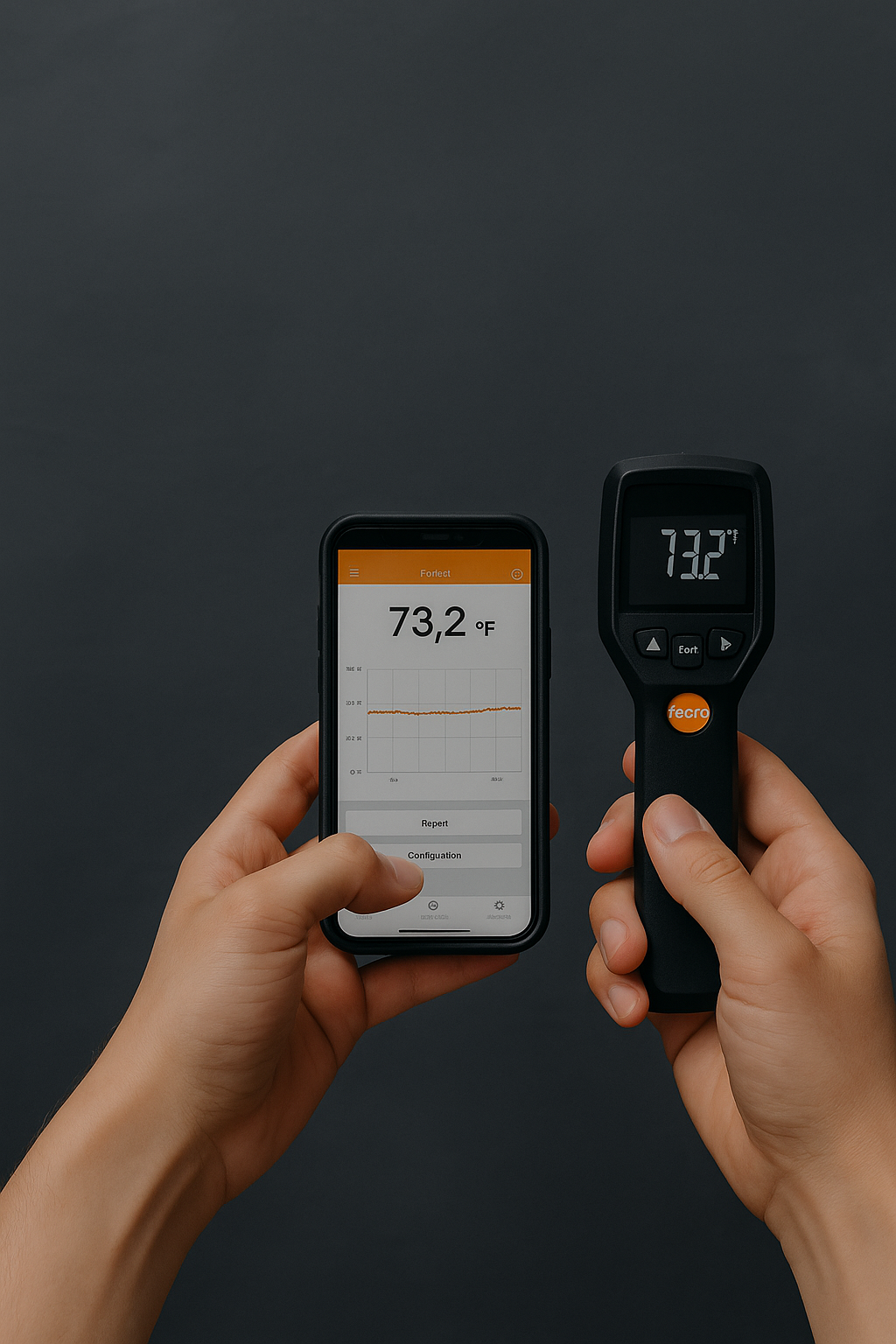
From HVAC diagnostics to measurement, reporting, and system verification, Bluetooth-enabled tools are changing the way work gets done. Instead of juggling handwritten notes or repeatedly checking gauges, tradies can now view live readings, log data, and generate reports straight from their phone or tablet.
👉 Upgrade your setup with reliable Bluetooth smart tools for Australian tradies designed for real jobsite conditions.
Most Bluetooth issues on site are caused by battery condition or interference, not faulty tools.
What Are Bluetooth Smart Tools?
Bluetooth smart tools are traditional trade tools enhanced with wireless connectivity. Instead of relying solely on a local display, they transmit data to an app, where readings can be viewed, stored, and analysed.
This creates a centralised workflow where multiple tools feed into a single interface. Instead of manually writing readings, everything is captured digitally from the start.
For HVAC technicians, this means pressure, temperature, and airflow data can be tracked simultaneously, improving accuracy and reducing the chance of missing key information.
How Bluetooth Smart Tools Work in HVAC Systems
Most modern tools use Bluetooth Low Energy technology. This allows them to transmit data in efficient bursts rather than a continuous stream, which improves battery life while maintaining accuracy.
When paired with a mobile app, the tool becomes part of a larger diagnostic system. A digital manifold can calculate superheat and subcooling automatically. Temperature probes can track system performance over time. Pressure readings can be logged and compared instantly.
Using Bluetooth-enabled HVAC manifolds and probes for real-time system diagnostics allows technicians to move freely while still monitoring system performance.
Line-of-sight positioning improves Bluetooth reliability more than reducing distance alone.
Evacuation, Micron Behaviour, and Smart Tool Integration
One of the biggest advantages of Bluetooth tools appears during evacuation. Micron gauges and vacuum probes can transmit live readings directly to an app, allowing technicians to monitor system dryness without standing next to the pump.
This is particularly useful on larger sites. Instead of checking the gauge manually, you can monitor micron stability remotely. If readings rise after isolation, it indicates moisture or leaks.
Bluetooth tools make this process faster and more reliable. Instead of relying on guesswork, you can confirm evacuation performance with real data.
Why Bluetooth Smart Tools Are Growing in Australia
Australian job conditions amplify the benefits of smart tools. In Brisbane, humidity makes accurate diagnostics critical. In Perth, extreme heat affects both tools and workflow. In Sydney, high-density environments require efficient movement between units. In Melbourne, changing temperatures demand reliable readings across different conditions.
Bluetooth tools reduce physical movement, allowing technicians to monitor systems from a single location. This saves time and reduces fatigue, particularly on larger jobs.
Battery health directly affects Bluetooth stability. Replace batteries early to avoid connection issues.
Real Tradie Scenarios
On a Sydney residential job, a technician can attach probes to the system and monitor readings from inside the home instead of moving back and forth. This reduces time and improves workflow efficiency.
On a Melbourne commercial system, multiple probes can be connected simultaneously. This allows the technician to analyse performance across different points without switching tools.
On a Perth rooftop installation, Bluetooth tools allow monitoring from a safer distance, reducing time spent climbing and improving overall safety.
Comparison Table: Traditional vs Bluetooth Workflow
| Task | Traditional Method | Bluetooth Workflow |
|---|---|---|
| Reading measurements | Manual checks | Live app monitoring |
| Recording data | Handwritten notes | Automatic logging |
| Diagnostics | One reading at a time | Multi-point analysis |
| Reporting | Manual write-up | Instant digital reports |
| Safety | Close proximity | Remote monitoring |
Cluster Context: How Smart Tools Fit Into HVAC Workflow
Bluetooth tools are not standalone. They integrate with manifolds, vacuum pumps, hoses, and gauges. Together, they form a complete diagnostic system.
A smart manifold works with temperature probes. Vacuum probes work alongside pumps. Gauges confirm system pressure. This creates a connected workflow that improves accuracy and efficiency.
That is why professionals invest in a complete system rather than a single tool.
When to Upgrade to Bluetooth Tools
If your current workflow involves repeated movement, manual note-taking, or inconsistent readings, upgrading to Bluetooth tools can improve efficiency immediately.
Technicians who switch often notice faster job completion, fewer errors, and better customer communication.
👉 Upgrade to modern Bluetooth HVAC tools for faster diagnostics and reporting and streamline your workflow.
Key Takeaways
Bluetooth smart tools are not just a convenience. They improve accuracy, reduce manual work, and create a more efficient workflow. In Australian conditions, where jobs can be physically demanding, this makes a significant difference.
Final Thoughts
Smart tools are becoming standard across HVAC work. The difference between average and professional results often comes down to workflow efficiency. Bluetooth tools help bridge that gap by providing real-time data and cleaner reporting.
👉 Explore Bluetooth smart HVAC tools for professional tradies and upgrade the way you work.
FAQs
Do Bluetooth tools need internet?
No, only for updates and cloud features.
Are they reliable?
Yes, when used correctly and maintained properly.
Do they save time?
Yes, especially for diagnostics and reporting.