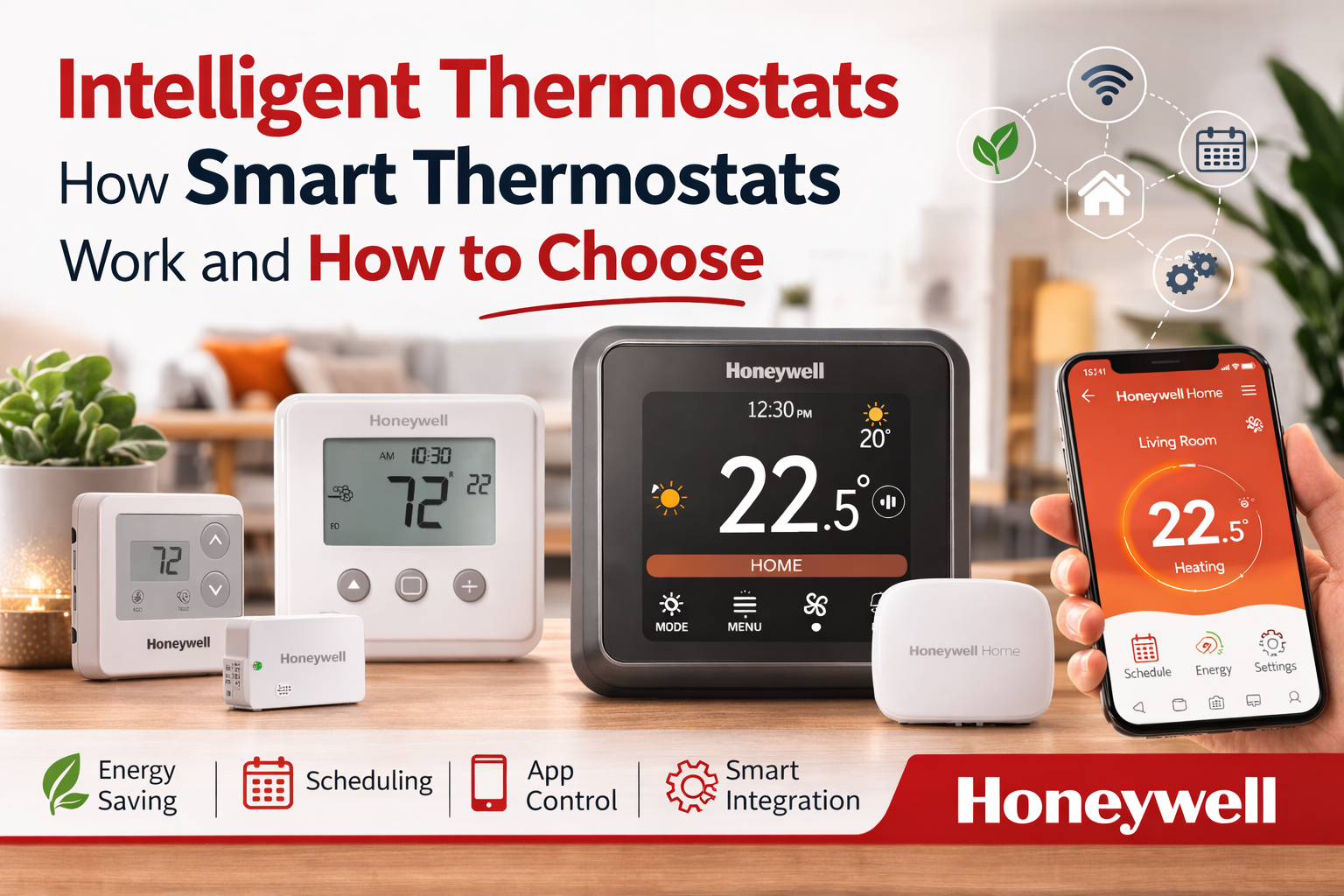
The Smart Temperature Revolution

An old thermostat does one basic job. You turn it up. You turn it down. It follows orders, even when those orders don’t match the day you’re actually having.

That’s fine until you live in a real Australian week. Melbourne can give you a cold snap in the morning, a warm arvo, then a chilly night again. Brisbane can feel “cool” on the number, but still sticky in the air because of humidity. Sydney coastal air can make a home feel damp and clammy, even when the temperature looks “okay”.

Honeywell WiFi touchscreen smart thermostat for Australian home comfort control

In those conditions, the simple “set it and forget it” approach often wastes energy and comfort. You end up heating or cooling an empty house. You forget to change settings before work. You run the system harder than needed because the home never quite settles.

That’s where an intelligent thermostat comes in. It’s a smart thermostat that does more than a basic programmable thermostat. It can connect to WiFi, let you adjust settings from an app, learn patterns, and help you manage comfort in a more automatic way.

This guide is built for Australian homes and Aussie trade reality. We’ll keep it practical. We’ll explain what an intelligent thermostat is, how it works, how it compares to manual and programmable controls, and how to choose the right one without getting caught by common mistakes.

If you want to see the type of gear many people start with, you can browse the Honeywell smart thermostat range and get a feel for what “basic to smart” looks like in real product terms.

And if you’re already building a connected home, it helps to think of the thermostat as part of the bigger system. This article on smart home integration in Melbourne shows how people tie comfort control into the rest of the house, not just the heater or air con.

What is an Intelligent Thermostat?

An intelligent thermostat is a temperature controller that can make better decisions than a basic thermostat. It still turns heating and cooling on and off, but it also uses extra information to do it smarter.

The first big change is WiFi connectivity and app control. A WiFi thermostat connects to your home network, so you can see and change settings from your phone. That means you can fix the “I left it running” mistake from the driveway, the office, or even from a holiday house.

Honeywell ProSeries WiFi thermostat screen showing a setpoint for ducted HVAC control

The second change is scheduling, like a programmable thermostat, but with more flexibility. You can still set times for weekday mornings and evenings. The difference is that intelligent thermostats often make schedules easier to manage, and they can adjust when life changes.

The third change is learning. Some models use learning algorithms that watch how your home heats and cools. Over time, the thermostat can start to predict what you need and when you need it. It might start heating a bit earlier on a cold morning because it knows your home takes time to warm up.

Remote access is another big one. A manual thermostat only works when you are standing in front of it. A basic programmable thermostat only does what you programmed last month. A smart thermostat lets you check and adjust any time, as long as you have internet.

Many intelligent thermostats also offer energy monitoring. This is not always perfect, because it depends on the system type and what data the thermostat can read. But even simple run-time reports can help you spot patterns, like the system running longer on humid days or when a door is left open.

Voice assistant integration is common too. In many homes, you can link a smart thermostat to a voice system like Google Assistant or Alexa. That can be handy, but it should be seen as a convenience feature, not the main reason to buy.

So what’s the difference from a basic programmable thermostat? A programmable thermostat is mostly “set times, set temps”. An intelligent thermostat adds “connected, adaptable, and aware”. It can respond to change, not just follow a fixed timetable.

Did You Know?

Many comfort complaints aren’t about “the unit is too small”. They’re about control. A better control strategy can reduce short cycling, stop overcooling, and make the house feel steadier.

If you’re not sure if your home is even a good fit for a smart thermostat, the safest next step is to look at your current control type and your HVAC system model. If you want help matching the two, talk to our team to confirm compatibility before you commit.

How Intelligent Thermostats Work

At the centre of every thermostat is sensing. The thermostat measures temperature in the space, then decides if the system should run. Intelligent thermostats still do that core job, but they add more layers around it.

Most models have one or more internal temperature sensors. Some can also use remote room sensors. That helps when the thermostat is in a hallway that doesn’t match the bedroom comfort you care about.

Next is the WiFi connection to your home network. This is what makes a WiFi thermostat “connected”. It lets the thermostat talk to an app, send usage info, and receive updates. A weak router signal can make a smart thermostat feel “glitchy”, so WiFi quality matters.

Honeywell digital thermostat with clear display used for steady temperature control in Australia

Then comes the cloud-based app interface. In plain terms, your thermostat and your phone often meet “in the middle” through an online service. This is why you can control the home from anywhere, not just when you’re on the same WiFi.

Machine learning algorithms are the part people hear about most, but they’re not magic. They look for patterns, like when you usually wake up, when you get home, and how quickly the house changes temperature. Some systems can also adapt based on weather trends, but results vary by model and setup.

Integration with your HVAC system is the part that matters on the tools side. The thermostat must match the type of system you have. That could be a ducted reverse-cycle system, a heating-only setup, a multi-stage system, or a system with zoning.

Some intelligent thermostats can control multiple stages of heating and cooling. Some can manage fan behaviour better. Some can work with add-ons like humidifiers or dehumidifiers, but only when the HVAC system supports it and wiring is correct.

Real-time data and reports are usually built into the app. You might see run time per day, temperature swings, and sometimes alerts. These alerts can be helpful, like “system ran longer than usual” or “temperature didn’t change as expected”. They can also be noisy if the thermostat is not set up right.

If you want a step-by-step look at what “setup right” means, read our guide on the smart thermostat installation process. It helps you understand what a tech checks before wiring anything in.

Pro Tip

Before you choose a thermostat, confirm what you have on the wall now. Is it low-voltage control wiring, or is it switching mains power? A photo of the old thermostat wiring and the indoor unit model sticker can save a lot of guesswork.

One more practical point: a smart thermostat is only as “smart” as the system it controls. If your ducting leaks, filters are blocked, or sensors are in the wrong place, the thermostat can’t fix that. But it can make problems easier to spot, because you can see patterns that a basic thermostat never shows.

For safety, treat thermostat work with respect. Even if the control side is low-voltage, the equipment it connects to is still part of an electrical system. Follow safe work practices and, when in doubt, use a licensed professional. For general safety guidance, Safe Work Australia is a reliable starting point: Safe Work Australia.

When everything is set up well, the thermostat becomes the front door to smart HVAC control. You’re not guessing what the system is doing. You’re managing it with clear settings, better timing, and useful feedback.

Smart vs Programmable vs Manual

This is the section where a lot of buying decisions get clearer. People often search “smart thermostat Australia” or “programmable thermostat” and get mixed advice. The truth is: each type can make sense, depending on the home and how you live.

A manual thermostat is the simplest. You set a temperature, and that’s it. Some manual thermostats are very basic, like a dial. Others are digital, but still manual in behaviour. They can be reliable, but they rely on you remembering to adjust them.

A programmable thermostat is a step up. You can set schedules, like “warm the house at 6am” and “cool it at 5pm”. For many households, that alone can reduce waste, because you stop running heating and cooling when you don’t need it.

An intelligent thermostat adds remote control, learning, and smarter automation. It can act like a programmable thermostat, but it can also adapt to changes, provide usage reports, and respond to your routine.

Basic Honeywell thermostat with simple controls, showing how manual or basic control looks on the wall
Type Key features Cost control Energy savings Best fit
Manual thermostat Basic setpoint control, wall-only adjustment Relies on you remembering to change settings Often lowest, because it’s easy to run when you don’t need to Small homes, low use, people who like manual control
Programmable thermostat Schedules you set, consistent day-to-day timing Cuts wasted run time when your routine is stable Moderate to strong when schedules match real life Regular routines, school mornings, predictable work hours
Intelligent thermostat App control, WiFi access, automation, often learning and alerts Reduces “set and forget” waste, supports smarter timing and away modes Often highest when used well, but varies by home and setup Busy homes, mixed routines, people who want remote control

Tech Specs

Compatibility is not just “does it turn on”. It can include system type (heating only or heating and cooling), stages, fan control, zoning, and how the indoor unit expects to be commanded. If you don’t know, check the indoor unit model label and the existing thermostat wiring before choosing.

Cost control and energy savings are closely linked, but they’re not identical. Cost control is about avoiding needless run time and keeping setpoints sensible. Energy savings is the result you get over time when the system runs less and runs smarter. With an intelligent thermostat, the biggest wins usually come from better timing, better away behaviour, and fewer “all day by accident” blow-outs.

When does each type make sense? A manual thermostat can be fine in a small home where people are always there and happy to adjust it. A programmable thermostat is great when your household runs on routine, like school mornings and evening dinner time.

An intelligent thermostat shines when routine is messy. Shift work. Kids’ sport. Working from home some days. Travelling. These are the homes where you get the most value from remote control and automation, because the thermostat can follow real life instead of a fixed timetable.

If you want a deeper read that focuses on the decision between smart and programmable, this article on smart vs programmable comparison can help you line up features with your actual day-to-day use.

Benefits for Australian Homes

The benefits of an intelligent thermostat come down to three things: comfort, control, and waste reduction. In Australia, those benefits show up a bit differently depending on climate and how the home is built.

Let’s talk energy bills first, because it’s a big reason people search “intelligent thermostat benefits”. You’ll often see savings figures mentioned in general advice and product discussions. A commonly cited idea is that smarter control can reduce heating and cooling waste, sometimes described in the 15–25% range in the right home. The safe way to think about it is simple: results vary, and your home’s insulation, duct sealing, setpoints, and habits matter most.

Even without chasing a perfect number, the everyday wins are easy to understand. A smart thermostat can reduce waste by avoiding heating or cooling an empty home. It can also help you stop overcooling in summer, which is a common comfort trap in humid areas.

Remote control is a simple but powerful benefit. If you’ve ever driven back home and realised the system has been running all day, you know the pain. With an app controlled thermostat, you can fix that in seconds.

Melbourne’s changing weather is a great example of where intelligent control helps. A cold snap can arrive fast. A smart thermostat can help your home respond without you constantly chasing the settings. It can also manage “pre-heat” or “pre-cool” behaviour more smoothly, depending on model.

Brisbane humidity is another big one. Comfort is not just temperature. When the air is sticky, people often turn the thermostat down too far, trying to feel dry. That can lead to overcooling and higher bills. A smarter control strategy, paired with the right system setup, can improve comfort without pushing temperatures to extremes.

Sydney coastal air adds its own challenges. Damp air and salt can make homes feel clammy, and it can also affect HVAC components over time. A smart thermostat won’t stop salt air, but it can help you run the system in a way that keeps comfort steadier instead of swinging hot and cold.

Integration with solar systems is another benefit people talk about. The basic idea is simple: if you have solar, you may prefer to run heating or cooling more when solar is producing. Some households use schedules and automation to do that. The exact approach depends on your energy plan, your system type, and the thermostat ecosystem you choose.

Rebates and incentives do exist in the wider energy efficiency world, but they change by state, retailer, and year. Instead of assuming something is available, it’s smarter to treat it as a possible bonus and check your local options when you’re ready to install.

If you want to dig deeper into the “why these features matter” side, our guide to advanced smart thermostat features is a helpful companion read, especially if you’re comparing models and trying to avoid buying something that doesn’t suit your system.

At the practical level, the biggest benefit is visibility. When the house feels wrong, you can see patterns. When the system runs longer than normal, you can spot it sooner. That helps you fix comfort issues before they turn into big bills or repeat call-backs.

If you’re aiming for better comfort and better control, and you want to do it without guesswork, contact us for a quote and we’ll help match the right thermostat to your HVAC setup.

Top Smart Thermostat Features

This is where “smart thermostat” starts to feel real. Features are only useful when they solve an everyday problem. So let’s break the big ones down in plain terms.

Geofencing (auto adjust when you leave)

Geofencing uses your phone location to help the thermostat decide if you’re home or away. If the household leaves, the system can ease back. When you’re on the way home, it can prepare the house. This is one of the best features for homes with mixed routines.

It’s also one of the easiest features to misunderstand. Geofencing works well when the right phones are connected, permissions are allowed, and the household agrees on how “away mode” should behave. If one person is always home, the settings should reflect that.

Voice control (Alexa and Google Assistant)

Voice control is handy in busy homes. “Turn it down” while you’re cooking, or “set it to 22” when you’re putting kids to bed. It can feel modern and simple.

But voice control is not essential. If you don’t love voice assistants, don’t buy a thermostat just for that. App control and good automation often deliver more real value.

Multi-zone control

Multi-zone control matters for larger homes, especially with ducted systems. Zoning means different areas can be conditioned differently. An intelligent thermostat setup can help manage those zones in a cleaner way, but it depends heavily on the zone controller and how the system is wired.

This is one of the reasons professional setup matters. The thermostat has to match the zone system, and the zone system has to match the HVAC unit. If one part is wrong, comfort suffers.

Energy reports and insights

Most smart thermostats provide some kind of usage history. This can be as simple as “the system ran for X hours today” or as detailed as graphs and comparisons to your usual pattern.

These reports help you catch the “silent waste” problems. A filter that’s blocked. A door that doesn’t seal. A duct that has come loose. The thermostat can’t fix those issues, but it can show you the symptom sooner.

Weather adaptation

Some systems can factor weather into their control decisions. In practice, this often looks like better pre-heating or pre-cooling, or smoother response to changing conditions.

In places like Melbourne, that can help comfort feel steadier. In Brisbane, the bigger comfort driver is often humidity and how the system is set up to manage it. So weather adaptation can help, but it’s not a cure-all.

Usage alerts

Alerts can tell you when something looks off, like the system running much longer than normal. Some alerts are also tied to maintenance reminders, like filter change prompts.

The trick is to keep alerts useful. Too many notifications can turn into noise. A good setup aims for alerts that help you act, not alerts that nag.

When you’re choosing features, focus on your real needs. If you travel a lot, remote control and geofencing matter. If you have a big home, zoning matters. If comfort swings drive you mad, look for better sensing and better automation options.

And remember: features only work when the thermostat is compatible with the HVAC system it’s controlling. If you’re unsure, talk to our team to confirm compatibility before you choose a model.

Smart Thermostat Brands in Australia

When people search “best smart thermostat Australia”, they usually want a short list of safe choices. The problem is that thermostat choice is not only about the thermostat. It’s about the system behind it.

In Australia, Honeywell options are common across a range of control styles, from basic controls through to smart system integration. You’ll see models that focus on simple scheduling, and models that add WiFi control and app features.

Some product names are used differently across markets. You may see references to smart WiFi models like the T6 series, and higher-end touchscreen series that are sometimes described with “9000” style naming in some places. The key point is not the label. The key point is compatibility and support in Australia.

That’s why local support matters. A smart thermostat is not just a box on the wall. It’s an ecosystem: app, updates, service parts, and installation knowledge. When you choose a brand with solid local distribution, you reduce the risk of headaches later.

Honeywell FocusPRO style thermostat with large display, suited to programmable scheduling in Australia

If you want to see options in one place, the complete Honeywell thermostat range is a good starting point for comparing “basic, programmable, and smart” without bouncing between random listings.

Honeywell also has well-known programmable lines that many techs have worked with for years. FocusPRO-style controls (and similar families) are often chosen when a customer wants reliable scheduling without going full connected home. They can be a strong fit in rentals, simple homes, or places where WiFi is unreliable.

The outline for this guide calls out price ranges and value, and the safest way to handle that is to talk in tiers rather than dollars. Entry-level WiFi thermostat models usually focus on remote access and basic schedules. Mid-tier intelligent thermostat options often add better automation, better reports, and smoother day-to-day comfort. Higher-tier setups are often about system complexity, like zoning support, multi-stage control, or deeper integration with the HVAC system. The right “value” choice is the one that matches your system and your routine, not the one with the longest feature list.

When you compare smart thermostat brands, try not to get stuck on hype. Instead, check these practical points.

First, check system compatibility. Is your HVAC system single-stage or multi-stage? Is it heating only, cooling only, or reverse-cycle? Does it use a common low-voltage control layout, or something more specialized? If you don’t know, the indoor unit model sticker and the existing wiring are your best clues.

Second, check how the thermostat handles your must-have features. If you want app control, confirm the app is supported in Australia and is actively maintained. If you want zoning, confirm it can work with your zoning controller.

Third, check support and warranty terms with the Australian distributor or authorized seller. Warranty length and coverage can vary by model and supplier, so it’s best to confirm rather than assume.

Fourth, check the real value for your home. An intelligent thermostat can be a great upgrade, but only if it fits your life. If your home routine is very stable, a good programmable thermostat might deliver most of the benefit with less complexity.

For a broader view of what’s commonly discussed and compared in the local market, our overview of Australian smart thermostat brands can help you understand the landscape without getting pulled into overseas-only models or mismatched advice.

If you want help choosing, a simple approach is to tell us what system you have and what problem you’re trying to solve. Are you chasing lower bills, better comfort, or easier control? Contact us for a quote and we’ll guide you to an option that fits your setup.

And one practical SEO-and-customer journey note: a good “spiderweb” cluster means related guides link back to this pillar, so nothing is stranded. If you manage the other pages in this cluster, add one short contextual sentence on each related article pointing readers back to this complete guide.

Upgrade to Smart Control

An intelligent thermostat is not about fancy features for the sake of it. It’s about control that matches real life. It helps you manage comfort in a home where weather changes fast, routines change often, and energy costs matter.

In this guide we covered what an intelligent thermostat is, how it works, and why it can beat both manual and programmable controls in the right home. We looked at the features that matter most, like app control, learning behaviour, geofencing, zoning support, and usage insights.

The most important takeaway is simple: choose based on compatibility and real needs. The best smart thermostat is the one that matches your HVAC system and your day-to-day routine. If you get that right, the comfort and control upgrade feels immediate.

Before you buy intelligent thermostat gear online, do one quick check: confirm your HVAC system type and your existing control wiring, then match that to the thermostat requirements. If you want to avoid guesswork, talk to our team to confirm compatibility and get a clear install plan first.

If you’re ready to move forward, start by looking at options that suit Australian systems and support. You can shop smart thermostats Australia-wide, and if you want a low-pressure next step, contact us for a quote or compatibility check.

App controlled thermostatAustralian smart homeEnergy saving thermostatHoneywell thermostatIntelligent thermostatProgrammable thermostatSmart hvac controlSmart thermostatThermostat installationWifi thermostat

Blog posts

View all

Smart Thermostat Installation Guide Australia: DIY vs Professional, C-Wire and App Setup

C Wire ThermostatRica Francia Macaspac

Thinking about installing a smart thermostat in Australia? This guide explains DIY vs professional installation, how to check HVAC compatibility, what the C-wire does, and the step-by-step setup process from wiring to app configuration. It also covers common problems like WiFi dropouts, no power, and incorrect system settings, plus when it’s safer (and cheaper long-term) to call a licensed professional

Smart Thermostat Brand Buying Guide

ducted thermostat australiaRica Francia Macaspac

Choosing a Honeywell smart thermostat in Australia is really about compatibility, support, and the way your HVAC system is controlled. This guide compares Honeywell smart and programmable options, explains split vs ducted and heat pump fit, and helps you pick the right model for reliable comfort, setup, and long-term value.

Intelligent Thermostats: How Smart Thermostats Work and How to Choose

app controlled thermostatRica Francia Macaspac

Take the guesswork out of home comfort with this complete Australian guide to the intelligent thermostat. Learn what makes a smart thermostat “intelligent”, how WiFi and app control work, how it compares to manual and programmable thermostats, and which features matter most for Aussie conditions like Brisbane humidity, Sydney coastal air, and Melbourne cold snaps. We’ll also cover compatibility checks and common setup mistakes so you can choose the right thermostat and control your HVAC properly.

Smart Thermostat Features Guide for Australia

Geofencing ThermostatRica Francia Macaspac

A practical Australian Smart Thermostat Features Guide that explains which features actually matter in real homes and small businesses. Learn how remote app control, geofencing, energy reports, voice integration, and climate-based setup affect comfort, energy use, and day-to-day usability—so you can choose the right thermostat features for your HVAC system and routine.

Smart vs Programmable Thermostat

Australian HVAC tipsRica Francia Macaspac

Trying to choose between a smart and programmable thermostat in Australia? This practical guide compares features, costs, energy savings, and compatibility so you can pick the right upgrade for your home and HVAC system.

Nitrogen HVAC Applications

Commercial RefrigerationRica Francia Macaspac

Nitrogen is one of the simplest ways to protect HVAC installs from long-term headaches. This guide covers the real on-site uses of nitrogen in Australia: purging during brazing to prevent black oxide, controlled leak testing and pressure holds, commissioning checks before charging, and practical cylinder management so your kit is ready when you need it.