Vacuum pumps, vacuum lines, and chambers may all be tested with ease using the vacuum pump and gauges.
In both the home and the workplace, air conditioning is a must. A well-functioning air conditioning system keeps high temperatures and heat at bay. You must regularly check the vacuum and dehydration levels for a conditioning system to remain effective. You can quickly and accurately measure these levels with the help of a vacuum pump and gauges.

In this guide:
The Vacuum Gauge
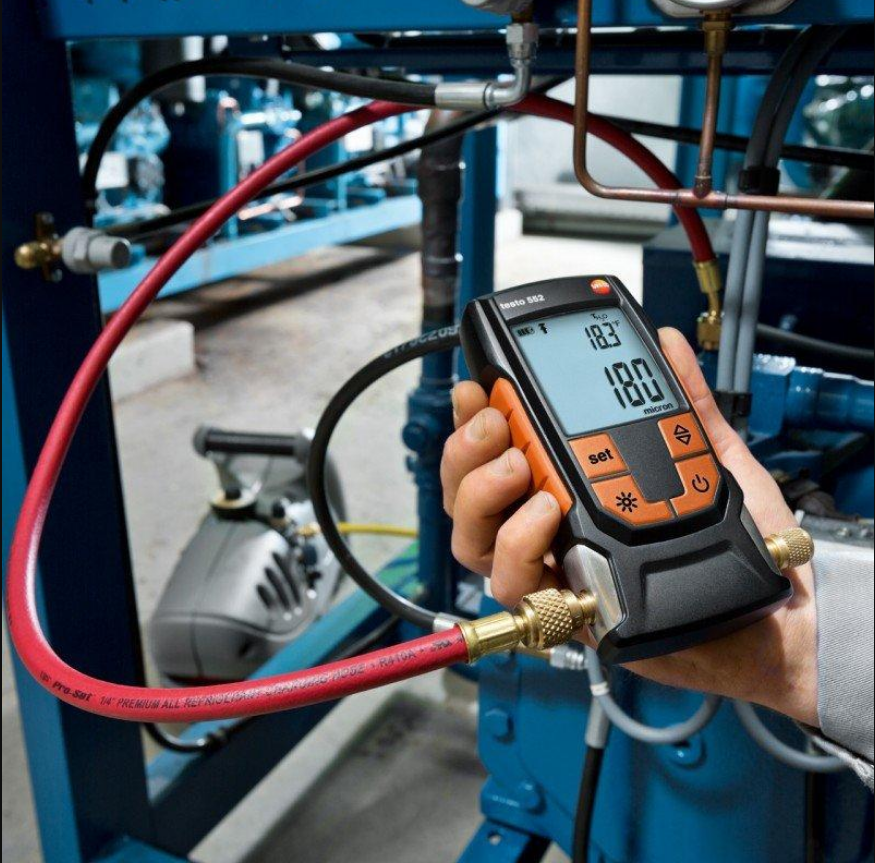
A vacuum gauge measures the pressure within an air conditioner. As needed, it can also measure the liquid gas's total output and intake and the vacuum level in microns.
While some gauges still use analog displays, they serve the same purpose as digital ones. The precision of modern gauges is exceptional, and due to their sturdy structure, they can last decades. A common HVAC professional uses a vacuum gauge to measure microns on an air conditioning unit to ensure the system is dry and leak-free.

The Micron Gauge
A micron meter (or micron gauge) is an instrument specifically designed to measure how much vacuum or evacuation is present in a system. It monitors the dehydration and degassing of appliances such as air conditioners, refrigerators, and deep freezers.
What is a Micron?
Absolute vacuum is often measured using mercury. Microns are the units of measurement for deep vacuum; 1,000 microns equals 1 millimetre of mercury. Because the tool's principal purpose is to determine the precise vacuum level in a system, it's an essential tool for technicians.

Guide to Buying a Good Micron Gauge
Purchasing a micron gauge that does not provide precise and accurate readings is a waste of money and can damage equipment. Here are the key factors to consider:
1. Accuracy
A micron gauge's precision is the most important indicator of its quality. The best way to ensure accuracy is to purchase a meter that has been certified by the National Institute of Standards and Technology (NIST). Certification is only provided once the item meets strict criteria.
2. Quality & Durability
If you plan to use your micron gauge in workshops or tough environments, choose something durable. Not every gauge is water and dust resistant, so check the IP rating if you work in harsh conditions.
3. Maintenance
Dirt is a micron gauge's toughest enemy. Oil and contaminants can degrade performance. Look for a device that is easy to clean and maintain, rather than one that requires complex cleaning procedures after every use.
4. Display and Features
Digital vs. Analog: Digital displays offer larger fonts and easier reading compared to old-fashioned analog dials. They also allow you to swap units instantly.
Smart Connectivity: Many modern gauges link to smartphones via Bluetooth. This allows you to view data remotely, graph trends, and save reports—functions traditional gauges cannot perform.
5. Connectivity
Ensure the gauge fittings are compatible with your existing hoses and equipment (typically 1/4" SAE flare).
Micron Vacuum Gauge Types
Ultrasonic Micrometre
Measures the time it takes for an ultrasonic wave to bounce back (Time of Flight). Useful for measuring the thickness of materials with complicated forms.
Optical Micron Gauge
Uses laser light beams to measure the shadow left by a material. It works quickly and can measure across moving materials like paper.
Laser Micrometres
Similar to optical meters but uses lasers for higher precision. They can take more than 50,000 measurements per second with incredibly low error rates.
Using a Micron Gauge
A micron gauge completes the evacuation process by ensuring non-condensable mediums (like air and moisture) are removed. Here is a step-by-step guide:
Step 1: System Setup
- Remove the valve cores from the system service ports to maximize flow.
- Connect core removal tools to large-diameter vacuum rated hoses.
- Connect the hose to the vacuum pump via a manifold if necessary.
Step 2: Create a Vacuum
- Open all valves and start the pump to reduce pressure.
- Ensure the micron gauge is not located directly at the pump inlet (this gives a false reading). Place it as far from the pump as possible.
- Reduce pressure to the target level (e.g., 500 microns). Close the valve between the pump and the system (isolation).
Step 3: Stabilization Test
- Once isolated, watch the gauge. The pressure will rise slightly and should stabilize.
- If it stabilizes below your target (e.g., 500 microns), the system is dry and tight.
- If it rises rapidly to atmospheric pressure, you have a leak. If it rises slowly and stalls, you still have moisture in the system.
Step 4: Maintenance After Use
- It is critical to clean the sensor after use, as oil can coat it and cause inaccurate readings.
- Some sensors can be cleaned with alcohol; check your manual.
HVAC Vacuum Pump and Gauges in Australia
You can buy HVAC Vacuum Pumps and Gauges in Australia from HVAC Shop. We offer high-quality products that will make air conditioner maintenance a breeze.
HVAC Shop has experts ready to answer your queries, so don't hesitate to call us today!