
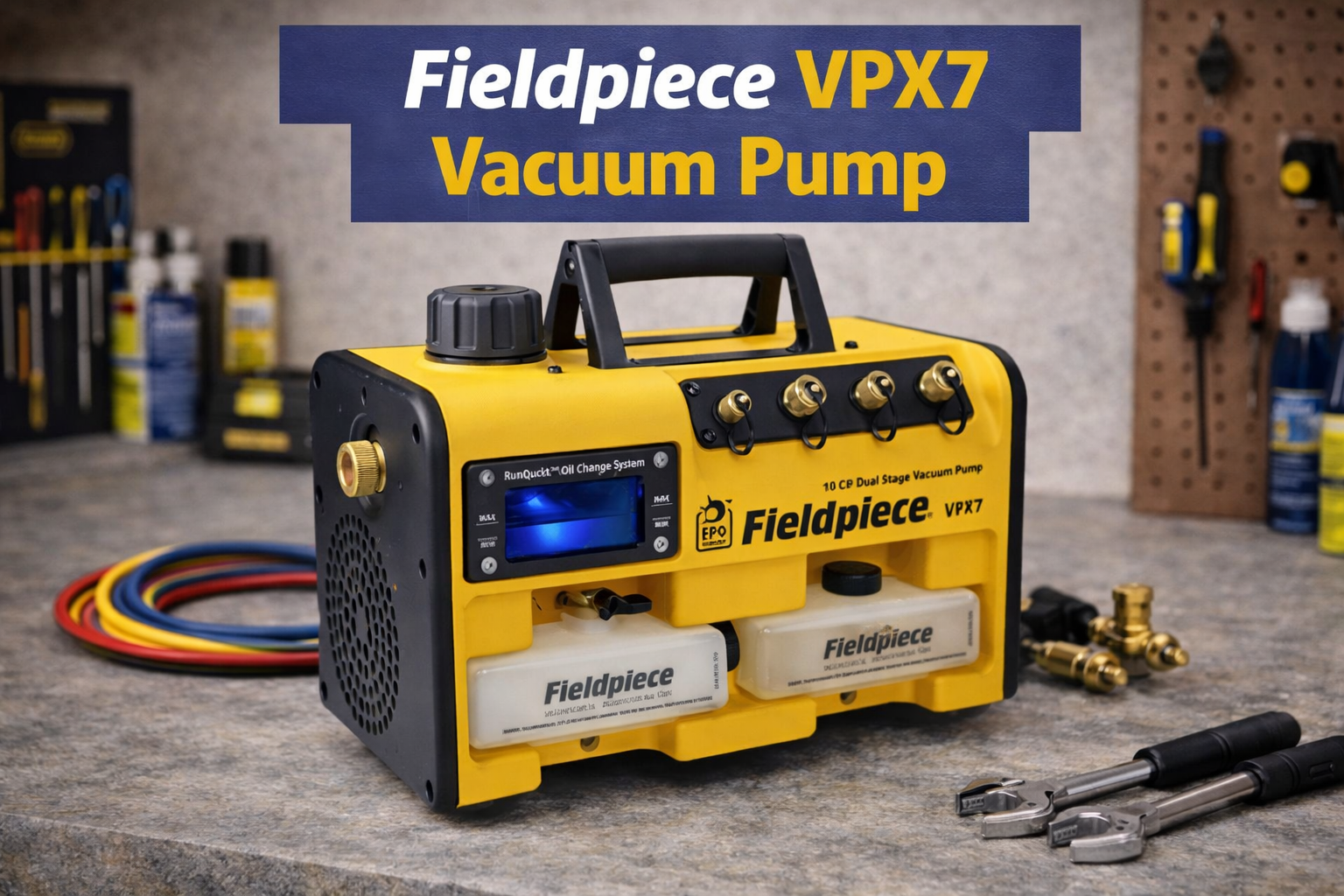
Fast Deep Evacuation
Good evacuation work is one of those parts of HVAC that customers rarely see, but it is often the difference between a smooth startup and a callback a week later. A system can look tidy on the wall, roof, or slab, yet still be carrying moisture, air, and non-condensables that should never have been left inside. When that happens, oil breaks down faster, performance drops away, and faults get harder to explain. The customer sees a problem with the install. The tech knows the real issue may have started during evacuation.
That is why vacuum pump quality matters so much in the field. A slow pump does not just feel annoying. It changes the pace of the whole day. It keeps you on site longer, makes the final stages of commissioning drag out, and creates the kind of pressure that leads to shortcuts. In Brisbane humidity, the moisture load can be harsh. On coastal work around Sydney, systems already fight salty air and tough outdoor conditions. In Melbourne cold snaps, a slow pull late in the afternoon can turn a clean finish into a frustrating delay.
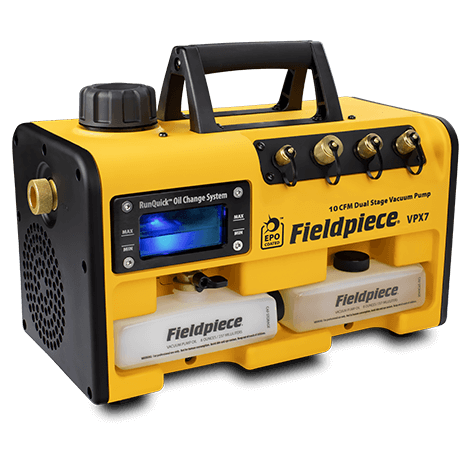
The Fieldpiece VPX7 vacuum pump is aimed right at that problem. It is designed for fast, deep evacuation with features that help in real service conditions, not just on a brochure. If you are comparing pumps, searching for a fieldpiece vpx7 review, or trying to work out whether a vpx7 10 cfm pump suits your workload, this guide breaks it down in plain English.
We will cover the core specifications, explain why the RunQuick oil system matters more than it first sounds, compare the VPX7 against the VP87 and VP67, look at A2L refrigerant compatibility, and go through deep vacuum best practice in simple terms. The aim is not to oversell a pump. It is to help you decide whether it fits your style of work across Australian conditions. If you want the broader brand context first, the Fieldpiece vacuum equipment collection is a useful place to see where the VPX7 sits.
Just as important, this article keeps the conversation grounded in real HVAC workflow. A vacuum pump is not a magic fix on its own. Hose size matters. Core removal matters. Micron measurement matters. Oil condition matters. The VPX7 is strong because it supports a better process, and when the whole process is right, the time savings become very obvious.
Fieldpiece VPX7: Features and Specifications
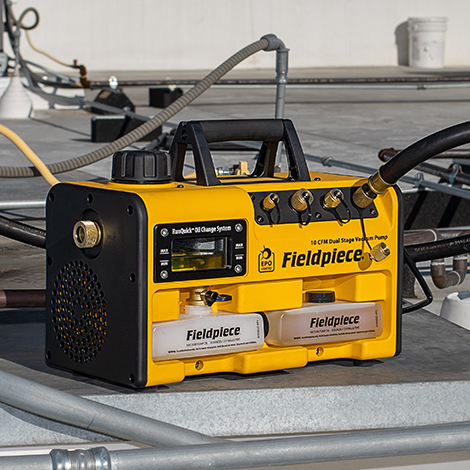
The VPX7 sits at the top end of this part of the Fieldpiece vacuum pump range for straight evacuation speed. The headline number is 10 CFM, or about 283 L/min, and that immediately tells you what kind of work it is built for. This is not a pump meant only for occasional touch-up jobs or very light domestic use. It is aimed at tradies who want faster pull-downs, less wasted waiting time, and better flow on everything from standard splits through to bigger installs and a lot of light commercial work.
Its ultimate vacuum target is 15 microns, and that matters more than many buyers first realise. Flow rate is easy to compare because it is the big number on the page. But a pump still has to pull deep enough to support proper dehydration work. A high-flow pump that cannot pull deep is not solving the real problem. The VPX7 stands out because it combines strong flow with a deep vacuum target, which is what professional evacuation work actually needs.
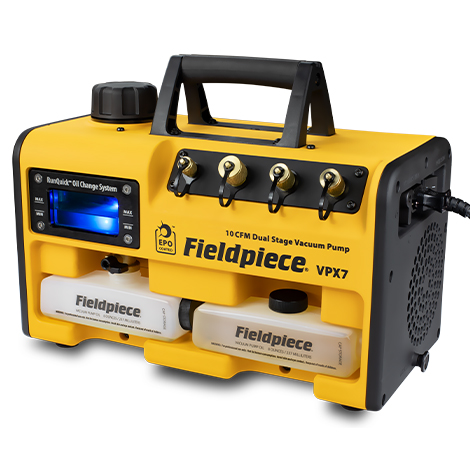
The motor is a 3/4 HP brushless DC design. In practical terms, that affects more than just the spec sheet. Motor design changes how the pump feels in the field, how it starts, and how it copes with real jobsite conditions. A serious motor platform helps the VPX7 behave like a proper trade tool rather than something that only looks good when it is new. Fieldpiece also gives it a small footprint, sturdy base, removable cord storage, and a layout that keeps hoses easier to manage around the front ports.
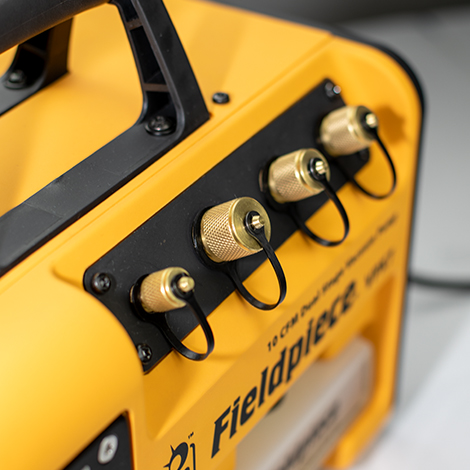
Port layout matters more than many people expect. The VPX7 gives you one 1/4 inch port, two 3/8 inch ports, and one 1/2 inch port. That means cleaner hose routing and better options for large-bore evacuation setups. On jobs where you want fast vapour removal, hose choice can matter almost as much as the pump itself. A pump with a smart port arrangement is simply easier to set up properly.
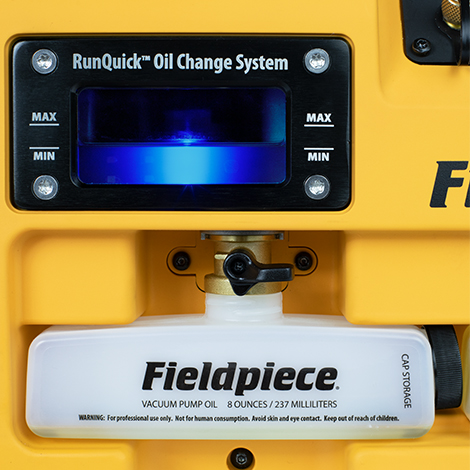
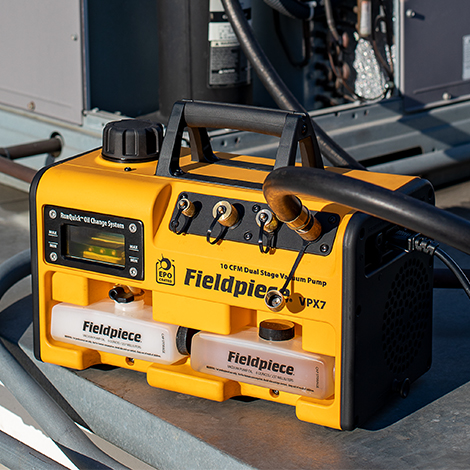
Another strong point is that the pump is built around the RunQuick oil change system and a backlit oil reservoir. Plenty of pumps can perform well with fresh oil. The real difference appears on jobs with higher moisture load, where the oil condition changes and performance can fall away if you do not respond. The VPX7 is built to make that response quicker and cleaner.
There is also practical durability built into the package. Fieldpiece describes the VPX7 as water resistant for direct rain exposure, which is the sort of feature that makes sense for Australian rooftop and outdoor work. No one should treat wet electrical conditions casually, but tools do end up in changing weather. A pump that is better prepared for mixed conditions is easier to trust on real jobs.
If you are mapping out a full van setup rather than buying one item in isolation, the Fieldpiece Australia tool guide helps show where the VPX7 fits within the wider range. That is useful because a pump works best when the rest of the evacuation gear supports it.
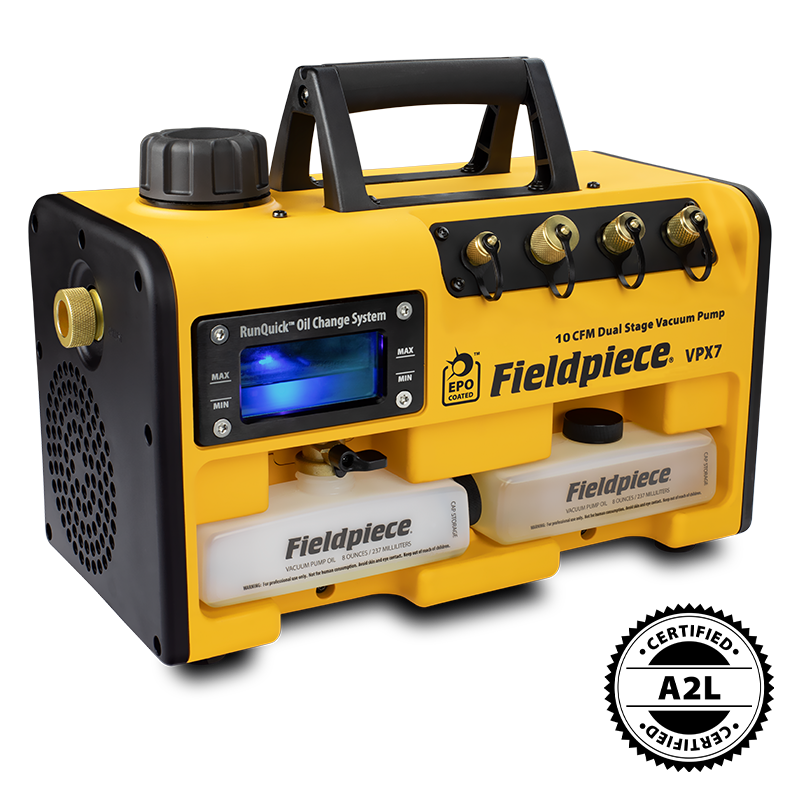
At a practical level, the VPX7 is a two-stage 10 CFM vacuum pump with a 15-micron ultimate vacuum target, a 3/4 HP brushless DC motor, A2L certification, a backlit oil reservoir, RunQuick on-the-fly oil changes, and four front ports for cleaner hose routing. It is also a notably light pump for its class, which matters when you are carrying gear up ladders, across roofs, and in and out of plant rooms all week.
Those details are why the VPX7 reads as more than just “the bigger one” in the range. It is meant to save time, keep performance more consistent during long pulls, and give techs more setup flexibility without becoming awkward to carry around.
RunQuick Oil Change System Explained
The biggest difference between a pump that looks impressive in the warehouse and one that genuinely earns its keep in the field is often oil management. Good oil is not just maintenance. It is part of the evacuation process. Once the oil becomes contaminated with moisture and vapour, pump performance drops away. Pull-down slows, final readings get harder to reach, and the job starts taking longer than it should. That is why the Fieldpiece RunQuick oil change system matters so much. It solves a very real field problem.
On the VPX7, the idea is simple. When oil condition starts to deteriorate, you can replace it quickly, neatly, and without turning the whole job into a messy interruption. That matters a lot more on moisture-heavy jobs than on clean demo bench tests. A pump with fresh oil and a pump with milky oil are not behaving the same way, even if both are technically running. Clean oil keeps sealing performance where it should be and helps the pump keep pulling at the speed you expected when you bought it.
What makes the VPX7 different is not just that the oil can be changed. Every rotary vane pump relies on oil. What matters here is how quickly you can do it and how little disruption it causes. The RunQuick setup is designed so the change can happen while the pump is still operating and without losing vacuum. That is a big deal on jobs where stopping the process feels like losing momentum. Instead of thinking, “I’ll just push through with tired oil,” you are more likely to actually do the oil change at the right time.
The backlit oil reservoir is also more useful than it first sounds. Plenty of techs have worked with ordinary sight glasses that are hard to read in dim areas, at dusk, in roof spaces, or when the weather turns dull. If you cannot clearly see the oil, it is easier to ignore it. The VPX7 makes the condition more obvious, and that helps techs act sooner rather than later.
That makes a real difference in Australian conditions. Humid summer air can load the oil quickly. Coastal work can mean long rooftop setups in mixed weather. Commercial service jobs often come with time pressure, access issues, and awkward locations where nobody wants to be kneeling beside a messy drain routine. The more practical the oil change process is, the more likely it will actually be done when it should be done.
There is also a simple mindset shift here. Some techs treat oil changes like workshop maintenance that happens after the job. With vacuum pumps, that thinking can cost time during the job itself. Oil quality affects evacuation speed. So when the VPX7 makes oil changes fast, it is not only being convenient. It is helping the pump stay productive during the pull.
If you want to support that sort of workflow properly, keeping a Fieldpiece vacuum pack on hand makes a lot of sense. The value is not in collecting accessories for the sake of it. The value is in being ready to keep the pump working at its best instead of limping through the second half of a job with contaminated oil.
A lot of “this pump feels slow” complaints are really dirty-oil complaints. Once the oil goes cloudy, evacuation speed often drops before the tech fully notices why. Fast oil changes can save more time than simply waiting longer with tired oil.
The RunQuick system is one of the main reasons the VPX7 keeps coming up in conversations about field efficiency. It is not flashy for the sake of it. It supports better habits, and better habits are what protect deep vacuum results.
VPX7 Performance for HVAC Work
Performance is where the VPX7 makes the clearest case for itself. The simple version is that it gives you the highest flow rate in this part of the Fieldpiece family while still targeting the same 15-micron level the smaller models aim for. That matters because most buyers are not choosing between a good pump and a bad pump. They are choosing between enough speed and more speed.
The VP67, VP87, and VPX7 all have a place. A smaller pump can still produce correct results when the setup is right and the system size matches. But if your workload includes longer line sets, repeat installs, commercial split systems, VRF branches, or jobs where you are simply sick of standing around waiting, more flow can make a real difference. It does not replace good technique, but it gives good technique more pace.
The VPX7 is also a sensible choice for techs who want one pump that covers everyday residential work without feeling underdone when larger jobs come along. That balance is important. Some tools are brilliant on the rare big day but clumsy the rest of the week. The VPX7 works because it improves normal jobs as well as heavier ones.
| Model | Flow Rate | Ultimate Vacuum | Motor | Best Fit |
|---|---|---|---|---|
| VPX7 | 10 CFM | 15 microns | 3/4 HP brushless DC | High-throughput residential work, larger splits, and a lot of light commercial evacuation |
| VP87 | 8 CFM | 15 microns | 3/4 HP brushless DC | Strong all-round install and service work where you want speed without stepping to the largest model |
| VP67 | 6 CFM | 15 microns | 1/2 HP AC | Residential and lighter-duty evacuation where lower throughput is still acceptable |
The fieldpiece vpx7 vs vp87 decision usually comes down to workload, not whether one is serious and the other is not. The VP87 is still a very capable professional pump. But the VPX7 is the better answer when speed matters more often. If you regularly handle larger splits, do repeat install work, or want less waiting during pull-down, the extra flow changes the feel of the job.
Against the VP67, the difference is clearer again. The VP67 still targets a deep vacuum and gives you the same general RunQuick concept, but it is naturally more at home in lighter residential thinking. The VPX7 gives you more headroom. That does not only help on obvious big jobs. It also helps when the setup is not perfect, when the system has seen more moisture than you would like, or when weather conditions are making a clean pull harder to achieve.
Another way to look at it is this: the VPX7 does not simply reduce waiting time. It can reduce frustration. When you pair it with the right hoses, a clean core-removal setup, and proper micron measurement, it gives the whole evacuation process a calmer rhythm. That matters on busy days where three small delays can easily turn into an hour of lost time.
That is also why it makes sense alongside more complete setups such as the Fieldpiece advanced HVAC kit. In that context, the pump is not carrying the whole process alone. It becomes part of a stronger overall workflow built around evacuation, recovery, and measurement.
A2L Refrigerant Compatibility
A2L compatibility is no longer a future-only talking point. It is part of normal buying decisions now, especially for Australian techs working on modern split systems and lower-GWP refrigerants. The VPX7 matters here because it is rated for A2L use, including R32 applications. That makes it more relevant than older pump thinking that leaves you wondering whether the tool still suits the direction the market is moving.
For many buyers, that is not about changing every job overnight. It is about not buying yesterday’s thinking when refrigerant practice is clearly moving forward. If R32 work is already a normal part of your week, the value is obvious. If you are still mostly dealing with older refrigerants, it is still smart not to buy gear that may feel behind too soon.
That said, compatibility should never be treated like a licence to get casual. A2L readiness on the pump is only one part of the bigger safe-work picture. Recovery procedures, leak awareness, ventilation, ignition-risk thinking, and proper handling practices still matter. If you want the formal Australian refresher on refrigerant handling obligations, the ARCtick licensing framework is the right reference point.
In practical terms, the VPX7 gives confidence because you are not forcing older assumptions onto newer refrigerant work. That is especially helpful when you are standardising the rest of your tools. If A2L jobs are becoming more common in your area, building around something like the Fieldpiece R32 premium kit makes sense because the pump becomes part of a setup designed for that style of service work rather than a disconnected purchase.
The biggest benefit is future-proofing without drama. You are not chasing a trend. You are simply choosing equipment that still makes sense as more lower-GWP systems become normal across Australian domestic and light commercial installs.
That matters because tool purchases last longer than one season. The more often a tool crosses from current jobs into next year’s jobs without fuss, the better value it usually becomes in practice.
Deep Vacuum Best Practices
A strong pump helps, but deep vacuum results always come from the whole setup. This is where a lot of frustration starts. Someone buys a powerful pump, then runs it through narrow hoses, leaves valve cores in place, skips a proper micron gauge, and wonders why the pull is still slow. The truth is simple: a good pump cannot fully rescue a poor evacuation setup.
Large-bore hoses are one of the biggest gains. Restriction kills evacuation speed. If you choke a 10 CFM pump through a poor hose arrangement, you are paying for performance that never reaches the system. Large-bore hoses let the pump breathe, improve vapour removal, and make the difference especially clear on longer runs and bigger systems.
Core removal is the next major win. Schrader cores left in place create restriction you simply do not need. Pulling them with the right tools opens the path and usually cuts evacuation time more than many techs expect. If you are trying to get the most out of a VPX7, core removal is not a fancy extra. It is part of doing the job properly.
Micron measurement matters just as much. The pump’s ultimate vacuum rating tells you what the pump can do at its ports, not what the system itself has actually reached. For that, you need a proper micron gauge used in the right place. That is one reason the VPX7 works well in a broader setup like the Fieldpiece advanced HVAC kit, where the evacuation workflow is supported by matched tools rather than random add-ons.
Gas ballast use is another part of the process that deserves attention. On wetter systems, it helps to use the gas ballast early in the pull, when the pump is moving the bigger load of air and moisture. Then, once the evacuation is deeper and the system is drying out, closing the ballast helps the pump reach a deeper final vacuum. That kind of small process detail often separates average results from clean, repeatable ones.
Digital measurement tools can help make the whole job more organised too. If you are comparing how evacuation fits into your broader testing workflow, the Fieldpiece SM480V comparison is useful context. And if remote checks, recording, or cleaner reporting are part of how you work, the Fieldpiece Job Link guide helps show where the wider ecosystem can support you.
Australian conditions make good setup even more important. Humid summer air can slow dehydration. Rooftop service work can tempt shortcuts when the sun is hard and the schedule is tight. Cooler southern weather still leaves moisture in the system even when it does not feel as obvious. The answer is not to rush harder. It is to reduce restrictions, monitor the job properly, and make sure the pump is being allowed to do what it was built to do.
If a VPX7 feels slower than expected, do not blame the pump first. Check hose size, valve cores, oil condition, gas ballast use, and micron gauge placement. A fast pump with a restricted setup still behaves like a slow system.
That is why deep vacuum best practice always comes back to process. Use large-bore hoses. Remove cores where appropriate. Watch the oil. Measure with a proper micron gauge. Run a decay test instead of guessing. The VPX7 is strongest when the rest of the workflow lets it perform properly.
VPX7 Maintenance and Care
Vacuum pump maintenance is not glamorous, but it is where long-term performance lives. The biggest item is oil, and with the VPX7 that is not just a background maintenance line. Oil is part of the pump’s sealing and operating performance. The good news is that Fieldpiece has made oil care easier than it is on many traditional pumps. The more important question is whether the owner actually uses that advantage.
The best habit is simple. Watch the oil condition closely and act early. If it goes cloudy, that is useful information, not decoration in the sight window. Cloudy oil usually means moisture contamination is dragging down evacuation performance. On a deep pull, especially on a system that has been open too long or has seen humid air, fresh oil can make more difference than simply waiting longer.
It also helps to finish jobs cleanly. Leaving old oil in the machine for too long is asking for poor performance on the next call. A pump that starts the day with tired oil is already behind before you have connected a hose. That is why keeping spare oil ready matters. The Fieldpiece vacuum pack makes ongoing care easier because you are less likely to get caught short halfway through the week.
Storage matters as well. In Australia, tools live in vans, trays, sheds, workshops, and jobsite corners that are not always kind to them. Heat builds inside vehicles. Coastal moisture creeps into everything. Dust gets everywhere inland. The VPX7 is a professional tool, but that does not mean it should be treated like indestructible scrap-metal gear. Store it upright, keep it reasonably clean, and do not let the back of the van become its maintenance plan.
General cleanliness around the ports and body also helps. The pump is easier to trust when the hose connections stay clean and the working surfaces stay readable. The backlit oil window, gas ballast area, and power cord storage are all features you get more value from when the tool is looked after instead of buried under hoses and old fittings.
If your approach is to standardise more of your kit rather than mixing brands and routines, the broader Fieldpiece vacuum equipment collection can make maintenance simpler too. Matching tools and matched consumables usually reduce the chances of using the wrong oil, the wrong fittings, or a half-working workaround that wastes time.
Good maintenance is really about protecting efficiency. The VPX7 is bought to save time and improve evacuation quality. Dirty oil, poor storage, and lazy care all work against that. A serious pump stays serious because the owner keeps it ready for the next job, not because the badge on the side says it should.
Invest in VPX7 Efficiency
The VPX7 makes the strongest case for itself when you look at what actually slows down HVAC work. It is rarely just the major fault or the awkward system. More often it is the repeated lost minutes. Waiting on evacuation. Fighting restricted hoses. Pushing through with tired oil. Wondering whether the pump still suits newer refrigerants. The VPX7 is built to cut into those small losses that add up over a month of service work.
That is why it reads as a professional efficiency tool rather than a basic accessory. The 10 CFM flow rate matters because it reduces waiting time on the jobs where pull-down speed shapes the day. The 15-micron target matters because depth still counts. The brushless DC motor matters because real field performance matters. The RunQuick system matters because clean oil is part of the evacuation process, not just aftercare. And the A2L rating matters because refrigerant work in Australia is not moving backwards.
It also makes sense as part of a wider matched setup. If you want one pump that works neatly with other Fieldpiece gear, the Fieldpiece R32 premium kit and the Fieldpiece advanced HVAC kit both show how the VPX7 can fit into a cleaner overall process. That is often a better way to think about a pump purchase. Not as a single item, but as part of the way your whole evacuation job runs.
For many techs, that will be the real deciding factor. If your work is mainly occasional and light, a smaller pump may still be enough. But if you value faster pull-downs, cleaner oil management, easier hose routing, and better readiness for today’s refrigerant mix, the VPX7 is easy to take seriously.
You can review the full Fieldpiece VPX7 vacuum pump product page, compare it against the type of systems you handle most, and use the surrounding guides to make sure the pump fits your full evacuation workflow rather than only the spec sheet. That is the smarter way to buy HVAC tools in Australia. Choose the pump that supports the way you actually work, then make sure the rest of your setup lets it do its job properly.