
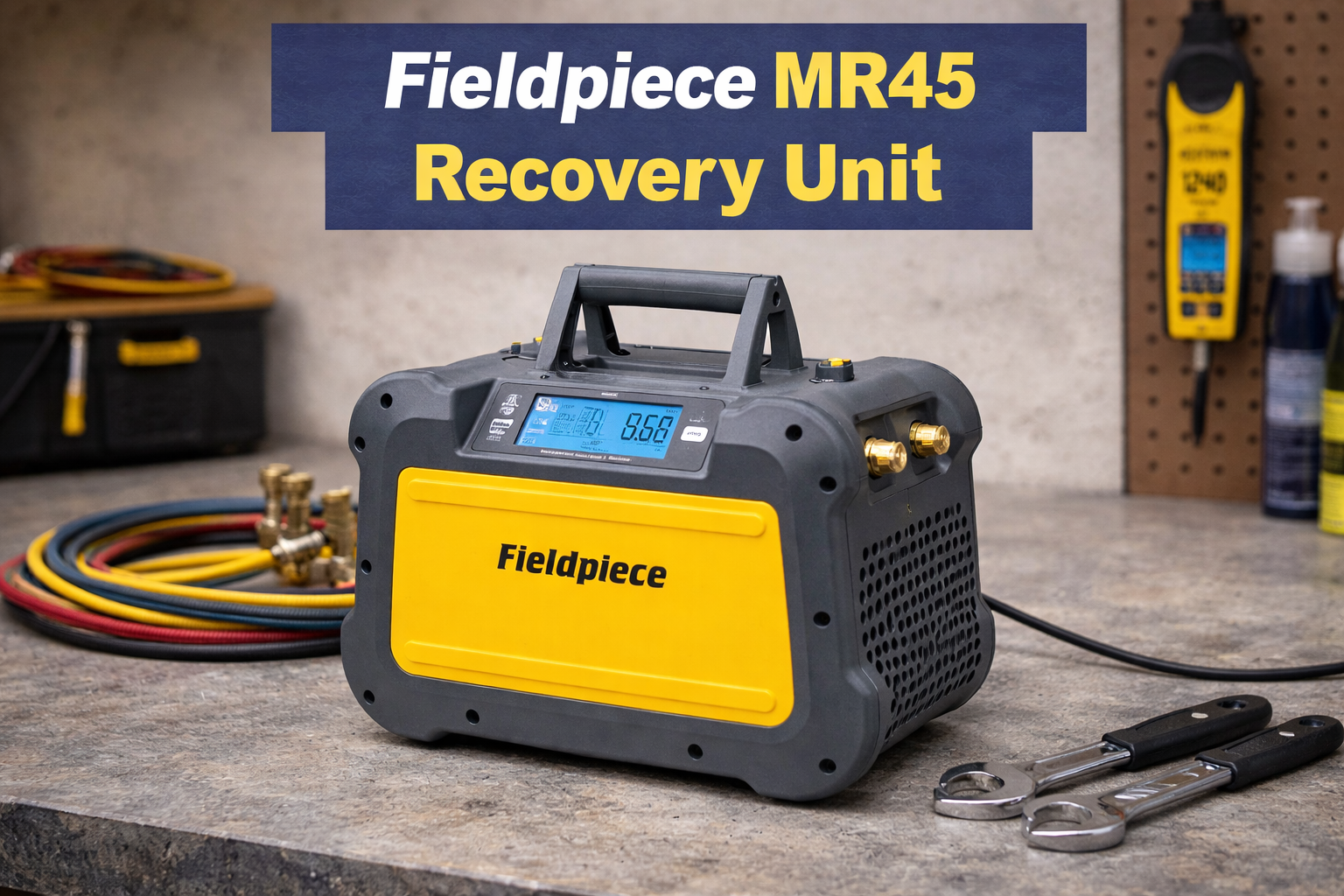
Professional Refrigerant Recovery
Refrigerant recovery is not the glamorous part of the job, but it is one of the parts that separates a proper HVAC technician from someone just rushing through calls. In Australia, recovering refrigerant is not optional. It is part of doing the work legally, safely, and professionally. If recovery is slow, messy, or unreliable, the whole day suffers. You lose time on site, customers wait longer, and the temptation to cut corners gets stronger when the weather is hot or the schedule is packed.
That is why the recovery machine matters so much. A weak setup can turn a simple split system service into a dragged-out process. A better machine changes the flow of the job. It helps you recover refrigerant faster, handle hotter conditions better, and keep moving without feeling like the machine is holding you back. That is exactly where the Fieldpiece MR45 recovery unit fits.
The MR45 is built around one clear idea: make refrigerant recovery quicker, smarter, and easier to manage in real field conditions. It is not just another box with ports and a motor. It is a Fieldpiece recovery unit designed for modern HVAC and refrigeration work, with smart speed control, automatic liquid and vapour handling, low-voltage compensation, and a lightweight build that suits Australian service work. Whether you are on a residential wall split, a ducted system, or a light commercial job, those details matter.
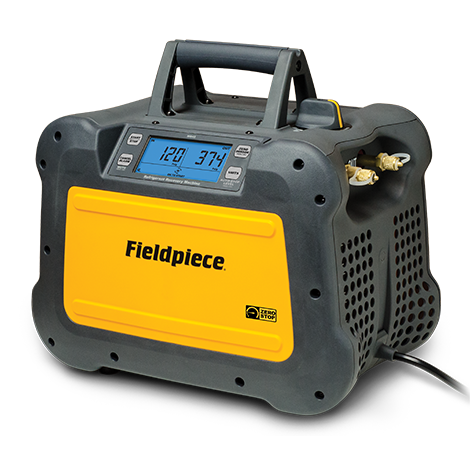
This guide is written for techs who want more than a basic spec summary. We will look at how the MR45 works, where its performance helps most, what it means for Australian compliance, how it handles different refrigerants, and what to check when recovery slows down. If you want the broader brand context first, the Fieldpiece recovery equipment range is a useful place to see where the MR45 sits inside a matched HVAC tool system.
If you are searching for a fieldpiece mr45 review, mr45 recovery machine details, or a plain-English explanation of whether this is a serious recovery machine for Australian conditions, this article is designed to answer that without fluff. The goal is simple: help you understand what the machine does, why pros use it, and how to decide if it fits your workload.
Fieldpiece MR45: Features and Performance
The MR45 is built as a professional refrigerant recovery machine, not a stripped-back budget unit. One of the headline features is the 1 HP DC motor with variable smart speed. In practice, that matters because recovery is not a one-speed job. Systems behave differently depending on refrigerant state, ambient temperature, hose setup, and how much liquid is still present. A smart motor that adjusts to what the machine is dealing with helps keep recovery moving instead of bogging down when conditions change.
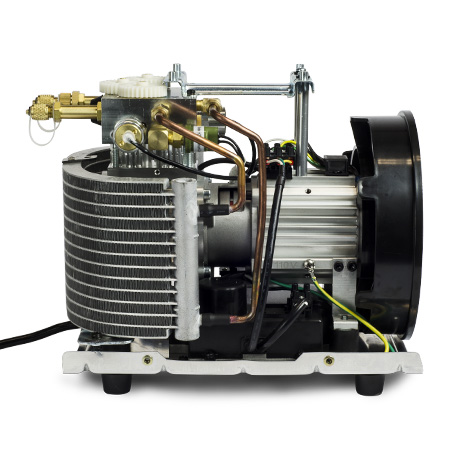
The oversized condenser is another feature that matters more in the field than it might on a product card. Heat is the enemy of recovery speed. Once a recovery unit gets hot, performance can slide, and jobs that should feel straightforward start dragging out. The bigger condenser on the MR45 is there to manage heat better, which is especially useful on longer recoveries and hot Australian days. Anyone who has worked through a Brisbane summer will understand why that is not a minor detail.
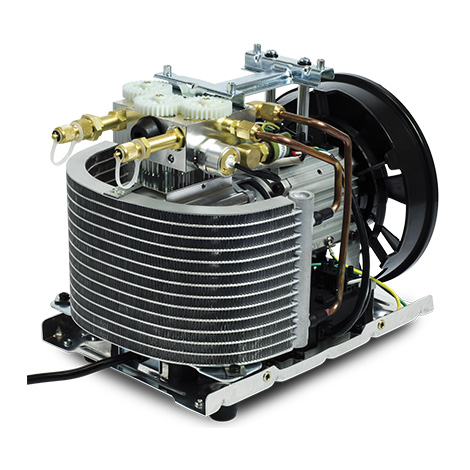
The machine also monitors whether it is handling liquid or vapour and adjusts operation accordingly. That matters because recovery rarely stays in one neat condition the whole time. At one point you may be moving more liquid. Later you may be mostly into vapour. A recovery machine that auto-adjusts helps you get better speed without standing over it trying to baby the process every minute.
Low-voltage step-up protection is another strong feature. Australian sites are not always electrically perfect. Long extension leads, awkward rooftop power, older buildings, and shared site circuits can all create supply headaches. The MR45 is built to protect performance when voltage drops, which is a real-world advantage rather than a spec-sheet extra. HVACShop lists the Australian model as 220 to 240 VAC at 50 Hz, which makes it properly suited to local electrical supply instead of forcing awkward workarounds.
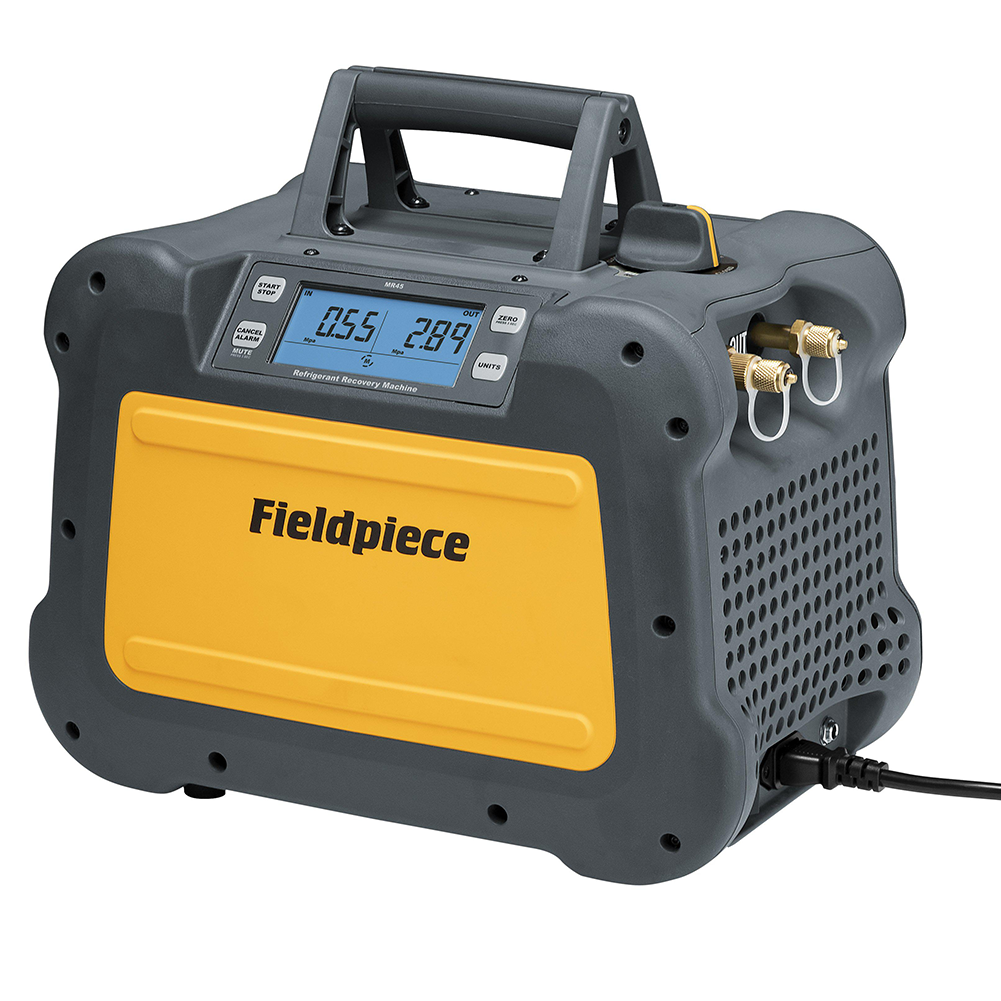
Weight matters too. At around 10 kg, the MR45 stays light enough to carry comfortably while still feeling like a serious machine. That sounds simple, but it matters on real jobs. If you are up stairs, on rooftops, or moving gear between multiple calls, a lighter machine is easier to live with. Add the single dial control, straight hose connection ports, and easy-to-read display, and the whole unit starts to make sense as a daily-use tool rather than just a workshop machine.
If you are looking at the wider setup instead of just one tool, this article on essential recovery units and service tools is useful for seeing how the MR45 fits into a modern van setup. And if your long-term plan is to standardise on one brand, the guide to the complete Fieldpiece system shows how recovery, evacuation, manifolds, and wireless tools can work together in one workflow.
At a practical level, the MR45 brings together a 1 HP variable-speed DC motor, oversized condenser, liquid and vapour auto-adjustment, low-voltage operation support, straight hose ports, single-dial control, digital display, and a lightweight 10 kg build. For Australian users, the listed 220–240V, 50Hz supply is also important because it suits local site power properly.
How the MR45 Works
The MR45 works by doing more than simply turning on a compressor and hoping for the best. It uses onboard monitoring to adjust motor behaviour as the recovery changes. That is why it stands out in the fieldpiece mr45 specifications discussion. The machine is designed to react to what it is actually seeing rather than running at one fixed pace no matter what is coming through the system.
The smart motor speed control is central to that. When conditions allow, the machine can push harder and move vapour quickly. When liquid is present or the load changes, it adjusts accordingly. That is important because the fastest recovery is not always the most aggressive one. Good recovery speed comes from matching the machine’s behaviour to the refrigerant condition in the lines and cylinder path.
Liquid versus vapour detection is another part of that logic. In plain English, the machine “knows” when it is dealing with a different recovery state and adapts so it can keep working efficiently. For the technician, the benefit is simple: less fiddling, better control, and a recovery process that feels more stable. On mixed real-world jobs, that matters more than a lab-style performance number.
The low-voltage compensation system is especially useful on awkward sites. If you have ever used a machine on a long lead or in a building where the supply is less than ideal, you know how annoying voltage drop can be. Recovery machines do not love weak supply. The MR45 is designed to deal with that better by stepping up low voltage at the supply input so the motor can still perform properly. That is not magic, but it is a very practical field advantage.
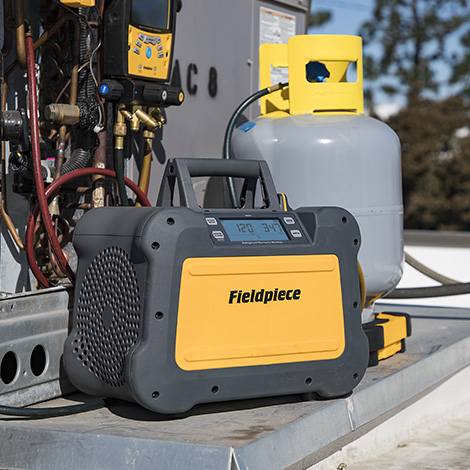
Heat management also plays a major role. Recovery speed is not only about motor power. It is about how long the machine can hold its performance. The larger condenser helps it shed heat faster, which is why the MR45 is better suited to long or hot jobs than smaller, less heat-tolerant designs. This is especially relevant in Australian conditions where rooftop work, summer service loads, and higher ambient temperatures can all punish recovery gear.
Recovery speed optimisation comes from all these pieces working together. It is not just “big motor equals fast recovery”. It is smart speed, heat control, auto-adjustment, and good field usability all stacked together. That is why a fieldpiece mr45 review often focuses on real workflow rather than just headline numbers. The machine is trying to make the whole process smoother, not just technically possible.
Australian power requirements matter here too. The local model is built for 220–240V at 50Hz, which means it fits the supply techs actually work with on Australian sites. That sounds obvious, but it is important. Good field performance always starts with using equipment designed for the electrical environment you are actually in.
MR45 Recovery Performance
Recovery performance is the question most buyers really care about. Does the machine save time, or does it just sound impressive? With the MR45, the answer depends on how you use it, what refrigerant you are handling, and how well the rest of your setup is configured. No recovery machine works at its best with bad hoses, poor cylinder practice, or sloppy connections. But the MR45 is clearly designed to recover faster and with less interruption than many older fixed-behaviour machines.
The biggest gains are usually seen in vapour-heavy recovery, where the machine’s smart motor control can keep the process moving strongly. That is why people looking for a mr45 recovery machine often ask about vapour recovery first. On R410A and R32 systems, where efficient recovery really matters for service time, the MR45 is built to move well through the vapour stage instead of dragging once the easy liquid portion is gone.
When liquid is present, the machine automatically adjusts rather than forcing the tech to guess the best behaviour every step of the way. That is useful across a wide range of refrigerants because recovery is rarely a clean “one mode only” process. A machine that can adapt makes it easier to keep a steady pace.
Hot conditions are another important part of the conversation. Plenty of recovery machines feel fine in mild weather, then start struggling on long summer recoveries. The MR45’s condenser and motor design are clearly aimed at that problem. In Brisbane summer conditions, or on hot metal rooftops in Sydney and Perth, heat tolerance stops being a bonus and becomes part of whether the machine still feels professional by the end of the job.
| Recovery Scenario | How the MR45 Responds | Typical Refrigerants | Practical Result |
|---|---|---|---|
| Vapour-only stage | Smart motor speed keeps recovery moving quickly | R410A, R32, legacy HFC blends | Better end-stage speed where slower machines often drag |
| Liquid present | Machine auto-adjusts for safer, steadier handling | Most common service refrigerants | Less guesswork and smoother recovery flow |
| Low-voltage site supply | Voltage compensation supports motor performance | All approved refrigerants | More consistent recovery on awkward site power |
| Hot ambient conditions | Oversized condenser helps manage heat load | R410A, R32, common split and ducted system charges | Better performance retention on long summer recoveries |
The key point is that actual recovery time always varies by charge size, refrigerant condition, hose setup, and cylinder temperature. So the right way to judge the MR45 is not by pretending one fixed time suits every job. The right way is to look at how well it deals with changing conditions, and that is where this Fieldpiece recovery unit stands out. It is designed to help skilled technique pay off rather than being the limiting factor.
That also helps answer the “best recovery unit Australia Fieldpiece” type of search. The right machine is not just the one with the biggest promise. It is the one that stays useful when the weather is rough, the power supply is imperfect, and the system does not behave exactly the way you hoped. That is the kind of real-world standard the MR45 is clearly aimed at.
Australian Compliance and Safety
In Australia, refrigerant recovery is not just good practice. It sits inside a wider compliance and licensing framework. That means the machine you use matters, but so do the way you use it, the cylinder you recover into, the records you keep, and your licensing status. A good fieldpiece mr45 guide has to cover that, because performance without compliance is not a professional answer.
The first point is simple. Refrigerant recovery should be carried out by appropriately licensed and trained people. That is part of why the MR45 is a professional tool, not a casual convenience item. It is designed for technicians working within regulated HVAC and refrigeration practice. If you are reviewing refrigerant handling regulations and site safety guidance, remember that the recovery machine is only one part of the safe-work picture.
Proper recovery procedures matter just as much as the machine. That means identifying the refrigerant first, using a suitable recovery cylinder, making sure the cylinder is within certification, checking hose condition, and using correct connections. It also means avoiding contamination between refrigerants. If a tech is sloppy with cylinder choice or mixes refrigerants carelessly, no recovery machine can fix that mistake later.
Documentation matters too. On commercial work especially, there is often an expectation that refrigerant handling is recorded properly. Even when the paperwork is simple, the habit matters. It proves the job was handled professionally and helps protect the technician, the customer, and the business if questions come up later.
Cylinder certification is another important point. A recovery unit only works safely when the receiving cylinder is correct, in-date, and suitable for the refrigerant and pressure involved. That is not something to gloss over. Too many problems start when people focus on the machine and forget the rest of the recovery chain.
In day-to-day use, the MR45 helps with compliance confidence because it is built for proper refrigerant recovery rather than improvised transfer methods. That is part of why it suits Australian trade work. The machine is not trying to replace safe procedure. It is trying to support safe, correct recovery so the technician can do the job well.
A fast recovery machine does not reduce your compliance duties. It just makes it easier to do the job properly without feeling tempted to rush or skip steps when the day gets busy.
Using MR45 for Different Refrigerants
One of the biggest reasons people look at the MR45 is flexibility. Refrigerants vary, and the machine needs to cope with the types techs actually see in the field. That is where the approved refrigerant list matters. The Australian MR45 listing includes common refrigerants like R410A, R32, R134a, R22, R404A, R407C, R507 and others, which makes it relevant to a broad mix of air conditioning and refrigeration work.
For R410A recovery, the focus is usually on efficient handling and keeping the job moving. The MR45 suits that work well because R410A service calls are common, and delays in recovery slow everything else down. Good hoses, a suitable cylinder, and a clean flow path still matter, but the machine is clearly designed for this kind of day-to-day professional use.
R32 is where more technicians start asking harder questions. Because R32 sits in the A2L category, the safety conversation gets more important. The MR45’s suitability for A2L class refrigerants is a major advantage here. It means the machine is relevant to modern Australian split-system work rather than being stuck in older refrigerant thinking. That does not remove the need for ventilation awareness, ignition control, and good procedure, but it does mean the recovery unit itself fits the direction the market is going.
Legacy refrigerants also still matter. Plenty of Australian work involves older systems, especially in commercial and retrofit situations. That is why it is useful that the MR45 remains practical across both common current refrigerants and many legacy types. The machine does not force you into a narrow “new systems only” role.
Mixed refrigerants are where you need more caution. If the refrigerant identity is uncertain or the charge is contaminated, the correct answer is not to shrug and recover it into whatever cylinder is nearest. The safe answer is to identify the refrigerant properly and handle it according to the rules and your business procedure. This is not only about recovery speed. It is about protecting cylinders, reclaimed stock, and system integrity.
Australian refrigerant rules also make it worth thinking in whole-workflow terms. The recovery unit is only one part. Your cylinder management, manifold, hoses, leak detector, and documentation all matter. That is why the MR45 makes even more sense when seen as part of a broader modern setup. If you are building around A2L readiness, the MR45 in R32 kit is a strong example of how Fieldpiece gear can be grouped around current refrigerant practice rather than handled as random separate purchases.
And if your work spans multiple system types and you want a fuller matched setup, the MR45 in advanced kit route shows how recovery can sit alongside evacuation, manifolds, leak detection, and digital measurement in a more efficient service flow.
MR45 Troubleshooting and Maintenance
Even a strong recovery machine can feel slow if the setup around it is wrong. That is the first thing to remember when people start searching fieldpiece mr45 troubleshooting. Slow recovery is often a system problem, not a “machine is bad” problem. Kinked hoses, clogged screens, a hot cylinder, poor airflow around the unit, or a weak power supply can all make performance look worse than it really is.
The first troubleshooting step is to simplify the recovery path. Check hose condition and length. Look for restrictions. Confirm the cylinder valves are open correctly. Make sure the input mesh screen is clean. The MR45 includes extra mesh screens for a reason. They are part of keeping the machine flowing properly, not spare bits to forget in the box.
Overheating prevention is mostly about sensible setup. Give the unit space to breathe. Keep the condenser area clear. Do not bury it under hoses or pack it into a corner with no airflow. On hot Australian days, heat load is already high. A machine with a good condenser still needs room to do its job.
Filter cleaning matters because recovery machines deal with whatever the system sends them. If debris or residue gets into the flow path, performance can suffer. The input mesh screen is one of the easiest places to start because it protects the machine while also acting as an early sign that your recovery path may not be as clean as it should be.
Hose maintenance matters just as much. Damaged hoses, flattened sections, worn gaskets, or contaminated lines slow recovery and create leak risk. A lot of “machine troubles” disappear once the hoses are sorted. That is true of almost every refrigerant recovery procedure Fieldpiece technicians work through in the real world.
Power issues are another common culprit. The MR45 is better than many machines at handling voltage drop, but that does not mean terrible site power stops being terrible. If performance is inconsistent, look at the supply path, extension lead quality, and the site circuit you are using.
For service support and matched setups, many Australian buyers prefer not to treat the machine as a standalone orphan. That is one reason kits remain popular. The MR45 in Beast Mode kit shows the machine inside a more complete premium setup, which can make workflow and support simpler if you are standardising multiple tools together. And if you use connected diagnostics in parallel with recovery and commissioning, the broader Job Link integration guide is helpful for seeing how Fieldpiece tools can support a cleaner end-to-end process.
If the MR45 feels slow, check the simple things first: hose restrictions, dirty input screen, hot recovery cylinder, cramped airflow, and weak site power. Recovery machines often get blamed for problems created elsewhere in the setup.
Professional Recovery with MR45
The strongest argument for the MR45 is not that it has a big motor or a clever display. It is that it helps professional refrigerant recovery feel less like dead time and more like part of a smooth workflow. The smart speed control helps on changing recovery conditions. The oversized condenser helps on long and hot jobs. The low-voltage support helps on awkward sites. And the 10 kg weight makes it easier to move without resenting it every time you lift it out of the van.
That adds up to more than comfort. It adds up to better efficiency. Faster, steadier recovery means less wasted labour on site. Better control means fewer frustrations. A more capable machine also supports compliance because it makes correct recovery easier to stick to when the day is busy. That is a real reason many technicians searching for the best recovery unit Australia Fieldpiece options keep landing on the MR45.
It also works well as part of a bigger matched setup instead of an isolated purchase. If you are building a consistent van loadout, the MR45 in advanced kit path is worth a look. If your work leans heavily into modern refrigerants and A2L-ready tools, the MR45 in R32 kit approach makes even more sense. Either way, the machine fits neatly into a professional Fieldpiece workflow rather than feeling like a one-off tool choice.
If you want a recovery unit that is easier to carry, smarter under changing conditions, and better suited to Australian HVAC and refrigeration work, the Fieldpiece MR45 recovery unit deserves a serious look. Review the current product details, compare it against your usual workload, and talk to the team if you want help confirming fit. And if you are ready to buy Fieldpiece MR45, do it as part of a proper recovery setup, not just as a box to tick. That is how you get the real value from it.