
Work Smarter on Site: Why Job Link Feels Like a Cheat Code
You know the scene. You’re on a Sydney coastal rooftop and the wind is rude. Your hoses are doing a dance. Your gauges are swinging like a pendulum. Your phone is wedged somewhere “safe” that is not safe at all. You take a reading, climb down, adjust something, climb back up, then do it again. It works, but it is slow. It also invites mistakes.
Now picture the same job with fewer trips. You clip probes on once. You step to a safer spot. You watch the whole system change in real time. That is the Fieldpiece Job Link idea. It turns old-school “walk back and forth” work into calm, wireless checks you can trust.
In Australia, that matters more than people admit. Brisbane humidity can mess with comfort readings fast. Melbourne cold snaps can hide airflow problems until the unit is under load. Perth heat can punish gear and patience. When you can see live data where you are standing, you work faster, you stay safer, and you explain results better to customers.
This guide is written for Australian HVAC technicians, apprentices, and hands-on owners who want fewer call-backs and cleaner proof. It keeps the language simple. It still respects the real work. We will also touch on ARCtick, WorkSafe Australia, AS/NZS safety thinking, and A2L refrigerants (like R32) in plain English. It is not legal advice. It is practical workplace guidance.
What the Job Link System Actually Is (No Fluff)
Job Link is a wireless measurement ecosystem. You use small Fieldpiece probes to measure the things you already care about, like pipe temperature, air temperature, pressure, and vacuum progress. Those probes send readings to your phone. Some tools also share readings with other Fieldpiece devices, like a digital manifold. You end up with one clear picture, not five half-answers.
The big win is not “Bluetooth” on a box. The win is workflow. You stop juggling wires and awkward body positions. You stop guessing what changed between checks. You get trends, not just snapshots. That is how you catch the sneaky faults that cause repeat visits.
Did You Know?
A lot of “bad charge” complaints are really “bad data” complaints. Wireless probes help because you can measure indoor and outdoor conditions at the same time, then show the customer what changed.
The Tools That Make Job Link Feel Wireless (And Useful)
Job Link works best when each tool has a clear job. You do not need every gadget on day one. You do need the right ones for the work you do most often. If you mainly service split systems, you want fast pipe temps and reliable pressure trends. If you do ducted and light commercial, you want better airflow context and easier reporting.
A common starting point is a good pipe clamp probe, because temperature is where a lot of guessing happens. The clamp reading affects superheat and subcooling, and that affects charge decisions. A quick, stable clamp changes your day.
That is why the Fieldpiece JL3PC wireless pipe clamp with Rapid Rail sensor technology is such a staple. You clamp once. It settles fast. You step back and watch the trend. No mucking about with slipping thermocouples.

To make the readings even more powerful, many techs pair probes with a digital manifold. This is where Job Link goes from “nice” to “proper system.” Your manifold becomes a live dashboard. Your probes become inputs. You get pressure, temperature, and derived values in one place, while you stay in a safer position.
If you want the full Job Link style experience in a single tool, the Fieldpiece SM480V 4-valve wireless digital manifold with IP54 protection is built for that. It is rugged. It is readable. It is made for the daily grind, not the showroom.
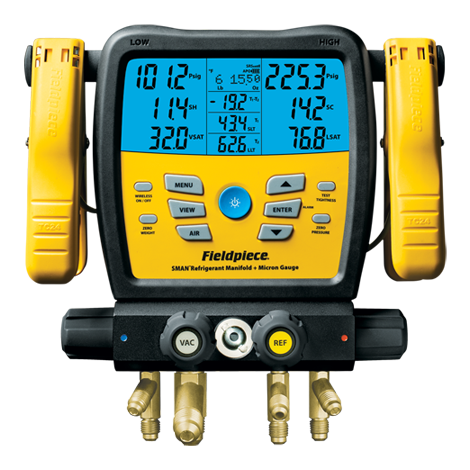
If you do mostly split system service and you want a smaller, simpler manifold that still fits the wireless style, the Fieldpiece SM380V 2-valve digital manifold with data logging is often the tidy choice. It still supports the “measure and trend” habit. It just suits lighter service runs and tighter budgets.
Tech Specs
For Aussie conditions, look for water resistance (IP rating), screen readability in sun, stable clamps, and simple logging. Those “boring” details are what stop bad days on hot rooftops.
The App: Where Wireless Turns Into a Real Workflow
Wireless tools are only half the story. The real magic is how you use the data. The Job Link app pulls readings together so you can understand what the system is doing, not just what it did five minutes ago.
This is a big deal for comfort jobs. You can see indoor and outdoor changes together. You can watch stabilisation happen. You can show the customer a clear picture without talking in circles. That helps trust. It also helps you get approval for the right fix.
It also helps with record keeping. On commercial sites, someone always asks, “What did you find?” When you can provide neat job notes and measured proof, the conversation stays calm. No drama. No blame game. Just facts.
| What you’re trying to do | Traditional setup | Job Link approach | Why it helps in Australia |
|---|---|---|---|
| Confirm charge on a split | Gauges + wired clamps + manual notes | Wireless clamp temps + manifold dashboard + live trends | Brisbane humidity and cycling loads can trick snapshots |
| Reduce trips on rooftops | Walk back and forth to read gauges | Read from a safer position with a phone in hand | Sydney coastal wind and height risks make fewer trips smarter |
| Explain results to a customer | “Trust me, mate” conversation | Clear readings, trends, and tidy job notes | Melbourne winters create comfort complaints that need proof |
| Standardise a team’s process | Everyone does it “their way” | Same measurements, same presentation, same expectations | Less confusion on multi-tech commercial jobs |
Notice what the table is really saying. Wireless is not a party trick. Wireless reduces gaps. It reduces repeated movement. It reduces the chance of “I thought it was fine” call-backs.
SM480V vs SM380V: Which Manifold Suits Your Aussie Work?
These two manifolds are popular because they match real workflows. The SM480V leans “all-in” for bigger service days and multi-system work. The SM380V keeps it tidy for lighter service runs. Here is a practical comparison to help you choose without overthinking it.
| Buyer focus | SM480V (4-valve) | SM380V (2-valve) |
|---|---|---|
| Best fit | Busy service techs, larger systems, more control on the job | Split service, simple workflows, tighter budgets |
| Workflow feel | More options while you stay in one spot, great for rooftop work | Less fuss, fewer valves to manage, quick day-to-day checks |
| Data + proof | Strong for trending and explaining results to customers and managers | Good logging habits without carrying a “big” setup |
| Why it helps in Australia | Fewer risky trips in Sydney wind, clearer trends in Brisbane humidity | Fast, consistent checks when Melbourne weather flips on you |
Real-World Applications in Australia (Where Job Link Shines)
Split system commissioning in Brisbane humidity
When it is sticky outside, heat load changes fast. Indoor comfort can swing with doors opening, sun hitting glass, and the unit cycling. If you only take one quick set of measurements, you can miss the real story. Job Link helps because you can watch the trend while the unit settles.
You can also keep your hands free. Clamp, step back, and watch the readings. That sounds small. It is not. Less time bent over the outdoor unit means fewer mistakes and less fatigue, especially on a long summer service run.
Windy rooftops and safer positioning in Sydney
On rooftops, safety is not a slogan. It is your day. A cleaner setup helps you stay stable and focused. Wireless reads mean you are not reaching, twisting, or leaning just to see a gauge face. You can stand where your feet are solid and your body is square.
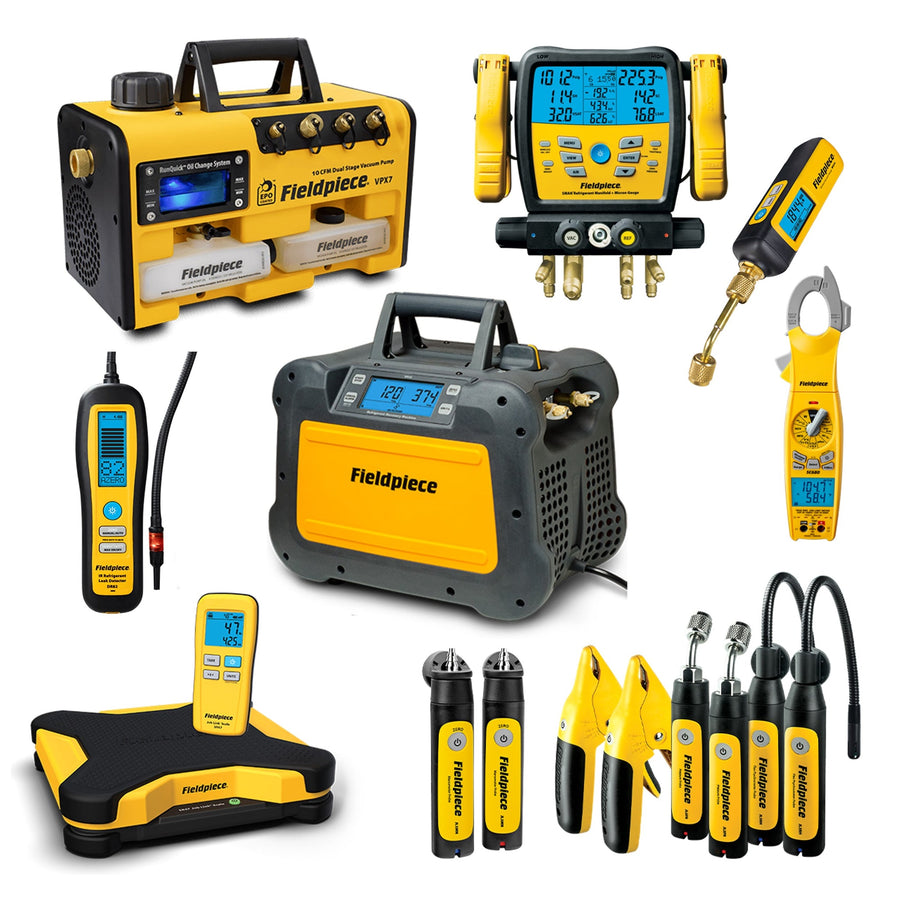
This is also where the “all-in” kit pathway makes sense for some teams. If you want a matched setup that standardises diagnosis, evacuation, and charging, the Fieldpiece Advanced HVAC Kit with VPX7, SM480V and wireless Job Link tools is the shortcut a lot of workshops use to keep everyone on the same process.
Melbourne mornings and the “it only fails when it’s cold” problem
Cold mornings can hide weak airflow and lazy fans. Systems can look “okay” until they hit demand. When you can trend measurements, you catch the moment the unit drifts off target. That is the moment customers remember, because that is when the house feels wrong.
It also helps you protect your reputation. You can show what changed, when it changed, and why your recommendation makes sense. Fair dinkum results are easier to sell than guesses.
Vacuum quality, dry systems, and fewer call-backs
Wireless measurement is not only for charge. It is also for evacuation habits. A good vacuum is a quality marker. It helps protect compressors and reduces moisture problems. The faster you can pull down, the less likely you are to cut corners.
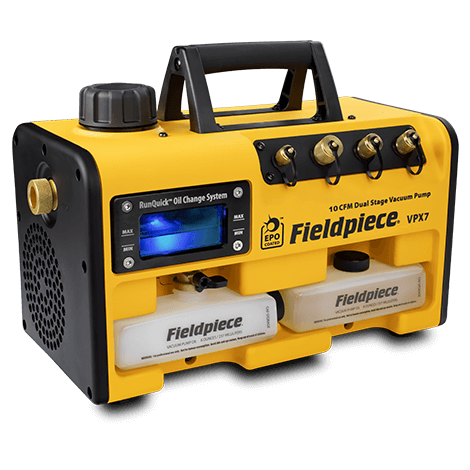
That is why a strong vacuum pump belongs in the conversation. The Fieldpiece VPX7 10 CFM vacuum pump with RunQuick oil change system is built for pro speed and simpler oil changes. It supports A2L work contexts too, which fits the direction Australia is going with modern refrigerants.
To actually see the vacuum properly (instead of guessing off a manifold), a proper micron gauge is the missing piece on a lot of vans. The Fieldpiece MG44 wireless vacuum gauge with LCD for Aussie evacuation work makes it easier to monitor from a safer spot while the pump does the heavy lifting.
And if you are recovering refrigerant on service jobs, Job Link-style workflow pairs well with a reliable recovery unit. The Fieldpiece MR45INT recovery unit for fast reclaim in Australian HVAC work helps you keep recovery clean and consistent, which supports better results and fewer messy delays.
When you pair strong evacuation habits with clear measurements, you reduce the classic “we topped it up last time” cycle. You start solving, not patching.
Setting Up Job Link Without the Headaches
Most setup pain comes from rushing. If you give yourself five calm minutes once, your daily use becomes no worries. The goal is simple. You want every probe to connect fast, show stable readings, and stay paired when you walk away from the unit.
Start with your phone. Make sure Bluetooth is on, and location permissions are allowed if your phone asks for them. Many Android devices need that for Bluetooth scanning. It feels annoying. It is normal. Do it once and move on.
Then pair one tool at a time. When you pair everything in a rush, you do not know what failed. When you pair one tool, you can confirm it is working before you add the next. It is slower for one minute. It is much faster over the next year.
Pro Tip
If readings look “jumpy”, check contact first. Re-seat the clamp, wipe the pipe, and keep the probe away from direct sun. A stable contact beats any fancy maths.
After pairing, do a quick “walking test.” Put your phone in your pocket and step away from the unit. On a typical site, you want to know where the signal drops, so you do not waste time on the job. In a plant room, walls and metal can reduce usable range. On an open rooftop, range is usually better.
If a probe drops out, don’t panic. Most of the time it is a simple fix. Move the phone a step, or rotate your body so the phone is not blocked by your torso. Wireless signals are weird like that. Once you know your “sweet spot,” you stop thinking about it.
Calibration is the last piece people skip. You do not need to over-complicate it. What you need is consistency. If you always use the same process and you keep your sensors clean and protected, your results stay tight. That is what matters to customers and supervisors.
R32, A2L, and Aussie Compliance (Plain English)
A2L refrigerants like R32 are now common across Australia. They are lower in flammability than older flammable classes, but they are still flammable. That changes how you think about ignition sources, ventilation, and safe work habits. It also changes what tools are designed for.
Job Link does not “make you compliant” by itself. What it can do is support the habits that good compliance needs. You measure properly. You record properly. You reduce risky movement and clutter. You keep your work tidy and explainable.
In Australia, refrigerant handling ties into ARCtick licensing and accepted trade practices. Site safety expectations also link to WorkSafe Australia approaches. If you want a straight-up starting point for safety guidance, use this official site once and keep it bookmarked: Safe Work Australia. It is a baseline reference, not a replacement for training or site rules.
AS/NZS standards exist for a reason. They support risk controls, safe installation thinking, and safe work methods across the trade. The takeaway is simple. Wireless tools are great, but you still need good judgement and safe habits.
If you want a local, plain-English refresher before you buy, this internal guide is handy: learn about R32-compatible Fieldpiece tools and safety requirements. It helps you match your kit to where the market is going.
Business ROI: The Quiet Money Is in Fewer Repeat Visits
Most people talk about wireless like it is a speed trick. Time matters, sure. But the real money is in fewer call-backs and cleaner handovers. When a customer can see what you measured, they trust the fix. When a site manager gets clean notes, they stop kicking back questions. When your team uses the same gear, the results are consistent.
Think about the “small” time costs you forget to count. You lose minutes walking to the unit and back. You lose minutes writing messy notes you can barely read later. You lose minutes rechecking because you do not trust the last value. Those minutes stack up across a week. Then they stack up across a year.
Wireless also helps on the safety side. Less ladder time is still ladder time saved. Less awkward leaning is still risk reduced. It is not about being scared. It is about being smart. No worries is the goal, not “she’ll be right.”
And remember, HVAC work is not only refrigerant. Electrical faults cause a heap of “it’s not cooling” complaints too. If you want a clamp meter that matches a professional workflow, the Fieldpiece SC440 True RMS clamp meter with dual display can tighten your electrical checks without turning the job into a long guessing session.
Job Link vs “Standard Digital” (Without Starting a Brand War)
Some techs already have digital gear from other brands. That is fine. You do not need to bin everything. The question is what you hate most about your current setup. If it is walking back and forth, wireless solves that. If it is unstable temperatures, better clamps solve that. If it is customer trust, clear reporting solves that.
Job Link tends to win when you care about the whole system picture, not one measurement. It is the ecosystem advantage. Manifold plus probes plus workflow. Less gear fighting. More job solving.
If you want a competitive read that is already framed for Australian conditions, this internal guide exists. It is a good reference when you are comparing features and value: read our detailed comparison of Testo 557 vs Fieldpiece SM480V for Australian conditions. This Job Link article stays focused on wireless workflow, so you can keep your thinking clean.
Putting It All Together: A Simple Upgrade Path
If you are starting from scratch, begin with one core measurement you do every day. For many techs, that is pipe temperature. A stable clamp helps every charge decision. Then add a dashboard that brings it all together. That is where a Job Link-ready manifold earns your dollars.
If you already have a manifold you like, start with wireless probes to reduce movement and improve trend checks. Then decide later if you want to unify the system inside a Fieldpiece manifold. That path is common. It matches how real people buy tools.
If you want the cleanest “one hit” setup that covers diagnosis, evacuation, and modern refrigerant work, a matched kit is the easiest path. You set it up once, then you run it the same way job after job. That is when wireless really pays off.
Either way, the goal stays the same. Build a system that fits your work. Use it the same way every time. Log what matters. Then enjoy the calm that comes from knowing, not guessing.
Ready to Go Wireless in Australia?
If you want faster checks, cleaner proof, and fewer return trips, Job Link is a fair dinkum upgrade. It is built for Aussie conditions and modern refrigerants. It helps you work smarter on rooftop units, domestic splits, and light commercial systems without turning your day into a circus.
When you are ready to start building your wireless setup, begin with the tools that match your day-to-day work. Start with a stable pipe clamp. Add a manifold that suits your workload. Add a micron gauge so your evacuation proof is solid. Then standardise how you measure so the process feels easy.
Ready to build your Job Link kit? Start here: Shop Fieldpiece Job Link & Fieldpiece tools in Australia.