
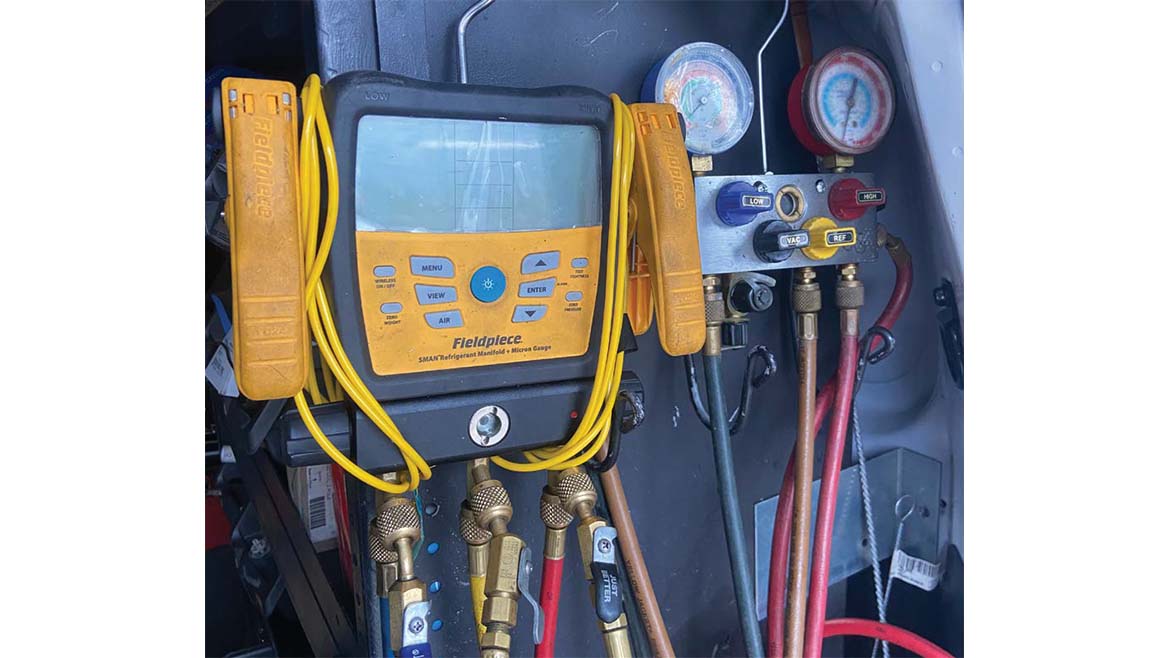
Introduction to Refrigerant Gauges
If you are working in HVAC, refrigerant gauges are one of the first tools you learn to trust. They are not just there to “check pressure.” They are how you understand what is happening inside a sealed system that you cannot see. Whether you are fault-finding a split system in Sydney, commissioning a new install in Brisbane, or servicing refrigeration in a commercial kitchen, your gauge readings are often the starting point for every decision you make.
The challenge for most technicians is not whether gauges matter. It is choosing the right setup and understanding how to interpret what the readings are actually telling you. That is where a lot of mistakes happen. Incorrect assumptions based on pressure alone can lead to overcharging, undercharging, or misdiagnosing issues that are not even refrigerant-related.
If you are reviewing your setup or looking to upgrade, a good place to start is the full range of refrigerant gauges available for HVAC work, then match your tools to the type of jobs you actually handle.
Visual Guide: Refrigerant Gauge Setup Options

What Refrigerant Gauges Actually Tell You
A common mistake, especially with newer techs, is treating gauges as a “go/no-go” tool. In reality, pressure readings are only one part of system diagnostics. What matters is how those pressures relate to temperature, load conditions, and system design.
For example, a low suction pressure could mean low refrigerant charge. But it could just as easily mean restricted airflow, a dirty coil, or a metering device issue. Gauges do not give answers on their own. They give clues.
This is why experienced technicians never rely on pressure alone. They combine gauge readings with temperature measurements and system behaviour to build a full picture before making adjustments.
Analog vs Digital in Real HVAC Work
There is a lot of debate about analog versus digital manifolds, but in practice, both have their place.
Analog gauges are still widely used because they are simple, durable, and reliable. On quick service calls or basic installs, they do the job without overcomplicating things. You can glance at the needle and immediately understand what is happening.
Digital manifolds, on the other hand, reduce the mental workload. They calculate superheat, subcooling, and often log data. This can save time, especially on larger systems or when you are working across multiple sites in a day.
The key is not which one is “better.” It is which one suits your workflow. Many experienced technicians keep both in their kit and choose depending on the job.
Why Hoses Matter More Than You Think
Hoses are often overlooked, but they directly affect accuracy. A worn hose can leak refrigerant, introduce air, or give unstable readings. That can lead to incorrect diagnostics and wasted time on site.
If your readings seem inconsistent or slow to stabilise, do not assume the system is the problem. Check your hoses. In many cases, replacing hoses fixes what looks like a system fault.
Using Refrigerant Gauges on the Job
On a real job, using gauges is not just about connecting and reading numbers. It is about context.
When you connect gauges, you need to consider ambient temperature, indoor load, system type, and refrigerant. A reading that looks “wrong” in one situation may be completely normal in another.
For example, a system running in high ambient Brisbane conditions will behave very differently compared to a mild Melbourne day. Experienced technicians factor this in automatically. Beginners often miss it.
Common Mistakes to Avoid
One of the biggest mistakes is adjusting refrigerant charge based on pressure alone. Without checking superheat or subcooling, you are guessing. Another common issue is rushing readings before the system stabilises. That leads to incorrect conclusions.
Another mistake is ignoring tool condition. Dirty manifolds, damaged hoses, or poorly calibrated gauges can all give misleading readings.
Maintenance and Calibration
Good gauges should last years, but only if they are looked after. That means storing them properly, keeping them clean, and checking calibration when readings do not match expected conditions.
Calibration is especially important if you rely heavily on your gauges for diagnostics. Even small inaccuracies can lead to poor decisions over time. If you use supplementary temperature tools alongside your gauges, it is also worth understanding the calibration and shelf life of temperature labels — the same discipline that applies to gauges applies to every measurement tool in your kit.
Choosing the Right Setup
Choosing the right setup comes down to your workload. If you mainly handle residential service, a solid analog set may be all you need. If you are working on larger systems or want faster diagnostics, a digital manifold may be worth it.
In both cases, do not overlook accessories like hoses. A complete, reliable setup will always outperform a premium tool with weak supporting components.
Refrigerant gauges are not just tools. They are part of how you think through HVAC problems. The better you understand them, the better your diagnostics and results will be.
If you are upgrading or building your kit, start by reviewing the full range of refrigerant gauges here and match your tools to the way you actually work.
Frequently Asked Questions About Refrigerant Gauges
What do refrigerant gauges measure?
Refrigerant gauges measure the pressure inside an HVAC system. These readings help technicians understand system performance, diagnose faults, and confirm whether refrigerant levels are correct.
Can you charge refrigerant using pressure only?
No. Charging refrigerant based only on pressure is not accurate. Proper charging requires checking superheat or subcooling alongside pressure readings to avoid overcharging or undercharging.
Are digital manifolds better than analog gauges?
Digital manifolds provide more features such as automatic calculations and data logging. However, analog gauges are still reliable and widely used for everyday HVAC servicing.
Why are my gauge readings unstable?
Unstable readings are often caused by worn hoses, loose connections, or air in the system. Always check your tools before assuming the system is faulty.
How often should refrigerant gauges be calibrated?
Gauges should be checked regularly and calibrated if readings appear inaccurate. Many technicians review calibration annually or when inconsistencies appear.