
Unpacking Testo 558s Kit
If you are searching for the testo 558s kit, you are probably trying to answer one practical question before you spend decent money: what exactly do I get, and will it actually suit the way I work? That question matters more than many product pages admit. A digital manifold is only part of the story. The real workflow depends on the probes, the hose setup, the case, the app connection, and how quickly the whole bundle can go from box to job site.
This is where buyers often get tripped up. The 558s is sold in more than one bundle. On Testo Australia, you will find a base Smart Vacuum Kit, a Smart Vacuum Kit with filling hoses, and a version with a clamp meter. HVAC Shop’s current Australian listing also presents the 558s as an HVAC manifold kit with wireless probes, hose set, case and app-based workflow. So if two tradies both say “the 558s kit”, they may not always be talking about the exact same pack-out.
This guide clears that up in plain English. We will go through the 558s kit contents, explain what each part does, show where the hose-included version differs from the leaner bundle, and walk through setup and job-site use for Australian HVAC work. If you want the broader platform background first, this Testo 558s complete overview helps explain where the manifold itself sits in the range before we focus on the bundle.
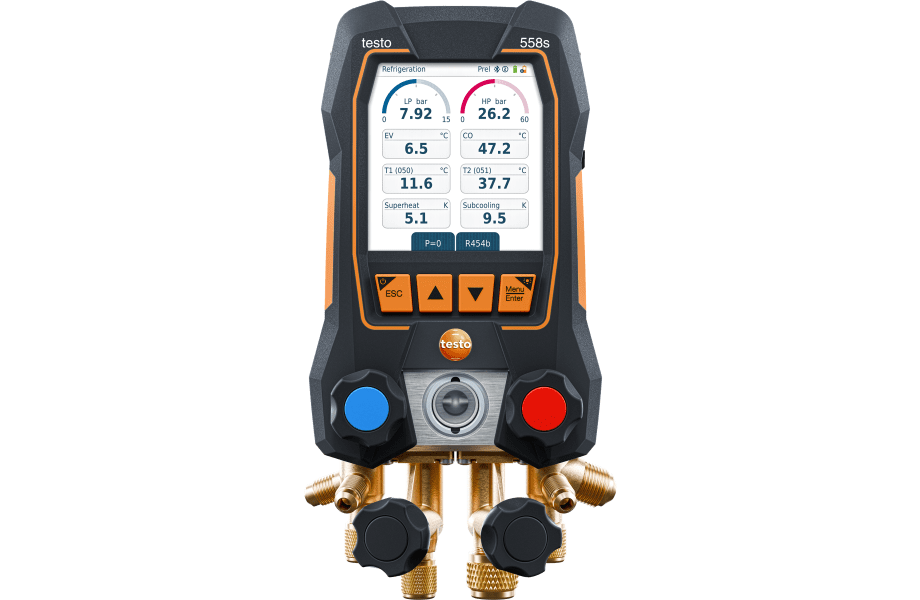
The short version is that the 558s kit is built around a 4-way digital manifold, two wireless clamp thermometers, one wireless vacuum probe, and then either a lighter accessory pack or a hose-included pack depending on the version. That matters because a kit is not just about convenience. It changes how cleanly you can handle commissioning, evacuation, superheat and subcooling checks, and reporting on the same visit. In Brisbane humidity, on a windy Sydney rooftop, or during a cold Melbourne morning startup, those small workflow gains add up fast.
So this article is really about investment transparency. Not sales talk. Just a practical breakdown of what is in the box, what each part contributes, where the kit offers good value, and how to tell whether the testo 558s smart vacuum kit is the right bundle for the work you actually do.
What's in Testo 558s HVAC Kit?
The heart of the kit is the testo 558s digital 4-way manifold. That is the main body you will use for pressure, temperature-linked calculations, guided measurement programs, and app-connected reporting. Around that manifold, the standard Smart Vacuum Kit on Testo Australia adds two testo 115i wireless clamp thermometers, one testo 552i wireless vacuum probe, a transport case, USB-C cable, calibration protocol, instruction manual, and access to the free Testo Smart App.
If you are looking at the hose-included version, the pack-out changes slightly. Testo Australia lists that bundle as the manifold, two 115i clamp thermometers, one 552i vacuum probe, three charging hoses with valve in 1/4" SAE, plus one 3/8" vacuum hose, then the case, USB-C cable, Smart App, calibration protocol, and instruction manual. That detail matters because the outline phrase “three filling hoses” is true in one sense, but the actual hose-included smart vacuum kit is really a four-hose setup: three charging hoses and one separate vacuum hose.
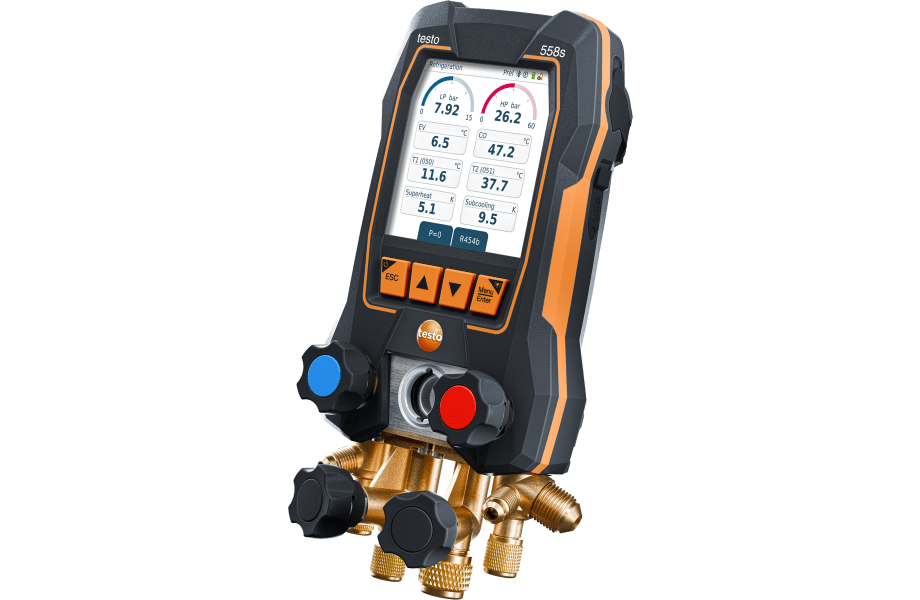
HVAC Shop’s current Australian product page describes its Testo 558s HVAC manifold kit with hoses and wireless probes in similar practical terms: one 558s digital manifold, one 552i wireless vacuum probe, two 115i wireless clamp thermometers, four refrigerant hoses covering three 7/16" UNF and one 5/8" UNF connection, a heavy-duty carry case, batteries, printed manual, and access to the Testo Smart App. That is why many local buyers treat the HVAC Shop version as the job-ready hose bundle rather than the stripped-back probe-only set.
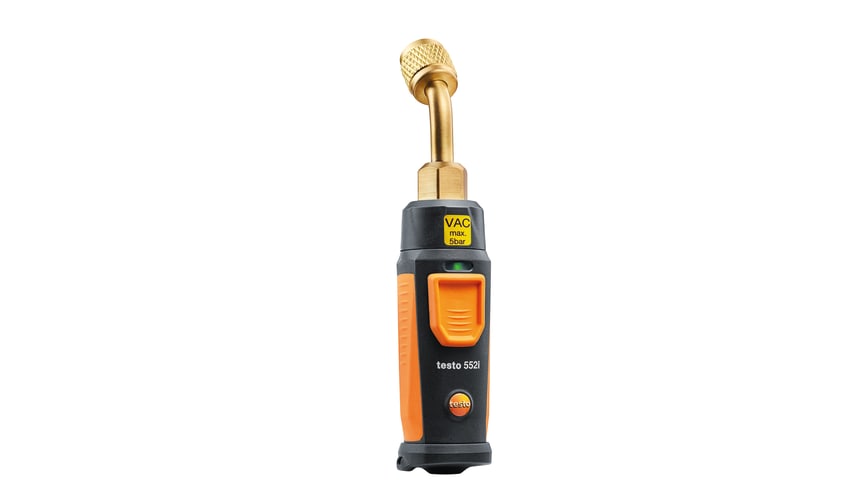
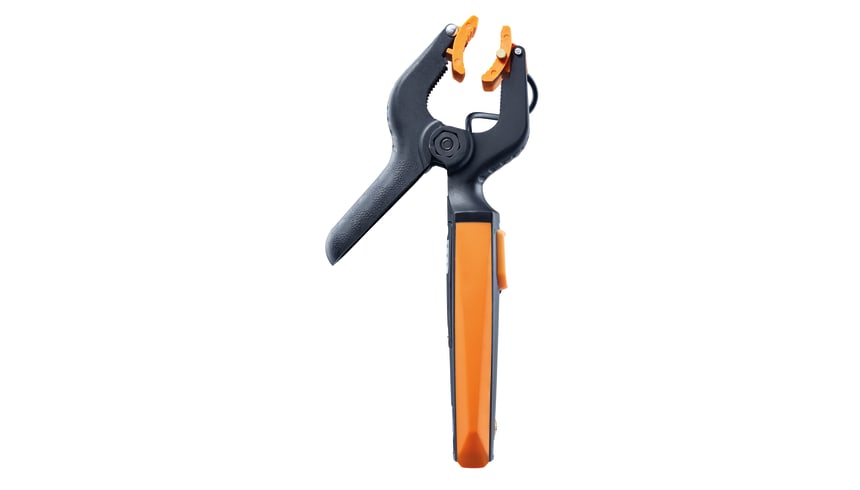
The wireless probes are what make the kit genuinely useful rather than just “a manifold plus extras”. The two 115i clamps handle pipe temperature so you can work through superheat and subcooling cleanly without hanging extra wired sensors everywhere. The 552i lets you monitor vacuum wirelessly from the service port, which is a much cleaner way to handle evacuation than relying on a less dedicated approach. The result is a neater setup, less clutter around the unit, and faster checks when you are moving between jobs.

The case and calibration paperwork matter more than they seem to at first glance. A kit that packs properly is easier to protect in the van, faster to check before leaving the workshop, and less likely to end up missing a probe when you need it. The calibration protocol is also worth keeping with the kit records, especially if your workshop is disciplined about asset tracking and measurement confidence. Testo’s official kit listings include that protocol as standard across the current 558s smart vacuum kits.
Tech Specs
For the current Australian 558s smart vacuum kit family, the most common core pack-out is: 1 x 558s manifold, 2 x 115i wireless clamp thermometers, 1 x 552i wireless vacuum probe, transport case, Smart App access, and supporting documents. The hose-included version adds 3 charging hoses plus 1 vacuum hose.
If you also want to see how the 558s bundle compares with the step-down option, this article on Testo 558s vs 557s HVAC kit comparison is useful. It helps clarify whether you really need the premium touchscreen-led kit or whether a lower-tier bundle might already cover your work.
558s Manifold: Features and Functions
The 558s manifold is the reason the kit feels premium. Testo Australia positions it as a digital 4-way manifold with a large colour touchscreen, clear measurement graphs, and an “intuitive app feel” built into the instrument itself. It can also be operated with keys when gloves make touch control annoying, which is a very real benefit on winter mornings or dirty service calls.
That large graphic display is not just there to look flash. It makes setup, control, and documentation easier because the readings are easier to interpret on the tool itself. On a busy commercial service call, that matters. You are not always in the mood to lean on the phone for every little step. The 558s gives you a more self-contained workflow, which is a big part of why the testo 558s unboxing experience usually feels like a step up from older digital manifold habits.
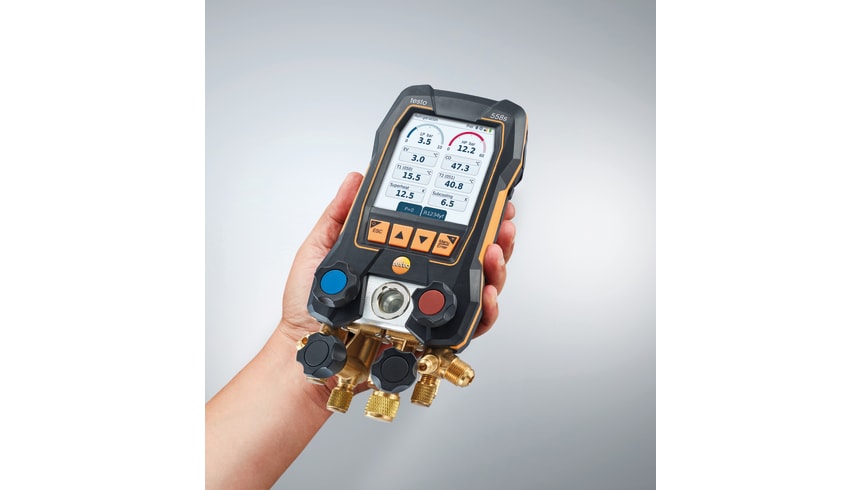
The manifold is also built to cover a wide range of refrigerant-era work. Testo states that 96+ refrigerants are stored in the instrument, with favourites available for quicker retrieval, and that the platform supports A2L and A3 refrigerants. For Australian techs dealing with modern refrigerant choices, that is important because it reduces fiddling at the point where you just want to get on with the measurement.
One of the more useful 558s features is that it keeps multiple measurement applications inside the same manifold body. Testo describes it as an all-in-one instrument for refrigeration portfolio connectivity, with measurement programs covering tasks such as superheat, subcooling, tightness testing, evacuation, filling and Delta T. That is why the manifold can act as the diagnostics hub of the whole kit instead of being just a pressure readout with Bluetooth added on top. If you want a dedicated feature walkthrough, this guide to Testo 558s features and workflow guide goes deeper into the manifold body itself.
Bluetooth connectivity is central to how the kit works. The manifold pairs with the wireless probes and works with the Testo Smart App for report export and data handling. Testo says readings can be recorded as trend curves for up to 30 minutes and optionally extended to 72 hours, then exported through the app as a measurement report. That means the testo 558s setup process is not just about turning the manifold on. It is about building a connected measurement system that can document the job properly on site.
From a durability point of view, the manifold has IP54 protection and a hybrid charging system using rechargeable and non-rechargeable batteries. That is exactly the sort of practical field detail that matters in Australia. North Queensland humidity, coastal corrosion risk around Sydney, and dusty WA work all punish tools in different ways. A manifold does not need to be overbuilt for marketing value, but it does need to survive real service days. The 558s is clearly aimed at that kind of reality.
Data storage is also part of the story, even though the 558s is not mainly sold as the big data logger in the range. Its trend recording and app export are still valuable for commissioning, short diagnostic capture, and showing the client or supervisor what happened without going back to the office first. That is often all a contractor needs from a kit like this. If you need more long-run data logic, that is when you start looking higher in the manifold family, not because the 558s is weak, but because it is tuned more toward guided field workflow.
Kit Components Breakdown
The simplest way to understand the testo 558s complete kit is to treat each part as a job-role tool. The manifold is the hub. The vacuum probe handles evacuation proofing. The temperature clamps give you the pipe readings that make the manifold calculations useful. The hose set determines how quickly you can actually hook up and get moving. The case and paperwork keep the whole setup organised. That sounds obvious, but buyers often focus too much on the manifold body and not enough on how the parts work together.
| Component | What it is | What it does on the job | Practical buying note |
|---|---|---|---|
| 558s manifold | Digital 4-way manifold with colour touchscreen and keypad backup | Acts as the diagnostics hub for pressure, guided programs, graphs and app-linked reports | Best suited to techs who want clearer on-tool workflow, not just app-only control |
| 552i vacuum probe | Wireless vacuum probe with Bluetooth and 45° service-port connection | Measures vacuum directly at the system for cleaner evacuation checks | A big upgrade over messy hose-based vacuum habits |
| 2 x 115i clamp thermometers | Wireless clamp temperature probes | Handle pipe temperature for superheat, subcooling and temperature comparison work | The pair matters, because one clamp alone limits the workflow |
| Hose set | 3 charging hoses plus 1 vacuum hose on the hose-included kit | Connects the manifold cleanly across standard service tasks | Check whether your listing includes hoses, because not every 558s bundle does |
| Case and documents | Transport case, calibration protocol, manual, cable or batteries depending on listing | Protects the kit and keeps the setup job-ready | Worth checking at unboxing so nothing important is missing before the first job |
The detail behind that table comes straight from the current Australian listings. Testo’s hose-included Smart Vacuum Kit lists the manifold, 2 x 115i clamps, 1 x 552i vacuum probe, 3 charging hoses, 1 vacuum hose, transport case, USB-C cable, Smart App, calibration protocol and manual. HVAC Shop’s current local pack-out describes the same core workflow with the hose set, case, batteries/manual and app access presented as the ready-to-work version.
That is also why this bundle makes sense for tradies who want a neater wireless setup without piecing together probes later. If you plan to build out further, you can browse wider Testo HVAC instruments, digital manifolds, probes, and accessories after the fact, but the value of the kit is that it already covers the core pressure, temperature and vacuum jobs most people want on day one.
Setting Up Testo 558s Kit
The first setup is straightforward if you treat it like a system, not just a product unboxing. Start by checking the case contents against the listing you actually bought. That matters because the base smart vacuum kit and the hose-included kit are not identical. Confirm the manifold, both 115i clamps, the 552i vacuum probe, case, support documents, and either USB-C cable or batteries/manual items depending on the retailer listing. It is a small step, but it saves you from discovering a missing probe on the first real job.
Next, power up the manifold and set the workflow basics. The 558s is designed around touchscreen navigation with keypad backup, so take a minute to get comfortable with the menu layout before you are standing beside a condenser in poor light. Mark the refrigerants you use most as favourites if that suits your work. Testo specifically highlights favourites as a quick-retrieval feature, and it is one of those small setup steps that pays back every week.
Bluetooth pairing is the next job. Pair the manifold with the Testo Smart App and then make sure both 115i clamps and the 552i vacuum probe are visible and stable in the setup. The clamp thermometers are designed for wireless temperature measurement with up to 100 m Bluetooth range, while the 552i connects automatically to the app or compatible digital manifolds and is meant to give hose-free vacuum measurement from one service port. In practice, this is where the kit starts to feel smarter than a box of separate pieces.
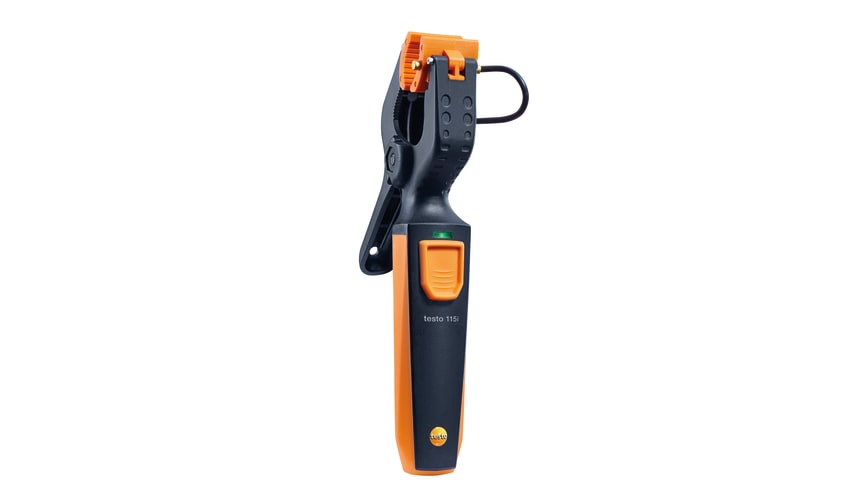
Probe preparation matters too. Make sure the pipe clamps seat properly and that the vacuum probe connection point is clean. Testo’s own vacuum guidance points out that contamination such as oil can affect a high-precision vacuum sensor, so it is worth keeping the 552i clean and capped when not in use. That is not overprotective behaviour. It is just sensible tool care when you are relying on vacuum readings to prove the system is actually ready.
Menu navigation is worth practising before the first live job. The 558s is sold on guided measurement workflows, and those workflows only save time if you know where the key programs live. Spend a few minutes working through pressure, temperature, evacuation and report-export flow while you are in the workshop. If you are setting it up for Australian field work, also check hose condition, O-rings, and the actual fitting needs of the systems you service most. That is especially important if your work mixes residential splits, packaged commercial jobs and heat pump installs.
Pro Tip
Before your first live call, build one mock workflow in the workshop: pair the probes, choose a refrigerant, run through the menus, and practise exporting a report. Ten calm minutes indoors beats fumbling through setup on a roof in summer.
The app side is part of setup too. Testo says the Smart App lets you view data graphically, use stored measurement menus, manage customer and measuring-point data, and send results as PDF or Excel files. That is useful because a good setup is not just about getting readings. It is about building a cleaner documentation routine from day one.
And because the kit is ultimately used for refrigerant system work, good measurement habits still sit inside proper handling practice. When you are using the kit on real jobs involving charging, evacuation or refrigerant-side service work, it is sensible to keep ARCtick refrigerant handling guidance and SafeWork NSW workplace safety guidance for HVAC and refrigeration work in view as part of the broader professional process.
558s Kit for Commercial Work
The 558s kit makes the most sense when you need one pack that can move cleanly through different commercial tasks without turning into a tangled mess of separate tools. The manifold handles the central readings. The clamp probes let you work superheat and subcooling without extra wired clutter. The 552i gives you vacuum proofing directly at the service port. That combination suits commercial HVAC contractors who bounce between installs, diagnostics and maintenance rather than doing only one kind of work all week.
That is especially useful on multi-system diagnostics. If you are working through more than one circuit, or moving between rooftop packaged equipment, plant room work and general refrigeration service, the cleaner wireless layout saves time. Less clutter around the unit means fewer chances of snagging hoses, misreading a probe position, or wasting time shifting gear just to get a proper reading.
For VRF and other larger installation or commissioning-style work, the 558s kit can still be useful because it combines pressure, pipe temperature, evacuation and app-based reporting in one ecosystem. The sensible caution is to confirm your actual fittings, access points and workflow needs before assuming any single kit covers every commercial scenario. That is not a knock on the kit. It is just how careful techs avoid surprises on complex sites.
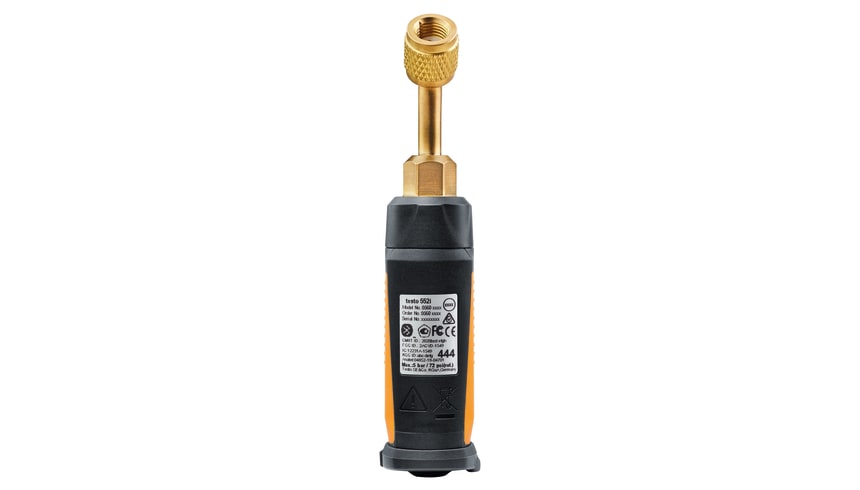
The durability side also matters in Australia. Testo gives the 558s manifold IP54 protection, and the 552i vacuum probe also carries IP54 protection in a compact housing. HVAC Shop’s local product page leans into that same “built for Aussie conditions” idea, talking about humid Queensland conditions and dusty WA job sites. Strip away the marketing tone and the practical point still stands: the kit is meant to handle real field use, not bench-top life.
The wireless workflow is another reason the kit suits commercial work. HVAC Shop positions the 558s package alongside other Bluetooth HVAC smart tools for data logging and diagnostics, and that makes sense because the bundle is strongest when you treat it as a connected measuring setup rather than just a digital manifold plus freebies. On commercial jobs, that connected approach helps with speed, site reporting and keeping the van kit more organised overall.
So is the 558s kit a commercial-only tool? No. But it absolutely suits pro workflows where time, clarity and cleaner evidence matter. It is not just a nice unboxing experience. It is a kit designed to reduce friction on the type of work that keeps most HVAC businesses busy.
558s Kit: Value and Pricing Australia
The current Australian pricing story is one of the most useful parts of the bundle breakdown. On Testo Australia, the base testo 558s smart vacuum kit is listed at A$1,428, the smart vacuum kit with filling hoses is listed at A$1,634, and the clamp-meter version is listed at A$1,886. HVAC Shop’s current local hose-based kit listing sits at A$1,699.99. That gives buyers a realistic frame for where the bundle lands in the premium manifold space and why different listings may look slightly different on price.
That price spread also explains a lot of the confusion around the keyword. Sometimes people search “testo 558s kit” and expect one universal bundle. In reality, there is a base smart vacuum kit, a hose-included version, and a clamp-meter version. So the value question is not just “is the 558s expensive?” The better question is “which 558s kit am I actually pricing?”
Individual component costs are part of the value logic too. Testo Australia lists the 552i wireless vacuum probe at A$397 on its own, and the 115i clamp thermometer is a stand-alone product in the same portfolio. That means the moment you start adding a dedicated vacuum probe, two temperature clamps, a proper manifold body, hose set, case and support documents separately, the bundle case becomes easier to understand. The kit is not cheap, but it can be more coherent and less risky than piecing together the workflow later.
The return on investment is mainly about time and error reduction. If the full system helps you set up faster, prove vacuum more cleanly, document readings on site, and avoid repeat call-backs caused by rushed or messy measurement habits, the bundle can pay back better than a cheaper but pieced-together setup. That is particularly true for contractors doing regular commissioning, service and maintenance work rather than occasional hobby use.
Did You Know?
The current 558s family is not one fixed pack. Testo Australia lists at least three distinct premium bundle paths around the same manifold body: a base smart vacuum kit, a hose-included kit, and a clamp-meter kit.
Australian availability also looks solid right now. HVAC Shop currently shows the 558s HVAC manifold kit in stock on the Testo collection page, which is useful for buyers who want a local retail reference rather than only a manufacturer page. If you are comparing bundle logic across the range, the wider Testo HVAC tools, manifolds, probes, and accessories collection is also handy because it shows how the 558s sits alongside the rest of the local Testo measurement lineup.
Get Complete 558s Kit
The biggest advantage of the 558s kit is that it gives you a connected workflow instead of a shopping list. You get the manifold, the temperature probes, the vacuum probe, and depending on the version, the hose set that turns the whole thing into a genuine job-ready package. That is why the bundle matters so much more than the manifold body alone.
If your work regularly includes commissioning, evacuation checks, superheat and subcooling, and on-site reporting, the kit approach makes sense. It is cleaner, easier to set up properly, and easier to keep consistent across the team. If your work is lighter or you already own part of the ecosystem, the base smart vacuum kit might be enough. If you want something that lands ready for field use straight away, the hose-included pack is usually the better match.
The safest buying approach is simple. Check which 558s bundle you are actually looking at, confirm the pack-out against the listing, think about whether you need the hose-included version, and match the kit to the jobs you do most often. That is how you avoid paying premium money for the wrong version of the right tool.
If you want a final local reference before deciding, review the complete Testo 558s HVAC kit guide page and compare it against your current workflow. If you need help confirming kit fit, accessories or setup for Australian HVAC work, contact us for a quote or talk to our team to confirm compatibility.