
Choosing Your Testo Manifold
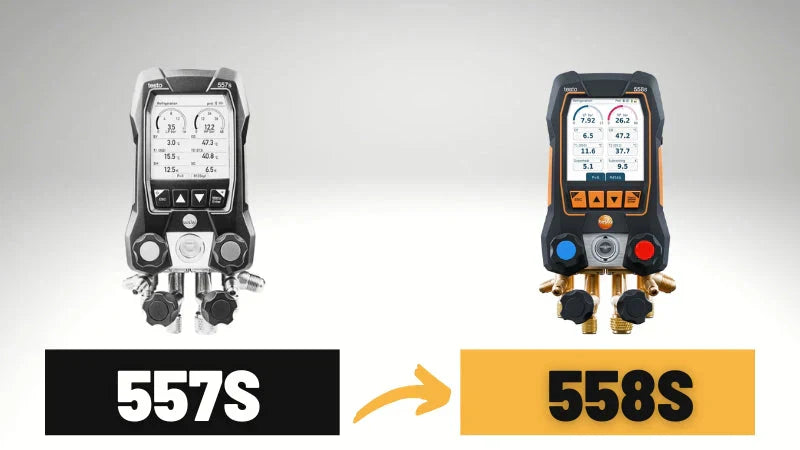
If you are comparing the testo 558s vs 557s, you are not alone. This is one of the most common questions tradies ask when they want a smart digital manifold without guessing their way into the wrong tier. The names are close, the overall job is similar, and both sit in the same broader Testo family. That is exactly why the confusion happens.
The real issue is not whether both tools can read pressure and temperature. They can. The real issue is how they fit your day-to-day work, how much help you want from the tool itself, and whether the extra spend on the newer platform actually saves you time on site. A manifold can look “close enough” on paper, then feel very different once you are doing commissioning, evacuation checks, superheat/subcooling work, and documentation on a hot rooftop in Brisbane humidity or on a windy Sydney coastal job.
This guide is written to clear that up in plain English. We will walk through what the 557s does well, where the 558s steps ahead, and how to decide between them based on real Australian HVAC work rather than catalogue talk. If you want a broader Testo 558s complete guide for Australian HVAC technicians before we get into the direct comparison, that will help with background.
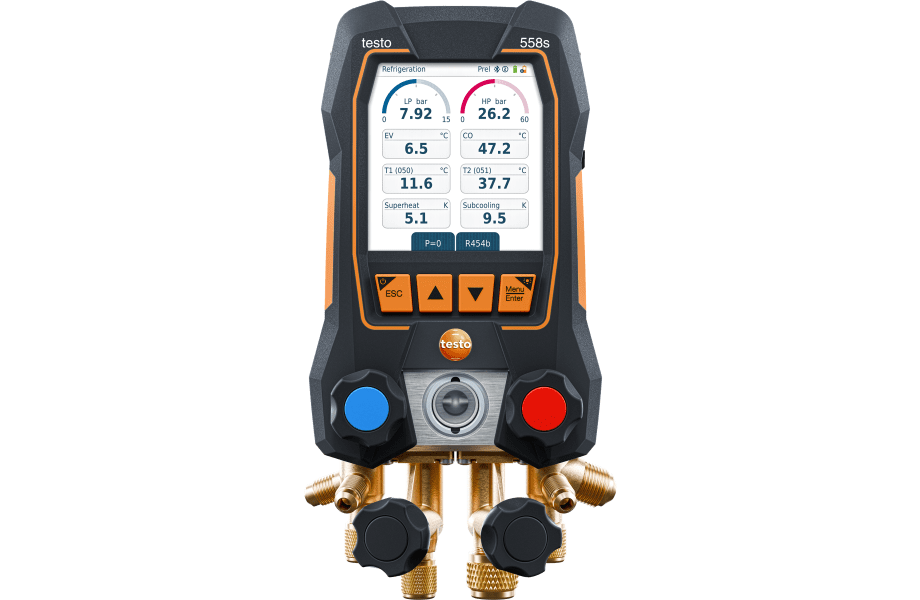
In the wider testo manifold comparison conversation, the 557s usually comes up as the proven smart option that gave many techs their first taste of app-connected workflow. The 558s is the newer premium step that pushes harder into touchscreen control, clearer on-device guidance, and a more polished field workflow. So when people ask testo 557s vs 558s, what they really mean is this: which one suits the way I actually work?
That is the question this article answers. Not with hype. Not with vague “better” claims. Just with practical decision points, current Australian buying context, and the kind of trade logic that helps you avoid overspending or underbuying.
Testo 557s: Mid-Tier Overview
The Testo 557s sits in a very sensible middle ground. It is not a stripped-down entry unit, and it is not trying to be the flashiest manifold on the market. What it does offer is a solid smart workflow for refrigeration and air conditioning servicing, especially if your work is mostly residential or light commercial. For plenty of fridgies, that is exactly the sweet spot.
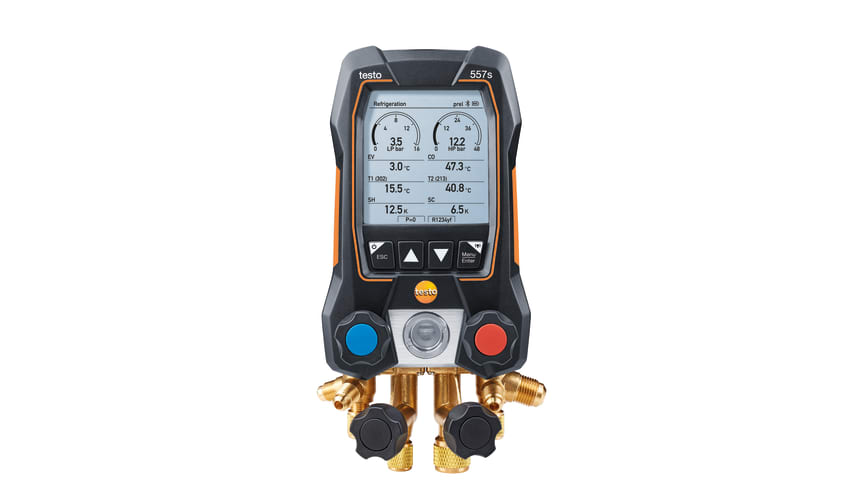
One reason the 557s built such a strong reputation is that it brought digital convenience without making the workflow feel overcomplicated. It gives you a clear screen, Bluetooth connectivity, app support, and a 4-way valve block layout that feels familiar to techs who already know their way around field service. If you want background on how this platform sits in the range, our Testo 557 vs Fieldpiece digital manifold comparison gives more context around where it fits in a working kit.
You will sometimes see the screen described in different ways online. The practical takeaway is simple: the 557s gives you a large, easy-to-read non-touch graphic display that works well for routine service work, paired with the Testo Smart App for deeper workflow and documentation. In other words, the manifold body itself stays straightforward, while the app handles a lot of the extra convenience.
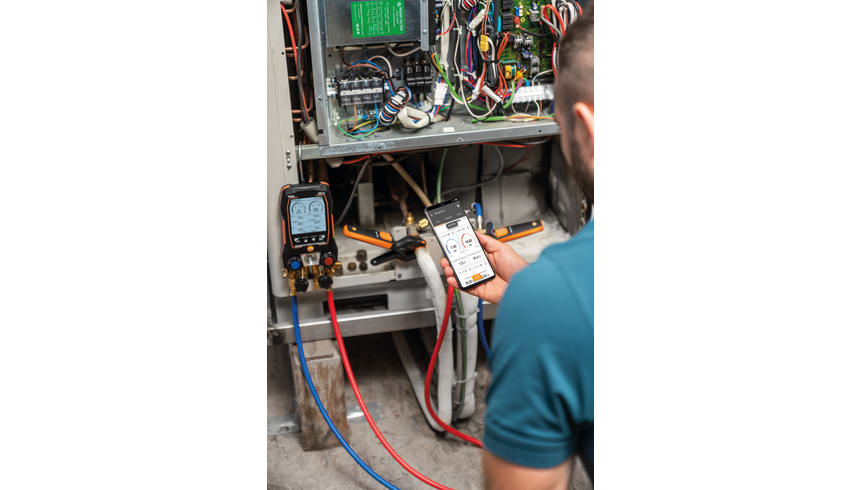
That matters because many techs are happy using their phone as the “brains” for part of the job. If you already keep notes, photos, and job info on your mobile, the 557s can feel like a natural fit. You do your readings at the manifold, connect by Bluetooth, and let the app help with calculations, logging, and record keeping. For split systems, small packaged units, and general service jobs, that is often enough.
It is also a good unit for people stepping into the Testo ecosystem for the first time. You get Bluetooth connectivity, wireless probe compatibility, guided measurement help through the app, and a workflow that is clearly more modern than an old analogue set. That is why the 557s still comes up when people search testo 557s or 558s. The 557s is not outdated because it lacks value. It is simply the less premium path.
From an Australian price perspective, the 557s usually appeals because it sits lower than the 558s when stock is available. Depending on the kit and supplier, it has commonly shown up around the low-$1,300 to low-$1,400 bracket, which is why many buyers still think of it as the more budget-conscious Testo smart manifold option. That lower buy-in can matter a lot if you are fitting out a van, buying your first serious digital manifold, or trying to keep tool spend balanced across the business.
It also suits the kind of tech who does not need the tool to hold their hand on every step. If you know your process, you like working from the app when needed, and most of your jobs are repeatable residential tasks, the 557s still makes sense. It is the kind of tool that feels honest. Capable, connected, and practical without trying to do everything at once.
If you are weighing it against earlier models, our article on Testo 557s vs 557 comparison guide helps explain the jump from older workflow into the newer smart platform. That is useful because some buyers are not just comparing two current-looking options. They are also trying to work out whether the 557s is already enough of an upgrade for their type of work.
Testo 558s: Premium Pro Overview
The 558s is where Testo leans harder into a premium field experience. This is the model that tends to answer the “should I step up?” question for techs who want the manifold itself to do more of the thinking, display more clearly, and feel quicker to use on busy commercial work. If the 557s is a smart mid-tier tool, the 558s is the more polished pro-grade version.
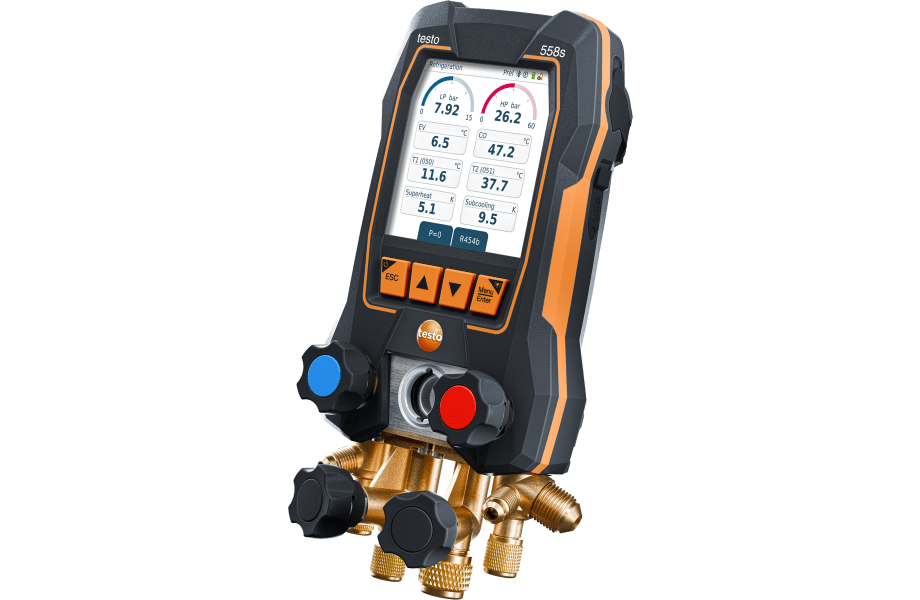
The biggest difference you notice first is the display and control style. The 558s uses a large colour touchscreen with an interface that feels much closer to a phone or tablet. It still keeps button operation for working with gloves, which matters on colder Melbourne mornings or when your hands are dirty and you do not want to fumble around on glass. In practice, that gives the 558s a smoother learning curve on complex jobs because the manifold itself guides you more clearly.
That is why so many people searching for testo 558s features are really looking for workflow improvements, not just raw measurement numbers. The 558s is not compelling because it suddenly turns pressure into magic. It is compelling because it makes the job easier to read, easier to track, and easier to document when the job is bigger or more demanding.
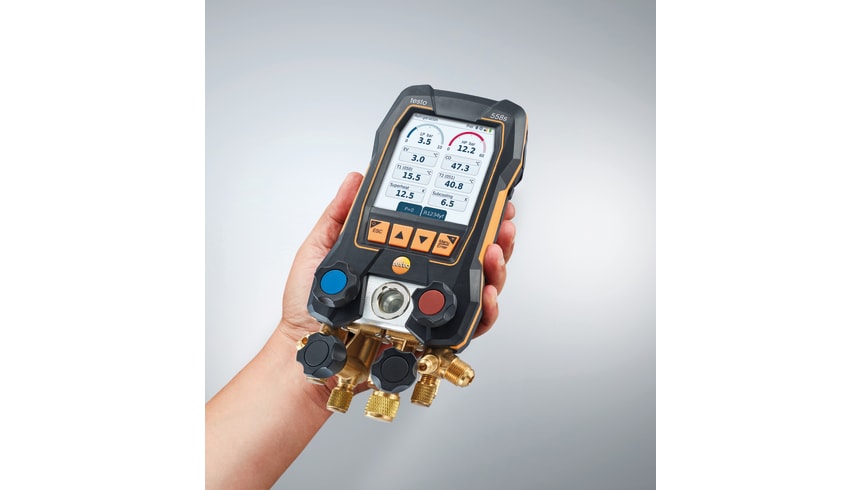
The official Testo positioning also pushes the 558s as a stronger all-rounder for modern refrigerant work, with A2L and A3 compatibility, a robust IP54 housing, Bluetooth connectivity, and hybrid charging using rechargeable and non-rechargeable power options. That hybrid charging setup is more useful than it sounds. It means the manifold is better prepared for real field conditions when a charging cable is not convenient, the van is a mess, or the site day runs longer than planned.
For many Australian techs, the 558s feels like a more serious commercial tool. Not because the 557s cannot do service work, but because the 558s reduces friction when you are moving between multiple steps, multiple probes, and multiple system checks in the one visit. If you are dealing with larger commercial plant, heat pumps, or more demanding diagnostic jobs where clear on-screen guidance helps, the 558s earns its premium position.
The price reflects that. In Australia, common 558s kit pricing has generally sat above the 557s, often landing from the mid-$1,500s into the high-$1,600s, with some hose-included or expanded kits pushing higher again. If you want the direct product view, the Testo 558s smart vacuum kit with hoses product page is the best place to see how it is presented in the local market.
What makes the 558s easy to justify is that the premium is tied to real job benefits. Clearer measurement graphs, more intuitive menus, better on-device visibility, stronger “whole workflow” thinking, and a platform that feels built for techs who do a lot of work across refrigeration, air conditioning, and heat pump servicing. That does not mean every tech needs it. It means the right tech will notice the difference every day.
So when someone asks, is 558s better than 557s, the honest answer is yes for some work and not automatically for all work. The 558s is the better tool in absolute terms. But the better buying decision depends on what sort of jobs fill your week.
558s vs 557s: Side-by-Side Comparison
This is where the comparison becomes clearer. The shared Testo DNA is real. Both are smart digital manifolds with Bluetooth connectivity, app integration, and a professional 4-way platform aimed at refrigeration and air conditioning work. The difference is not that one is “proper” and the other is not. The difference is how far each one goes in helping you on the job.
| Feature | Testo 557s | Testo 558s | Advantage |
|---|---|---|---|
| Display and control | Large graphic display with app-supported workflow | Large colour touchscreen with button backup and clearer graphs | 558s |
| Guided menus | Strong app-based guidance | More on-device guidance and app-like interface | 558s |
| Bluetooth workflow | Wireless probe integration and Smart App support | Wireless probe integration with a more refined display experience | 558s by a small margin |
| Trend visibility | Good for normal app-linked documentation | Better graphing and easier on-screen interpretation | 558s |
| Refrigerant-era readiness | Modern smart manifold for regular service work | Newer platform with broader premium positioning, including A2L and A3 compatibility | 558s |
| Power and field flexibility | Capable and field-proven | Hybrid charging adds convenience on long site days | 558s |
| Residential/light commercial value | Very strong | Strong, but may be more than needed for simple jobs | 557s |
| Commercial workflow speed | Good | Better when jobs get more complex | 558s |
| Australian buying position | Lower spend when stock is available | Higher spend, current premium choice | Depends on budget |
Tech Specs
This is the part buyers often miss. The testo 558s vs 557s difference is not mainly about one having wildly different base pressure numbers. On official listings, both sit in the same general class for core measurement work, with pressure measurement to 60 bar, overload to 65 bar, and temperature support from -50 to +150°C. The buying decision is more about interface, workflow, job fit, and how much on-device help you want.
That is why the 558s vs 557s Testo debate often gets muddled. People expect a simple “one is basic, one is advanced” story. In reality, both are serious tools. The 558s just gives you more convenience, more visible data, and a more premium experience while you work. If you want a deeper feature breakdown of the newer model, this guide on Testo 558s features guide for Australian HVAC technicians is worth reading next.
When to Choose 557s Over 558s
There are plenty of cases where the 557s is the smarter buy. That point gets lost when comparisons turn into a race for the newest unit. Not every tech needs the premium option. Sometimes the right business decision is the manifold that covers your actual work with less capital tied up.
The clearest case is residential split system servicing and routine light commercial work. If most of your week is made up of standard install checks, commissioning, service calls, and the usual superheat/subcooling tasks, the 557s will feel more than capable. You still get smart functionality, Bluetooth support, good visibility, and access to the app ecosystem. That is a very long way from “settling.”
It also makes sense for budget-conscious buyers. Maybe you are an apprentice stepping into your first serious digital manifold. Maybe you run a small team and need to fit out another van without blowing the tool budget. Maybe you would rather save the extra dollars for a vacuum gauge, scale, or leak detection gear. In those cases, the 557s can be the more balanced purchase because it still moves you into a connected digital workflow without forcing you into the highest spend bracket.
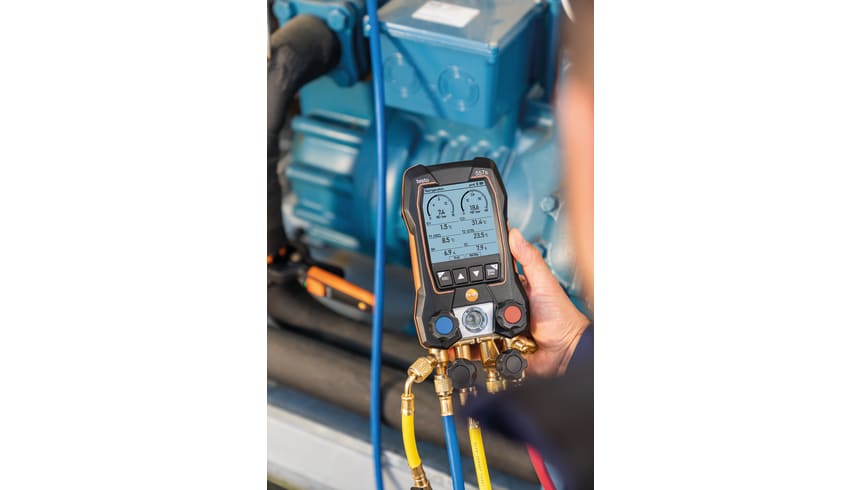
The 557s is also a good fit for techs who prefer app-based workflow anyway. Some tradies do not care if the manifold body has a fancier interface because they already use the phone or tablet as the main screen for reports, job photos, and notes. If that is you, the 558s premium touchscreen may feel nice, but not essential. You are paying for convenience rather than solving a real problem.
Simpler diagnostic needs are another big checkpoint. If you are not constantly bouncing between complicated commercial plant rooms, long trend checks, or multi-stage diagnostic routines, the 557s will rarely feel lacking. It covers the day-to-day tasks that matter most in general HVAC service work. That is especially true for techs whose work is more repetitive and predictable.
There is also a good ecosystem argument. For someone entering the Testo range, the 557s can be a sensible doorway into wireless probes, smart documentation, and digital service habits without jumping straight to the top-tier manifold. That can be a strong training path for newer techs or growing businesses that want standardised workflow but still need to watch spending.
Pro Tip
If your calendar is mostly house splits, smaller ducted systems, and routine maintenance, do not let comparison hype push you into overbuying. A 557s that gets used properly every day is a better business tool than a premium manifold with features you barely touch.
There is a real-world reason this matters in Australia. On many suburban service days, your challenges are access, heat, moisture, customer time windows, and paperwork. Not every job needs a premium interface. A clear, dependable manifold with smart app support can already be a major upgrade over older habits.
So if you are asking whether to buy the cheaper of the two, the honest answer is yes, sometimes. The 557s is still a smart choice when your work is mostly residential, your budget matters, your app workflow is already strong, and you want reliable digital capability without chasing every premium extra.
When to Upgrade to 558s
The 558s starts making stronger sense as soon as the job mix gets more demanding. This is where the newer platform pays you back. Not because it magically creates better refrigeration practice, but because it removes little bits of friction that add up across a full week.
Commercial HVAC work is the first obvious reason to step up. Bigger sites usually mean more moving parts, more readings, more steps, more documentation, and less patience for clunky workflow. When you are in a plant room, on a packaged unit, or checking more involved heat pump and refrigeration setups, the 558s gives you a cleaner on-device experience. Clearer graphs and a more intuitive interface reduce the amount of bouncing back and forth between the manifold and the phone.
Multi-system diagnostics are another strong reason. The more often you work across different system types, different refrigerants, and different service conditions, the more valuable the 558s becomes. That is especially true when you want the manifold itself to present information clearly without depending as heavily on the app for every extra layer of interpretation.
Guided workflow preference is a real factor too. Some techs simply work faster when the tool walks them through the process in a cleaner way. That is not a weakness. It is smart productivity. The 558s feels more self-contained, more polished, and more confident in the hand. If you are the kind of person who likes a better interface because it cuts mistakes and speeds decisions, the upgrade will make sense quickly.
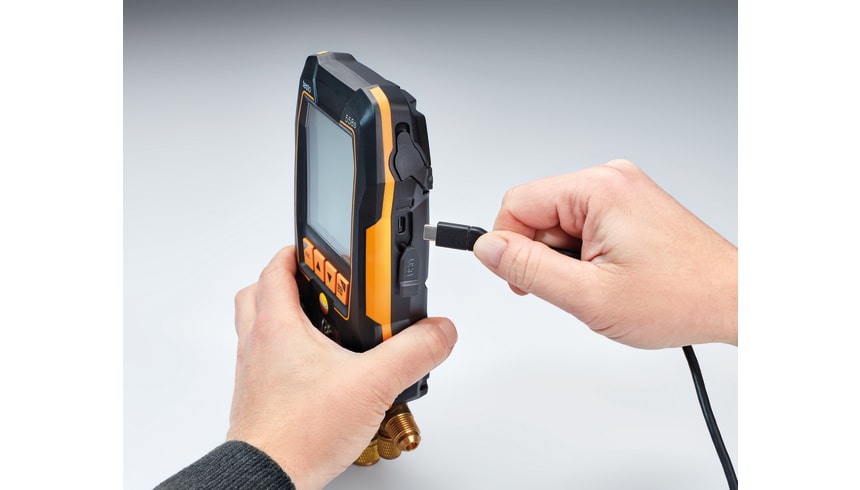
The tougher your working conditions, the more that premium feel matters. On commercial roofs, in humid mechanical spaces, or during long days moving between calls, a cleaner display and better field flexibility help. Brisbane humidity can drag out evacuation and verification work. Sydney coastal conditions can make already-busy service days even more annoying. Melbourne cold snaps mean gloves, rushed hands, and a bigger chance of fumbling through menus. In those moments, the 558s earns its keep by being easier to work with.
The upgrade question also gets stronger when your jobs include larger multi-head, packaged, or VRF/VRV-style diagnostic work. The 558s does not need a flashy label to prove its value there. It simply makes complex work easier to manage. More readable screens, better menu logic, and a more premium whole-system feel can shave frustration off the sort of jobs that already have enough moving parts.
There is also the future-proofing argument. If you are already looking ahead to broader connected workflow, newer refrigerant-era service habits, and a premium manifold you will want to keep for years, the 558s is the more forward-looking buy. That is why the testo 558s upgrade question comes up so often. Techs do not ask it because the 557s is poor. They ask it because they can see the 558s is the more complete platform.
If you are curious where the 558s sits above other premium options in the same family, our Testo 558s vs 570s comparison guide helps show how Testo positions its higher-end gear. That is useful if you already know you want premium, but still want to land on the right level.
So when should you upgrade to the 558s? When your work is more commercial, your diagnostics are less repetitive, your workflow benefits from better on-device guidance, and you want a manifold that feels more like a central smart tool than a reading device that leans on the app. That is the real dividing line.
558s vs 557s: Australian Pricing
Price matters, but only in context. A lot of comparison articles get this wrong by turning the whole decision into “cheaper versus dearer.” That is too basic. The right question is whether the price gap pays you back in time, clarity, and fewer annoying field slowdowns.
In Australia, the 557s has usually been the value play. When available, it has commonly landed around the low-$1,300 to low-$1,400 range depending on stock position, supplier, and whether you are looking at a base or hose-included style kit. The 558s usually sits higher, often around the mid-$1,500s to high-$1,600s for common kits, with some expanded versions going above that again. That means the difference is real, but not massive in the context of pro-level HVAC gear.
That gap becomes easier to assess when you think in workflow terms. If the 558s saves only a few minutes on a job where reading, navigating, and documentation are more involved, that can add up across a month. For a commercial tech or a service business with a high call volume, that matters. For a tech who does simpler jobs and already works happily through the app, the payback may be slower and less obvious.
The other pricing factor is buying position. Because the 557s is the older model, pricing can vary more depending on remaining stock, bundle details, and channel. That can create strong value if you find the right package. The 558s, by contrast, sits more clearly as the current premium choice, so its pricing tends to track that position more consistently.
Long-term investment also depends on who is holding the tool. For a business owner buying for senior techs doing more complex work, the 558s can be easier to justify. For a second van, a junior tech, or a business keeping costs tight while still upgrading into digital workflow, the 557s can make more financial sense.
Did You Know?
The cheapest option is not always the lowest-cost option over time. But the reverse is also true. Paying more only makes sense when the extra workflow speed, visibility, and convenience actually match the work you do every week.
That is the right way to read the testo 558s vs 557s pricing question. The 557s is the value choice. The 558s is the premium investment. Neither is automatically “better value” without looking at your actual job mix.
It also helps to view both inside the bigger category. If you want to compare where they sit among the refrigerant gauges, manifold gauges, and AC gauges options available to Australian techs, you get a better sense of how these manifolds stack up in real buying terms. And if you are building out a full brand-aligned kit, the Testo HVAC instruments, digital manifolds, probes, and accessories shows where the manifolds fit alongside other connected tools.
One more practical point: in Australia, refrigerant work is not just about tools. It sits inside real handling and licensing responsibilities, so it is worth keeping ARCtick refrigerant handling guidance in mind when choosing service gear and setting up workflow around commissioning and maintenance. That does not decide between the 557s and the 558s, but it does remind you that better workflow and good documentation habits are not just nice extras.
Make the Right Testo Choice
So which manifold should you choose?
If your work is mostly residential split systems, light commercial service, and straightforward commissioning, the 557s remains a very sensible answer. It gives you Bluetooth connectivity, app support, a strong digital workflow, and a lower entry cost into the Testo ecosystem. It is the tool for buyers who want smart capability without paying for premium interface gains they may not use every day.
If your work is more commercial, more varied, or more diagnostic-heavy, the 558s is the stronger choice. Its touchscreen-led workflow, clearer graphing, refined on-device guidance, and premium field feel make it easier to justify when your work regularly asks more from the tool. That is where the 558s stops being a luxury and starts being a productivity upgrade.
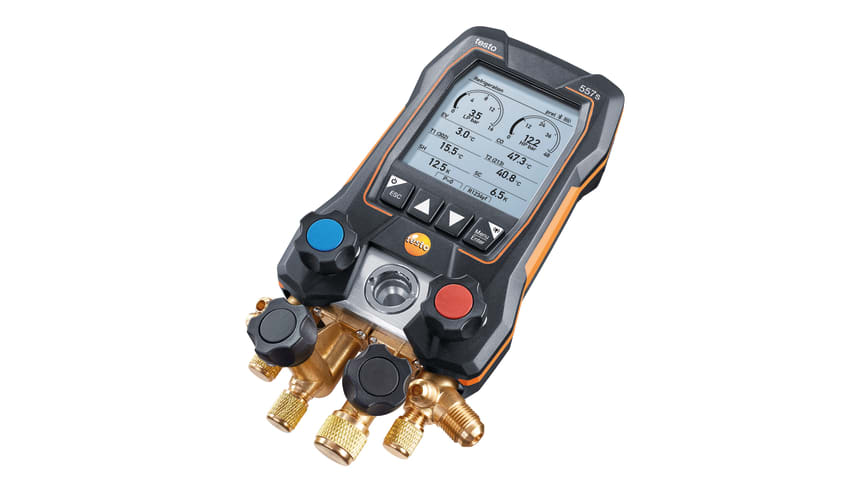
The simplest way to frame the whole comparison is this. The 557s is the value smart manifold. The 558s is the premium smart manifold. The right answer depends less on the brand badge and more on whether you want to save money up front or save more friction across the life of the tool.
If you are still deciding, start with your own week. Count how many jobs are standard residential service calls. Count how many are bigger commercial or multi-step diagnostic jobs. Think about how often you rely on the phone app, and how much you would benefit from better on-device visibility. That will usually answer the question faster than any spec sheet.
For more reading, the Testo 558s complete guide and the guide to Testo 558s features guide help if you are leaning premium, while the Testo 557s vs 557 comparison guide article is useful if you are also comparing older Testo paths.
And if you already know the newer model is the better fit, you can review the Testo 558s smart vacuum kit with hoses page to check the local kit setup. If you want help matching the manifold to your workflow, job mix, or probe setup, contact us for a quote or talk to our team to confirm compatibility Australia-wide.