
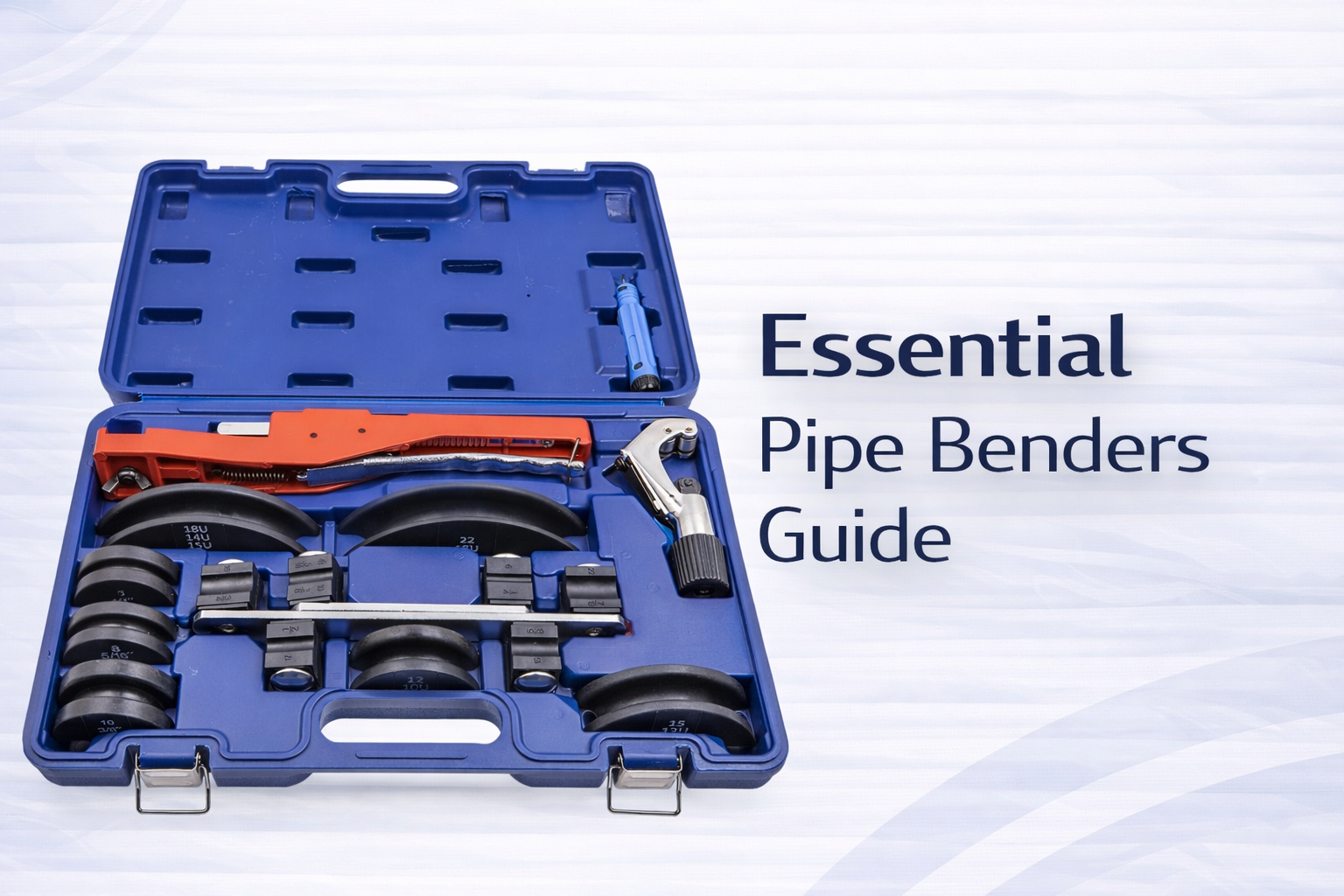
Perfect Bends Every Time
If you’ve ever kinked a copper line on a job, you know the feeling. The bend looks “close enough” until it flattens, splits, or starts rubbing on a bracket. Then you’re back on site, fixing a problem that never had to happen. That’s the kind of call-back that hurts your time, your margin, and your name.
In HVAC and refrigeration, neat pipework isn’t just about looking tidy. A bad bend can choke flow, crack later from vibration, or force you into ugly joins that are harder to insulate and harder to service. On split systems, it can mean a line set that won’t sit right in a wall cavity. On commercial jobs, it can mean a plant room run that’s a nightmare to trace when you’re fault-finding at 7am.
The big issue is simple: the wrong pipe bender (or the wrong technique) damages the tube. You might get away with it once or twice, but it catches up. Copper work-hardens. Kinks start hairline cracks. Tight bends can rub through insulation fast—especially in Sydney coastal air where salt and moisture are always hanging around.
There’s also a hidden cost most people don’t count. When your bend is rough, you spend extra time “making it fit”. You trim a bit. You re-flare. You re-braze. You add another bracket. You wrestle insulation. Ten minutes here and there turns into hours across a month. And if you’re running a crew, that time is real money.
This is your complete, practical guide to pipe benders for Australian HVAC work in 2025. We’ll cover what pipe benders are, which types suit which jobs, how to size them to the tube you actually use, and how to choose between manual and hydraulic tools without wasting money. We’ll also talk real job conditions—Brisbane heat, Melbourne cold snaps, tight apartments, and remote WA work—because the “best” bender on a bench isn’t always the best bender on a roof.
If you’re building out your kit, it helps to see pipe benders in the bigger picture Essential HVAC tools you rely on every week. A good bender is one of those tools that quietly makes every other step smoother.
By the end, you should be able to answer the real questions Aussie tradies type into Google: “pipe benders Australia”, “best pipe benders Australia 2025”, “manual vs hydraulic pipe bender”, and even “pipe benders near me Sydney Melbourne”. Not with hype. With job-ready checks that stop mistakes.
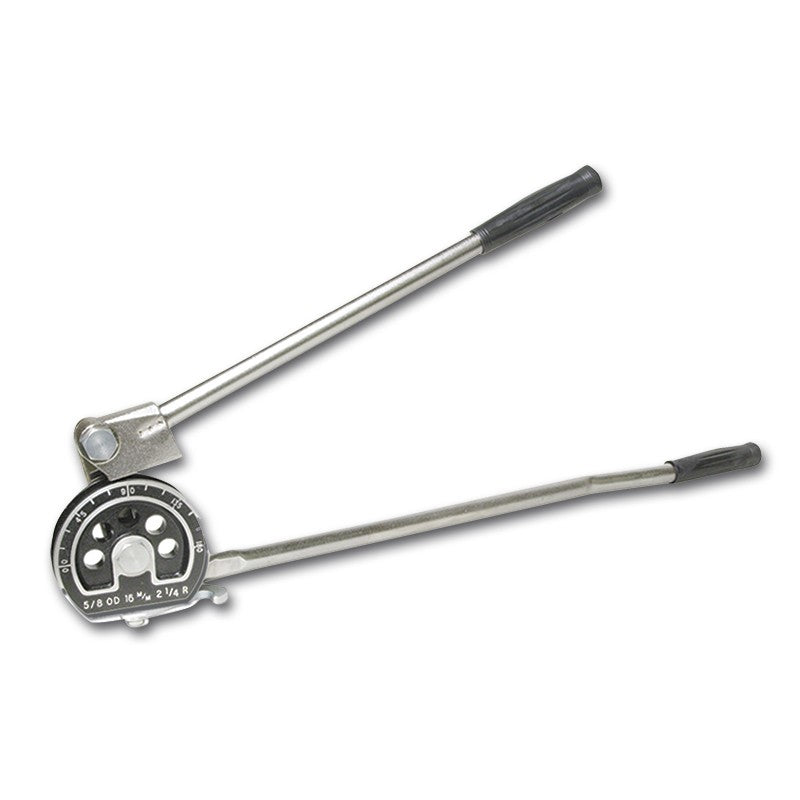
What Are Pipe Benders? (HVAC Applications)
A pipe bender is a tool that forms a controlled bend in tubing without crushing it. In HVAC, most people say “pipe bender”, but you’ll also hear “tube bender”. The difference can get messy because “pipe” often means thicker, measured by nominal bore, while “tube” is measured by outside diameter. For our world—copper refrigeration lines and soft aluminium tube—what you want is a tube-bender style tool that supports the outside of the tube through the bend.
Why bending matters comes down to two things: flow and strength. When you bend copper properly, the inside radius stays smooth and round. That means less restriction and less turbulence, which matters when the system is pushing hard on a humid Brisbane afternoon. It also means the tube keeps its wall support, so it’s less likely to crack from vibration later.
On HVAC installs, the common bends are 90° turns around corners, 45° changes to line up with penetrations, and offsets to clear brackets, beams, or pipe trays. Offsets are the sneaky one. They look easy, but a messy offset can push your line into a rub point, and then you’re chasing a mystery leak months later.
Most HVAC bending is on copper, because it’s the standard for refrigerant lines. You’ll also see soft aluminium tube in some applications, and it can bend nicely when supported properly. The key is using the right former size and keeping the bend clean, because aluminium can mark or kink quickly if you rush it. Either way, your goal is a clean bend with the tube still round, not an oval shape that’s begging for trouble.
Another reason pipe bending tools matter is service access. A bend that hugs a wall too tight can block access to a flare nut later. A bend that sits hard against a bracket can rub through insulation. A bend that forces the line set to twist can make the indoor unit harder to mount square. When you’re planning your bends, you’re really planning the next tech’s day too—often your own.
In Australia, bending needs to sit comfortably inside good installation practice. That means bends that don’t stress the tube, don’t create obvious restrictions, and don’t force sharp turns where insulation can’t sit properly. Even if you’re not quoting standard numbers on site, the practical goal is the same: neat runs, correct support spacing, and a bend radius that suits the tube and the job.
From a search point of view, you’ll see people look up “pipe benders Australia”, “copper pipe bender”, and “hvac pipe bender” because they want the right tool for our common tube sizes, plus something they can get locally and rely on. That’s what we’ll focus on here.
If you want help matching a bender to your day-to-day work, talk to our team to confirm compatibility. It’s an easy way to avoid buying the wrong capacity for the tube you actually bend.
Types of Pipe Benders for HVAC Work
There isn’t one “best” pipe bender. The best choice depends on tube size, how often you bend, where you bend, and how tight the space is. Below are the main types you’ll see in HVAC work, with the real-world reasons you’d choose each one.
One simple way to think about it is this: the more support the tool gives the tube through the bend, the cleaner the bend will be. The trade-off is usually size, weight, and setup. A tiny spring bender is light, but it gives you less control. A solid frame bender gives you control, but it takes space. Your job is matching that to your jobs.

Manual lever benders
Manual lever benders are the classic for HVAC copper lines. You’ve got a shaped former (the bending die) and a handle that pulls the tube around it. For common split system sizes, a good manual lever bender gives you clean, repeatable bends with a nice radius. They’re fast once you’ve got the feel, and they’re easy to carry up stairs or onto a roof.
They shine when you’re doing regular bends in the 1/4" to 5/8" range (and sometimes larger, depending on the tool). The main limitation is effort. Once you get into bigger diameters or thicker wall tube, manual bending can turn into a wrestling match—especially if the copper isn’t as soft as you expect.
Manual lever benders also reward calm technique. Mark your start point, keep the tube seated, and pull smoothly. Then stop and check spring-back before you “just give it a bit more”. That last little “bit more” is where bends go past 90°, and then people try to pull it back, which work-hardens the tube.
Ratchet benders
Ratchet benders are built for situations where you can’t swing a long handle. Instead of one big pull, you ratchet the bend around in smaller steps. This is handy in tight plant rooms, ceiling spaces, or cramped service corridors where you’ve got gear in the way.
The trade-off is speed. Ratcheting takes longer than a clean lever pull. But if the alternative is removing half a ceiling tile grid or trying to bend by hand and hoping for the best, a ratchet setup can save the day.
Ratchet styles can also help when you need more control through the last part of the bend. That last 10 degrees is where people overcook it, then try to “pull it back” and stress the copper. A ratchet lets you creep up on the angle and stop where you need.
Spring benders
Spring benders are the budget-friendly option you’ll still see in vans. You slide a spring over the tube (or sometimes inside, depending on the spring type), then bend the tube by hand. The spring supports the tube wall so it doesn’t flatten as easily.
They can work for small sizes and gentle bends, but they’re more “feel-based” and less consistent. On a hot Brisbane roof where you’re trying to move fast, it’s easy to over-bend or mark the tube. They’re best seen as a backup or a quick solution for a light bend when you don’t have space for a full bender.
Another limitation is repeatability. If you’re doing two lines side-by-side and you want them to look symmetrical, springs make that harder. You can still do good work with them, but you need to slow down and be honest about what the tool can and can’t do.
Hydraulic benders
Hydraulic benders bring the effort down. Instead of muscling the bend, you use hydraulic force to pull the tube around the former. This is a big deal when you’re bending larger sizes, doing repeated bends all day, or working with tougher tube. They’re common in workshop settings and on jobs where the bend quality has to stay consistent across multiple runs.
In HVAC, “hydraulic bender” can mean different things. Some people mean a true hydraulic ram bender used in workshops for heavier pipe. Others mean heavier-duty bending setups that reduce effort through design and leverage. Either way, the decision point is the same: you’re choosing less strain and more consistency when the work volume or tube size demands it.
The trade-offs are weight, setup time, and cost. A hydraulic bender can be a serious bit of kit to haul around, and you don’t always want it on a ladder or in a tight apartment balcony space. But when you need the capacity, it’s hard to beat.
Electric or battery powered benders
Powered benders sit in the “speed and consistency” lane. If you’re doing repetitive work, or you want the cleanest bends with less fatigue, a powered option can make sense. They’re also useful for reducing strain on apprentices and techs who are doing lots of bending in a day.
The key is not to assume “powered” automatically means “better for every job”. On remote work in WA mining areas, you might value a simple tool that’s tough, easy to service, and not dependent on batteries or charging. Powered tools are great, but they need to fit your reality.
Powered benders also need more care around setup. If the tube isn’t seated right and the tool starts pulling, you can damage a tube quickly before you even feel it. That’s why training and a calm workflow matter as much as the tool type.
If you want to see what styles and capacities are available right now, you can Browse our Pipe Bender Collection. Even if you’re not buying today, it helps you compare types and decide what suits your work.
Pro Tip
Before you bend, do a quick “path check” with the tube held in place where it will run. Look for rub points, insulation clearance, and bracket locations. One small tweak to your bend location can stop a future vibration wear spot.
Manual vs Hydraulic: Which Do You Need?
This is the big decision point for many Aussie techs. Manual lever benders are common because they’re simple, portable, and perfect for the tube sizes you see every day on split systems. Hydraulic benders come into their own when tube size increases, bending becomes frequent, or consistency matters across a whole job.
It also depends on your role. If you’re an apprentice or a newer tech, manual benders are often the best place to start. They teach you bend control, spring-back feel, and how to keep your tube aligned in the former. That skill stays with you, even if you move to bigger gear later.
If you’re a business owner or leading hand, the question becomes: how much labour and rework are you paying for? If your team is bending larger tube daily, and you’re seeing kinks, flattened sections, or slow progress, a hydraulic tool (or a heavier-duty bending setup) can pay for itself through time saved and fewer scrapped lengths of copper. The “ROI” isn’t about a magic number. It’s about fewer mistakes, less fatigue, and faster, repeatable work.
Think about where you bend most. On a job site, you want light and quick. In a workshop, you can live with heavier gear if it gives you cleaner results. Also think about Australian conditions. On a scorching Brisbane day, fatigue hits quicker. On a windy high-rise in Melbourne, you want a tool you can control safely with gloves and limited space.
There’s another angle people miss: consistency across the crew. With manual tools, one tech might hit a perfect 90 every time, and another might always come up short and “correct it” by pulling back. That back-and-forth is what work-hardens the copper. If you’ve got mixed experience levels, a more controlled setup can lift the whole crew’s results.

| Decision factor | Manual lever bender | Hydraulic / heavy-duty bending setup |
|---|---|---|
| Best for | Everyday HVAC copper lines, service work, installs, mobile vans | Larger tube, frequent bending, consistent results across multiple runs |
| Portability | High. Easy to carry onto roofs and into tight spaces | Lower. Often heavier and better suited to workshop or planned site setup |
| Speed on small tube | Very fast once you’ve got the technique | Fast, but setup can be slower for quick “one-off” bends |
| Effort and fatigue | More physical effort, especially as tube size increases | Lower effort, better for repeated bends and reducing strain |
| Consistency across a crew | Varies with skill. Great in experienced hands | More consistent when multiple people need the same result |
| Typical buying mindset | Apprentice starter kit, service tech kit, “grab-and-go” tool | Workshop investment, high-volume install teams, larger capacity needs |
| What to watch out for | Wrong former size, rushing the bend, over-bending then “pulling back” | Tool weight, setup space, ensuring correct die size and alignment |
If you mostly work on residential split installs and service, a set of Quality Manual Pipe Benders is usually the sensible first move. If you’re regularly handling larger sizes, or you want more stability and repeatability for bigger copper, a heavier-duty option like an A-frame bender can be worth a look. See Professional Benders for larger tube, or talk to our team to confirm compatibility for your tube range and job style.
One more practical point: safe handling matters. Bending can put you in awkward positions—twisted shoulders, awkward pulls, and sudden slips. If you’re building safe habits (or teaching apprentices), it’s worth brushing up on Safe manual handling techniques and setting up your work so you’re not fighting the tool.
When you’re ready to compare options side-by-side, you can also Browse our Pipe Bender Collection and focus on the type and capacity that fits the way you work.
Sizing Guide: Matching Bender to Tubing
Sizing is where people get caught. It’s easy to buy a bender that looks right, then realise it doesn’t match the tube you actually use on most jobs. In Australian HVAC, common copper tube sizes often fall between 1/4" and 7/8", with smaller sizes showing up in residential splits and larger sizes more common in bigger ducted systems and some commercial work.
Your bender needs to match the tube outside diameter properly. If the former is too small or too loose, the tube can flatten. If it’s the wrong size entirely, you can mark the tube or create a bend that looks fine but has a hidden restriction. This matters even more on tighter bends, where the tube wall is under higher stress.
Here’s a simple “how to confirm” habit that saves a lot of grief. First, read the markings on the copper coil or line set packaging if you have it. Next, confirm the bender’s rated tube O.D. matches that size. If there’s any doubt, measure the outside diameter with calipers. That extra minute beats scrapping a whole length of copper because the bend went oval.
Capacity ratings on benders are usually shown by tube size. Some tools are dedicated to one size, which can be very precise and quick. Others are multi-size sets with interchangeable formers. Multi-size is handy for a mobile tech, but you still need to confirm each former matches the tube you’re bending, and that you’re assembling it correctly every time. A bender that’s “almost right” is often worse than no bender, because it gives you confidence while quietly damaging the tube.
When people ask about “R32 and R410A line sizing”, what they’re really asking is: “What tube sizes will I see on the jobs I do?” The safest answer is that it varies by system capacity, manufacturer, and installation requirements. You’ll commonly see certain combinations on split systems, but you should always confirm line sizes in the installation manual for the unit you’re fitting. The bender you choose should cover your most common sizes first, then expand out if your work needs it.
Metric versus imperial can also trip people up. In Australia, HVAC copper line sizes are often discussed in inches (like 1/4", 3/8", 1/2"), even if other parts of the job use metric. Some benders show both. Some don’t. If you’re ever unsure, measure the tube outside diameter or check the markings on the coil. That saves you from guessing and getting the wrong former on the day.

If you want a broader refresher on how different benders are designed and what they’re meant to handle, this plain-English guide can help: Tube Bender basics for tradies. It’s also handy for apprentices who are still building confidence with tube identification and bend control.
Tech Specs
When a bender says it “covers” a size, confirm it’s talking about tube outside diameter, not a rough “pipe size” label. If the former doesn’t match the tube properly, bend quality drops fast, even if the handle feels fine.
Not sure which sizes you should cover for your work? Talk to our team to confirm compatibility. A quick check now is cheaper than buying a set that misses your most-used tube size.
If you’re building a pipe bender buying guide for your own van, a good approach is to start with the sizes you touch every week, then add the “sometimes” sizes later. That keeps your spend sensible and your kit lighter for daily work.
Australian Climate & Work Considerations
Pipe bending is one of those tasks that looks the same everywhere, but the job conditions change how it feels and how clean your results are. Australia throws a mix at you: heat, humidity, wind, dust, corrosion, and tight building layouts.
On a Brisbane rooftop in summer, the heat and glare are brutal. Gloves get sweaty, copper gets hot, and fatigue can sneak up on you. That’s when simple, repeatable tools matter. A bender that grips well, aligns easily, and doesn’t require awkward body positions can keep your bends clean when your energy is dropping.
In Sydney apartments and tight ceiling spaces, access is the enemy. You might have only a small swing for a handle, or you might be bending close to a wall penetration where every millimetre counts. That’s where compact benders, ratchet styles, or careful pre-measure and mark work can save you from forcing a bend and kinking the line.
In Melbourne, cold snaps can make hands stiff and work slower, especially early mornings. Copper can also feel less forgiving when you’re rushing. A controlled bend, done smoothly, is safer than trying to “snap” it into place. If you’re doing early starts in winter, take the extra moment to set the tube properly in the former before you pull.
Remote installations in WA mining and industrial areas bring dust, travel, and limited access to replacements. You want tools that are tough, easy to maintain, and easy to pack. If a tool breaks mid-swing and you can’t get parts quickly, it becomes dead weight. This is where solid build quality and simple maintenance routines make a big difference.
Across all regions, high-rise work adds another layer: wind, edge safety, and limited space to set up. The best bending workflow is often the one that reduces time spent handling long tube lengths near edges. Plan your bends, mark carefully, and keep the tool stable. If you can pre-bend shorter sections safely away from the edge and then fit them, it can reduce risk and stress.
For a job-focused view of compliance thinking (without turning your day into a standards lecture), this internal guide is a useful reference: AS/NZS compliance basics for Aussie HVAC gear. The main takeaway is simple: use the right equipment, keep it maintained, and don’t cut corners when pressure and safety are on the line.
Did You Know?
Copper can work-harden if you keep tweaking the same bend back and forth. If you over-bend, avoid “unbending” and re-bending the same spot. It’s better to remake a short section than leave a stressed bend in a vibration zone.
A quick note on coastal corrosion. Copper itself handles a lot, but straps, saddles, and the way insulation gets damaged around bends can create moisture traps. A bend that’s too tight can tear insulation during install, and that small tear becomes a wet spot later. Clean, spacious bends make insulation easier, and that helps durability on coastal jobs.
Top Pipe Bender Brands in Australia
When people search “best pipe benders Australia 2025”, they’re usually trying to avoid two headaches: tools that kink tube, and tools that don’t last. Brand matters, but not because a logo makes bends better. Brand matters because better brands usually give you better die accuracy, smoother action, stronger frames, and easier access to support if something wears out.
In Australia, you’ll see a mix of professional-grade tool makers and economy options. Professional tools tend to be more consistent, especially when you’re bending daily or working on larger tube. Economy tools can still be useful for light work, but they’re more likely to flex, slip, or mark the tube if tolerances aren’t great. Over a year, that can mean more scrapped copper and more time spent “massaging” bends into place.
You’ll commonly see recognised tool brands in the HVAC space (for example, Hilmor and Imperial) because they’re built for trade use and tend to offer better fit, smoother movement, and more consistent formers. The practical advice is simple: pick brands with clear support channels and parts availability, not just a cheap upfront price.
Local supplier availability is a big deal. If you’re in Sydney or Melbourne and you need a replacement former, handle part, or a warranty check, you don’t want to be waiting ages. For tradies searching “pipe benders near me Sydney Melbourne”, the real win is choosing a tool that’s supported locally and easy to get serviced or replaced if needed.
Australian tradie feedback is usually consistent on what matters: bend quality, durability, and the feel in the hand. If a bender twists under load, you’ll fight it. If the former is rough or mismatched, you’ll mark the copper. If the handle feels flimsy, you’ll hesitate on the pull and create a lumpy bend. Those are the small things that turn into time loss on every install.
Price versus quality is also about how you work. If you bend occasionally, you might be fine with a simpler tool. If you bend every day—especially larger sizes—better build quality can stop tool failures and stop you scrapping copper because the bend went bad. It’s not about chasing “premium”. It’s about choosing a tool that matches your workload.
If your goal is convenience—like “buy pipe benders online Australia” searches—focus on two checks before you commit: does it cover your tube sizes, and is there clear support if something arrives wrong or wears out? If you’re unsure, talk to our team to confirm compatibility before you lock it in. It’s the easiest way to avoid ordering a bender that’s wrong for your copper line set sizes.
If you want to see what other Aussie techs are choosing most often, start with the Best-Selling Pipe Benders. That view is a handy shortcut for what’s popular for real-world jobs, then you can narrow it down by your tube sizes and the type of bending you do.
And if you’re comparing “pipe bender” versus “tube bender” listings across different stores, remember this: for HVAC copper, the tool has to fit tube O.D. cleanly and support the wall through the bend. If the listing is vague, ask questions before you buy. A quick message can save you a lot of frustration later.
Choose Your Perfect Bender
A good pipe bender is one of those tools that pays you back quietly. It gives you clean bends, fewer kinks, less scrap copper, and fewer call-backs. It also makes your installs look professional and keeps pipework easier to insulate, support, and service later.
To choose the right bender, start with your reality: the tube sizes you use most, where you work (roof, plant room, apartments, remote sites), and how often you bend. Manual lever benders are brilliant for everyday HVAC work and mobile service. Hydraulic benders (or heavier-duty bending setups) make sense when sizes get bigger, bending gets frequent, and you want consistent results with less strain.
If you’re building a starter setup, cover your most common sizes first, then expand. If you’re running a crew, think about consistency and fatigue. And if you’re unsure about capacity or fit, take the safe route and talk to our team to confirm compatibility.
When you’re ready to choose, you can Shop Pipe Benders Australia-wide. If you want to compare options first, take another look and Browse our Pipe Bender Collection to match the tool to your tube sizes and your job style.