
Mastercool Recovery Machines: Complete Guide Australia
If you're handling refrigerant on Australian job sites, a quality recovery machine isn't optional. It's a legal requirement and a genuine time-saver.
Whether you're pulling refrigerant off a residential split system in Brisbane or decommissioning a large rooftop pack on a Sydney CBD building, the right recovery machine makes all the difference to your workflow, your compliance, and your bottom line.
This guide covers everything you need to know about Mastercool recovery machines: how they work, which model suits your application, and how to keep them running reliably for years of heavy use. If you're working your way through the Mastercool range at HVAC Shop, this is the right place to start.
Written by Rica Francia Macaspac, HVAC Shop content writer, in consultation with Aussie HVAC tradies and industry experts. Published: June 2026 Last reviewed: June 2026.

What Is a Refrigerant Recovery Machine?
A refrigerant recovery machine is a purpose-built pump that removes refrigerant from an HVAC-R system and transfers it into a certified recovery cylinder. It does this safely, efficiently, and in compliance with Australian regulations.
Under the Ozone Protection and Synthetic Greenhouse Gas Management Act 1989, it is illegal to knowingly vent refrigerant into the atmosphere. Every ARCtick-licensed technician knows this, but the practical implication is worth spelling out. Venting refrigerant isn't just an environmental issue. It's a licensing risk and a potential financial liability.
The recovery process works by drawing refrigerant from the system in vapour form, liquid form, or both, then compressing it and pushing it into the recovery cylinder. The machine does the heavy lifting that would otherwise take ages manually, and it does it consistently every time.
Oil-Less vs Oil-Lubricated Recovery Machines
Recovery machines fall into two main internal design categories. Oil-lubricated machines use compressor oil to keep internals moving smoothly. They're generally heavier, more durable under sustained commercial use, and better suited to high-volume jobs like large chiller plants or multi-system commercial buildings.
Oil-less machines eliminate the risk of oil contamination in the recovered refrigerant, making them popular for residential work and jobs where refrigerant may be returned to service. Mastercool offers options across both types, so understanding which suits your typical job mix is the first step in choosing correctly.
R32 vs R22 Compatibility
With the Australian market well into its R32 transition, refrigerant compatibility is a critical spec to check before purchasing any recovery machine. R22 systems are still out in the field, particularly on older commercial equipment, but new installations are overwhelmingly R32 or R410A.
The key point with R32 is its A2L flammability classification. It requires spark-free recovery equipment to comply with WHS obligations and ARCtick guidelines. Not every recovery machine on the market is rated for A2L refrigerants, so this is a non-negotiable check for modern Aussie job sites.
Capacity Ratings Explained
Recovery machine capacity is measured in pounds per minute (lb/min) or kilograms per hour (kg/h). Put simply, it tells you how fast the machine can pull refrigerant from a system. A higher capacity machine finishes recovery faster, which matters most on larger commercial systems where you might be pulling 10 to 30-plus kg of refrigerant.
On a residential split, a lower capacity machine is perfectly adequate. Matching capacity to your typical job size is how you avoid overspending on commercial-grade kit you don't need, or bottlenecking your day on a machine that's undersized for the work in front of you.
Tradie Pro Tip: Always check your machine's R32/A2L rating before starting work on any modern split system. Using a non-spark-free machine on an R32 system isn't just a compliance issue. It's a genuine safety risk in poorly ventilated plant rooms and roof cavities.
Mastercool Recovery Machine Models Overview
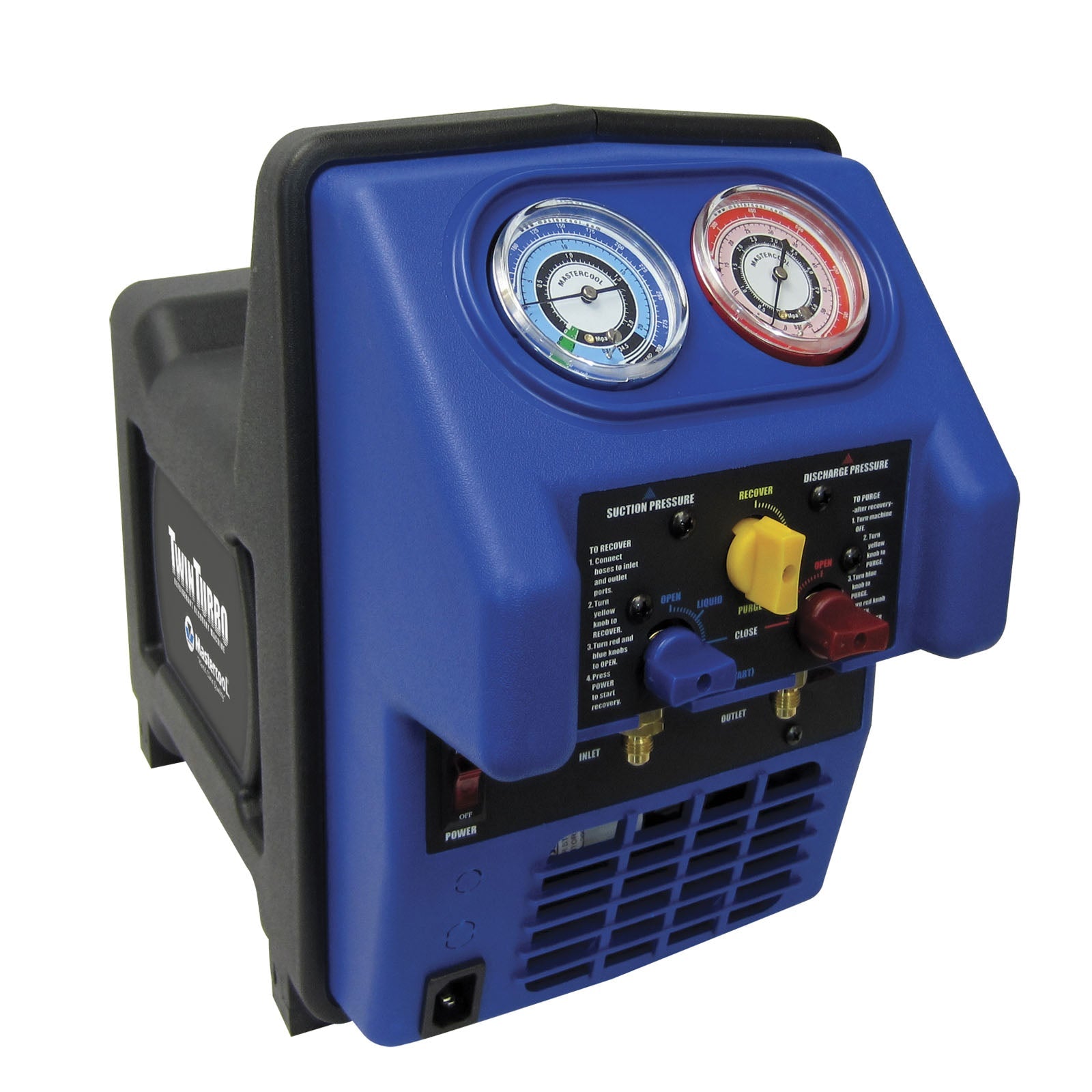
Mastercool's recovery machine lineup in Australia is built around the MC69000, MC69200, and MC69400 series. Each targets a different segment of the market based on capacity, portability, and commercial duty requirements.
The full series is available through HVAC Shop's Mastercool recovery machine series listing, which covers the complete specification breakdown for each model. Here's where each one sits in the range.
MC69000 Series: Residential and Light Commercial
Compact, van-friendly, and built for residential work. The MC69000 series is Mastercool's entry into the recovery machine range. It's lightweight and designed for split systems, small VRF units, and light commercial package units.
Recovery speed is well matched to the job types these systems serve. The unit handles common refrigerants across the residential market including R32 and R410A, making it a practical daily tool for technicians whose work is primarily residential.
MC69200 Series: Mid-Range Versatility
The sweet spot for Australian contractors doing mixed residential and commercial work. Higher recovery capacity than the MC69000 means less waiting on larger systems, while it remains portable enough for multi-site days.
This is the model many experienced fridgies land on as their daily driver: capable enough for commercial work, not overkill for residential. The MC69200 carries R32 spark-free certification, making it compliant for A2L refrigerant recovery across modern installations.
MC69400 Series: Commercial Grade
Built for sustained commercial and industrial recovery work. The MC69400 is Mastercool's heavy-duty option, designed for large rooftop packs, chiller systems, industrial refrigeration plant, and multi-compressor commercial setups.
Recovery speed is significantly higher than the lighter models, which pays dividends on back-to-back large system decommissioning jobs. Pressure ratings are suited to high-side commercial system pressures, and the unit is built for durability under frequent use rather than occasional residential cycling.
Tech Specs Note: All Mastercool recovery machine specifications, including pressure ratings, recovery speeds, and refrigerant compatibility lists, should be confirmed against the current Mastercool datasheet for each model before purchase. Refer to the Mastercool official website for current model documentation.
All three series are available through HVAC Shop's recovery units collection, where you can compare current stock and availability across the range.
How Recovery Machines Save Time and Money
It's easy to think of a recovery machine purely as a compliance tool, something you use because the law says you have to. In practice, a quality recovery machine pays for itself in real job-time savings surprisingly quickly, especially on systems with meaningful refrigerant charges.

Speed Compared to Slower Methods
A modern recovery machine dramatically reduces the time spent on refrigerant extraction, particularly on systems with larger charges. On a commercial system holding 15 to 20 kg of refrigerant, the difference between a correctly sized recovery machine and a slow alternative can be measured in hours, not minutes.
On a day with multiple jobs or a tight commercial schedule, that time saving is directly tied to how much work you can turn over. For contractors billing by the job, faster recovery means faster throughput.
Reduced Refrigerant Waste: Environmental and Cost Benefits
Modern recovery machines achieve high recovery efficiency, meaning the vast majority of refrigerant in the system ends up in the recovery cylinder rather than being lost. Refrigerant isn't cheap, and reducing waste directly reduces operating costs over time.
From an environmental standpoint, high-GWP refrigerants like R410A and the now-phased R22 cause real harm if they escape to atmosphere. Efficient recovery is the professional standard, not just the legal one.
Cost Per Job Analysis
When you break down the economics, a quality recovery machine is a straightforward business investment. Faster recovery means more jobs per day. Reduced refrigerant waste means lower consumable costs per job.
A reliable machine that doesn't fail mid-job also avoids the costly scenario of an incomplete recovery holding up a whole project while you wait on repairs or a replacement unit. For commercial contractors doing regular large-system work, the ROI is typically measured in months, not years.
Professional Reputation
Arriving on a commercial job site with the right equipment, including a properly rated recovery machine that complies with A2L requirements, signals to facilities managers, building owners, and project managers that you run a professional operation.
It's a detail that distinguishes a serious contractor from someone cutting corners. In the B2B commercial space, that reputation is worth considerably more than the cost of the equipment itself.
Did You Know? On larger commercial systems, liquid recovery is significantly faster than vapour-only recovery. If your machine supports liquid recovery mode and the system configuration allows it, switching to liquid mode on big jobs can cut recovery time considerably. Worth keeping in mind when you're on the clock on a large decommission.
Setup, Maintenance, and Long-Term Care
A recovery machine that's well maintained will give you years of reliable service. One that's neglected will fail at the worst possible moment, and it's almost always mid-job on a commercial site.
The maintenance requirements aren't complex, but they need to be taken seriously as part of your regular tool care routine.
Oil Changes
For oil-lubricated recovery machines, oil condition is the primary maintenance factor. Oil degrades over time through acid contamination from moisture in refrigerant and through general mechanical wear.
Mastercool recommends oil change intervals based on hours of use and operating conditions. Refer to your specific model's service manual for the manufacturer's guidance. On a high-volume commercial operation, you'll reach those intervals faster than a technician doing occasional residential work.
Using the correct oil type for your machine is essential. Refer to HVAC Shop's vacuum oils collection for compatible options. The wrong viscosity or type can cause premature wear and void warranty.
Filter Replacement
Recovery machines typically incorporate an inlet filter or strainer to catch debris and moisture that might otherwise contaminate the compressor. This filter needs periodic inspection and replacement, especially after recovering from systems containing moisture, acid, or contamination such as a compressor burnout job.
Running a contaminated recovery job without inspecting the filter afterward is a common way to accelerate compressor wear. Check the filter after any suspect or contaminated system recovery, and replace it on the schedule your model's manual specifies.
Pre-Use Checks and Daily Inspection
Before each use, a quick pre-check takes thirty seconds and can prevent a lot of headaches. Check hose connections for wear or cracking, particularly the high-pressure connections that see significant stress during operation.
Verify the recovery cylinder is within its certification date and has adequate capacity for the job. Check oil level if your machine has a sight glass. Confirm the auto-shutoff pressure settings are appropriate for the refrigerant type you're working with. These checks become second nature quickly.
The table below summarises the key maintenance intervals and considerations for Mastercool recovery machines. Specific intervals should always be confirmed against your model's service documentation, as they vary by model and usage intensity.
| Maintenance Task | Frequency | Why It Matters | Notes |
|---|---|---|---|
| Oil change | Per manufacturer schedule or after contaminated recovery | Maintains compressor lubrication; prevents acid-degraded oil damaging internals | Confirm oil type with model manual; see HVAC Shop vacuum oils range |
| Inlet filter inspection | After every contaminated system recovery; periodically otherwise | Blocked filter reduces flow; contaminated filter passes debris into compressor | Always inspect after compressor burnout jobs |
| Hose and connection check | Before each use | Cracked or worn hoses leak refrigerant; high-pressure connections are under significant stress | Replace at first sign of cracking or wear |
| Pressure test / leak check | Periodically; after any repairs | Identifies internal or connection leaks before they become compliance issues | Follow manufacturer procedure for pressure testing the machine itself |
| Recovery cylinder check | Before every use | Expired or over-filled cylinders are a safety and compliance issue | Cylinders have certification periods; check the date stamp |
| Full service / compressor inspection | Annually or per manufacturer schedule for heavy use | Identifies wear before failure; extends machine life significantly | Use an authorised service agent for warranty-covered units |

Common Issues and Solutions
Slow recovery is the most common field complaint with recovery machines. It usually comes down to one of a few causes: a partially blocked filter, degraded oil reducing compression efficiency, a recovery cylinder that's nearly full with high back-pressure, or hose connections with restriction or partial blockage.
In WA's dusty conditions or Queensland's high-humidity environments, contamination-related issues are more common. The environment genuinely affects how hard your equipment works and how quickly it degrades.
If you're seeing slow recovery that can't be explained by system size or refrigerant type, a filter inspection and oil check are the logical first steps before assuming a major mechanical issue.

Tradie Pro Tip: After any compressor burnout job, always inspect and replace your recovery machine's inlet filter before the next use, even if it looks clean. Burnout contamination is fine enough to pass visual inspection but coarse enough to accelerate compressor wear over time.
Frequently Asked Questions: Mastercool Recovery Machines
If you're ready to explore the Mastercool range or want to talk through which model suits your work, our team at HVAC Shop can help you confirm current stock, trade pricing, and compatibility for your application. View the full Mastercool range at HVAC Shop or get in touch directly.
Once you've completed recovery, the next step is system evacuation. See our range of vacuum pumps for HVAC to complete your recovery-to-recharge workflow with the right equipment at every step.