
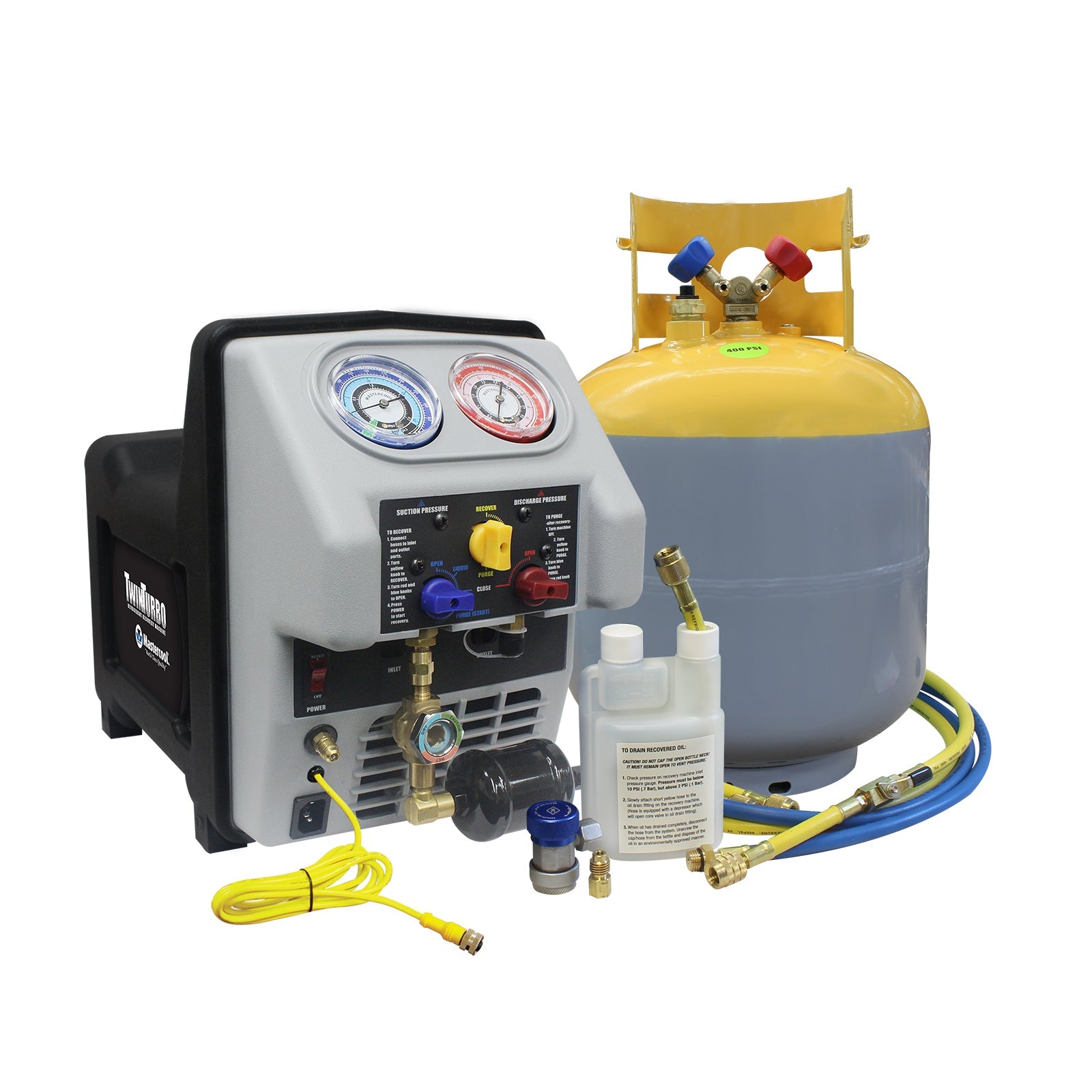
Mastercool vs Robinair Recovery Machines: Comparison Guide
If you're pricing up a new recovery machine for your van or workshop, there's a good chance Mastercool and Robinair have both come up in the conversation. They're two of the most commonly stocked brands at trade suppliers across Australia, and both have earned real-world credibility on the tools.
But they're not the same machine. For most fridgies working in the Australian market right now, particularly those doing R32 work, the differences matter more than they used to. This guide gives you a straight, side-by-side look at how the two brands stack up across the things that actually affect your bottom line: R32 readiness, local support, total running cost, and long-term reliability.
Whether you're a sole trader upgrading your kit or a mechanical contractor procuring for a team of techs, this breakdown should make the decision clearer. You can view the Mastercool recovery machinesMastercool Refrigerant Recovery Machine Series (Models MC69000-220 to MC69400-220) range at HVAC Shop to follow along with the model references below.
Written by Rica Francia Macaspac, HVAC Shop content writer, in consultation with Aussie HVAC tradies and industry experts. Published: June 2026 · Last reviewed: June 2026.
 Quick Comparison Table: Mastercool vs Robinair Recovery Machines
Before getting into the detail, here's a practical side-by-side snapshot of where the two brands sit. Both manufacturers update their ranges regularly and pricing in the Australian market moves with supply and exchange rates. Treat these as indicative figures and confirm current specs and pricing with your supplier before buying.
| Feature | Mastercool (MC69000 to MC69400 Series) | Robinair (34988 / RG6 Series) |
|---|---|---|
| Indicative AUD Price Range | Typically $900 to $1,800 AUD depending on model. Confirm with HVAC Shop. | Typically $1,000 to $2,200 AUD depending on model. Confirm with supplier. |
| Capacity (CFM / LPM) | MC69000: approx. 3 CFM (85 LPM). MC69200: approx. 6 CFM (170 LPM). MC69400: approx. 10 CFM (283 LPM). Confirm against current Mastercool datasheet. | RG6: approx. 3.5 CFM (99 LPM). 34988: approx. 6 CFM (170 LPM). Confirm against current Robinair datasheet. |
| R32 / A2L Capable | Yes. Spark-free models available for A2L refrigerants including R32. | Select models only. Verify A2L certification on a model-by-model basis. |
| Oil-less Option | Yes. Oil-less models are available across the range. | Primarily oil-lubricated. Oil-less options available in select models. |
| Warranty | Per Mastercool warranty policy. Confirm terms at point of purchase. | Per Robinair warranty policy. Confirm terms at point of purchase. |
| Australian Support Availability | Strong local stock through HVAC Shop with Aussie trade support. | Available through authorised service agents. Parts lead times can vary. |
| Spare Parts Access | Good local stock. Filters, seals, and consumables available through HVAC Shop. | Generally available. Some components may require order lead time. |
| Auto-Shutoff | Yes. Automatic high-pressure cutoff on current models. | Yes. Present on most current models. |
Neither brand makes a bad recovery machine. What separates them for the Australian market comes down to a handful of practical factors that add up over the working life of the tool. That's what we'll work through now.
Tradie Pro Tip: Before you commit to any recovery machine, check it's certified for the refrigerants you're actually running. R32 is now the dominant refrigerant in new split systems sold in Australia. If your machine isn't spark-free A2L rated, you're already behind the eight-ball on new installs.
Mastercool Strengths: Why Australian Tradies Choose It
Mastercool has built a solid following in the Australian HVAC-R trade over the past decade, and it hasn't happened by accident. The brand sits at a sweet spot between serious professional-grade capability and pricing that doesn't require you to refinance the ute. Here's where it genuinely earns its reputation.
R32 Readiness Across the Range
R32 readiness is probably the single biggest practical consideration for any fridgie buying a recovery machine in Australia right now. R32 is an A2L mildly flammable refrigerant, and using a non-spark-free machine on an R32 system isn't just a compliance issue. It's a safety issue that carries real liability on the job.
Mastercool's spark-free models in the MC69000 to MC69400 range are specifically designed with isolated electrical components and brushless motor technology. That engineering removes the ignition risk when recovering A2L refrigerants, which is exactly what Australian tradies need for modern split system work.
Under ARCtick licensing requirements enforced by the Australian Refrigeration Council, licensed technicians are responsible for using appropriate equipment for the refrigerant being handled. Mastercool's spark-free certification across the range makes compliance straightforward, particularly in a market where R32 now dominates residential and light-commercial split system installs.

Australian Local Support and Parts Availability
If your recovery machine goes down mid-week on a commercial job, how quickly can you get a part? This is where Mastercool has a genuine practical advantage in Australia. HVAC Shop stocks Mastercool spare parts locally, including filters, seals, oil, and common wear items, so you're not waiting on an international freight order when something needs replacing.
You can browse the full Mastercool collection at HVAC Shop to see what's currently in stock. For a contractor running two or three machines across a team of techs, having a local distributor who understands the trade makes a real operational difference. Robinair has an established global service network, but when it comes to depth of local parts stock at trade-accessible suppliers, Mastercool currently holds the edge in Australia.
Competitive Pricing Without Cutting Corners
Mastercool recovery machines typically come in at a price point that's competitive with mid-range Robinair models, while still hitting the technical specs that matter: CFM ratings, pressure limits, and R32 certification. The Mastercool range doesn't ask you to pay a premium for features you won't use on standard residential and light-commercial work.
For a sole trader setting up their first van kit, that pricing gap is meaningful when you're also buying a vacuum pump, scales, and manifold gauges at the same time. Getting a capable, R32-ready machine without blowing the budget on day one is a genuine advantage for anyone starting out or scaling up.
Proven in Australian Commercial Work
The MC69400 in particular has found a home in commercial mechanical contractor fleets across Australia. These are the outfits doing multi-storey commercial fit-outs, shopping centre plant rooms, and large industrial refrigeration systems in Queensland warehouses and WA food processing facilities. These environments don't tolerate unreliable gear.
The fact that the MC69400 series is regularly specified by commercial contractors says something about its track record on high-demand, high-hours-per-week use. When a machine gets chosen for fleet use in tough conditions, it's usually earned that position through consistent performance rather than marketing.

Did You Know? Oil-less recovery machines eliminate the risk of cross-contamination between the machine's compressor oil and the recovered refrigerant. This matters when you're switching between refrigerant types on different jobs. If you're regularly handling both legacy R22 systems and new R32 installs, an oil-less model is worth serious consideration.
Total Cost of Ownership: The Real Number That Matters
Purchase price is the number most people focus on, but it's only part of the story when you're comparing recovery machines that'll see daily use across a five to ten year service life. Total cost of ownership is what tells you which machine is actually cheaper over time. Here's how the main components break down.
Initial Purchase Price
Both brands cover a price spread depending on the model tier. Compact residential units sit at the lower end and commercial-grade machines at the higher end. As a general guide, Mastercool models typically retail in the $900 to $1,800 AUD range, while comparably specced Robinair models typically sit in the $1,000 to $2,200 AUD range. Always check current pricing at HVAC Shop or your preferred trade supplier before committing.
The entry-level gap between the two brands is often the deciding factor for apprentices and sole traders purchasing their first machine. You can view current stock across the recovery units collectionRefrigerant Recovery Units | A2L & HVAC Recovery Machines to compare what's available and get a feel for the current price spread.
Maintenance Costs: Oil, Filters, and Consumables
For oil-lubricated models, regular oil changes are part of the running cost calculation. As a rough guide, heavy-use commercial work may require oil changes every 40 to 60 hours of operation. Confirm the current service schedule in your machine's documentation, as intervals vary by model and usage intensity.
Using the correct pump oil matters. Incorrect oil can accelerate wear and void warranty claims. HVAC Shop stocks compatible vacuum and pump oils locally, which keeps maintenance cost predictable and turnaround fast. Robinair oil-lubricated models have similar maintenance requirements, but local parts cost and availability should be factored into your ongoing expense comparison.
Filter replacement is another recurring cost for both brands. Inlet filter-driers need periodic replacement, particularly when recovering from systems with high moisture or contamination. For commercial contractors running machines at high hours, this expense adds up. Having Mastercool filter components available locally through HVAC Shop keeps both cost and turnaround time predictable.

Warranty Support and What It Actually Covers
Warranty terms vary by model and supplier, so before buying either brand, get specific answers on a few key points. Find out what the warranty period covers for the exact model you're buying, whether warranty work is performed locally or requires shipping interstate, whether labour costs are covered alongside parts, and what specific actions void the warranty. Using incorrect oil is a common one worth checking on.
Mastercool warranties are administered through Australian distributors, which generally means faster resolution when something goes wrong. Brands that escalate warranty claims offshore tend to add days or weeks to the process, and that downtime has a real cost on a busy schedule.
Resale Value and Trade-In
Well-maintained recovery machines from reputable brands hold reasonable value in the secondhand trade market. There's a consistent buyer base for quality HVAC-R gear among apprentices and sole operators setting up their first kit. Both Mastercool and Robinair have solid recognition in the Australian trade, so neither brand is difficult to move on when you're upgrading.
Mastercool's strong distribution through HVAC Shop makes it a familiar brand name in online trade communities, which tends to support secondhand pricing and speed up private sales. That familiarity is worth something when it comes time to sell.
Long-Term ROI: Running the Numbers
Putting it together: if a Mastercool MC69200 saves you $300 to $400 on purchase price versus a comparable Robinair model, and maintenance parts run slightly cheaper due to local stock availability, you're looking at a meaningful cost advantage over five years of regular use. Factor in the avoided cost of a machine sitting idle while waiting on parts, and the gap widens further.
For a commercial contractor managing multiple machines across a team, that advantage multiplied by three or four units becomes a genuinely significant figure. The ROI case for choosing the machine with stronger local support isn't just about price. It's about uptime, and uptime is what keeps jobs on schedule.
Tradie Pro Tip: When comparing total cost of ownership, don't forget to factor in recovery cylinder compatibility and whether your existing hose set and couplers work with the new machine. Unexpected ancillary costs like new couplers or a second recovery cylinder for a different refrigerant type can add $150 to $400 to the real first-job cost of a new machine.
Once recovery is complete, the next step in any refrigerant handling job is system evacuation. If you're reviewing your full tool kit, it's worth checking out the range of vacuum pumps available at HVAC Shop alongside your recovery machine selection.
Frequently Asked Questions: Mastercool vs Robinair Recovery Machines
If you're ready to compare models or confirm which Mastercool recovery machine suits your workload, the HVAC Shop team is available to help. Whether you're a sole trader speccing up a van kit or a procurement manager sourcing for a contractor fleet, get in touch for current stock, trade pricing, and technical guidance.