
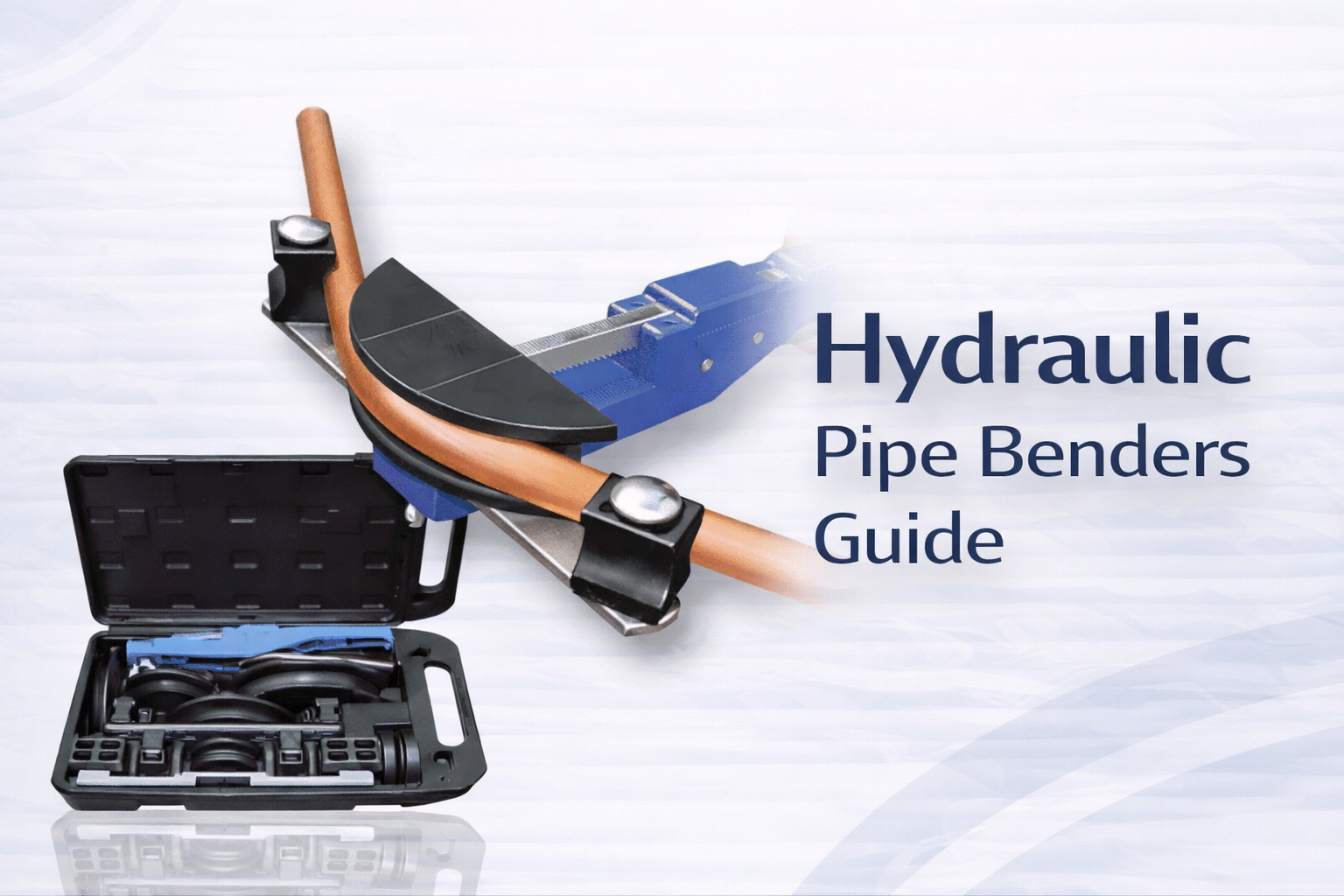
Power Bending for Efficiency
If you’ve ever had a day where you’re bending bigger copper again and again, you already know why hydraulic pipe benders exist. On large jobs, a hydraulic bender can save hours. Not “maybe”. Real hours you can feel in your shoulders and see on the clock.
Manual bending is still king for plenty of HVAC work. It’s quick, it’s portable, and it’s perfect for common split system sizes. But when tube size goes up, when bend count goes up, or when you need repeatability across a crew, manual bending starts to cap your productivity.
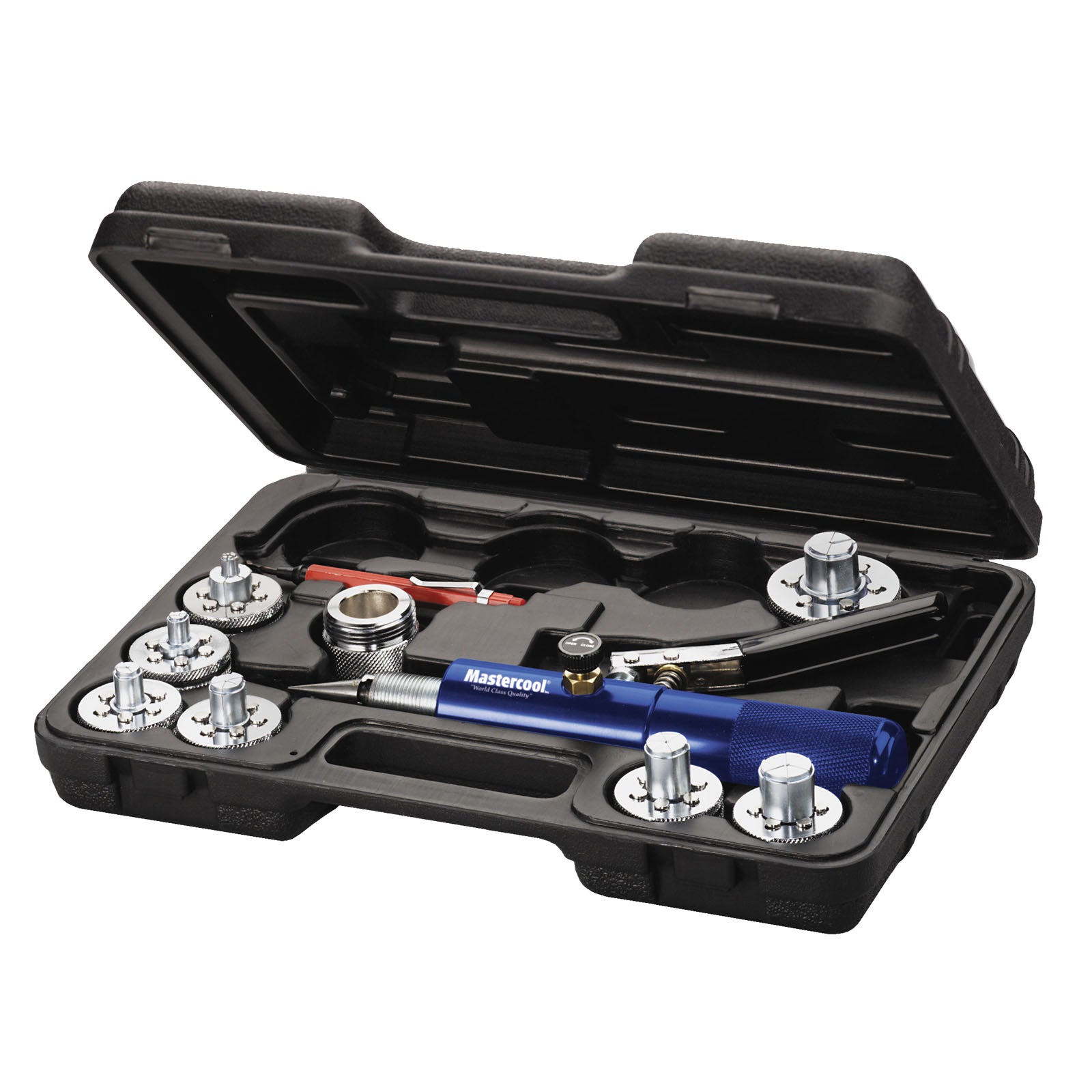
This guide is built for Australian contractors and serious techs who are thinking about hydraulic bending as an investment. We’ll explain how hydraulic pipe benders work, the types available in Australia, how to make the business case, and how to choose the right setup for your jobs. We’ll also cover safe operation, maintenance, and the most common troubleshooting issues that cause downtime.
If you want the bigger picture across all bending styles, start with our overview of pipe benders for HVAC work. This article goes deeper on hydraulic tools specifically, with a focus on productivity and professional outcomes.
The aim is simple: fewer scrapped lengths of copper, fewer kinks, less fatigue, and cleaner, repeatable bends—whether you’re working in a Sydney plant room, a Brisbane rooftop in sticky humidity, or a remote WA site where you can’t afford delays.
How Hydraulic Pipe Benders Work
A hydraulic pipe bender uses hydraulic pressure to generate bending force. Instead of you pulling hard on a long handle, the tool’s hydraulic system does the heavy lifting. You’re still controlling the bend, but the force comes from hydraulic pressure, not brute strength.
In simple terms, hydraulic pressure drives a ram or bending mechanism that forms the tube around a die (also called a former). The former sets the bend radius. The guides keep the tube tracking straight. When everything is aligned, you get a smooth, consistent bend without the tube collapsing, twisting, or going oval.
For HVAC work, round tube matters. A bend that looks “fine” can still be slightly flattened, and that can make insulation harder, increase vibration points, and create a restriction you didn’t plan for. If you’re bending 3/4" or 7/8" regularly, hydraulic help can keep the tube supported and reduce those ugly surprises.
Hydraulic pressure system explained
Hydraulics work by pushing fluid through a sealed system under pressure. That pressure moves a piston (ram) in a controlled way. The result is steady force that doesn’t rely on your body weight or a long handle swing.
That steady force is the big difference you notice on real jobs. Manual bending can feel “start-stop” when you’re fighting the tool, changing stance, or working in awkward spots. A hydraulic unit tends to keep moving smoothly, which helps the tube form evenly around the die.
It also helps crew consistency. Two techs can use the same hydraulic setup and get more similar results than they would with manual bending, because the tool is doing more of the work and less is left to “feel”. That’s a big deal when you’ve got multiple people bending lines on a commercial site and you want the install to look like one person did it.
Electric vs battery powered
In the real world, “electric hydraulic pipe bender” usually means a powered unit that runs off mains. “battery powered pipe bender” usually means a cordless setup you can take anywhere without dragging leads.
Electric makes sense when you’ve got reliable power access and you want steady output across the day. It can be a good fit for workshops, prefab work, and plant rooms where power is already part of the workflow.
Battery makes sense when mobility is the bottleneck. Rooftops, ceiling spaces, tight corridors, and busy sites where leads become a trip hazard are where cordless earns its keep. Brisbane humidity and wet mornings can also make you more cautious about where leads are going, so cordless can simplify the risk side as well as the speed side.
Both can work well. The better choice depends on where you bend and how your jobs actually run. If you’re unsure, talk to our team to confirm compatibility with your site conditions and tube sizes before you commit.
Capacity and force ratings
Hydraulic pipe bender capacity is about what tube sizes and wall thickness the tool is designed to handle, using the correct dies. Some hydraulic benders are built for smaller tube ranges with high portability. Others are heavy-duty pipe benders built for larger tube, high volume, and commercial-grade work.
You’ll see force ratings and “ton” numbers mentioned. They can be useful context, but they don’t replace the practical check: does the bender support your tube size with the right dies, and does it suit the bend radius you need? The safe approach is to choose based on tube size range and intended use, then confirm capacity in the manufacturer’s documentation before relying on it for critical work.
If you want a simple way to sanity-check capacity, start with your most common “hard” bends. Think big suction lines, tighter routing behind units, and any time you’re bending close to fittings. Those are the moments where undersizing a tool costs you copper and time.
Speed and consistency advantages
A hydraulic pipe bender can speed up bending when you’re doing repeated work, but the bigger win is often consistency. The time savings come from two places. First, you’re not fighting the tool. Second, you’re not remaking bends that went off-angle, went oval, or kinked during a rushed pull.
Consistency matters because rework kills time. When a bend is off, you lose time adjusting, cutting, re-flaring, or re-brazing. On a big job, small inefficiencies stack up fast. That’s why contractors often feel the ROI sooner than they expected once the bend count gets high.
Safety features built-in
Many hydraulic benders include safety features such as guarded areas, controlled triggers, and designs that reduce sudden movement. That doesn’t remove risk. Pinch points and crush hazards are still real. But a predictable tool is easier to use safely than a tool you’re wrestling with.
Hydraulic power also changes how mistakes happen. With manual bending, you feel resistance and often stop naturally. With powered tools, the tool can keep pushing if you’re not paying attention. That’s why setup, training, and safe operation habits matter.
To place hydraulic benders in the broader tool picture, this overview of HVAC power tools helps explain how powered kit can improve productivity when it matches the job.
Did You Know?
On repeated large-tube bends, a hydraulic bender often saves more time by preventing rework than by bending faster. One avoided kink can save you more time than ten “fast” bends.
Types of Hydraulic Pipe Benders
Not every hydraulic pipe bender is the same. Some are built for workshop production. Others are built to be portable on-site. Some run on mains power. Others are cordless. The right type depends on whether your bending is a planned workflow or a “wherever the job takes you” reality.
Bench-mounted workshop units
Bench-mounted units are designed for controlled workshop work. They suit pre-fabrication and repeat runs where you want consistent bends and a stable setup. If you’re building assemblies or doing repeat jobs, a bench unit can give you excellent consistency and reduce fatigue across the team.
The trade-off is mobility. Bench units aren’t designed to be carried up stairs or moved across a large commercial site every hour. They shine when your workflow comes to the tool.
Portable electric models
A portable electric hydraulic pipe bender aims to bring power to the job without needing a full workshop setup. These models can work well when you’ve got reliable power access and you want to reduce manual effort while still moving around a site.
In Australia, the big question is power access and site rules. On some sites, you’ve got power everywhere. On others, you’re hunting for a compliant outlet or working in a plant room where access is controlled. Planning this before you arrive saves frustration.
If you’re comparing options, use our bender collection as a starting point and narrow down by tube size and job type: electric hydraulic pipe benders.
Cordless battery-powered
Cordless hydraulic benders are built for mobility. They’re useful for rooftop work, tight access, and situations where cord management becomes a safety issue. They can also help on busy sites where running leads is messy or simply not allowed in certain areas.
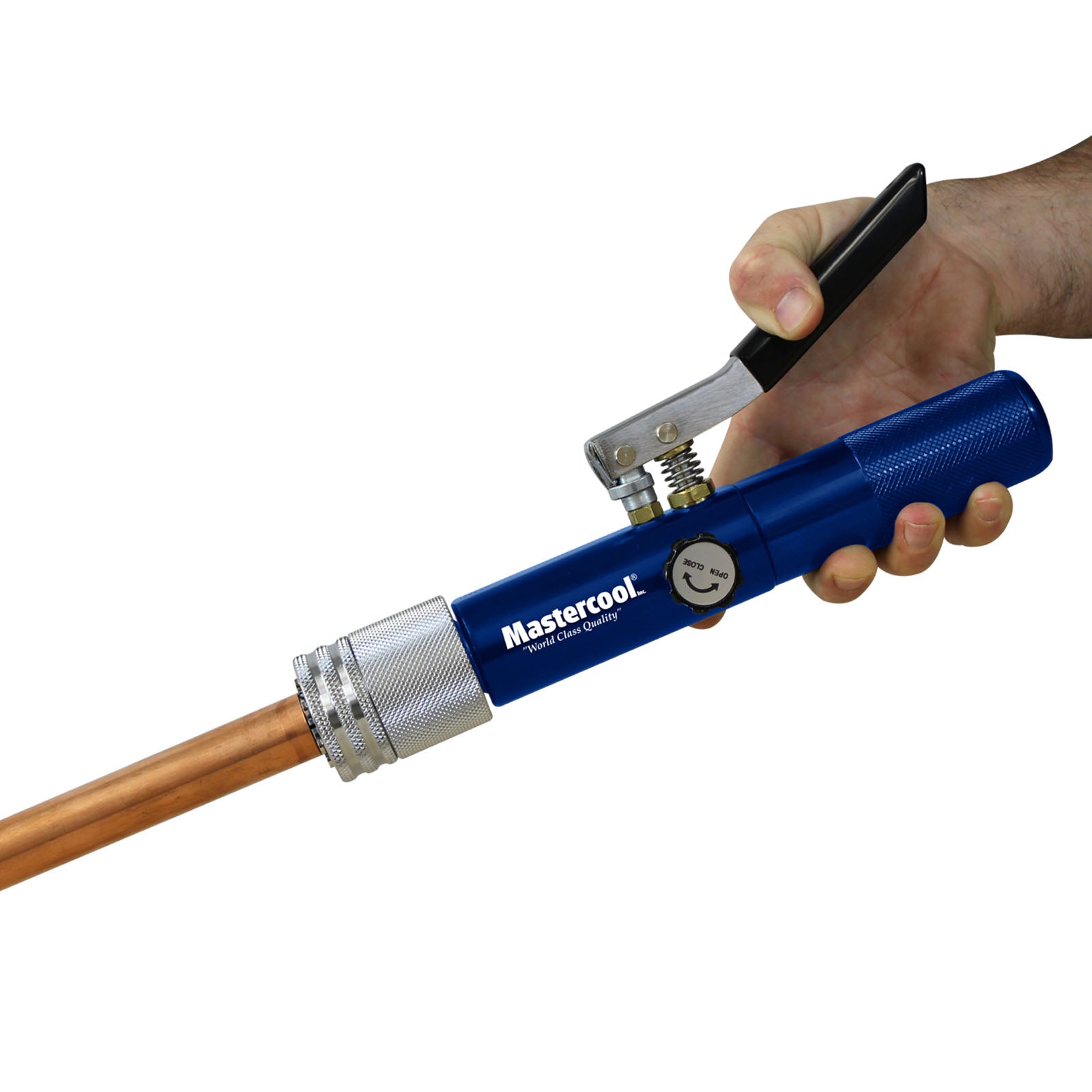
Battery tools are only as good as your charging plan. If you’re doing high volume work, make sure you’ve got batteries ready and a safe place to charge. A tool that’s flat when you need it becomes a manual job again, and that can wreck your workflow.
For cordless options and compact units in the same family, start here and filter by what suits your work: cordless hydraulic benders.
Mini hydraulic for tight spaces
Mini hydraulic benders are designed for tight access where larger tools can’t fit. They can be useful in plant rooms, ceiling spaces, and confined service corridors where you still need more force than manual bending comfortably provides.
The key is being realistic about capacity and clearance. Mini tools can be brilliant, but they still need room to position the tube and tool correctly. If you’re forced into an awkward position, bend quality can drop, and safety risks rise.
Heavy-duty commercial grade
Heavy-duty pipe benders are built for larger tube and higher work volume. They’re most common in commercial contracting and workshop settings where bending is a regular part of the day, not an occasional task.
If you’re doing “commercial pipe bender Australia” style work—multi-storey, plant rooms, repeat risers, long runs—the cost of downtime is high. Heavy-duty tools often focus on durability, repeatability, and service support because a tool failure mid-job can cost more than the tool itself in labour and delays.
Australian power requirements (240V)
For powered hydraulic tools, Australian 240V reality matters. If the tool is mains-powered, confirm it suits local power supply and jobsite use. If it’s battery-powered, confirm the charger and battery system fits your workflow and site rules.
Tech Specs
When comparing hydraulic benders, prioritise the tube size range and the die/former fit. Marketing claims can vary, but correct tube O.D. support and correct die alignment are what protect bend quality.
Manual vs Hydraulic: The Business Case
The best way to decide between manual and hydraulic is to look at the business case. This isn’t about “which tool is cooler”. It’s about time, consistency, and the cost of rework. For many contractors, hydraulic pays off when bend volume is high or when larger tube is common.
Manual benders are brilliant for common sizes and quick work. But manual bending can slow down as tube size grows, and fatigue becomes a real factor. When techs get tired, bends get sloppy. Sloppy bends create rework. Rework burns labour.
Hydraulic benders can reduce labour cost by making bending easier and more repeatable. You get fewer kinks, fewer flat spots, and fewer “almost right” bends that need adjustment. Across a week, that can be the difference between finishing on time and running late.
Time savings per bend vary by job. The safe way to measure it is to track your current bending time on a real job. Count how many bends you do. Note how many were remade. Note how much time was spent adjusting and “making it fit”. That gives you a baseline. From there, you can estimate what improved consistency might save you.
Financing options in Australia can help if you’re scaling. Some businesses prefer to finance tools to preserve cash flow, especially when the tool is likely to increase capacity and reduce labour waste. The best approach is to consider your ROI timeline honestly and match your finance choice to your workload.
If your search is more like “hydraulic pipe bender hire Brisbane”, that usually means you’ve got a one-off job or a short burst of bigger tube work. Hiring can make sense when you need hydraulic capacity for a week, you want to trial the workflow before buying, or you don’t have the bend volume yet to justify ownership. On the flip side, if you’re hiring more than once or twice a year and still losing time to bending, it’s worth running the numbers on buying, because labour savings can overtake hire costs faster than most people expect.
| Decision factor | Manual pipe bender | Hydraulic pipe bender |
|---|---|---|
| Speed on high bend counts | Can slow down as fatigue builds | More consistent output across long days |
| Consistency across a crew | Highly skill dependent | Often easier to standardise results |
| Large tube comfort | More effort, higher risk of rushed bends | Lower effort, better control under load |
| Rework risk | Higher if techs over-bend and correct | Lower when setup and dies are correct |
| Upfront cost | Lower | Higher, but can pay back on volume |
| Best fit | Service work, residential installs, low bend volume | Commercial work, repeat bends, high volume bending |
| When it pays off | When bend counts are low and access is easy | When labour time and rework cost exceed the tool cost |
If you want a refresher on manual technique so you can compare fairly, see our guide to manual pipe bending techniques. A fair comparison includes skill level, not just tool type.
Pro Tip
If you’re unsure whether hydraulic will pay off, track one big week. Count bends, note remakes, and record how long bending really takes. Decisions based on your own job data beat guesses every time.
Choosing the Right Hydraulic Bender
Choosing the right hydraulic pipe bender starts with tube size range. Be honest about the copper sizes you bend most. If you mostly bend small line sets, a heavy commercial tool might be overkill. If you regularly bend larger tube, undersizing the tool will cause frustration and poor results.
Job volume is the next question. How many bends per week are you doing? If bending is a daily activity, higher durability and better service support matter more. If it’s occasional, a simpler setup may do the job without tying up too much budget.
Workshop versus mobile work shapes your choice. If you can do most bending in a workshop, a bench-mounted unit can be excellent. If you bend on-site, portability matters. A portable hydraulic pipe bender is only useful if you can actually bring it to where the bend happens without creating safety risk or wasting time.
Power source availability is a practical constraint. If you’re mostly on sites with reliable power, electric makes sense. If you’re frequently on rooftops or areas where leads are messy, battery can be the better fit. Always think about charging and spare batteries if your work volume is high.
Budget and ROI timeline should be realistic. Don’t buy for the “one day” job you might do. Buy for the work you do now and the work you are actively moving into. If you’re scaling into bigger commercial contracts, hydraulic capacity can support that growth. If your workload is steady residential work, you may get better ROI elsewhere.
Australian workplace electrical standards also matter. Powered tools belong in a safe electrical workflow. Check site rules, test and tag requirements, and safe lead management. If you’re unsure, talk to our team to confirm compatibility and the right setup for your typical jobs.
To help with safe planning and correct kit, this guide on HVAC safety equipment requirements is a good reference for what should be on the radar when you’re running powered tools on sites.

Operating Hydraulic Benders Safely
Operating hydraulic pipe benders safely is about controlling risk from three angles: pinch points, hydraulic pressure, and power. A hydraulic bender can apply serious force, and that force doesn’t care if a finger is in the wrong place.
Pinch point protection is critical. Keep hands clear of the bending head. Keep the work area tidy. Make sure the tube is supported so it doesn’t whip or shift unexpectedly as the bend forms.
Hydraulic fluid safety matters too. Leaks can create slip hazards, and contact with fluid should be managed according to the tool’s safety information. Check hoses and fittings regularly. If the tool feels “spongy” or inconsistent, stop and inspect before you push on.
Electrical safety is a big part of powered hydraulic units. If you’re using mains power, manage leads properly and avoid wet areas. If you’re using battery power, treat charging as a safety task, not an afterthought. Use proper charging stations and avoid charging in unsafe environments.
For a clear Australian reference point on powered tool safety, review Electrical Safety Requirements and keep your setup job-ready.
PPE requirements depend on the site and task, but the practical basics are consistent: eye protection, gloves that don’t reduce control, and stable footwear. Gloves should protect without making you clumsy. If gloves reduce your grip or feel, you can increase risk rather than reduce it.
Emergency procedures should be simple. Know how to stop the tool. Know how to isolate power. Don’t operate alone in a risky setup where help isn’t nearby. And don’t rush. Rushing is the fastest path to a crushed finger or a damaged tube.
Maintenance & Troubleshooting
A hydraulic pipe bender is an investment, so maintenance is where you protect that investment. A well-maintained tool gives consistent bends. A neglected tool gives inconsistent bends, leaks, downtime, and frustration.
Hydraulic pipe bender maintenance starts with hydraulic fluid checks and changes, done according to the manufacturer’s schedule. The practical reason is simple: fluid condition affects pressure stability and smooth movement. If the tool starts to feel jerky or weak, fluid and seals are common places to look.
Seal inspection and replacement is part of the reality of hydraulic tools. Seals wear. If you see oil residue, drips, or pressure loss, stop and address it. A small leak can become a big failure, and the last place you want a failure is mid-job.
Die and former care matters because these parts touch your copper. Keep them clean. Keep them free of grit. A dirty die can scratch and mark tube, and scratches can become weak points under vibration. Clean dies also help the tube slide and form properly, reducing flattening.
Common problems and solutions often start with basics. If bends are inconsistent, check tube seating and die alignment. If the tool feels weak, check for leaks and correct power supply. If the tool is noisy or jerky, stop and inspect. Pushing through usually makes the repair bigger.
Service intervals and Australian service support are part of your buying decision. A tool is only valuable if you can keep it running. Before you commit to a hydraulic bender, confirm access to service and parts. That matters even more for contractors who can’t afford downtime.
If you’re sourcing maintenance items or want to understand what parts commonly wear, this guide to replacement parts and accessories can help you plan ahead.

Invest in Hydraulic Efficiency Today
A hydraulic pipe bender is about efficiency, not ego. It can lift your productivity on big jobs, reduce fatigue across the team, and improve bend consistency when tube sizes and bend counts are high.
The business growth potential is real when bending is a bottleneck. If you’re losing time to slow bending, rework, or tired techs, hydraulic bending can help you deliver jobs faster and cleaner. That can free you up for more work and less time spent fixing preventable mistakes.
Recommended models depend on your tube range, your job volume, and whether you’re workshop-based or mobile. If you want help picking the right setup, talk to our team to confirm compatibility and plan the best option for your work.
If cash flow is the only thing holding you back, financing options can be a practical pathway for growing contractors, especially when the tool is intended to reduce labour waste and speed up delivery. Contact us for a quote and we’ll help you map the right setup to your jobs and timeline.
When you’re ready to compare options, start with our collections and drill into what suits your work: Shop Hydraulic Pipe Benders. If you’re weighing electric versus cordless, start with your site realities and workflow. That’s how you choose a tool that actually gets used and pays you back.
If you want to browse the wider range of trade gear while you plan your setup, you can also view all categories here: HVACShop collections.