
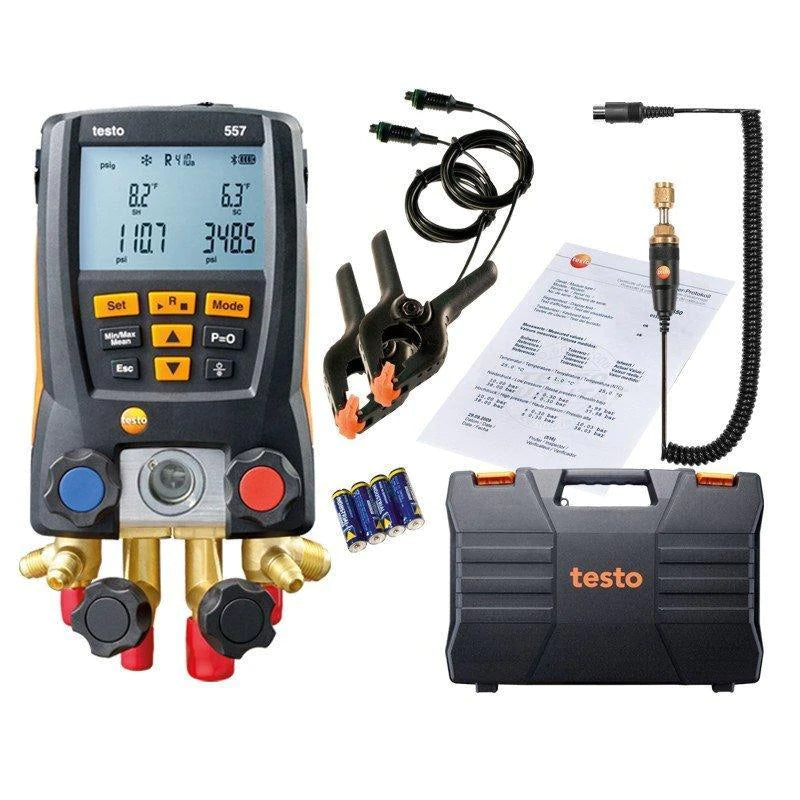
Air conditioning and refrigeration tools check the correct performance and discover and fix faults to maintain cooling systems functioning efficiently.
These tools can check system pressure, find and seal refrigerant leaks, restore condenser airflow, and clear out and reclaim refrigerant, among other things. Make sure to buy air conditioning tools like refrigerant gauges and more from established shops like HVAC Shop to guarantee quality and durability.
Using the right air conditioning tools will make maintenance or repairing HVAC equipment much easier and faster. Wrenches, hammers, pliers, screwdrivers, mallets, vices, twist drills, taps, dies, hacksaws, chisels, and files are hand tools essential for HVAC service technicians. Plus, many more!
BUY AIR CONDITIONING TOOLS: SPECIFIC TOOLS FOR HVAC

HVAC technicians require equipment that other trades do not. These tools are more tailored to the demands of HVAC work. Therefore you'll need them if you want to work as an HVAC specialist.
Multimeter
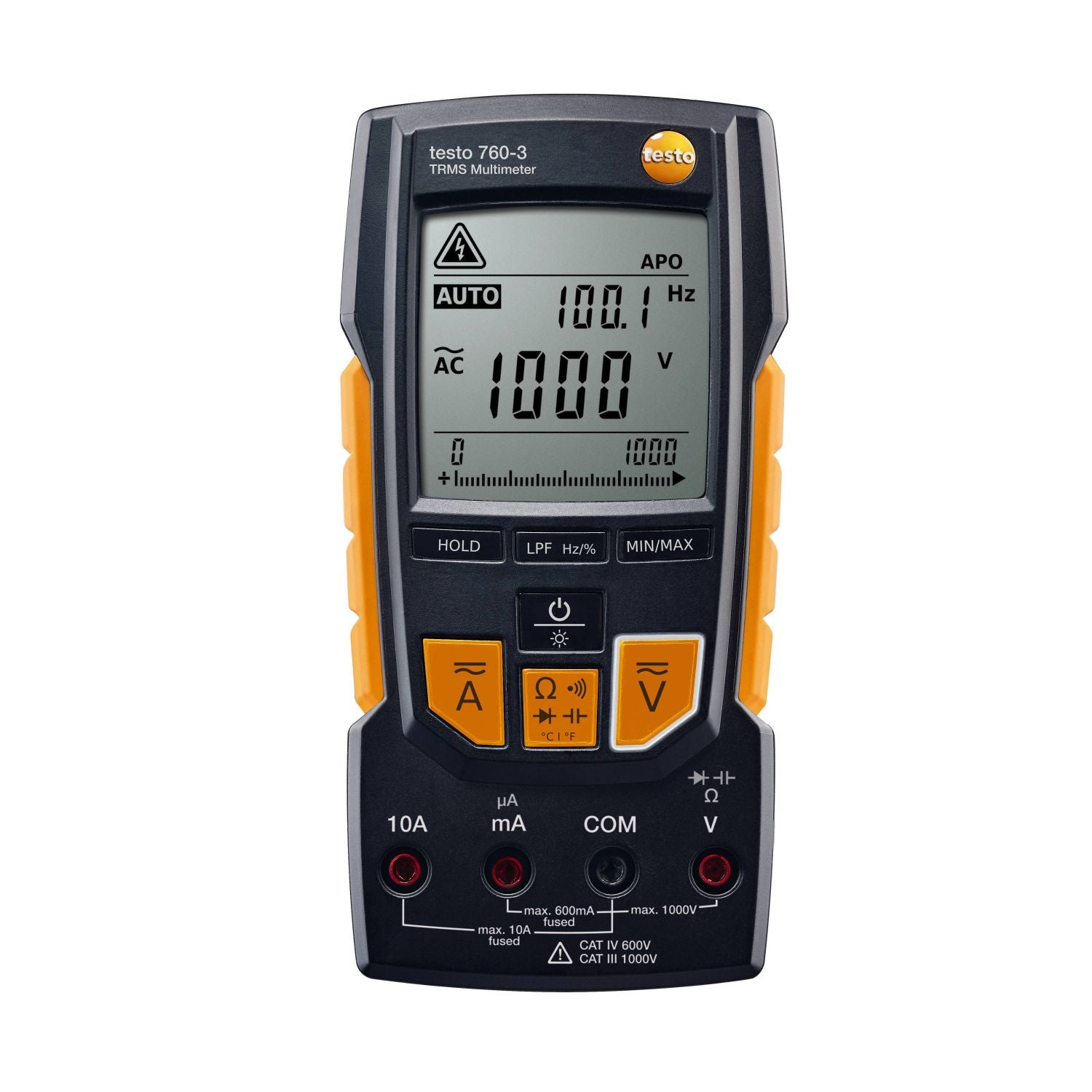
A multimeter is a tool that every HVAC technician should have in their toolbox. This useful tool allows you to see live currents in a wire, power switch, or outlet. It keeps you from being electrocuted while you're at work.
Thermometer

Technicians must check the temperature of HVAC equipment. To acquire an accurate reading, use a thermometer. Add refrigerant to the HVAC unit if the reading is too high.
Vacuum Pump

HVAC professionals must have vacuum pumps. You can use this gadget to eliminate moisture from any system you're working on. You'll need to utilise this a lot more than you think.
HVAC Software
Not every HVAC tools are real objects that you can handle in your hand. Invest in HVAC software to help you run your business more efficiently. It increases your online scheduling, dispatching, estimating, and invoicing efficiency and communication. HVAC software will transform your business, even if you aren't tech-savvy.
BUY AIR CONDITIONING TOOLS: GAUGES
HVAC technicians use gauges to measure various levels and pressures. To complete all of their tasks, HVAC professionals use a range of gauges.
Manifold Gauges
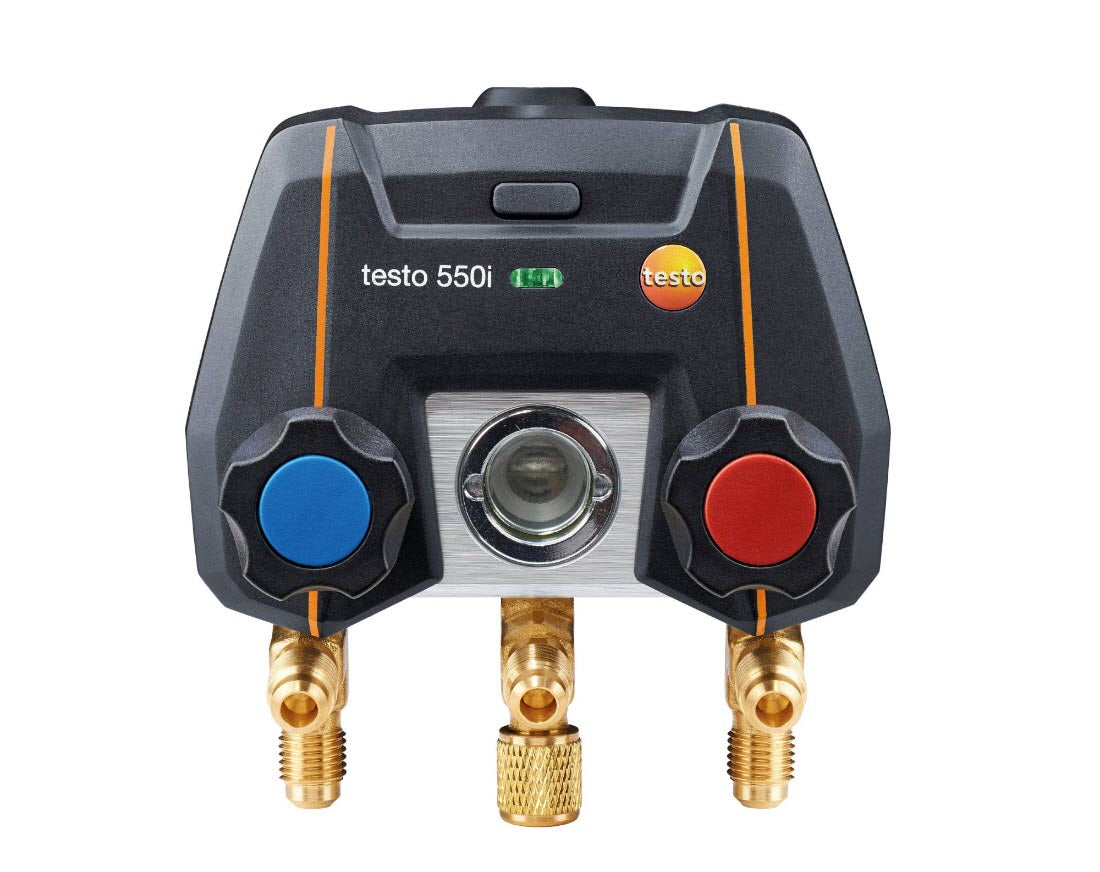
A manifold gauge is easily one of the most important instruments for an HVAC technician. These gauges aid in the detection of leaks in an aircraft. They also charge air conditioners and remove refrigerants from HVAC units. One of the most crucial instruments for an HVAC professional, along with the multimeter, is this.
Refrigeration Gauges
If you work in the HVAC industry, you're probably aware that you'll be handling a lot of refrigerants. A refrigeration gauge makes it simple to check refrigerant levels. The manifold comes with refrigeration gauges, but you must purchase hoses separately.
Refrigeration Gauge Hoses
Purchase refrigeration gauge hoses with quick release fittings and de minimis fittings to ensure no refrigerant spills outside of the unit. The quantity of refrigerant that these fittings reduce leaks outside of the unit.
BUY AIR CONDITIONING TOOLS: CUTTING AND STRIPPING TOOLS
When working on HVAC units, you must deal with cables and rewire various systems. As a result, you'll need several cutting and stripping equipment capable of cutting through multiple materials, including metal sheets and wires.
Crimpers
You come into contact with many open pipes as an HVAC technician. Seal the open end of a circular tube with a crimper. The crimper's teeth are what allow the open end to be closed. After that, you'll join the two pipes together by inserting the freshly sealed end into the open end of another tube.
Tubing Cutters
Professionals use copper tubing in air conditioning systems. Tube cutters have a particular design to cut this tubing quickly and effectively. You can utilise this instrument by fastening a cutting wheel around the tube and spinning it until it is cut. As you rotate the tube, prepare to tighten the clamp.
Metal Shears
Shears are metal-cutting tools that cut long, straight lines in metal sheets. For cutting long parts, you'll need this tool.
Tin Snips
Metal shears are sometimes too big for the cuts you want to create. For tiny cuts, use tin snips that are extra-sharp scissors. Three distinct kinds of tin snips are required for HVAC units. Make sure your kit contains all of the necessary snips:
- Lefts: Left snips are a snip that cuts to the left. For many individuals, this may seem unnatural, but it means you won't have to lift the metal as much. The handles on the majority of left snips are crimson.
- Rights: Unlike lefts, rights lean to the right. The majority of it have green handles. These are the standard cutting tools.
- Straights: As you might expect, straights cut straight. Because they can cut numerous metal sheets at once, they are frequently referred to as Bulldogs. Cuts that are too short for metal shears can be made with these. The majority of straights are orange. However, this is not always the case.
Side Cutter Pliers
HVAC workers must often cut cables. Make sure you have side cutter pliers in your equipment to accomplish it quickly.
BUY AIR CONDITIONING TOOLS: HVAC POWER TOOLS
Even though HVAC professionals use fewer power tools than other workers, you should consider purchasing a handful of things. These tools will greatly simplify your task.
Cordless Drill
Drilling tiny holes for new cables are necessary when installing them. You'll need a cordless drill to complete this task quickly and efficiently. We prefer a cordless drill over a corded drill because there will be no cord to restrict your movement. All you need is a cordless drill and some batteries to travel anywhere.
Sawzall
Every day on the job, HVAC professionals must cut through various materials. Invest in a Sawzall to cut through any material with just one instrument. Although this is more expensive upfront, it will quickly pay for itself by saving you time and effort on the task.
Heavy-Duty Extension Cord
Suppose you've ever worked as an HVAC professional. In that case, you understand that one of the most problematic aspects of the job is operating in areas where there isn't an electrical outlet. It's an issue since many of your tools need the usage of a cord. Invest in a heavy-duty extension cord to ensure access to corded power whenever you need it.
STANDARD TYPES OF AIR CONDITIONING TOOLS
Hacksaw
We use hacksaws to cut copper tubing and other metal-cutting projects. Most saws come with various blades that can change out depending on the metal you're cutting. The number of teeth per inch varies depending on the type of blade. If you're cutting thin or hard metal, use blades with more teeth per inch. If you want a higher-quality blade, go for tungsten or molybdenum steel alloy.
Pliers
Pliers are a basic item that you may find in almost every home. It usually features alloy steel and are capable of cutting wires. When you need to access cracks or narrow openings, the slim nose type is the way.
Hammer
Hammers are excellent air conditioning tools since you may use them to secure or remove nails and provide the necessary force to join two different materials. You may find a 16-ounce ball-peen hammer in most hardware stores.
Wrenches
technicians use wrenches to tighten bolts and nuts together. It has several types: Box, Socket, Open-end, or Adjustable. HVAC fasteners are typically constructed of copper or brass, which makes them soft and necessitates appropriate wrenches to tighten or loosen them.
Screwdrivers
Screwdrivers are a typical household tool. Cabinet bits, Philips bits, and Keystone bits are examples of common types. Allen Recess, Philips U Recess, Bristol Rece
ss, Bristol Bit, and Slotted Screw are among the others.
Vises
Vises are commonly seen in a standard workshop and are used to keep pieces in place while you work on them. Use a soft jaw made of copper or aluminium to protect the items you're working on.
Twist Drills
Twist Drills are used to install and repair various pieces of equipment. Different drills are necessary for drilling wood, plastic, masonry, and metal.
Taps
Taps are used to create threaded holes in metal objects that will be secured using machine screws or tap screws. Hard alloy steel is used to make the tap. Bottoming, plugging, and tapering are the three most prevalent taps. You will use a taper to begin a metal cut. The plug type is used to cut blind holes, whereas the bottom type is mostly used to trim full threads to the blind holes' bottom.
BUY AIR CONDITIONING TOOLS FROM HVAC SHOP
HVAC technicians have a wide range of responsibilities on the job, which necessitates a large toolkit. Have all the necessary tools ready to deal with everything that comes your way. We hope that this list has clarified what tools an HVAC professional should seek.
If you're looking for quality products, only buy air conditioning tools from an HVAC Shop in Australia. We worked with different brand names to ensure that your A/C business never gets compromised when it comes to the quality of your equipment.
Please send us a message for more information about what we can offer to your A/C business in Australia.