Thermometer Shop | Buy Air Conditioner Thermometers Online
51 products
Showing 49 - 51 of 51 products
An HVAC thermometer measures air, surface, and pipe temperatures to diagnose faults, verify system performance, and confirm comfort conditions. For homeowners, the most useful types are infrared thermometers for quick non-contact checks and pocket probe thermometers for supply and return air readings. For licensed HVAC/R technicians, clamp thermometers and smart wireless probes are the standard tools for superheat calculations, commissioning reports, and refrigeration log checks. HVACShop stocks thermometers from Testo, Fieldpiece, Uni-T, Mastercool, and SUPCO, ranging from $30 pocket probes to professional wireless smart probes that log readings directly to your phone.
Why Temperature Measurement Matters for HVAC
An air conditioner or heat pump that feels like it's working is not always working efficiently. The only way to know for certain is to measure. Supply air should typically be 8–12°C cooler than return air on a correctly operating split system. If the temperature difference (delta T or ΔT) is outside that range, the system is either overcharged, undercharged, low on airflow, or has a refrigerant leak. A thermometer tells you which direction to look.
Beyond fault-finding, Australian energy efficiency guidance for business HVAC systems calls for verified temperature measurements rather than relying on thermostat displays, which can read 2–3°C higher or lower than actual room conditions. For homeowners managing energy bills, knowing the actual supply air temperature versus the set point is the fastest way to confirm whether a system needs servicing.
How to Choose the Right Thermometer
| Type | Best For | Key Spec | Typical Products |
|---|---|---|---|
| Pocket probe thermometer | Supply/return air readings, grille checks, cold room spot checks | Range: −40 to 250°C, 0.1°C resolution | Fieldpiece SPK3, Uni-T A61 |
| Clamp thermometer | Superheat and subcooling on suction/liquid lines; hands-free during commissioning | Wireless Bluetooth; ±0.3°C accuracy | Testo 115i Smart Clamp |
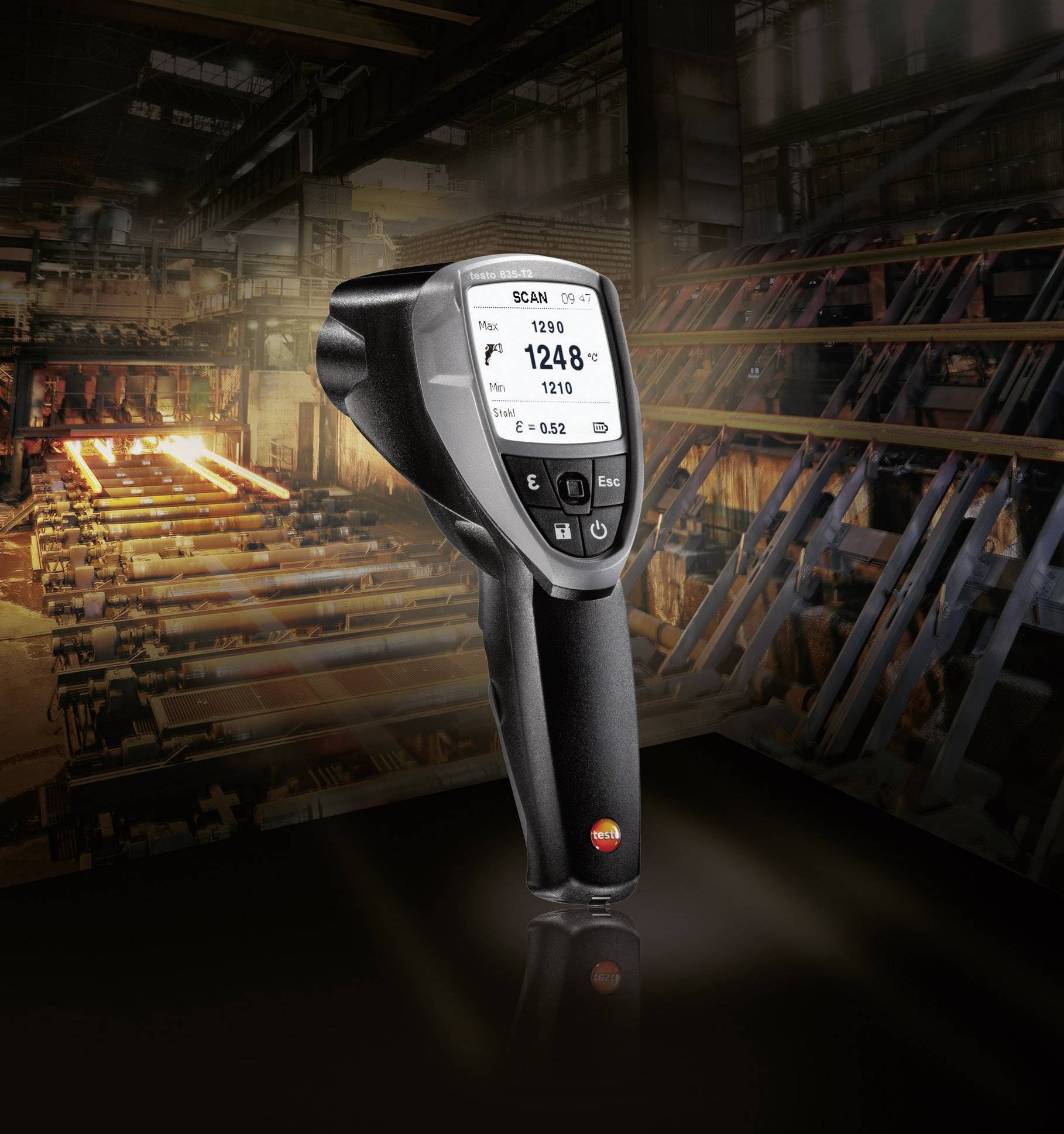
| Infrared thermometer | Non-contact surface scans: hot compressor heads, ductwork, switchboards, ceiling registers | Distance-to-spot ratio (12:1 or better); emissivity adjustment | Uni-T UT303D, Fieldpiece SIG1, Testo 830-T2, Testo 605i |
| Dual / differential thermometer | ΔT across coils, heat exchangers, or supply vs return; two readings on one screen | Dual input (K-type + IR); simultaneous display | EM90 Dual Thermometer (IR + Thermocouple) |
| Smart wireless probe | App-connected logging; commissioning reports; remote monitoring during pull-down | Bluetooth range; app compatibility (iOS + Android) | Testo 605i Smart IR, Testo 915i Immersion |
Thermometer Comparison, Top Models
| Model | Type | Range | Accuracy | Wireless | Best For |
|---|---|---|---|---|---|
| Fieldpiece SPK3 | Pocket probe | −40 to 150°C | ±1°C | No | Air temp, grille checks, everyday service |
| Uni-T A61 | Pocket probe | −40 to 250°C | ±1°C | No | Cold rooms, food service, value option |
| Testo 115i | Clamp (Bluetooth) | −40 to 130°C | ±0.3°C | Yes, Testo app | Superheat/subcooling, split system commissioning |
| Uni-T UT303D | Infrared | −32 to 1,300°C | ±2°C or ±2% | No | Industrial surfaces, motors, high-temp plant |
| Fieldpiece SIG1 | Infrared (gun) | −18 to 538°C | ±1.5°C or ±1.5% | No | Ductwork, registers, fast surface scans |
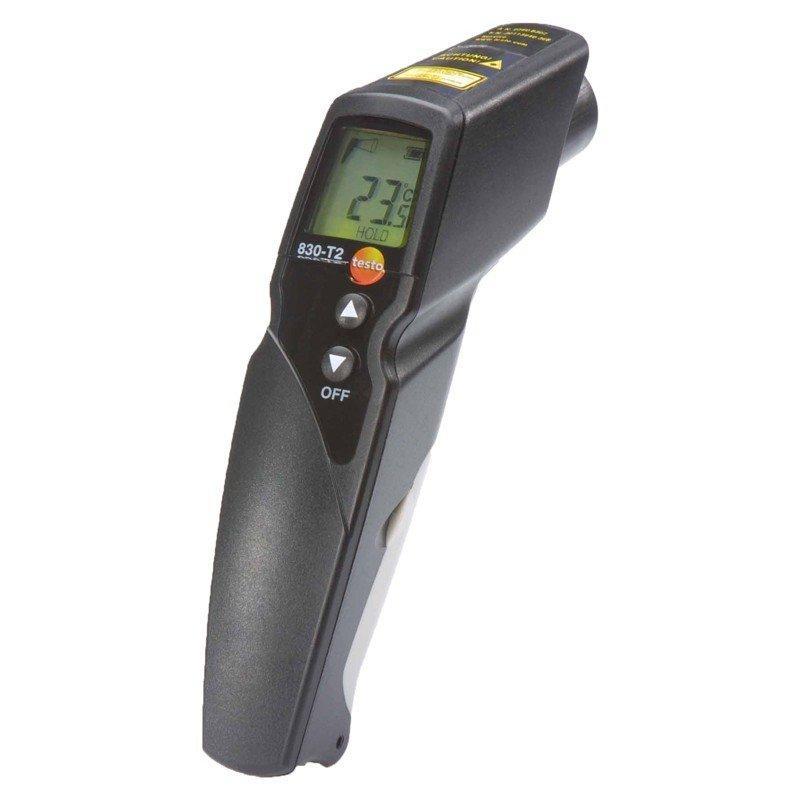
| Testo 830-T2 | Infrared (2-point laser) | −30 to 400°C | ±1°C or ±1% | No | Precise spot measurement, plant rooms |
| Testo 605i | Smart IR (Bluetooth) | −30 to 250°C | ±1.5°C | Yes, Testo app | App logging, commissioning reports, remote work |
| Mastercool 52229 | Digital thermometer | [CONFIRM]°C | [CONFIRM] | No | Refrigeration service, everyday temp checks |
ⓘ [CONFIRM] fields require verification against product listings before publishing.
Build a Complete Diagnostic Kit
A thermometer alone tells you temperature. Paired with the right tools it tells you why a system is underperforming. Most HVAC service calls benefit from at least three measurements working together:
- Temperature + pressure: pair your thermometer with refrigerant gauges to calculate superheat and subcooling simultaneously, the two values together confirm correct charge level.
- Temperature + humidity: pair with a hygrometer to assess true comfort conditions and identify latent heat issues, especially in humid Australian climates.
- Temperature + electrical: pair with a digital multimeter for motor and compressor diagnostics where both voltage/current and discharge temperature are relevant.
- Temperature + thermal imaging: for building envelope, switchboard, or underfloor work, pair with a thermal imaging camera to visualise temperature patterns across a surface rather than measuring a single point.
- Wireless logging: if you need app-connected measurement and report generation, see our Bluetooth smart tools, Testo smart probes connect directly to the Testo Smart app for PDF report export on the job.
Accuracy, Calibration & Australian Standards
For typical HVAC service and commissioning, 0.1°C resolution and ±1°C accuracy is the minimum practical standard. For cold chain compliance, laboratory environments, or formal commissioning reports where sign-off is required, tighter tolerances and documented calibration traceability are often specified by the client or applicable standard.
In Australia, the National Measurement Institute (NMI) maintains national temperature standards and provides calibration services traceable to international references. For day-to-day field tools, periodic comparison against a known-good reference instrument is good practice, replace any instrument that drifts beyond its specified tolerance. When purchasing, look for instruments with published accuracy specifications on the datasheet, not just marketing claims.
Frequently Asked Questions
What thermometer do I need for air conditioner servicing?
For split system servicing, a clamp thermometer on the suction line is the most useful starting point: it gives a stable pipe temperature for superheat calculations without holding a probe in place. Pair it with a pocket probe thermometer for supply and return air readings at the grille. If you need app-based logging or to generate a commissioning report, the Testo 115i (clamp) and Testo 605i (smart IR) work together in the Testo Smart app. Infrared thermometers are useful for scanning compressor heads and condenser coils but should not be used as the sole basis for charging decisions.
What is the difference between a contact thermometer and an infrared thermometer?
A contact thermometer physically touches the surface or fluid being measured, this includes pocket probes, clamp types, immersion probes, and K-type surface probes. Contact types generally give more stable and precise readings, especially on pipes and air streams. An infrared thermometer measures surface temperature from a distance using emitted infrared radiation, with no physical contact required. Infrared thermometers are fast and ideal for hot, moving, or live parts but require correct emissivity settings and an appropriate distance-to-spot ratio to avoid errors. For most HVAC jobs, you need both types: IR for scanning and contact probes for measurement you rely on for charging decisions. See our infrared thermometer guide for a detailed comparison.
What temperature difference should I see between supply and return air?
A correctly operating split system or ducted air conditioner in cooling mode should produce a temperature difference (delta T or ΔT) of approximately 8–12°C between supply air (at the outlet grille) and return air (at the return grille or filter). A ΔT below 8°C typically indicates low refrigerant charge, a restricted filter, low airflow, or a faulty indoor coil. A ΔT above 14°C can indicate low airflow or an oversized coil. Measure both points with a pocket probe thermometer and compare, it takes under two minutes and immediately narrows the fault diagnosis.
How accurate does an HVAC thermometer need to be?
For standard HVAC service and commissioning, 0.1°C resolution and ±1°C accuracy is the practical minimum. This is sufficient for supply/return air readings, superheat calculations, and comfort verification. For cold chain compliance (cool rooms, display cabinets, pharmaceutical storage) or formal commissioning sign-off, tighter tolerances, typically ±0.5°C or better, may be specified by the client or applicable standard. Always check the product datasheet for the specified accuracy at the temperature range you work in, as accuracy often degrades at extremes.
Do I need to calibrate my HVAC thermometer?
If you use your thermometer for commissioning reports, warranty claims, cold chain compliance, or any situation where the reading is used as a formal record, periodic calibration is good practice and may be required. In Australia, the National Measurement Institute provides calibration services traceable to national standards. For everyday service tools, at minimum compare suspect instruments against a known-good reference thermometer and replace any that drift beyond their specified accuracy. Most quality HVAC thermometers from Testo, Fieldpiece, and Uni-T will hold calibration for several years under normal service conditions.
Guides & Resources
|
Guide Everything You Need to Know About Infrared Thermometers Emissivity, distance-to-spot ratio, and when IR readings can mislead you. |
Brand Guide Testo 115i Clamp Thermometer, Setup and Use Guide How to use the 115i for split system superheat and subcooling checks. |
Guide Testo Surface Probes, Types and Applications K-type surface probes for pipe, duct, and flat surface temperature measurement. |
Related Collections
- Refrigerant Gauges, pair with a clamp thermometer for superheat and subcooling calculations
- Hygrometers, measure humidity and temperature together for full comfort assessment
- Digital Multimeters, electrical and temperature diagnostics in one tool
- Thermal Imaging Cameras, visualise temperature patterns across surfaces and building envelopes
- Bluetooth Smart Tools, app-connected probes for wireless logging and PDF report generation
- Inspection Cameras, see inside ducts, ceiling voids, and plant enclosures
Author: HVAC Shop Content Team, HVAC Content Specialist
Reviewed by: Licensed Refrigeration & Air Conditioning Technician, ARCtick
Business: HVAC Shop, ABN 98 351 143 900
Last updated: September 2026