Digital Gas Manometers
22 products
Showing 1 - 22 of 22 products


Manometers & Differential Pressure Gauges for HVAC/R
A manometer measures pressure — most commonly gas pressure, duct static pressure and differential pressure (pressure drop across filters, coils, heat exchangers and dampers). If you’re chasing airflow issues, nuisance pressure-switch faults, combustion setup checks, or you just want cleaner commissioning notes, a decent manometer pays for itself in fewer call-backs.
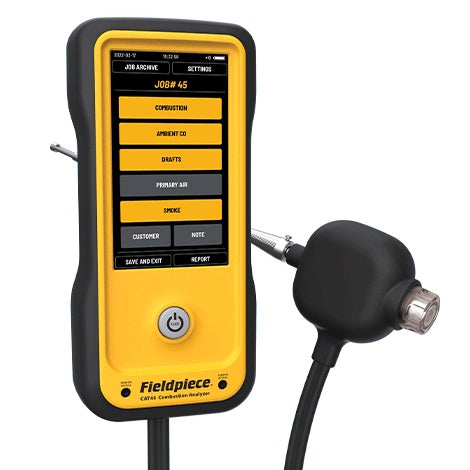
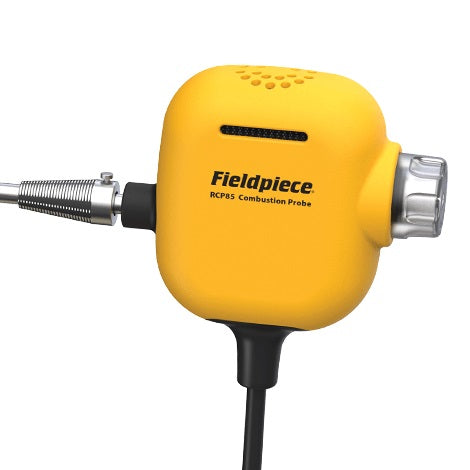
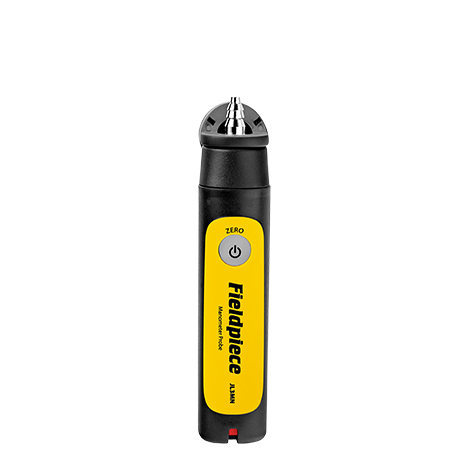
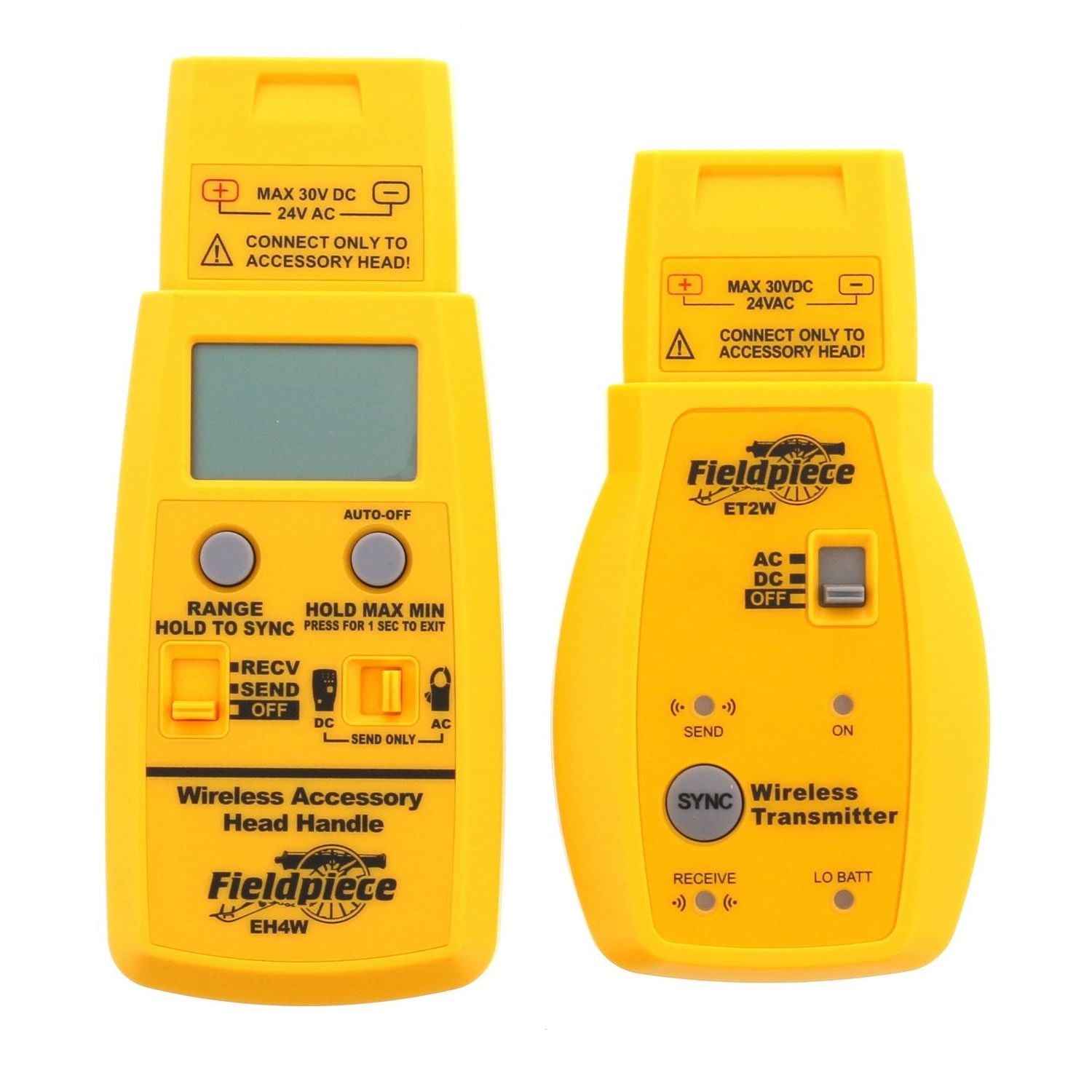
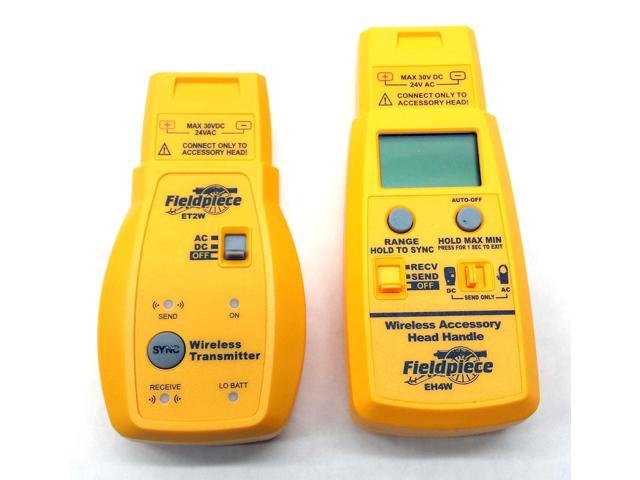
This collection includes digital manometers, micromanometers for low-pressure work, and Bluetooth/wireless manometer probes commonly used with Fieldpiece and Testo ecosystems. (Use the filters to narrow by brand and tool style.)
Prefer to browse all diagnostic gear? Start at Test & Measurement Tools, then pair your pressure readings with thermometers, hygrometers, and data loggers where needed.
Choose the right manometer (fast, trade-focused)
1) What are you measuring?
- Duct static pressure (airflow diagnostics): look for stable low-range readings and good resolution in Pa / inWC.
- Differential pressure (ΔP) across filters/coils: a 2-port manometer is the quickest way to see pressure drop.
- Gas inlet / manifold pressure: choose a meter suited to gas appliance work and the units you prefer (kPa / mbar / inWC). Always follow OEM procedures.
- Pressure switches & draft proving: a manometer with a built-in pump can speed up proving/cali checks where appropriate.
2) Single-port vs 2-port
- Single-port: simple spot checks (one pressure point).
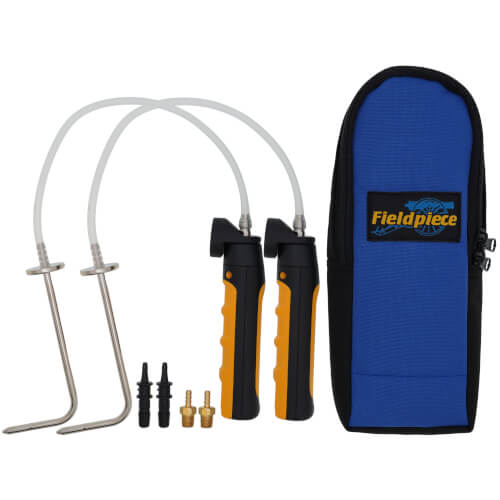
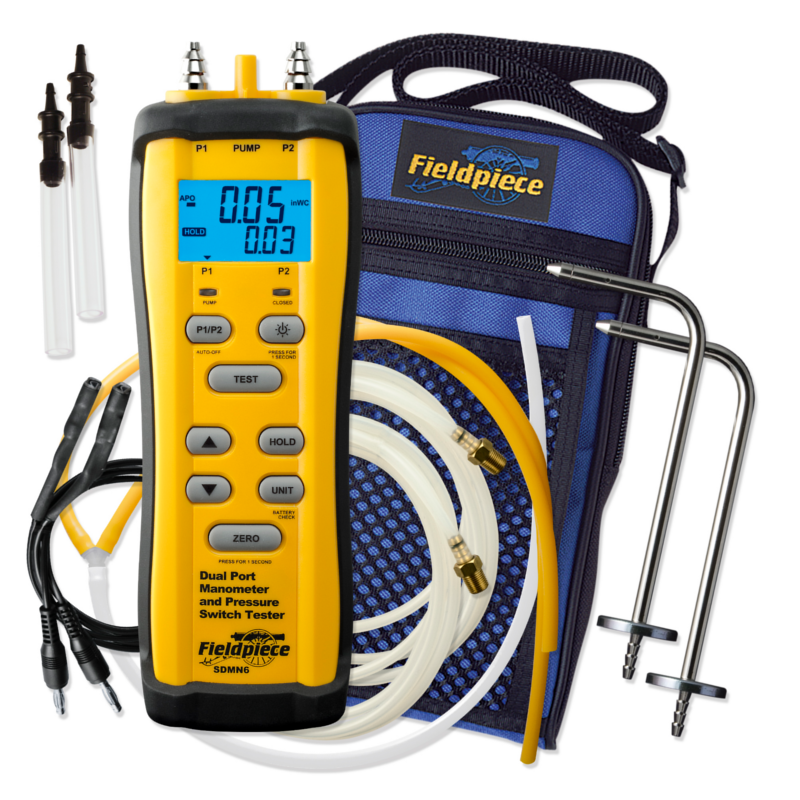
- 2-port (P1/P2 + ΔP): best for real HVAC troubleshooting — you can read supply/return, or see pressure drop across a component without maths.
3) Range & resolution (don’t overbuy the wrong spec)
For duct work, resolution matters more than huge max range. For gas work, pick a meter that reads cleanly in the ranges your OEM procedures call for. If you routinely diagnose low-pressure airflow problems (tight filters, undersized returns, dirty coils), a micromanometer can be the better tool.
4) Logging, Min/Max, Hold & Bluetooth
Logging and Bluetooth are worth it when you need trending (e.g. filter loading, plant drift) or you want clean job notes. If you’re already running an app ecosystem, match the tool to your platform so the data actually gets used.
Shortcut: If you mainly diagnose duct performance, prioritise 2-port + good low-pressure resolution. If you mainly do gas appliance checks, prioritise stable kPa/mbar readings and easy zeroing.
Common HVAC/R use cases (how tradies actually use them)
Static pressure (ducted systems)
- Confirm supply/return static is within the equipment’s specified limits
- Pinpoint restrictions: filter, coil, return grille, undersized duct runs
- Document “before/after” when cleaning coils or changing filtration
Differential pressure (ΔP) troubleshooting
- Pressure drop across filters and coils (dirty vs clean)
- Dampers and zoning diagnostics
- Proving fan performance without guessing
Gas pressure checks (where you’re licensed)
- Confirm appliance inlet/manifold pressure using the OEM procedure
- Verify regulators and diagnose supply issues (only within your scope)
Important: Gasfitting and gas appliance servicing is regulated in Australia and typically requires appropriate licensing. (For example, NSW states you need a licence/certificate before doing gasfitting work.) Use qualified, licensed trades for gas work.
What to add to the cart (pressure readings are only half the job)
- Refrigerant gauges for system-side pressures (separate from duct/gas manometers)
- Vacuum gauges + vacuum pumps for evacuation verification
- Electrical testing tools to pair pressure symptoms with motor/control diagnosis
- Indoor air quality tools when airflow complaints overlap comfort/IAQ
FAQs – Manometers
What’s the difference between a manometer and refrigerant gauges?
A manometer is typically for air/gas pressure (duct static, differential pressure, some gas appliance checks). Refrigerant gauges are for refrigeration circuit pressures. They solve different problems, and many HVAC/R techs carry both.
Do I need a 2-port manometer?
If you diagnose airflow issues, filter/coil restrictions, or pressure-drop problems, yes — 2-port makes ΔP checks fast and repeatable.
Which units should I measure in (Pa, inWC, mbar, kPa)?
Use the units your OEM procedures/specs reference. Duct static is commonly tracked in Pa or inWC. Gas work often uses kPa or mbar. If you’re swapping between jobs, pick a meter that lets you change units quickly.
Why do my static pressure readings jump around?
Common causes include poor probe placement, turbulence near bends/fans, leaks in tubing connections, or forgetting to zero the meter. Re-check setup, move to a calmer section of duct, and ensure hoses are seated properly.
Can I use a manometer for gas appliance work?
Manometers are commonly used for gas pressure checks, but gasfitting is regulated. Follow the appliance manufacturer procedure and use licensed trades where required by your state/territory rules.
Are Bluetooth manometers worth it?
They’re worth it when you need job reports, trending, or remote viewing while you adjust airflow or combustion settings. If you won’t log/record anything, a solid standalone meter can be the better value.
Do I need to isolate power when measuring pressure?
Often you’re working near live equipment. Follow site electrical safety practices and use competent persons where required. Safe Work guidance emphasises testing and safe practices around electrical hazards.
Trust, compliance & shopping with HVACShop
Business & contact
- ABN: 98 351 143 900 — verify via ABN Lookup (Australian Government)
- Phone: 0412 333 115
- Email: hvacshop.com.au@gmail.com
- Support hours: Mon–Fri, 9:00am–5:00pm (AEST)
- Help pages: Contact • FAQ • Shipping & Returns
Shipping, dispatch & delivery (Australia)
- Carriers used (may vary): Australia Post, TNT, Hunter Express, Toll Priority
- Dispatch target (in-stock): HVACShop aims to ship from the warehouse within 3 business days
- Delivery guide: typically 1–3 business days to capital cities; up to 7+ business days for remote/regional areas
- Tracking: tracking details are emailed after dispatch (see policy page for timing)
- Signature: carrier services may require receiving signature
Returns & warranty (summary)
- Returns: change-of-mind eligibility and process are listed on Shipping & Returns (conditions, restocking fees and timeframes may apply)
- Warranty: products are backed by manufacturer warranty (HVACShop notes at least 1 year cover on products, with some up to 2 years)
- Consumer guarantees: Australian Consumer Law rights apply in addition to manufacturer warranty
Secure payment methods
Accepted at checkout: American Express, Apple Pay, Google Pay, Mastercard, PayPal, Shop Pay, UnionPay, Visa. Buy-now-pay-later options include Afterpay and Zip (where available).
Australian compliance disclaimer
HVACShop supplies tools and equipment. Installation, commissioning, servicing and refrigerant handling activities may be regulated. If work involves fluorocarbon refrigerant (or a component that carries the risk of refrigerant being emitted), an appropriate Refrigerant Handling Licence is required — see ARCtick guidance. Gasfitting and some electrical work are also regulated — use appropriately licensed trades and follow site procedures.
Content governance
- Author: HVACShop Content Team (AU)
- Reviewer: Refrigeration & air-conditioning technician
- Last updated: 2026-01-13 (AEST)