
Built for Split Systems: The Testo 550 Series in the Real World
You know the call. A split system is “running”, but the rooms feel wrong. The customer swears it was fine last week. You clip on gauges, the unit cycles, the sun hits the outdoor, and your readings start to feel like guesswork.
That guesswork costs time. It also costs trust. In Australia, conditions make it worse. Brisbane humidity pushes moisture and load hard. Sydney coastal air can punish fittings and seals. Melbourne cold snaps can make a unit behave differently across the same day. You need clean numbers you can stand behind.
That is where the Testo 550 series shines. It is a pro digital manifold range that keeps the kit practical for split systems, while still giving you the clarity you need for fast diagnosis and neat reporting. No mucking about. Just steadier decisions and fewer call-backs.
Did You Know?
A lot of “it needs gas” call-backs are really “we did not measure properly” call-backs. Digital readings help you recognise the real fault earlier.
Why a Professional 2-Way Manifold Beats a Bulky Block
Most split system work does not need a big, heavy manifold block on every job. You need quick access, clear readings, and a workflow that keeps you moving without rushing.
A professional 2-way manifold is built for that pace. You get the core refrigeration measurements, plus superheat and subcooling support when you pair with clamps and probes. It is easier to carry, easier to set up, and easier to use on tight residential sites.
If you want to browse the full range first, start here: browse our complete Testo digital manifold and gauge range.
German Precision on Aussie Job Sites: Why Testo Feels Different
Testo is known for German measurement culture. That is a fancy way of saying one simple thing. They build tools around reliable numbers, not vibes.
Testo started in 1963 and has spent over 60 years focused on measuring heat, pressure, and airflow properly. In HVAC, that matters more than any “feature list”. If your numbers wobble, your diagnosis wobbles. If your diagnosis wobbles, your fix gets slower and your customer trust drops.
On Australian sites, your tools cop extra pressure. Brisbane humidity can make moisture management more serious. Sydney coastal air can turn tiny leaks into big time sinks. Melbourne cold snaps can make performance checks tricky because the system behaves differently across the day. Darwin’s tropics can push long run times that reveal small faults. Perth heat can make you rush, and rushing is where mistakes happen.
This is where German precision shows up in the real world. A clear screen in bright sun. Stable readings when the compressor cycles. A workflow that lets you repeat checks and tell the same story, even when the weather changes. That is what helps you work calm and keep your labour protected.
Pro Tip
When you change tools, do not change everything at once. Keep your steps the same for a week. Same order, same checks, same notes. After that, it feels no worries.
Testo 550 Series Model Comparison: 550, 550s, and 550i
People often search “testo 550”, but they really mean, “Which 550 suits my day-to-day work?” The clean way to decide is to match the model to how you like to work on site.
If you want a straight digital manifold that keeps it simple, this is the classic entry point: Testo 550 standard 2-way digital refrigeration gauge. It is a tidy option when you want digital clarity without leaning hard on app workflow.
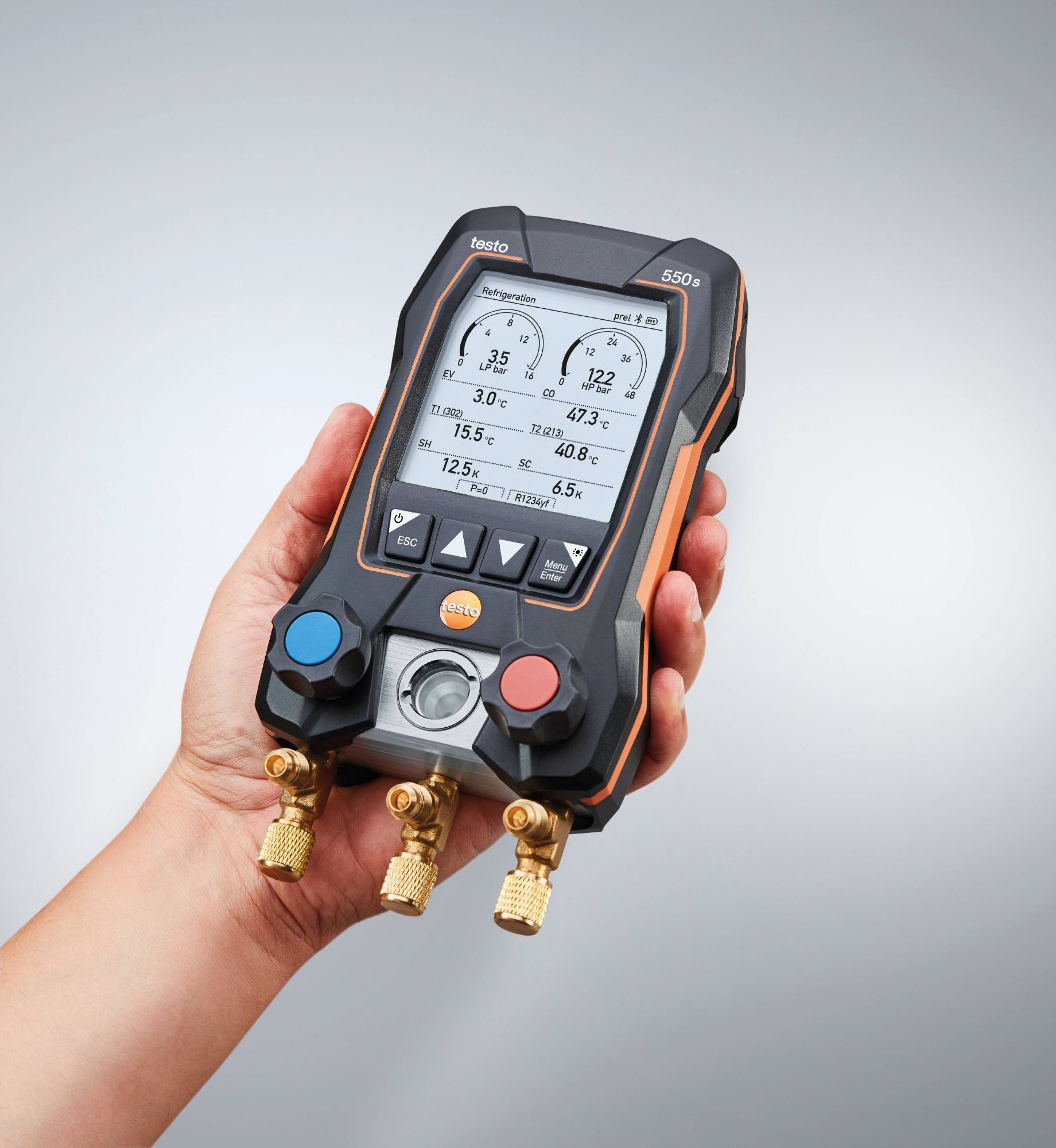
If you want the most common “all-rounder” option for split systems, this is the one most Aussie techs lean toward: Testo 550s Smart Digital Manifold with 2-way valve block and wireless temperature probes. It suits busy service days where you want speed and clean proof.
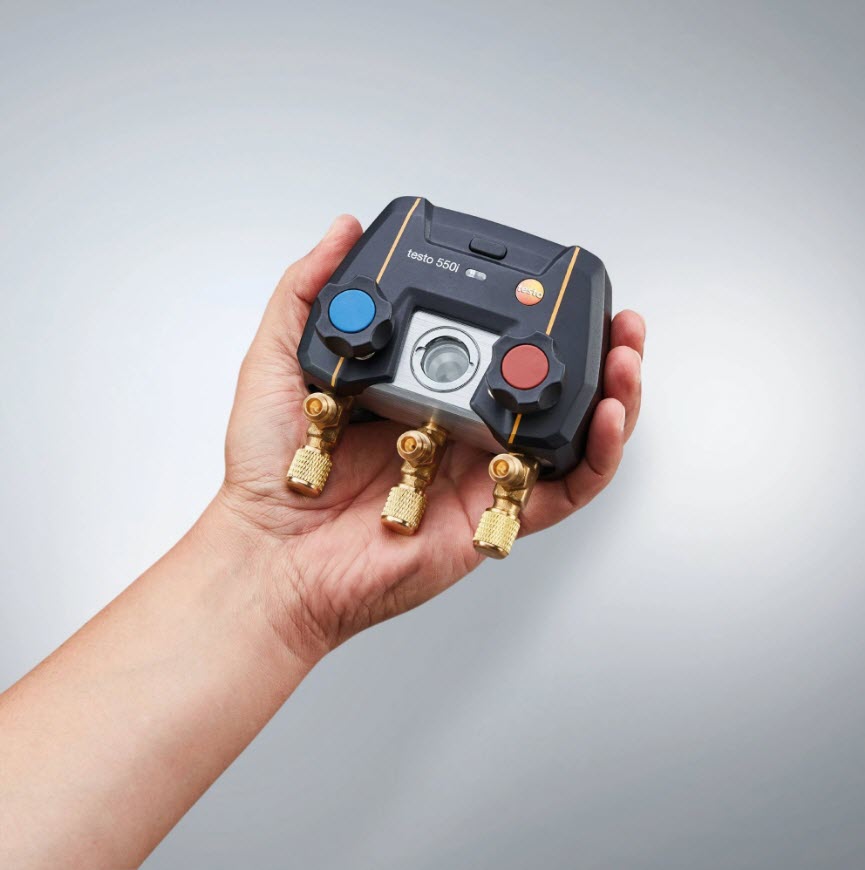
If you prefer running the job from your phone, and you like a lighter “screen-free” style, this is the app-driven option: Testo 550i app-controlled 2-way digital manifold for smartphone operation. It is a good fit when you already live in the app and you want the smallest kit possible.
Whichever model you pick, the rule stays the same. Pressure and temperature together gives you the real story. That is how you stop guessing and start diagnosing.
Tech Specs
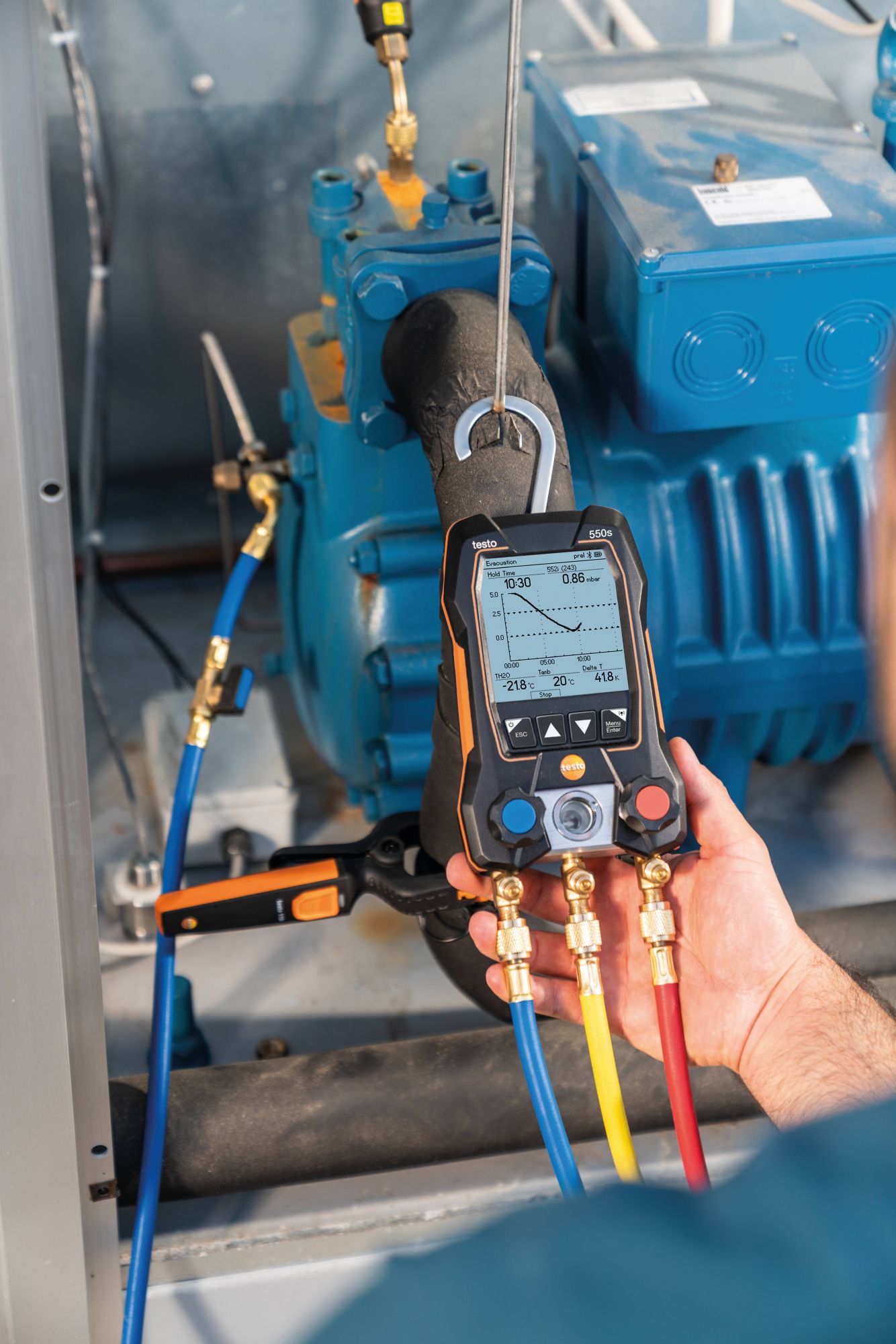
For split systems, the goal is simple. Measure pressure and temperature together. Then let the manifold do the maths for superheat and subcooling so you are not guessing.
How to Use the Testo 550 Series on a Real Service Call
Most problems on splits are not dramatic. They are small issues that stack up. Airflow drift. Dirty coils. A charge that is not quite right. A fan that is tired. A restriction that only shows under load. The Testo 550 series helps because it makes the changes easier to see.
Start by letting the system settle. If you rush the first reading, you end up chasing noise. Once it is stable, the manifold gives you a clean baseline you can trust. That baseline is what you compare against when you adjust airflow, clean filters, or check heat load changes.
On a Brisbane day, load swings can be quick. Doors open, sun hits the wall, and the system story changes. Digital readings help you watch that change without squinting at needles. In Sydney coastal air, small leaks and tired seals can waste your time fast. Stable numbers make it easier to spot when the system will not settle, which tells you to stop and check connections instead of waiting.
In Melbourne cold snaps, systems can behave “fine” at first, then drift when they cycle. This is where digital shines. You can repeat checks and compare cleanly. That makes your diagnosis stronger, and it makes your customer chat simpler because your story stays consistent.
If you are working in Darwin’s tropics or Perth heat, the win is still the same. Faster setup and clearer readings keep you calm when the day is punishing. Calm techs make fewer mistakes. That is a fair dinkum quality and safety benefit.
Testo 550s vs 550i: Pick the Workflow That Matches Your Day
This is another common search because both models can do the job, but they feel different in the hand. Think of it like this. The 550s is a “screen-first” tool. The 550i is a “phone-first” tool.
If you like a quick glance at the tool while you are standing at the outdoor unit, the 550s style often feels faster. You see what you need straight away. That is handy on tight side paths, balcony installs, and those jobs where you are moving in and out of the access panel all morning.
If you like standing back and running the checks from your phone, the 550i workflow can feel cleaner. You can keep your phone where it is safe and easy to see. That can be a big win on rooftops in Perth heat or when you are working around hot surfaces and sharp edges.
It is also about your habits. Some techs love phone workflow because it feels like one dashboard for the day. Other techs want the tool to be the tool, and the phone to stay in the pocket until notes time. Neither approach is wrong. The best pick is the one you will actually use properly every job.
One simple tip helps either way. Keep your setup consistent. If you change hoses, clamps, and steps every job, the readings feel messy. If you keep the routine stable, the readings tell a clearer story.
Testo 550 vs 557: Which Manifold Should You Buy?
This is a common search in Australia because techs do a mix of jobs. The 550 series is built for fast, clean split system work. The 557 style is built for broader workflows and heavier daily variety. Neither is “better” on paper. The right choice is the one that suits your workload.
If you are mostly residential splits, light commercial maintenance, and quick fault finding, the 550 series usually feels more practical. If you are regularly on larger systems, doing more complex commissioning, or you want a bigger valve block workflow, stepping up can make sense.
If you want to see what a flagship manifold looks like as a step up from the 550 series, this is a strong reference point: Testo 557s Smart Digital Manifold with wireless vacuum gauge and NTC clamp probes.
If you prefer the classic style many techs still know, this is the original model page: original Testo 557 Digital Refrigeration Gauge with 4-way valve block.
Here is a simple comparison table that focuses on real buying decisions, not brochure talk.
| Buyer focus | Testo 550 series (2-way) | Testo 557-style (4-way) |
|---|---|---|
| Typical work | Split systems, quick service checks, tidy residential workflow | Mixed systems, heavier commissioning, more complex day-to-day variety |
| Portability | Lighter feel in the bag, faster to pull out and get going | Bigger block and more ports, more “full bench” style on site |
| Best reason to choose | You want speed and simplicity without sacrificing accuracy | You want maximum flexibility and a larger workflow range |
| Best fit for Australia | High-volume split system days in Brisbane, Sydney, and Melbourne | Big weeks across commercial work, mixed equipment, and varied sites |
Testo 550s Smart: Why It’s the Sweet Spot for Most Techs
When people say “testo 550s smart manifold”, they usually want one thing: a faster day with fewer doubts. The 550s is popular because it balances a clear screen, a practical 2-way workflow, and wireless support that actually feels useful.
On a busy day, you can set up, take stable readings, and make a call sooner. That matters when you are hopping between jobs and you do not want your tools to be the slow part.
It is also friendly for customer chats. Instead of pointing at shaky analogue needles, you can show numbers that make sense. You can explain what changed, what it means, and what you are doing next. That keeps jobs calm and reduces disputes.
If you want to compare what is included in the kit version many techs choose for split systems, this is the main page: Testo 550s Smart Digital Manifold with 2-way valve block and wireless temperature probes.
Wireless Probe Integration: Make Your Day Smoother
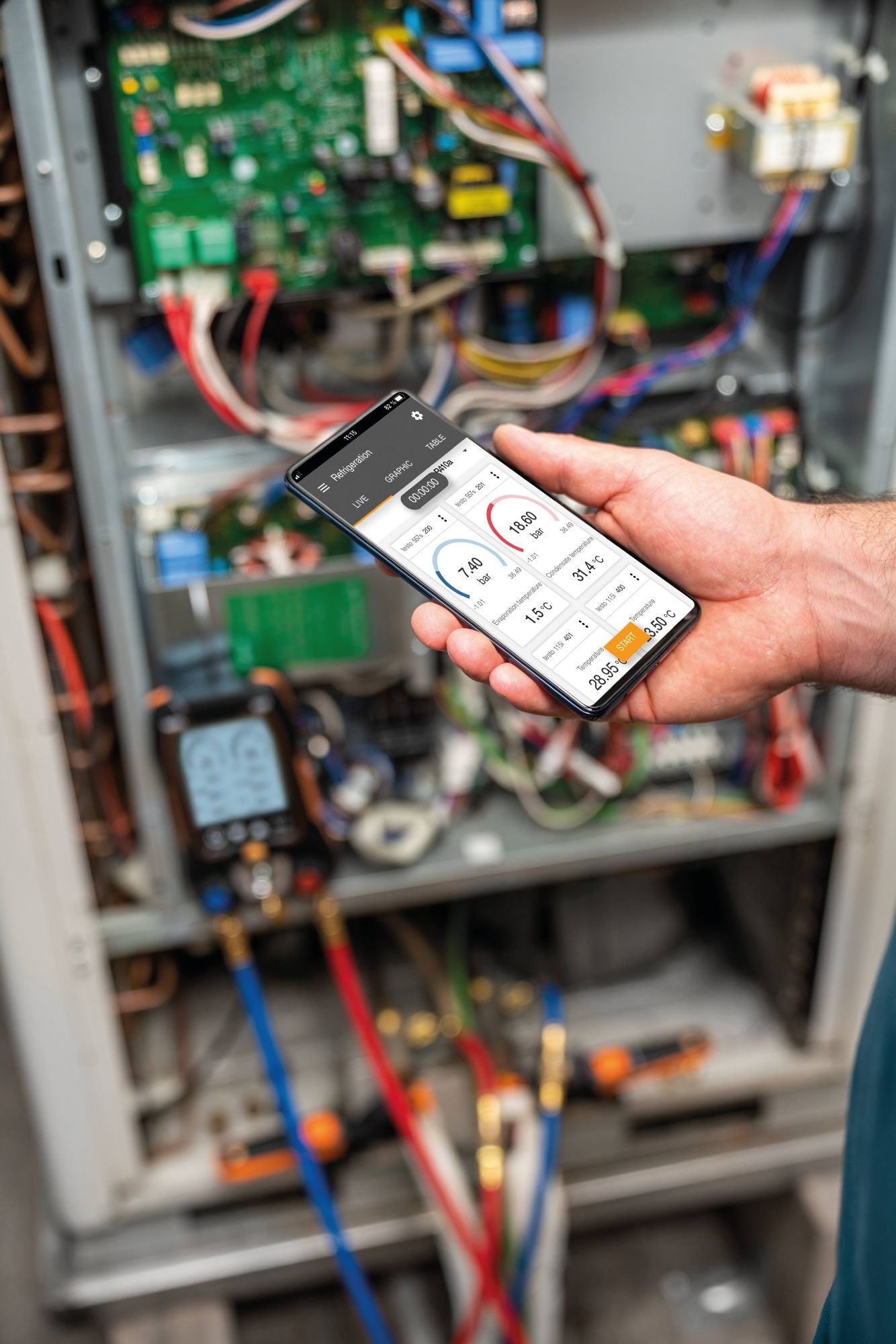
Wireless is only worth it when it removes hassle. With the 550 series, the goal is to reduce back-and-forth, keep you in a safer position, and make the job easier to document.
The app-controlled approach is most obvious with the 550i. If you like smartphone operation and you want a compact setup, this is the model that fits that style: Testo 550i app-controlled 2-way digital manifold for smartphone operation.
Wireless also helps with reporting. When you can capture stable readings and save the result, you stop relying on memory. You can show what you found, what you changed, and what improved. For property managers, that is gold. For homeowners, it feels professional and calm.
People also ask, “How do I connect it, and what do I do when it drops out?” Here is a simple table that covers pairing behaviour and quick fixes without turning your day into an IT job.
| What you are doing | What usually works | If it still will not connect |
|---|---|---|
| First-time pairing on site | Turn Bluetooth on, open the app, keep the phone close, then connect before you start changing settings | Close the app fully, toggle Bluetooth off and on, then reopen and try again with the phone within arm’s reach |
| Range feels shorter than expected | Stand with clearer line of sight and avoid putting the phone behind metal panels or inside a switchboard area | Move closer, reconnect, and keep the phone out of heavy interference zones while you capture readings |
| Reading delay or “lag” | Give the system time to settle, then watch trends instead of chasing instant changes | Restart the app and reconnect before blaming the manifold, because the phone can be the bottleneck |
Perfect for Australian Split Systems
Split systems are everywhere in Australia, and they are not all installed in easy places. You will see outdoor units squeezed into tight side paths. You will see condensers on hot roofs. You will see indoor heads in shops that never close their doors. Tools need to help you work cleanly in those real settings.
In Brisbane humidity, you often feel the load swings fast. A unit can look “fine” for five minutes, then drift when the sun hits the wall or a door opens. Digital readings help you track behaviour instead of chasing a perfect moment.
In Sydney coastal air, you want to keep your connections tidy and your seals healthy. Salt and grit can turn small leaks into big time-wasters. A stable manifold makes it easier to spot when a system is not settling the way it should.
In Melbourne cold snaps, the tricky calls are often the ones that only show up under the right conditions. A system can behave one way in the morning and another way in the afternoon. Digital tools make repeating checks easier, which makes your diagnosis stronger.
And if you do work in Darwin’s tropics or Perth heat, the win is simple. Faster setup and clearer readings keep you calm when the day is punishing. Calm techs make fewer mistakes. That is a fair dinkum safety and quality benefit.
How the 550 Helps You Prove the Problem
A lot of split system faults feel the same to the customer. “It’s not cold enough.” “It’s noisy.” “It used to be better.” Your job is to turn that vague feeling into a clear cause.
This is where digital manifolds earn their keep. They help you separate a true refrigerant problem from an airflow problem, or a heat load problem, or a control problem. That means you stop throwing time at the wrong fix.
One common example is airflow restriction. The customer thinks the system “has no gas” because it is not cooling. But the real issue can be a dirty filter, a blocked coil, or a fan that is not moving enough air. When airflow is wrong, your pressures and temperatures can look odd. If you do not measure well, you can get tricked. With clearer readings and temperature pairing, you can see patterns that match airflow issues and act fast.
Another common example is heat load. A room gets smashed by sun at 2pm, and the customer calls it a fault. Your readings might be stable, but the comfort is still poor. Digital tools help because you can check, confirm the system is doing what it can, then explain the real limit. That conversation can save you a lot of repeat visits and frustration.
Then there is the “small leak” story. In Sydney coastal air, fittings and seals can cop it. Tiny leaks can slowly shift performance. The job is not always to do something dramatic. Sometimes it is to find the small weakness and fix it properly. Stable readings make it easier to spot when the system refuses to settle. That is often the clue that you should stop waiting and start checking connections.
In Melbourne, the tricky ones can be the cycling faults. The unit looks fine, then drifts when the compressor cycles or when the day cools. When you can repeat checks and log results, your diagnosis becomes stronger. You are not guessing off one moment. You are watching behaviour. That is a big difference.
The key message is simple. The Testo 550 series helps you make the job less emotional. It turns “I think” into “here is what the numbers say”. That is better for you, and it is better for the customer.
When Vacuum Proof Matters: The Missing Piece on Many Split Jobs
Most split system faults are about performance. But installs and major repairs live or die on moisture control. If moisture stays in the system, you can end up with trouble later. That trouble looks like poor performance, weird pressures, and repeat visits you did not plan for.
This is why vacuum proof matters, especially in humid climates. If you only “pull a vacuum and hope”, you are guessing. A micron gauge turns that guess into proof. It shows pull-down speed, stability, and rise behaviour.
If you want a dedicated tool for that part of the job, this is a popular option many Australian techs trust: Testo 552 Digital Vacuum Gauge with Bluetooth connectivity. It is a simple way to lift install quality without adding drama to your day.
On Brisbane-style humid days, this can be the difference between a clean install and a slow headache later. Moisture is sneaky. It does not always bite straight away. That is why proof matters. It protects your labour in the weeks after the job, not just on the day.
Safety and Compliance in Australia: ARCtick, AS/NZS, WorkSafe, and A2L Thinking
Quick reminder in plain language. This guide is not legal advice and it does not replace your training. But in Australia, refrigerant work comes with real expectations. ARCtick licensing applies when you handle refrigerant. AS/NZS standards guide safe installation practice. WorkSafe Australia principles matter for safe work methods. And modern splits often use R32, which sits in the A2L category, so flammability needs sensible habits.
Digital manifolds do not make you “compliant”. What they can do is support good decisions and cleaner records. When you can measure clearly, you reduce risky rework. When you can document clearly, you reduce arguments later.
If you want the official ARCtick starting point, this is the single external reference in this article: ARCtick.
On site, keep it practical. Work with ventilation in mind. Control ignition risks where A2L refrigerants are involved. Do not rush electrical work to save minutes. A calm job is usually a safer job.
Keeping Your Testo 550 Kit Accurate for Years
Most “tool problems” are not electronics problems. They are accessory problems. A tired seal. A dirty connection. A hose that has been dragged through grit too many times. If you want German-precision results, your whole setup needs to stay clean.
On Sydney coastal jobs, salt and dust can build up fast. Wipe down connections. Keep caps on ports when the tool is in the bag. It is basic stuff, but it stops little issues from becoming reading issues.
On Perth rooftops, heat can push you to rush the pack-up. That is when hoses get kinked and seals get damaged. If you take an extra minute to pack the kit properly, you often save an hour on a future job that would have been a leak chase.
In Melbourne winters, condensation and wet hands can get into places you do not want it. Keeping the kit dry between jobs is a simple habit that pays off. In Darwin humidity, that habit matters even more. Moisture gets everywhere. A clean bag and a clean routine keeps your gear calmer.
If you treat the 550 series like a daily instrument, not a rough spare, it rewards you. Readings stay stable. Diagnosis stays fast. Customers stay happier. That is the whole point.
Testo 550 Price Australia: Value and Return on Time
When people search “testo 550 price Australia”, they are usually weighing up one thing: will this pay me back? The answer is often yes, if you are doing regular split system work and you want to save time without cutting corners.
The payback is not magic. It comes from fewer “double checks”, fewer doubts, and cleaner customer conversations. If the tool helps you diagnose faster and explain better, you protect your labour and you protect your schedule.
If you do a lot of residential service, the 550s style setup is often the easiest place to land because it balances practical kit and smart workflow. If your business is already phone-forward and you want the lightest setup, the 550i style can feel like a better fit. If you just want digital clarity without extra steps, the standard model can be enough for many days.
Right-Size Your Manifold and Get Back Time
If you are mainly working on Australian split systems, the Testo 550 series is built for your pace. It keeps the kit practical, keeps readings clear, and helps you work with more confidence when the weather and the job site are doing their best to throw you off.
If you are thinking about stepping up later, it helps to understand the “next level” changes before you spend. This internal guide is a clean read when you want to compare the 557 generations without noise: read our Testo 557s vs 557 upgrade comparison for Australian tradies.
Ready to choose your setup? Start with the model that matches your daily jobs, then build your kit so it stays reliable across the hardest weeks. Head to browse our complete Testo digital manifold and gauge range and pick the manifold that fits your split system workflow. Built for Aussie conditions, and designed to help you measure properly, document cleanly, and move on with confidence.