
R32 Recovery: Mastercool Spark-Free Machines for Modern Refrigerants
R32 has become the dominant refrigerant in new Australian HVAC-R installations, and that shift has changed what's acceptable on the tools side of the job. A recovery machine that worked fine on R410A or R22 may not be appropriate for R32 work, and in many situations it is not compliant at all.
This article explains why R32 requires spark-free recovery equipment, what spark-free certification actually means in practice, and how to adapt your recovery technique for A2L refrigerant jobs. If you're running Mastercool equipment or evaluating whether your current kit meets the standard, this is the reference you need.
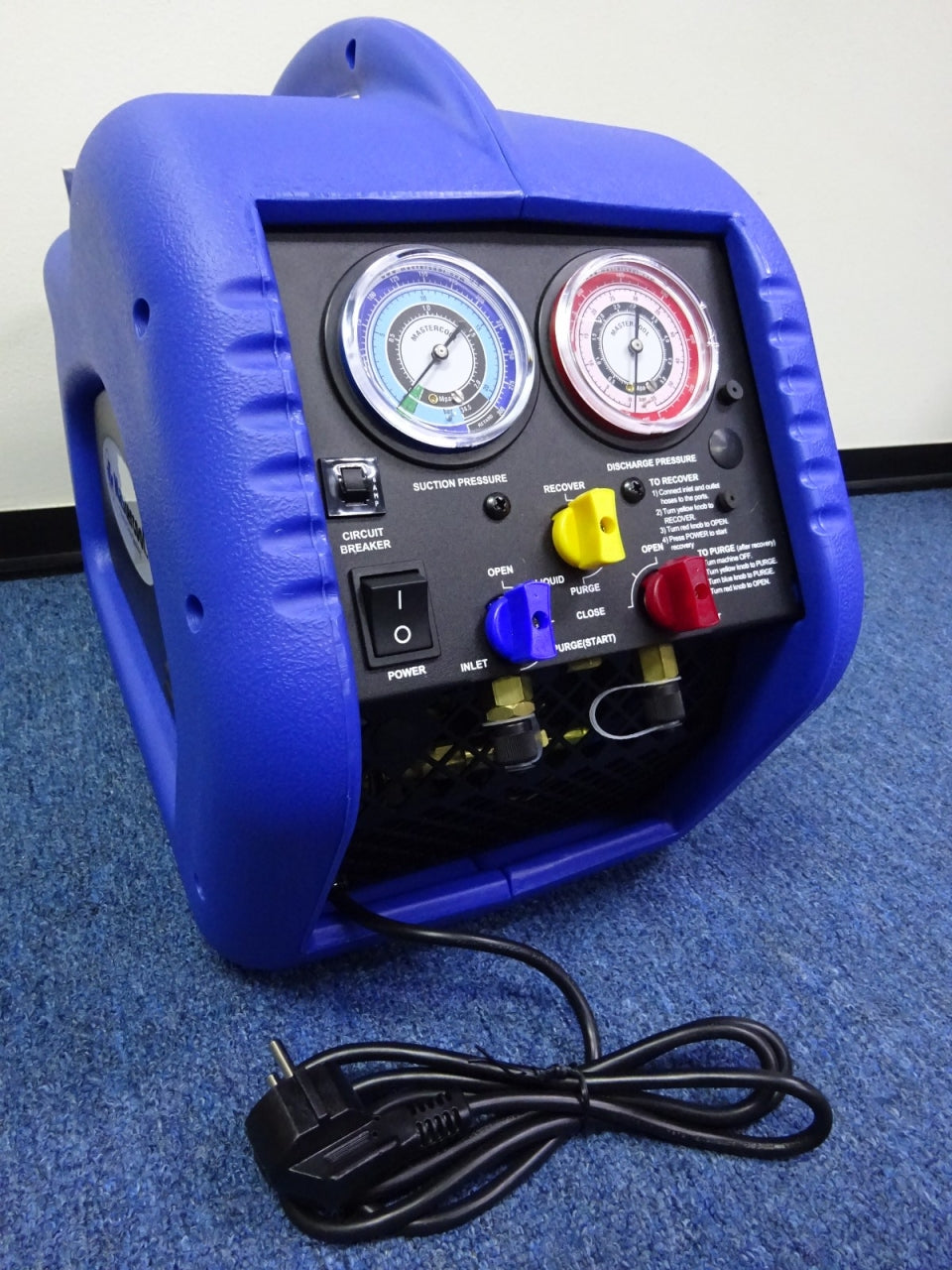
The Mastercool spark-free recovery machines at HVAC Shop cover the MC69000 through MC69400 series, each rated for A2L refrigerant work across residential and commercial applications.
Written by Rica Francia Macaspac, HVAC Shop content writer, in consultation with Aussie HVAC tradies and industry experts. Published: June 2026 · Last reviewed: June 2026.

Why R32 Requires Spark-Free Recovery
The reason R32 demands different equipment comes down to one classification: A2L. R32 is classified as a mildly flammable refrigerant under the AS/NZS 60335 series and international refrigerant safety standards. The "2L" designation means low flammability with a low burning velocity, but flammable nonetheless.
R22 and R410A are both A1 refrigerants, meaning non-flammable. Equipment designed and certified for A1 refrigerants does not carry the same internal electrical safeguards needed for A2L work. Using a non-spark-free machine on an R32 system isn't a minor technical mismatch. It's a genuine ignition risk in certain conditions.
A2L Flammability in Practice
R32 has a lower flammability limit (LFL) than many technicians realise. In a poorly ventilated space, a refrigerant release can build a flammable concentration faster than expected. The ignition energy required to ignite R32 is higher than for propane or other more flammable hydrocarbons, but it is not zero.
In confined plant rooms, ceiling voids, or poorly ventilated rooftop enclosures, the combination of a refrigerant release and a spark source from an uncertified motor creates a real hazard. This isn't a theoretical concern cooked up by standards bodies. It's the practical reason why the industry moved to spark-free requirements as R32 adoption grew.
On Darwin warehouse jobs or in tightly enclosed roof plant rooms in Brisbane, ventilation is often limited. The risk profile on those jobs is higher than on an open residential rooftop in Melbourne, and the equipment selection needs to reflect that.
ARCtick Compliance and WHS Obligations
ARCtick licensing covers the legal right to handle refrigerants in Australia, but it doesn't exempt a technician from WHS (Work Health and Safety) obligations. Using equipment that isn't rated for the refrigerant being handled is a WHS exposure, regardless of ARCtick licence status.
Safe Work Australia's guidance on flammable substances applies to A2L refrigerants in the same way it applies to other flammable gases in the workplace. The practical obligation for HVAC-R technicians is to use equipment that is appropriate for the refrigerant class being handled. For R32, that means spark-free certified equipment for recovery, evacuation, and any other process that moves refrigerant through or past electrical components.
The ARCtick R32 requirements page is the authoritative reference for licence-holders in Australia on what's required for A2L refrigerant handling.
The Legal Liability Angle
If an incident occurs during recovery on an R32 system and the machine used was not spark-free rated, the liability question is straightforward. A technician who used non-compliant equipment on a flammable refrigerant has a difficult position in any subsequent investigation, whether by a WHS regulator, insurer, or building owner.
Contractors who are serious about their business don't take that risk. The cost difference between a spark-free rated recovery machine and a non-rated alternative is not meaningful compared to the exposure of running non-compliant equipment on every R32 job.
Tradie Pro Tip: If you're unsure whether your current recovery machine is spark-free rated, check the product label and documentation for explicit A2L or flammable refrigerant certification. A machine described as suitable for "all common refrigerants" without specifically listing A2L classification is not confirmed compliant for R32 work. Confirm before the job, not after.
Spark-Free Certification Explained
The term "spark-free" describes a specific design approach to the motor and electrical components inside a recovery machine. Understanding what it actually means helps you verify certification claims and choose equipment with confidence.
All recovery machines have an electric motor driving the compressor. In a standard machine, this motor can produce small electrical sparks during normal operation, typically at brush contacts or commutator points. In an environment where flammable refrigerant vapour is present, those sparks are a potential ignition source.
Brushless DC Motor Technology
The primary approach to spark-free motor design in recovery machines is the brushless DC (BLDC) motor. By eliminating the brush and commutator contacts that create arcing in traditional motors, BLDC motors remove the primary internal spark source.
Brushless motors also run cooler and with less mechanical wear than brushed alternatives, which is a secondary benefit for machine longevity and maintenance intervals. For recovery machines doing heavy commercial use, this durability advantage compounds over time.
Mastercool's spark-free recovery machines use this approach across the range. The practical result is a machine that can handle R32 refrigerant passing through the compressor circuit without the electrical ignition risk present in standard motor designs.
Electrical Component Isolation
Beyond the motor itself, spark-free certified machines isolate other electrical components from the refrigerant pathway. Switches, controls, and any electronics that could produce a spark are physically separated from the areas where refrigerant vapour could be present inside the machine.
This electrical isolation is part of the overall design standard rather than a single component feature. A machine that has a brushless motor but exposed electrical contacts near the inlet or outlet path doesn't meet the full design intent of spark-free certification.
Testing and Certification Standards
Recovery machines claiming spark-free or A2L suitability should carry certification against a recognised standard. For the Australian market, look for certification referencing IEC 60335-2-40 (which covers heat pumps and air conditioners with flammable refrigerants) or equivalent standards applied to refrigerant handling equipment.
The certification mark and the specific standard it references should be on the product documentation. If a machine's marketing describes it as suitable for R32 but the documentation doesn't reference a specific certification standard, that's a gap worth clarifying with the supplier before committing to the purchase.
For the full Mastercool recovery machine range including their spark-free certified models, HVAC Shop's recovery units collectionRefrigerant Recovery Units | A2L & HVAC Recovery Machines covers current stock and availability.
How to Identify a Spark-Free Machine
Practically, here's how to verify whether a recovery machine is genuinely spark-free rated. First, check the product label on the machine itself for an A2L or flammable refrigerant suitability marking. Second, check the specification sheet or product documentation for a reference to a recognised certification standard. Third, if in doubt, contact the supplier or manufacturer directly and ask for the certification documentation.
This three-step check takes five minutes and gives you a defensible position if the question ever comes up. It also filters out machines where the marketing claims A2L suitability without the documentation to back it up.
Tech Specs Note: Mastercool spark-free recovery machine specifications, including certification details and refrigerant compatibility, should be confirmed against current product documentation before purchase. Specifications can be updated as certification requirements evolve. Confirm current certification status with HVAC Shop or refer to Mastercool's product documentation directly.
 R32 System Recovery Best Practices
Having the right equipment is the first requirement. Running it correctly on R32 systems is the second. R32 has different physical properties to R22 and R410A, and those differences have practical implications for recovery technique.
Why Liquid Recovery Is Preferred for R32
For R32 systems with any meaningful refrigerant charge, liquid recovery is generally the preferred approach where the system configuration allows it. The primary reason is safety rather than speed, though speed is also a benefit.
Vapour recovery moves R32 in its gaseous state through the recovery circuit. In a space with limited ventilation, any small vapour release during the process contributes to the ambient concentration. Liquid recovery draws refrigerant in its liquid state from the high-side liquid line, which means less vapour is present in the system and in the immediate environment during the recovery process.
On a large R32 commercial system being decommissioned in a rooftop plant room, this difference is meaningful. Less time spent moving vapour through the system in an enclosed space reduces the overall risk profile of the job.
Vapour Recovery as an Alternative
Vapour recovery remains appropriate for R32 in situations where liquid recovery isn't possible, such as on small residential systems where the refrigerant charge is modest and the setup doesn't easily support liquid recovery mode. On a standard residential split with 1 to 1.5 kg of R32, vapour recovery on a spark-free machine in a well-ventilated outdoor setting is a practical and compliant approach.
The key variables are charge size, ventilation, and whether the machine supports liquid recovery mode. Where all three favour liquid recovery, use it. Where vapour recovery is the practical choice, ensure ventilation is adequate and the machine is confirmed spark-free rated.
Pressure and Temperature Differences from R22
R32 operates at significantly higher pressures than R22 at equivalent temperatures. At 25°C, R32 saturation pressure is around 1.25 MPa (approximately 181 PSI), compared to R22 at around 1.04 MPa (approximately 151 PSI). This pressure difference affects what you see on your gauges during recovery and sets the context for what constitutes a normal reading versus something worth investigating.
R32 pressures are closer to R410A than to R22, so technicians experienced with R410A systems will find R32 gauge readings more familiar than those coming directly from older R22 backgrounds. The recovery machine and hoses must be rated for the higher operating pressures of R32 and R410A systems.
Safety Monitoring During R32 Recovery
For R32 recovery work in enclosed spaces, a refrigerant gas detector appropriate for A2L detection adds an important layer of safety monitoring. The detector provides real-time awareness of ambient refrigerant concentration, which is particularly relevant if a hose connection fails or there's unexpected vapour release during the process.
This isn't a mandatory requirement for every residential outdoor recovery job, but it's a sensible precaution for enclosed plant rooms and any situation where ventilation is restricted. Professional contractors working regularly on commercial R32 systems typically carry detection capability as part of their standard kit.
The following table summarises the key differences between recovering R32 and recovering R22 or R410A, to give a clear reference for technique adaptation.
| Factor | R22 | R410A | R32 |
|---|---|---|---|
| Flammability class | A1 (non-flammable) | A1 (non-flammable) | A2L (mildly flammable) |
| Spark-free machine required | No | No | Yes |
| Saturation pressure at 25°C (approx) | ~151 PSI | ~233 PSI | ~181 PSI |
| Preferred recovery mode (larger systems) | Liquid or vapour | Liquid or vapour | Liquid preferred |
| Gas detector recommended in enclosed spaces | Not required | Not required | Recommended |
| Dedicated recovery cylinder required | Yes (R22 only) | Yes (R410A only) | Yes (R32 only) |
Note: Saturation pressure figures are approximate reference values for context. Always confirm current pressure and temperature data against the refrigerant manufacturer's published property tables for your specific application.
R32 Workflow Comparison: What Changes from R22
For technicians who have been handling R22 systems for years, the workflow adaptation to R32 is not a complete overhaul. The sequence of pre-checks, connection, active recovery, and post-recovery documentation stays the same. What changes is the equipment requirements, the pressure expectations on the gauges, and the ventilation awareness during the job.
The muscle memory of running recovery transfers across. The judgement calls about what readings look normal transfer across. What needs updating is the equipment checklist at the start of every R32 job to confirm spark-free rating, appropriate cylinder, and adequate ventilation for the space being worked in.
For the full step-by-step recovery procedure applicable to both R22 and R32 work, the Mastercool recovery machine how-to guideHow to Use Mastercool Recovery covers the complete workflow with safety checks for each phase.
Did You Know? R32 is a single-component refrigerant, unlike R410A which is a blend of R32 and R125. This means R32 can be topped up with a vapour charge without fractionation issues that affect blends. For recovery purposes, however, it still requires a dedicated cylinder and cannot be mixed with other refrigerant types.
Evacuation After R32 Recovery
Once R32 recovery is complete, the next step in any repair or commissioning workflow is evacuation. The same spark-free requirement that applies to recovery equipment applies to vacuum pumps used on R32 systems. Using a standard vacuum pump on an R32 system after recovery, when residual refrigerant vapour may still be present, carries the same ignition risk as using a non-spark-free recovery machine.

Mastercool's range includes spark-free vacuum pumps designed for R32 and other A2L refrigerant applications. For a complete overview of selection and use, the vacuum pumps collection at HVAC Shop covers the full range with current stock information.
Maintaining consistency in spark-free rated equipment across both recovery and evacuation is the professional standard for R32 work and the approach that keeps your compliance position clean across the whole job.
Frequently Asked Questions: R32 Recovery with Mastercool Equipment
If you're reviewing your equipment for R32 compliance or want to confirm the right Mastercool spark-free machine for your work, our team at HVAC Shop can help. View the full Mastercool range at HVAC Shop or get in touch to discuss your application.