
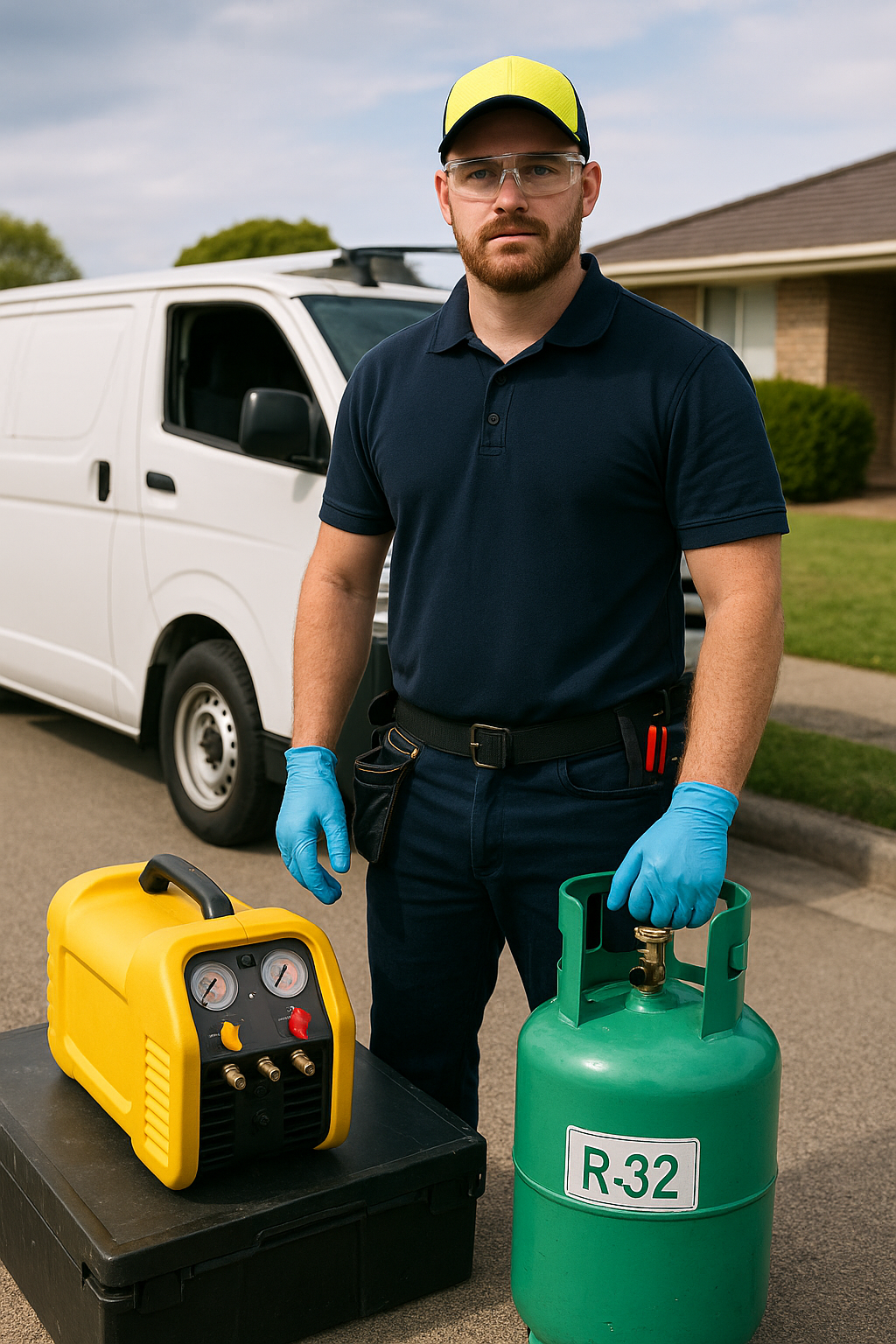
Whether you’re an HVAC tech servicing a rooftop unit in Perth or a DIYer upgrading a split system in your Brisbane home, knowing how to safely use a refrigerant recovery machine in Australia is a must.
Why? Because environmental regulations, flammable gases like R32, and the complexity of newer systems mean that using the wrong method—or the wrong gear—can lead to safety risks, compliance issues, and failed installs.
Here’s a simple, practical guide tailored for Australian conditions.
When and Why to Use a Refrigerant Recovery Machine
You should use a refrigerant recovery machine any time you need to remove refrigerant from an HVAC system for:
- Servicing or maintenance
- System replacement or upgrade
- Leak repairs
- Compressor change-outs
Releasing refrigerant into the atmosphere is illegal in Australia under the Ozone Protection and Synthetic Greenhouse Gas Management Act. That’s why recovery machines are essential.
They allow you to safely and legally transfer refrigerant from the system into a storage cylinder.
Step-by-Step: How to Use a Recovery Machine
✅ Step 1: Prep the Area
- Turn off the HVAC unit.
- Ventilate the area (especially for R32 systems).
-
Confirm you’re using a R32-compatible or R410a-compatible machine.
✅ Step 2: Connect Your Hoses
-
Use high-pressure, R32-rated hoses.
- Connect your manifold gauge set to the service ports.
-
Connect the low-side port to the recovery machine's input.
-
Connect the output of the machine to the recovery cylinder.
✅ Step 3: Set Up the Recovery Cylinder
- Use a certified, approved recovery cylinder.
- Place it on a scale to monitor refrigerant weight.
- Ensure the cylinder is not overfilled (80% max).
✅ Step 4: Purge the Air
- Open valves and briefly run the machine to remove air in the hose lines.
- Shut the purge valve when refrigerant begins to flow.
✅ Step 5: Begin Recovery
- Power on the recovery machine.
- Monitor the scale and pressure gauges.
- Allow the machine to run until it reaches the shutdown point or a vacuum is pulled.
✅ Step 6: Final Purge & Shutdown
- Run a final purge to remove remaining refrigerant from the hoses.
- Shut off the recovery machine and close all valves.
Safety Tips for R32 & R410a Recovery
🔥 Be Aware of Flammability
-
R32 is mildly flammable (A2L)—ventilate and avoid sparks.
- Keep ignition sources well away from the work area.
✅ Use R32-Certified Tools
- Only use recovery machines, hoses, and cylinders marked safe for R32.
- Check manufacturer specs—don’t assume compatibility.
🧯 Fire Safety Kit On-Site
- Always keep a dry chemical extinguisher nearby.
"Even though R32 is only mildly flammable, I treat it with full respect. Using the right gear makes a big difference in peace of mind and safety." — Josh, HVAC Tech in Sydney
Recommended Recovery Machines for Australian Conditions
Not all machines are created equal—especially when you're dealing with Aussie heat, dusty rooftops, or unpredictable site access.
💪 Fieldpiece MR45INT Recovery Machine
- R32/R410A rated
- Lightweight, compact, and weather resistant
-
Digital display with auto-purge feature 👉 View the MR45INT on HVAC Shop
💪 Javac RG6000 Twin Cylinder Recovery Machine
- High-speed twin-cylinder design
- Handles all common Aussie refrigerants including R32
-
Built tough for trade use 👉 Check out the RG6000
Maintenance and Storage Tips
Your recovery machine is an investment. Treat it right and it’ll last for years.
-
After each use: Purge the machine and empty the cylinder.
-
Monthly: Check and clean filters, inspect seals.
-
Annually: Full inspection and service (especially before peak season).
-
Storage: Keep it in a clean, dry place—ideally inside a van box or workshop shelf.'
Final Thoughts
Using a refrigerant recovery machine in Australia isn’t just about compliance—it’s about safety, efficiency, and doing the job right.
Whether you’re a facility manager doing in-house work or a tradie running jobs back-to-back, investing in a proper R32- and R410a-compatible recovery machine will save you time, money, and stress.
✅ Explore the Best Recovery Machines in Australia
Check out top-rated options like the MR45INT and RG6000, available now at: 👉 https://www.hvacshop.com.au/collections/recovery-machines