
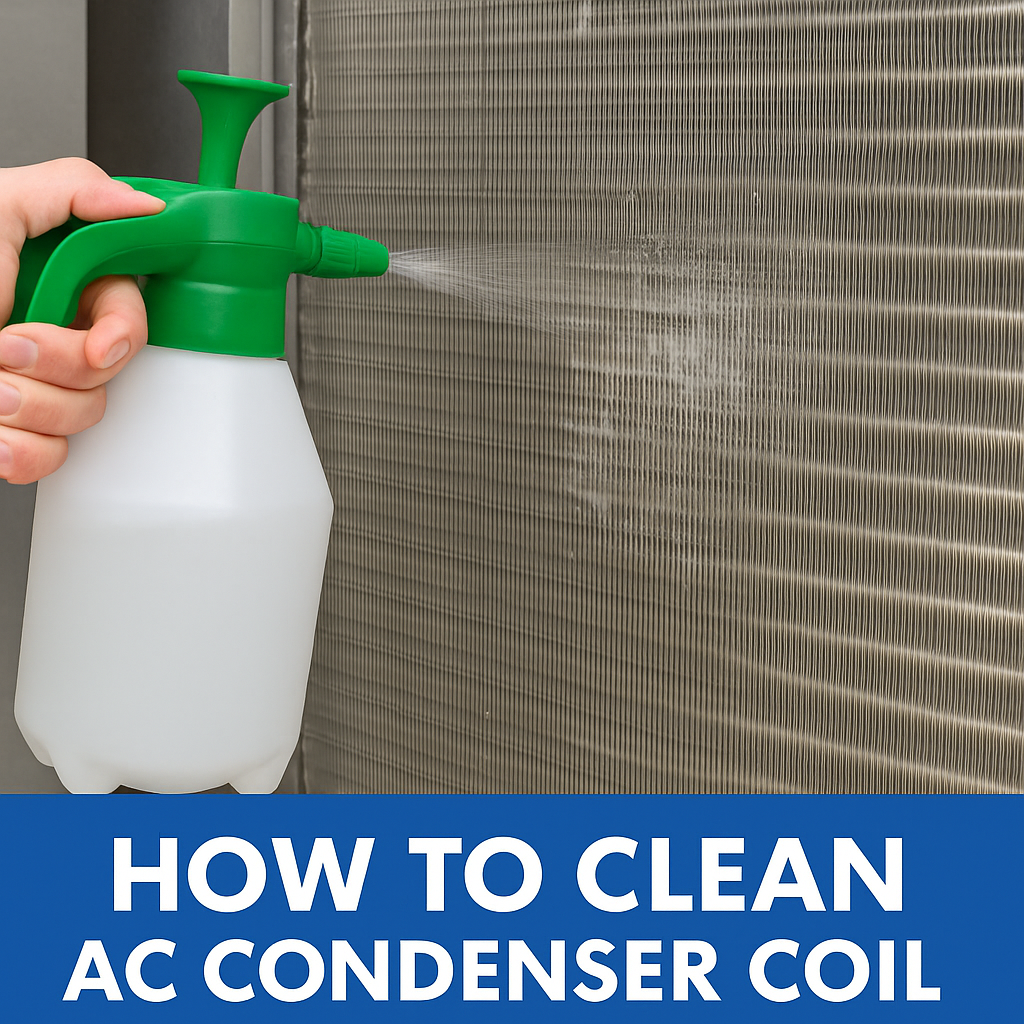
When your air conditioner begins to work overtime, makes strange sounds or simply doesn’t cool as well as it used to, there’s a good chance the condenser coil is suffering from a buildup of dirt, grime and other debris. Easily the most neglected aspect of AC maintenance, cleaning the AC condenser coil is extremely important for performance, energy efficiency and the system’s life expectancy.
In this ultimate guide, you’ll discover everything you need to know about how to clean condenser coils AC the right way — whether you’re a DIY homeowner or a professional heating, ventilation, and air conditioning (HVAC) technician.
🔍 What’s a Condenser Coil and Why Does It Matter?
Your air conditioner’s condenser coil is housed in the outdoor unit of your air conditioning system. It’s what releases the heat it’s absorbed inside your house to the outdoors.
The refrigerant process: The refrigerant goes through the condenser coil, and as it travels, it cools off and becomes a liquid again. This exchange of heat is necessary for an air conditioner to produce cool air inside a house.
If the coil is dirty or obstructed:
- The absorbed heat is not exchanged as efficiently.
- The compressor works harder
- Energy consumption increases
- System life is reduced
- Cooling capacity drops
That's why it's a must to know how to AC clean condenser coil elements by every homeowner and technician.
🛑 Signs You Need to Clean Condenser Coils
Before you get hold of a cleaning kit, however, there are signs that suggest your condenser coil is due a thorough clean:
- ✅ Reduced cooling performance
- ✅ Increased electricity charges
- ✅ AC longer running cycles
- ✅ Visible dirt/dust/grass clippings on the outdoor coil
- ✅ Weird sounds coming from the outside unit
- ✅ The fan seems warmer to the touch than usual
If you’ve noticed any of these symptoms, it's time to schedule a cleaning.
🧰 What You'll Need to Clean Your AC Condenser Coil
If you’re doing it yourself or building out a toolkit for your team, here’s what you need:
✔️ Tools and Supplies:
- Solution to clean the coils ( i.e.,SpeedClean SpeedyFoam, AC6 Coil cleaner)
- Brush with soft bristles or fin comb
- Hose with gentle spray nozzle
- Screwdriver (for getting into the panels)
- Safety gloves and eyewear
- Optional: pump sprayer for foam – you can just as easily use a single one-gallon sprayer.
🔗 Need reliable products? Shop HVAC Coil Cleaning Solutions at HVACSHOP
🧼 Step-by-Step: How to AC Clean Condenser Coil
Step 1: Turn Off the Power
Before starting, shut off power to the AC unit at the disconnect box or circuit breaker. This is critical for your safety.
Step 2: Remove the Outer Panel or Grille
Use a screwdriver to remove the screws holding the access panel or grille in place. Gently set the panel aside.
Step 3: Inspect the Coil
Look for visible signs of buildup such as:
- Dust
- Pollen
- Grass clippings
- Pet hair
- Mold or mildew
Step 4: Apply Coil Cleaner
Spray the AC coil cleaning solution generously across the entire coil surface. Follow the product instructions for dwell time (usually 5–10 minutes). Choose a foaming coil cleaner like SpeedyFoam for deep penetration.
🔧 Pro Tip: Use a no-rinse formula if you have limited access to water.
Step 5: Gently Rinse or Wipe
If your cleaner requires rinsing, gently spray the coil with a hose. Avoid high pressure as it can bend or damage the coil fins. If using a brush, be very gentle.
Step 6: Straighten Bent Fins
Use a fin comb to straighten any bent fins to ensure airflow is not restricted.
Step 7: Reassemble and Restore Power
Once the coil is dry and clean, reattach the access panel, tighten the screws, and turn the power back on.
⚠️ Mistakes to Avoid When Cleaning Condenser Coils
Even experienced DIYers and technicians make these common errors:
- ❌ Using high-pressure washers that damage coil fins
- ❌ Ignoring manufacturer recommendations
- ❌ Skipping protective gear (some cleaners are caustic)
- ❌ Forgetting to shut off the power
- ❌ Letting debris fall deeper into the system
Avoid these and you’ll maintain your AC system in top shape.
🌿 Eco-Friendly AC Clean Condenser Coil Options
Many HVAC professionals are switching to biodegradable and non-toxic cleaning solutions. Not only are they safer for the environment, but they’re also gentler on equipment and indoor air quality.
Popular choices include:
- AC6 Coil Cleaner (Concentrated 2-Pack with Sprayer)
- Hydrocell Tradie Coil Cleaner – 12 Pack
- Viper Evaporator Coil Cleaner – 3.785L
These are available at HVAC Shop Australia, with fast nationwide delivery.
📅 How Often Should You Clean Your Condenser Coil?
| Environment | Recommended Cleaning Frequency |
|---|---|
| Urban/Suburban | Every 6–12 months |
| Coastal/Salty Air | Every 3–6 months |
| Commercial Sites | Quarterly |
| High Pollen Areas | Every 4–6 months |
Regular maintenance not only protects your investment—it significantly improves system performance and longevity.
🔄 Professional vs DIY Coil Cleaning: What’s Best?
DIY Cleaning
- Great for homeowners with basic tools
- Best for visible, light-to-moderate dirt buildup
- Use rinse-free products like AC6 or AirconCarePro Kits
Professional Coil Cleaning
- Necessary for deep blockages or annual tune-ups
- Includes fin straightening, internal inspection, and refrigerant pressure checks
- May include power wash (carefully regulated)
💡 Not confident? Book a licensed HVAC technician to handle the job safely.
🧠 Expert Tips to Keep Coils Cleaner Longer
-
Install a weatherproof coil guard to protect against leaves and debris
-
Maintain proper clearance around the outdoor unit (at least 2 feet)
-
Trim back plants or grass that grow too close
-
Change your air filters regularly (dirty filters strain the whole system)
- Schedule seasonal inspections
🛍 Shop Coil Cleaning Essentials at HVAC Shop Australia
At HVACSHOP, we stock everything from AC coil cleaning kits to eco-safe chemical solutions trusted by Australian tradespeople.
✅ Fast Shipping Nationwide
✅ Commercial-Grade Products
✅ Great Prices on Multi-Packs
✅ Expert Support from HVAC Pros
👉 Browse AC Coil Cleaning Solutions Now
🧾 Final Thoughts: Don’t Underestimate the Power of a Clean Coil
Keeping your AC condenser coil clean is one of the most impactful, low-cost ways to improve performance, reduce energy consumption, and extend the lifespan of your system. Whether you’re doing it yourself or hiring a pro, it’s a must-do task that pays off quickly.
Browse our full range of coil cleaners and maintenance kits, and keep your cool all summer long.