
Electrical Testing for HVAC in Australia: Fast Answers, Fewer Call-Backs
You can be a brilliant fridgie, but if the electrics are off, the system still won’t run right. You’ve seen it. A unit trips on start-up. A compressor hums and won’t kick. A fan ramps weirdly, then drops out. The client thinks it’s “the air con”. You know it could be power, wiring, a motor, or a control board playing up.
This is where a good clamp meter earns its keep. Not a generic meter that’s “fine for a quick look”. An HVAC-focused clamp meter that reads cleanly, holds steady, and tells you what’s happening under load. It helps you move from guesswork to proof, without turning the job into drama.
Australian conditions make this more important. Brisbane humidity can creep into connections and cause odd faults. Sydney coastal air speeds up corrosion near terminals and outdoor isolators. Melbourne cold snaps can make motors draw higher current at start, and weak capacitors show themselves fast. On those days, you want answers you can trust.
This guide covers the Fieldpiece clamp meter range you’ll see on HVAC vans across Australia. We’ll keep it simple. We’ll show where each model fits, how True RMS helps on modern inverter gear, and why microamp testing matters for flame sensors and control circuits. We’ll also keep safety and compliance in view, because “doing the right thing” is part of doing the job properly.

A “bad air con” call is often a simple electrical fault. A loose neutral, tired capacitor, or failing motor can look like a refrigerant problem until you test it properly.
Complete Fieldpiece Clamp Meter Range in Australia: What Each One Is For
When people search “fieldpiece clamp meter Australia”, they usually want two things. They want accuracy. And they want speed. Not speed like rushing. Speed like finding the fault before you burn an hour swapping parts.
Fieldpiece meters are built with HVAC work in mind. That means features that match the gear you actually see on site. It also means the meters tend to feel “site friendly”. They’re made to be used on ladders, in plant rooms, and in tight switchboards where you don’t have much room to breathe.
In broad terms, the range breaks into three styles of work. The first is your daily driver clamp meter, used for current, voltage, and quick electrical checks. The second is the compact backup meter that lives in the glovebox for the weird little jobs. The third is the modular stick meter system, where accessory heads let you adapt the tool to the job without carrying a mountain of gear.
If you prefer a classic clamp meter feel with HVAC-friendly features, the main workhorse option is the Fieldpiece SC440 True RMS clamp meter with dual display and microamp testing. It’s the sort of meter you reach for every day. It reads cleanly, it’s practical, and it helps you diagnose faults without overthinking it.
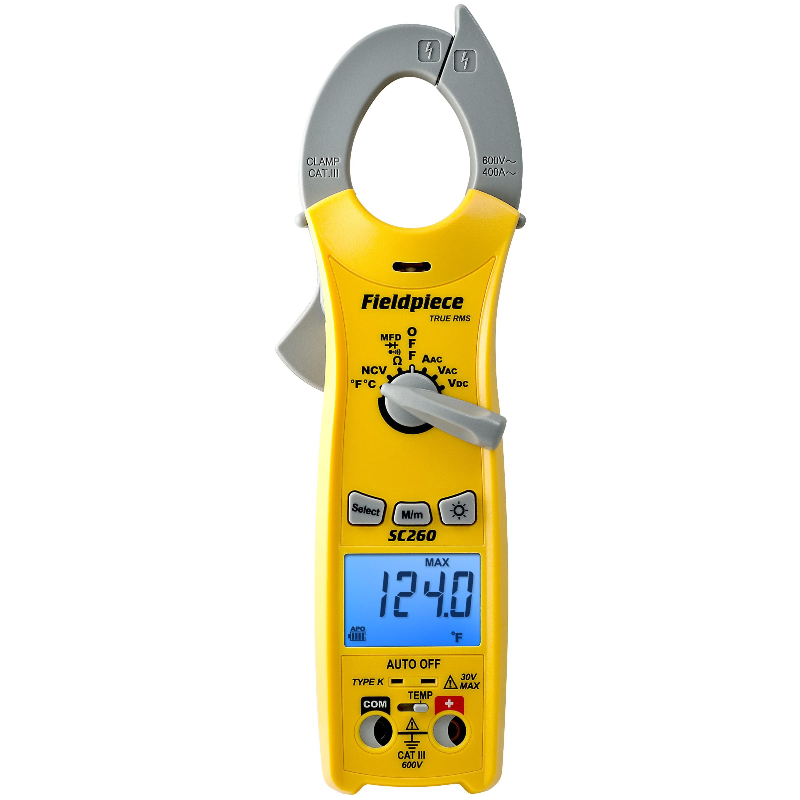
If you want a compact meter for quick jobs or as a backup, the small-but-handy option is the compact Fieldpiece SC260 clamp meter with temperature measurement. It’s designed for those times you need a reliable reading, but you don’t want to drag out the full kit.
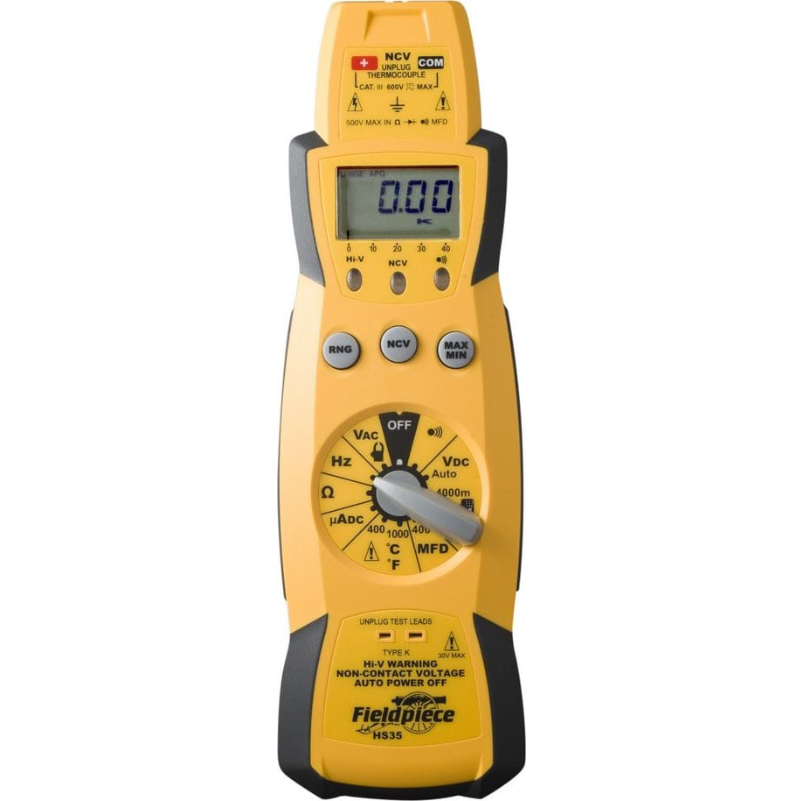
If you like the “one handle, many tools” approach, Fieldpiece’s modular stick meters are worth a look. The core idea is simple. You keep the stick meter body, and you add heads for the work you’re doing. For the stick meter itself, this is the Fieldpiece HS35 stick multimeter with modular accessory heads. It’s built for tight spots, which is gold in crowded electrical panels.
If you want that modular concept with a kit that includes a clamp head, the ready-to-go option is the Fieldpiece HS36 True RMS multimeter kit with clamp head for Australian HVAC electrical diagnostics. That “kit feel” suits techs who want a clean setup without mixing parts from five different brands.
Then you’ve got the more advanced end of the range, where wireless and app-based reporting can change your workflow. For power and current checks with a more system-style approach, the Fieldpiece SC480INT wireless power clamp meter for Australian HVAC power checks and trending is built for modern diagnosis. It helps you see what’s happening while the system runs, instead of guessing based on one quick snapshot.
The Wireless “Work Smarter” Option: SC480INT and the Job Link Advantage
Wireless sounds fancy until you use it once on a hard job. Then it just feels normal. On rooftops, on ladders, and in hot ceiling spaces, wireless readings can reduce how much you move around. Less moving around means fewer mistakes. It also means fewer risky positions while you run checks.
The biggest value of a wireless clamp setup is simple. You can take readings while the system is doing its thing, and you can keep your hands free for the parts that actually need hands. That might be checking a fan, watching an overload, or confirming a compressor start without leaning into a live panel.
This is where the Fieldpiece SC480INT wireless power clamp meter suits Australian work. You’re not always in a comfy workshop. You’re often on a balcony in Sydney coastal wind, or on a Perth roof where the unit is cooking in the sun. Wireless means you can stand where it’s safer and still see what you need.
It also helps with the “prove it” side of the job. More clients, facility managers, and builders want a clear story. They don’t want “it should be right”. They want a record that shows you tested properly. Wireless plus app reporting can make that record easier to produce, which keeps the handover calm.
Now, not every job needs wireless. Fair dinkum. Sometimes you’re doing a quick check, and the basic clamp meter is the best tool for the moment. But if you troubleshoot a lot of inverter gear, compressors that trip on heat, or sites with repeat issues, wireless measurement can pay for itself in reduced call-backs.
When a system trips “randomly”, try to capture readings under load. A quick snapshot can miss the real problem. Trending current or voltage while it runs often shows the fault pattern.
SC440 vs SC260: Which Clamp Meter Should You Buy?
This is the most common choice. Do you buy a full-featured daily driver, or do you buy a compact meter and keep the spend down? The honest answer depends on how you work.
If you’re on tools every day and you test electrics on most calls, the SC440 style meter saves time. It gives you the features you keep reaching for, and it helps you diagnose without swapping between multiple tools.
If you want a backup meter, or you mainly do installs and only test electrics when something looks odd, the compact meter makes sense. It’s still capable. It’s just simpler, and it’s easier to throw in the van as a “just in case”.
Here’s a straight comparison to keep it practical. No brand drama. Just what the tools are best at.
| What you care about | SC440 | SC260 (compact) |
|---|---|---|
| Best fit | Daily HVAC diagnostics and fault-finding | Backup meter, quick checks, tight budgets |
| Readings you trust | Strong accuracy and stable readings for service work | Reliable core readings for common checks |
| Microamp testing | Built for HVAC-style diagnostics where microamps matter | Not the go-to choice if microamps are a regular need |
| Size and carry feel | Mid-size, easy on site, good balance in hand | Very easy to carry, fits in small bags |
| When you’ll love it | When faults are tricky and you want deeper testing options | When you want a no-fuss meter that’s always there |
If you’re leaning toward the daily driver, the SC440 is the “do most things well” choice and suits the bulk of HVAC electrical work.
If you want the compact backup, the SC260 is the meter you keep close when you want a quick, confident reading without lugging extra gear.
Microamp Testing for HVAC: Why It Matters (And When You’ll Actually Use It)
Microamp testing sounds niche until the day you need it. Then it’s everything. In HVAC work, microamps often come up in gas heating systems with flame sensors. The flame signal can be the difference between a smooth run and constant lockouts.
In Australia, you’ll see this most in ducted gas heating, packaged units, and some commercial setups where gas heat is part of the system. If you service those sites, microamp testing helps you confirm if the flame sensor circuit is healthy, or if you’re dealing with contamination, poor grounding, or a control issue.
We’re not going to pretend microamps replace proper training. If you’re not licensed or not trained for the job, you follow your workplace method and you stay safe. No worries. The goal here is to explain why microamps matter, so you don’t get caught out by a fault that looks “mystical” but isn’t.
Here’s the simple idea. The flame sensor circuit is looking for a small current. If that current is too low, the system thinks there’s no flame, and it shuts down. You can clean burners all day, but if the signal is still low, the lockouts keep coming.
When you do microamp checks, the goal is consistency. You’re not chasing a perfect number from memory. You’re confirming the signal is within the expected range for that system, and that it’s steady. A steady reading tells you the circuit is behaving. A flaky reading tells you something is unstable.
This is why HVAC-focused meters are helpful. They include the functions techs actually use on these systems. If microamp testing is part of your work, a meter like the SC440 makes that path smoother because it’s designed with that need in mind.
If you’re running the modular stick meter system and you want microamp capability through an accessory head, this is the Fieldpiece AUA2 accessory head for microamp and milliamp testing on HS36 stick meter systems. It suits techs who like one meter body and flexible add-ons.
In real-world Aussie work, microamp testing can also help you avoid unnecessary parts swapping. If the microamp signal is healthy, you stop blaming the flame sensor and start checking wiring, grounding, airflow, or the board logic instead. That saves time, saves money, and saves your reputation.
True RMS: Why It Matters on Modern Inverter Systems
True RMS is one of those terms that gets thrown around, but it’s easy to understand when you think about modern HVAC loads. Inverter systems don’t always pull “smooth” current. Variable speed drives, electronic boards, and non-linear loads can create waveforms that basic meters struggle to read cleanly.
In plain words, a basic meter can give you a number that looks fine, but isn’t the full truth. On older, simpler gear, you might get away with that. On newer inverter systems, that can waste time. It can also lead to wrong conclusions, like blaming a compressor when the real issue is upstream.
In Sydney high-rises and modern commercial sites, you’ll see more variable speed everything. Fans, pumps, compressors, and control systems all change speed. If you’re diagnosing those systems, True RMS helps your readings stay meaningful.
This is where meters like the SC440 and HS36 style systems earn their keep. They’re built for the kind of mixed loads you see on today’s units. That matters when you’re chasing a fault that only shows under certain conditions, like a fan speeding up, or a compressor ramping during a hot pull-down.
Melbourne is a good example of why this matters. Cold mornings can push systems harder on start. If a motor is borderline, it can draw higher current at start-up and settle later. A meter that reads clearly helps you spot that behaviour without guessing.
And Brisbane matters in a different way. High humidity can add stress to components. Connections can corrode. Boards can suffer. When you’re checking power quality and load behaviour, you want a meter that doesn’t get confused by the real-world mess.
Think of it like this. A clamp meter tells you what the system is drawing. True RMS helps that number stay honest on modern inverter loads. Microamps help you diagnose control and flame circuits without guessing.
Stick Meter vs Clamp Meter: The Aussie “What Should I Carry?” Decision
This comes down to how you work. A clamp meter is fast. Clamp the conductor, read the current, and move on. It’s perfect when you’re doing lots of current checks and you want a familiar workflow.
A stick meter shines when space is tight. In many plant rooms and boards, you don’t have much room for big tools. A stick meter body with modular heads feels built for Aussie conditions because it suits the spaces you actually work in.
For a lot of Aussie techs, the best answer is “both, in different roles”. You keep the clamp meter as the main electrical tool, and the stick meter system as the tight-space specialist. That way you’re never stuck trying to make the wrong tool do the right job.
Australian Compliance and Safety: ARCtick, AS/NZS, WorkSafe, and A2L Context
Let’s keep this realistic. A clamp meter doesn’t replace safe work methods. It supports them. If you’re working in live panels or near rotating equipment, you follow your workplace process, you isolate where required, and you keep your testing controlled.
In Australia, WorkSafe expectations shape what “reasonable safety” looks like on site. If you want a simple starting point for safety guidance, use Safe Work Australia. It’s a baseline reference, not a replacement for training.
AS/NZS standards sit behind a lot of electrical and installation practices in Australia. You don’t have to quote standards on site to work safely. But you do want to follow the common sense principles they support, like testing properly, confirming isolation, and using the right category-rated tools for the environment.
ARCtick licensing comes into the picture when you handle refrigerant. It’s not an “electrical licence”, but it is part of doing HVAC work properly in Australia. If you’re diagnosing a fault on an R32 system, you’ll often be looking at both electrical and refrigerant-side clues. You want to do that safely and methodically.
That’s also where A2L refrigerant context matters. R32 is an A2L refrigerant, meaning it is mildly flammable. You don’t need to panic. You do need to avoid sloppy work. That includes controlling ignition sources, keeping your workflow tidy, and making sure your testing isn’t creating unnecessary risk. A good meter supports this by reducing “random poking” and helping you test with purpose.
Australian Pricing and Value: What You’re Really Paying For
Prices move. Stock changes. Kits come and go. So rather than throwing a number on the page that goes stale, it’s better to talk about value the way techs actually experience it.
If you do HVAC service daily, you’re paying for speed and trust. You want readings that don’t bounce. You want a tool that survives the van. You want a meter that doesn’t make you second-guess the result. That is why a daily driver like the SC440 often makes sense. It’s not about being fancy. It’s about being consistent.
If you’re easing into fault-finding, or you mainly do installs and only test electrics sometimes, a compact meter can be a smart buy. You still get real readings. You just keep the tool simple and the carry weight down.
If your work includes bigger motors, inverter systems, or tricky intermittent faults, wireless and trending can save you serious time. That is where a tool like the SC480INT can change your workflow. It helps you capture what happens under load, which is often the only time the fault shows itself.
Warranty and support also matter in Australia. When a tool is used daily, downtime is expensive. A meter that’s supported locally and designed for the trade is often better value than a cheap option that dies at the worst moment.
Build Your Fieldpiece Electrical Testing Kit (Without Overbuying)
The clean way to build a kit is to start with your main meter. If most of your work is standard service and installs, the SC440 is a strong centrepiece because it covers the checks you do constantly. If you want a compact backup, add the SC260 as the “always there” option.
If you work in tight panels, or you like the modular approach, the HS35 stick meter body and HS36 kit pathway can make life easier. It keeps your kit flexible without loading your bag with duplicates.
If you want a more “system” approach, where your electrical tools sit alongside other diagnostic gear, the bundled kit path can be handy. This is the Fieldpiece Advanced Kit including SC680 wireless power clamp meter. Even if you don’t buy the full kit, it’s useful as a reference for how Fieldpiece tools can work together.
Choose a Meter That Matches How You Work
The best clamp meter is the one you trust enough to use properly. It should feel natural in your hands. It should read cleanly. It should help you make decisions with confidence, especially when the job is messy and the clock is ticking.
If you want a straightforward daily driver, go the SC440 path. If you want a compact backup, keep the SC260 close. If you want flexibility in tight panels, the stick meter system is hard to beat. And if you want modern workflow advantages, wireless measurement can be a fair dinkum upgrade that reduces ladder time and cuts call-backs.
Ready to upgrade your electrical testing kit? Pick the meter style that matches your day-to-day work, and build from there without overbuying.