
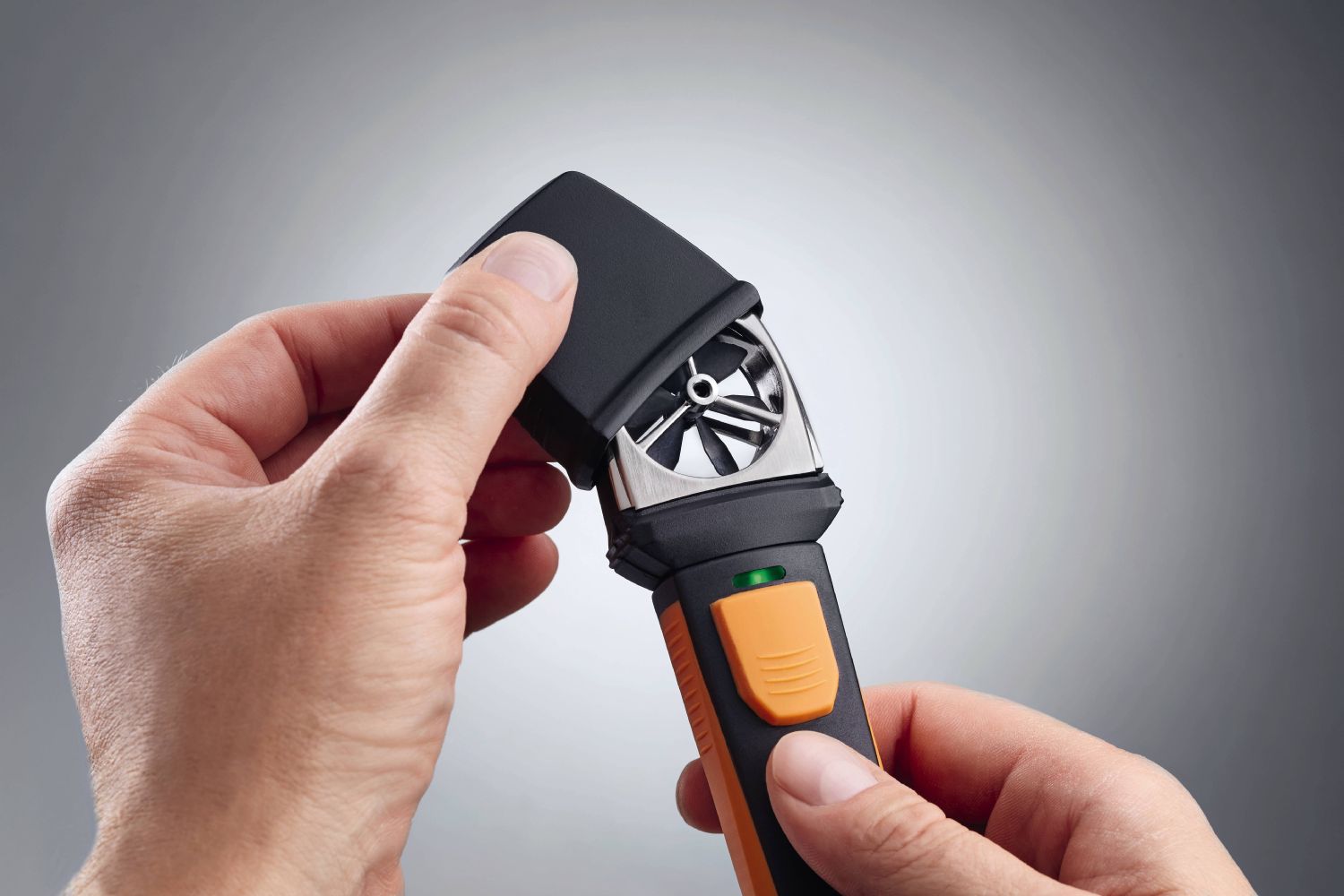
Airflow Testing Made Simple (Without Bulky Gear)
You know the job. A ducted system is “running”, but half the rooms feel flat. The client wants answers. The builder wants a sign-off. And the site manager wants you out of there before smoko is even over.
This is where airflow testing can turn into a headache. Traditional airflow gear can be bulky. Set-up can be slow. And if you are doing commissioning or air balancing HVAC work, the real time sink is the back-and-forth. Measure a grille. Walk back. Adjust a damper. Measure again. Then repeat that loop across a whole home, a full floor, or a tenancy fit-out.
That’s why the Testo 410i has become a favourite for quick, practical airflow checks. It’s small, wireless, and built around a simple idea. Measure where the air is, view the numbers on your phone, and move through the job faster with cleaner notes.
For Aussie work, that matters. Brisbane humidity can make people crank systems hard, and poor balancing shows up fast. Sydney coastal air can drive comfort complaints that are really airflow problems. Melbourne cold snaps can highlight draughts and uneven supply that were not obvious in mild weather. And on commercial sites, airflow is often the difference between “looks good” and “meets spec”.
This guide is a practical, Australian walkthrough of the testo 410i vane anemometer and how it fits real duct testing wireless workflows. We will cover what it is, how to use it on air balancing jobs, what to expect from Bluetooth range, how to keep readings repeatable, how it compares to traditional anemometers, and how to build a complete Testo Smart Probes setup for faster diagnosis and better reporting.

Did You Know? On many “airflow problems”, the hardest part is not the fix. It’s proving the problem. Wireless airflow numbers make that proof quick and easy.
What Is the Testo 410i?
The Testo 410i is a compact wireless vane anemometer designed for HVAC airflow checks. In plain terms, it measures air velocity at grilles and outlets, then helps you turn that into useful airflow information for supply and return work.
Instead of squinting at a tiny screen or dragging a lead around a ceiling space, the 410i sends readings to your phone via Bluetooth. You use the Testo Smart App as your dashboard. That app angle is the whole point. It makes the numbers easier to see, easier to compare, and easier to save when the job needs proper documentation.
If you want the current model and official product details, this is the best source-of-truth page to keep handy: Testo 410i wireless vane anemometer with smartphone operation and telescopic handle.
It also suits the way techs really work. You are often testing in tight spots, moving room to room, and dealing with noise, dust, ladders, and people walking through. A wireless anemometer HVAC workflow keeps the test simple. It reduces setup fuss, reduces note-taking errors, and makes it easier to show a client a clean number without turning the job into a performance.
Tech Specs The Testo 410i is a wireless vane anemometer that measures airflow velocity and supports volume flow calculations in the app when you enter grille or duct details.
Where it fits best is anywhere airflow checks need to be fast, repeatable, and easy to explain. Think ducted installs. Think balancing on commercial fit-outs. Think supply and return checks where you need to show a building manager “here’s what’s happening”. It is not trying to replace every piece of commissioning gear. It is trying to remove the daily friction that slows good techs down.
One quick note on “testo 410i accuracy”. On real jobs, the biggest issue is rarely the tool. It is the method. If you measure in the wrong spot, or you rush the reading, you can get a number that looks confident but is not representative. The 410i shines when you use a consistent approach and treat airflow like a pattern, not a single snapshot.
Why Wireless Airflow Testing Helps Aussie Techs
Wireless tools do not just feel modern. They change how you move. And movement is where time disappears on balancing jobs.
When you can hold the probe at the grille and see the numbers clearly on your phone, you stop doing silly stuff like twisting your wrist to read a screen, walking back to your bag to write notes, or repeating a test because you forgot what the first number was. Those little moments do not feel big, but they stack up across a full house or a full floor.
Wireless also supports safer work habits. Less gear hanging around. Fewer leads to snag. Fewer awkward movements while you are on a ladder or leaning over a high return. It is not “safety by marketing”. It is safety by reducing clutter and rush moments.
If you are building a full kit that stays consistent in one app, the easiest planning hub is the Testo range page: browse Testo wireless airflow and velocity measurement tools.
Air Balancing With Testo 410i (What It Looks Like on Real Jobs)
Air balancing sounds fancy, but most of the time it is simple. Make sure supply and return air are doing what the system design expects, and make sure rooms are not getting short-changed.
On residential ducted, that might mean fixing the “front rooms freezing, back rooms stuffy” problem. On light commercial, it might mean verifying that airflow matches what the tenancy needs. On bigger commissioning work, it can mean documenting airflow as part of a handover package.
The Testo 410i fits this workflow because it is fast to deploy. You can move through grilles, capture consistent readings, and build clean notes without breaking your rhythm. That rhythm is how you finish on time and avoid rework.
A real ducted balancing walk-through
Here is a common scenario. A single-storey ducted home. The lounge and kitchen are fine. The back bedrooms feel weak. The customer says the unit runs “all day” but the bedrooms never catch up. The installer swears it is sized right. You turn up and you want facts, not guesses.
First, you set a clean baseline. You keep the system on a steady mode so readings do not jump around. You check filter condition, because a blocked filter can make everything look like a balancing issue. Then you start supply testing room by room. With the 410i, you hold the vane at a consistent position at each grille. You take a short moment to let the reading settle. You write the number down or save it in your job notes straight away.
Now you see the pattern. The front rooms show strong airflow. The back bedrooms are down. That points to duct run losses, damper positions, crushed flex, or a restrictive grille. If you only tested one point, you might miss the story. Because you tested all points quickly, the story is obvious.
Next, you make one adjustment at a time. That is the boring habit that saves jobs. If you change three things at once, you never know what helped. So you adjust one damper that feeds the weak branch, then you re-test only the affected bedrooms. This is where wireless saves real time. You are not resetting gear. You are not untangling leads. You are just testing, adjusting, and testing again.
Once supply is closer, you check return behaviour. Return issues can make a balanced supply still feel wrong. A restricted return can cause noise, pressure issues, and comfort drift. You want the whole system to breathe. You do not need to turn this into a thesis. You just want confidence the airflow path makes sense.
Finally, you do a quick final sweep. Re-check the key rooms, confirm nothing got robbed by the changes, and record the “after” numbers. Those after numbers are what stop call-backs. They also help the customer trust the fix, because you can show proof in plain language.
Pro Tip On balancing jobs, your best tool is not the meter. It’s your method. Keep probe position and timing consistent, and change one thing at a time.
Featured Snippet: Air Balancing Steps With the Testo 410i
If you want the quick version, this is a simple on-site routine that suits most airflow and duct testing jobs. It is written for real work, not a lab.
| Step | What to do | Why it matters |
|---|---|---|
| Step 1 | Open the app, connect the 410i, and confirm units and settings before you start. | Consistent settings stop you comparing apples to oranges. |
| Step 2 | Measure each supply grille using the same probe position and the same timing. | Repeatability beats speed when you are proving airflow. |
| Step 3 | Record the initial results room by room, then look for the outliers. | One weak room often points to a damper, duct, or grille issue. |
| Step 4 | Make one adjustment at a time, then re-test the affected grilles. | One change at a time makes cause and effect obvious. |
| Step 5 | Check return performance and overall balance once supply is close. | Good supply with poor return still gives bad comfort and noise. |
| Step 6 | Save readings or export a report if the job needs commissioning proof. | Clean documentation reduces disputes and repeat site visits. |
That is the core idea. You are building a baseline, making controlled changes, and re-checking the right points. The 410i helps because it keeps the process light and mobile, which is exactly what you want when a site window is tight.
Practical Duct Testing Procedures (Supply, Return, and Fan Checks)
On balancing jobs, the biggest mistake is jumping straight into “fix mode” without a clean starting map. Airflow problems often move around. If you open one damper, you can rob another room. If you change fan speed, you can change noise and comfort. A clean method keeps you honest and keeps your results defensible.
Start with supply. Supply grilles are where comfort starts. If a room is under-supplied, it will never feel right, even if the outdoor unit is perfect. With the 410i, you can do quick airflow velocity checks at each grille and spot the weak points early. That helps you avoid chasing the wrong problem.
Then think about return. Returns are the quiet driver of stability. If return air is restricted, you can get poor performance, odd pressure behaviour, and that “why is this room stuffy?” complaint. You might also hear doors slam or feel that weird rush of air under a door. A return that is starved can make a system work harder than it needs to, and it can make balancing feel impossible.
Fan checks come last. You do not need to overcomplicate it. You just want confidence airflow is consistent with what the system should be doing for that mode. If airflow is low across the board, you may be looking at filter issues, coil cleanliness, duct restriction, or fan settings. If airflow is uneven, you are usually looking at balancing, duct layout, dampers, or grille restrictions.
On a busy day, this is where wireless helps in a very plain way. You test more points because it is easy. And testing more points is how you catch the real issue without drama.

Testo 410i Bluetooth Range Explained (Real Job Expectations)
People search “testo 410i bluetooth range” because they want to know if it will work across a whole site. The honest answer is simple. Bluetooth is great, but it is not magic. Range depends on the environment.
In open spaces, it can feel rock solid. In plant rooms, comms rooms, and ceiling spaces, you can get interference from metal, concrete, equipment cabinets, and distance. The practical promise is not “work from anywhere”. The promise is “see readings clearly without being glued to a tiny screen at the probe”.
On real Aussie sites, the best habit is simple. Keep your phone on you, not sitting behind a metal duct, and do not bury it in a toolbox. If you are measuring a grille, you are usually within a few metres anyway. That is the sweet spot where wireless shines and where the 410i feels like a genuine upgrade.
If you want the simplest workflow for signal reliability, keep the phone in your pocket, stand near the grille, and run the test. That sounds obvious, but it solves most “Bluetooth issues” people blame on the tool.
Testo 410i for Air Balancing Jobs (Residential and Commercial)
When people search “testo 410i for air balancing”, they usually want one thing. A tool that makes balancing faster without sacrificing professionalism.
On residential ducted, air balancing is often a comfort rescue. A family might say the lounge is freezing but the bedrooms are warm. Or the master is fine but the office is stuffy. In those jobs, the 410i helps you identify the weak rooms quickly, then test again after an adjustment without wasting time. That reduces call-backs, because you are not leaving the job half-done.
On commercial sites, it is often about proof. A tenant might complain that meeting rooms feel stale. A facility manager might want airflow confirmed after maintenance. A builder might need commissioning notes for handover. The 410i fits because it is quick to deploy and easy to document. That saves labour time and improves trust.
If you want the direct link for checking availability and keeping your team on the same model, here’s the main product page again: Testo 410i wireless vane anemometer with smartphone operation and telescopic handle.
410i vs Traditional Anemometers (What Actually Changes)
This is where most buyers sit. They ask “Is wireless worth it?” The answer depends on your job mix, but here is the practical reality. Traditional anemometers can do the job. The difference is the workflow, and the workflow is where the cost lives.
Wireless tools reduce friction. They make it easier to test more points, compare readings, and produce better notes without extra labour. That matters on commissioning and balancing because the value is not one measurement. The value is a set of measurements you can trust and repeat.
| Buyer question | Testo 410i (wireless vane) | Traditional anemometer | What it means on Aussie sites |
|---|---|---|---|
| How fast is setup? | Quick connect, app view, easy re-checks | Often slower workflow and more manual note-taking | Short site windows reward fast repeat tests |
| Can I read it easily? | Big phone screen, easy to show the client | Small screen can be awkward in poor light | Ceiling spaces and plant rooms are not bright showrooms |
| How clean is reporting? | App-based records are easier to keep consistent | Often manual notes, photos, and “trust me” explanations | Commissioning jobs love clean handover info |
| Is it practical to carry? | Compact kit, fast to move room to room | Some setups are bulky and slow in tight areas | Smaller gear helps on ladder work and busy sites |
| Does it save time? | Usually yes, because re-checks are faster | Often slower because re-checks break your rhythm | Time savings stack up across multi-room balancing |
Did You Know? “Wireless” is not just convenience. It helps you test more points. More points means fewer missed patterns, fewer call-backs, and fewer arguments on handover.
If you are doing a lot of commissioning or balancing, wireless tends to pay back quicker because you are doing lots of tests. If you only do airflow checks once in a blue moon, traditional tools can still work. The 410i is for people who want airflow testing to be part of their standard kit, not a rare event.
Commercial Building Applications (Where Commissioning Lives)
When people search “testo 410i for commissioning”, they are usually in the commercial world, or heading there. Commissioning is where airflow becomes serious. Not because the physics changes, but because expectations change. Someone wants evidence, and someone else will read your notes later.
Shopping centre commissioning and tight time windows
Shopping centres are a classic example. You might have multiple tenancies, multiple zones, and strict time windows. You may be working early mornings or after-hours. Airflow checks need to be quick, repeatable, and easy to share. The 410i helps you move faster without losing the thread of your results.
On these jobs, the win is not a single reading. The win is a clean sweep. You test each key outlet, confirm the pattern is right, make controlled adjustments, and re-check the same points. Because the process is fast, you are more likely to do the re-check properly instead of “hoping it’s fine” to hit the deadline.
Office HVAC balancing and the meeting room complaint
Offices often hide airflow issues until occupancy changes. One meeting room can be stuffy while the main floor feels fine. Or one corner is always cold because it gets hammered with supply air. Airflow numbers let you point to the cause, not just the complaint.
This is where the phone screen matters too. You can show a facility manager a simple number and explain it in plain language. You do not need jargon. You just need a clear “before” and “after” that lines up with comfort.
Hospitals, health sites, and careful habits
Hospitals and health sites care deeply about ventilation behaviour. This is not the place for guesswork. If you work on these sites, you already know documentation and safe work habits are non-negotiable. You test carefully, you record properly, and you follow site rules. Wireless tools can support that because they make the reporting step easier and less error-prone.
Schools and “stuffy classroom” calls
Schools are another big one. Complaints often show up as “this room is stuffy” or “that classroom smells damp”. Airflow and ventilation checks are how you separate perception from reality and make changes that actually help. The 410i makes it easy to do quick checks and keep notes consistent across rooms, which is exactly what you need when a school wants a simple, clear plan.
Data centres and comms rooms
Data centres and comms rooms are their own world. Cooling performance can be fine overall, but airflow at specific points can drift due to layout changes or load shifts. A fast vane anemometer check can help you spot where air is not moving the way it should. It is a practical check that can prevent bigger issues later.
Complete System With Other Probes (Because Airflow Is Not the Whole Story)
Airflow numbers are powerful, but airflow is rarely the only factor. Comfort is a mix of airflow, temperature, and moisture. That is why the best approach is to treat the 410i as one part of a broader diagnostic system.
A common pairing is humidity and temperature, especially when the complaint is “it feels clammy” or “it smells musty”. If you want a clean, wireless way to add moisture insight to your airflow checks, this is the companion tool: combine with Testo 605i for complete air quality and airflow assessment.
That combo is simple but powerful. Airflow tells you how air is moving. Humidity and temperature tell you how that air feels and whether condensation risk is creeping in. In Brisbane humidity, that matters fast. In Sydney coastal air, it helps explain why “cool” can still feel damp. In Melbourne cold snaps, it helps explain why corners and windows might sweat even when the system is “working”.
If you are building a standardised workflow across a team, bundles can be the tidy move because they reduce tool mismatch and keep reporting consistent. This option suits people who want a full wireless setup in one case: Testo Smart Probes HVAC/R ultimate kit including 410i airflow measurement.
And if you are still mapping out your kit, the Testo ecosystem page makes planning easier because you can see the range in one place: browse Testo wireless airflow and velocity measurement tools.

The real benefit of an ecosystem is not the logo. It is the workflow. Same app. Same reporting style. Same habits. That reduces mistakes and makes results easier to trust, especially when you are doing commissioning and someone else will read your notes later.
Testo 410i Accuracy (What Professionals Actually Care About)
When people search “testo 410i accuracy”, they are usually trying to answer one question. Can I trust it enough to make a call?
In real HVAC work, trust comes from repeatability and method. If you measure the same grille the same way and you get stable readings, you can make good decisions. If you measure quickly in random positions, you can get numbers that look precise but do not represent the space.
Here is the simple approach that keeps airflow testing honest. Use a consistent probe position. Avoid measuring right on the edge of a grille where turbulence is messy. Give it a short moment to settle. Then record the result. If something looks weird, re-check with the same method, not a different one.
This is also where the app view helps. You can see the behaviour of the reading instead of trusting the first number that flashes up. That reduces false confidence and makes your results more defensible when a client asks “how do you know?”
Tech Specs For best real-world repeatability, keep vane position consistent, measure away from grille edges, and let the reading stabilise before saving results.
Wireless Tools for Accurate Duct Air Testing (Without the Drama)
“Duct testing wireless” sounds like a trend phrase, but it is real. Wireless tools reduce friction, so techs test more points. And testing more points is how you catch the real issue.
On ducted systems, airflow problems can hide in plain sight. A kinked flex duct might only affect one branch. A damper might be half shut. A grille might be too restrictive. A return path might be starved. If you only test one point, you can miss the pattern and waste time chasing the wrong fix.
The 410i makes it easier to build that pattern because it is quick to move. It is also less mentally taxing. You do not spend your attention managing gear. You spend it understanding airflow behaviour, which is where good techs earn their money.
Safety and Compliance Context (Keep It Simple, No Legal Advice)
Airflow testing is not high drama, but site safety always matters. You are often on ladders, in ceiling spaces, around plant, and working near live systems. Wireless tools can reduce clutter and awkward movements, but they do not replace training or safe work methods.
In Australia, you will also hear compliance language around HVAC work in general. ARCtick licensing applies to refrigerant handling, and many projects reference AS/NZS requirements for safety and installation. You do not need to quote standard numbers to customers. You do need to work in a way that fits the site requirements and the equipment manuals.
A2L refrigerants like R32 are now common across Australia. The 410i is an airflow tool, not a refrigerant tool, but real jobs overlap. You might be balancing airflow while also confirming system performance. If refrigerant work is involved, follow your ARCtick obligations, safe handling methods, and the job’s safety plan.
This is not legal advice, but for a plain official starting point on general Australian WHS guidance, Safe Work Australia is a solid reference: Safe Work Australia.
Australian Pricing & ROI (Why It Pays Back on Commissioning Work)
People search “testo 410i price Australia” because they want a straight answer. Pricing can move with stock, promos, and bundles, so the best approach is simple. Check the current price on the product page, then decide based on your job mix.
Here is the link you want for current availability and the exact model: Testo 410i vane anemometer for wireless airflow and volume flow checks.
Now the ROI logic. The 410i pays you back when it saves time and reduces call-backs. If you are doing commissioning or balancing, you are not taking one reading. You are taking many readings, and you are repeating them after adjustments. That is where wireless shines. Each re-check is quicker, your notes are cleaner, and you spend less time resetting your setup between rooms.
Here is a plain example. Say you test 12 supply grilles and 3 returns in a medium ducted job. You take a baseline, do a round of adjustments, then do a re-check. That is 30 readings across the two passes. If wireless saves you even 20 seconds per reading because you are not fiddling with a screen, not writing messy notes, and not repeating tests, that is 10 minutes saved on one job. On a commercial site, where you might test 30 to 60 points and re-check more than once, the time savings can jump fast.
It also pays back in professional positioning. When you can show airflow evidence in plain language, clients trust the fix. That trust reduces debates, reduces return visits, and helps you close jobs cleanly. The tool is not just measurement. It is confidence and proof.
If you want a broader view of where airflow tools sit in a modern kit, this supporting article is a useful cross-reference: see how Testo wireless airflow tools rank in essential HVAC equipment.
Upgrade Your Air Balancing (Built for Aussie Conditions)
The Testo 410i is a simple idea done well. It gives you wireless airflow measurement that is fast to deploy, easy to read, and easy to document. For duct testing, air balancing, and commissioning, that can be the difference between “we think it’s fine” and “here are the numbers, and here’s the fix”.
If you are a building commissioner, a service tech doing lots of ducted work, or a contractor who wants fewer call-backs and cleaner handovers, the 410i fits the brief. It helps you test more points with less fuss. It helps you explain results in plain words. And it helps you finish jobs with confidence, even when the site is noisy and time-boxed.
If you are ready to build the full wireless workflow, the clean next step is browsing the Testo ecosystem so your tools stay consistent across jobs: browse Testo wireless airflow and velocity measurement tools.
{ "@context":"https://schema.org", "@type":"HowTo", "name":"How to do basic air balancing with the Testo 410i", "description":"A simple on-site method for pairing the Testo 410i, measuring supply and return airflow consistently, making controlled damper adjustments, and saving results for commissioning proof.", "step":[ { "@type":"HowToStep", "name":"Connect the Testo 410i in the Smart App", "text":"Open the Testo Smart App, connect the 410i via Bluetooth, and confirm units and settings before testing." }, { "@type":"HowToStep", "name":"Measure supply grilles consistently", "text":"Measure each supply grille using the same vane position and timing, let the reading stabilise briefly, and record results room by room." }, { "@type":"HowToStep", "name":"Identify outliers and adjust one thing at a time", "text":"Find the weak or strong rooms, adjust one damper or restriction at a time, then re-test the affected grilles using the same method." }, { "@type":"HowToStep", "name":"Check return airflow and overall balance", "text":"Confirm return performance so supply improvements translate into stable comfort and reduced noise and pressure issues." }, { "@type":"HowToStep", "name":"Save results for handover", "text":"Save readings or export documentation when the job needs commissioning proof or a clear before-and-after record." } ] }