
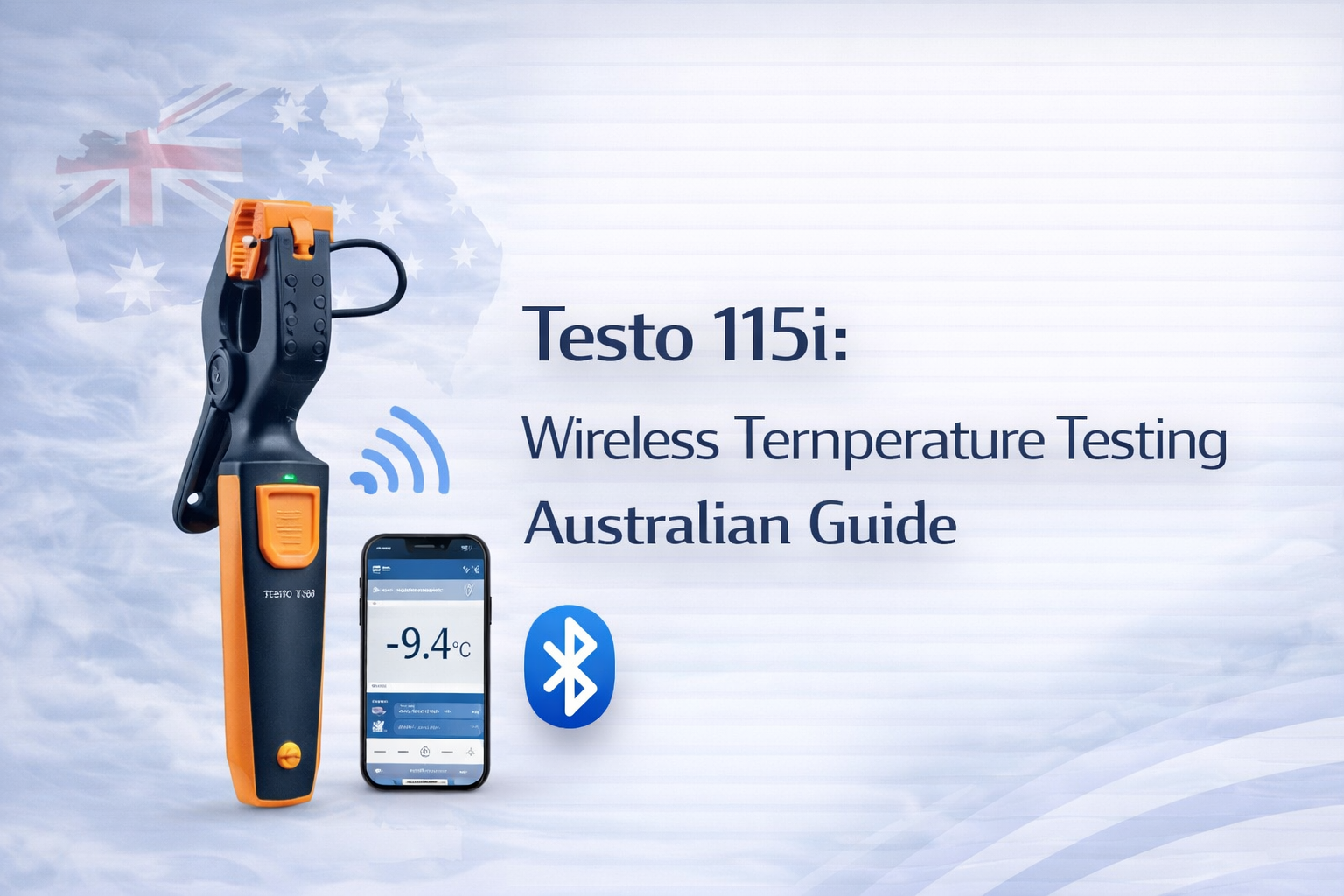
Say Goodbye to Probe Wires
You know the feeling. You’re on a rooftop unit and the wind is doing its best to throw your gear off the edge. Your temp probe lead is snagged on a pipe clip. Your phone is balanced on a casing that is vibrating. You take a reading, then you move, then you take it again because the lead pulled loose. It gets the job done, but it is slow, fiddly, and easy to mess up when you are rushing.
That is the real reason wireless tools have taken off. It is not “tech for tech’s sake”. It is about getting clean numbers with less drama. The testo 115i is one of those tools that feels small in your hand but big in your workflow. It is a testo 115i clamp thermometer that clips on, shows live pipe temperature in the app, and helps you keep moving without dragging probe wires everywhere.
On Australian jobs, that matters more than people admit. Sydney coastal air can be rough on gear and fittings. Brisbane humidity can make comfort issues change fast, so you need stable readings you trust. Melbourne cold snaps can make a system look “fine” until it is loaded up, then the numbers tell a different story. In Darwin’s wet season, heat and moisture can turn a “quick check” into a sweaty grind. A good wireless thermometer hvac setup helps you move faster and stay calmer.
It can also be a safety win. High-rise balconies, plant rooms, and rooftop ladders are not the place for loose leads and extra trips. The more you can clip once and read from a safer spot, the better. That is why the testo 115i is often the first step into the wider Testo Smart Probes ecosystem. It feels built for Aussie conditions because it saves time in the places that usually steal it.

Did You Know? A testo 115i clamp thermometer helps reduce “false temp” errors because it reads the pipe, not the air around it. That is a fair dinkum win on windy rooftops and tight plant rooms.
What Is the testo 115i?
The testo 115i is a Bluetooth wireless clamp thermometer designed for HVAC and refrigeration work. Instead of running a long probe lead to a meter, you clamp the 115i directly onto the pipe. The clamp measures pipe temperature, then sends the reading to your phone through the Testo Smart App using testo bluetooth connection.
In plain Aussie terms, it is a “clip and go” temperature tool. You can watch temperature change live while the system stabilises. You can step back from the unit and still see what is going on. And when the job needs proof, you can capture the result in a neat report. That is why so many techs call the testo 115i the easiest upgrade for daily temperature checks.
That “live view” is the big shift. Wired probes can be accurate, but they are also easy to bump, pull loose, or sit in the wrong spot. That means re-checks. Re-checks mean time. Time means the customer is watching you do the same step twice. A solid wireless thermometer hvac tool cuts that noise.
The testo 115i clamp is made for the temperatures techs see every day. It suits checks on suction lines, liquid lines, and discharge lines. It also suits quick “is this pipe doing what it should?” checks when you want real contact on copper, not a probe tip reading the air around it.
Specs matter, but the real story is how the tool behaves on site. The testo 115i is designed for field decisions where you want a stable, repeatable clamp reading. If you want the exact figures and the current datasheet details, use the official product page so you are working from the latest info.
One more thing that matters in Australia is how the tool fits into the bigger system. The testo 115i is part of the Testo Smart Probes family. That means you can pair it with pressure probes, airflow tools, and vacuum tools to build a full wireless workflow, not just a single temperature reading.

Why the testo 115i Is the Most Popular Temperature Probe
If you ask a few techs what Smart Probe they grab first, the answer is often the testo 115i. That is because temperature is the daily driver measurement. You check it on installs. You check it on service calls. You check it when comfort is off. You check it when charge looks suspect.
The testo 115i clamp makes that daily work easier. It clips on fast. It stays put. It reads the pipe, not the air. And because it uses testo bluetooth to show the number on your phone, you do not have to keep moving your body into awkward spots just to read a screen.
That is why the 115i has a “most popular probe” reputation. It removes small hassles that happen on almost every job. Less fiddling. Less re-checking. Better confidence in the number you write down.
Why Wireless Temperature Testing Feels Faster
Wireless is not magic. It just removes the annoying parts of the job. It removes the wire that catches on a corner. It removes the probe that slips when you bump it. It removes the “hold this here” moment while you try to read a screen at the same time.
On a typical split system service call, you do a few simple things again and again. You take a reading. You make a small change. You confirm the change worked. With a wired setup, every repeat means touching the probe again. With a testo 115i clamp, you set it once and watch the trend.
This matters when access is tight. Think balcony condensers in Sydney high-rise work. Think plant rooms with narrow walkways in Melbourne commercial buildings. Think rooftop units where you want your hands free and your gear secure. A good wireless thermometer hvac workflow helps you keep the job controlled.
Wireless Advantage Clip the testo 115i clamp once, then watch the reading settle while you do other checks. Less re-checking means fewer mistakes, fewer call-backs, and a calmer Friday arvo.
Testo 115i Setup Guide Steps
If you want the quickest start, use this simple setup guide. It is the same flow most techs use on real jobs.
| Step | What to do | Why it helps |
|---|---|---|
| Step 1 | Install the Testo Smart App and switch Bluetooth on. | Gets your phone ready for testo bluetooth pairing. |
| Step 2 | Turn on the testo 115i and open the app to connect. | After first pairing, reconnection is usually quick. |
| Step 3 | Wipe the pipe if needed, then clip the testo 115i clamp onto the target line. | Clean contact gives a steadier number you can trust. |
| Step 4 | Let the system run and watch the live temperature settle. | Steady numbers beat fast guesses. |
| Step 5 | Use the trend view to see change over time. | Great for “before and after” proof. |
| Step 6 | Create a report when the job needs a clean record. | Helps for commercial, warranty, and call-back protection. |
Bluetooth range is always best in open air, but real job sites have metal casings, walls, and interference. The practical rule is simple. Keep your phone on you, not buried in a metal toolbox or left behind a condenser coil. If you do that, the testo bluetooth connection is usually solid enough for normal HVAC work.
Pro Tip Clamp the testo 115i on, then let the reading settle before you decide. A steady number beats a fast guess, especially when you are checking superheat or subcool.

Real-World Australian Use Cases
The best way to understand the testo 115i is to picture it in the jobs you actually do. Wireless temperature measurement is not a fancy toy. It is a daily-driver tool that helps you move faster, stay safer, and explain results better.
Sydney high-rise split systems
Balconies are tight and wind can be rude. You want fewer loose items and fewer moments where you are leaning or reaching. A simple workflow is to clip the testo 115i clamp, step back to a safer spot, and watch the temperature settle while the unit runs.
Brisbane humidity and comfort complaints
In Brisbane and other humid areas, customers often say “it is cold but still sticky”. Temperature is part of the story, but it is not the whole story. When comfort is the complaint, it helps to measure more than one thing without adding mess.
Darwin tropics and wet-season load
Darwin work can be a workout. High moisture and heat load push systems hard. When you can clip the testo 115i once and keep a steady view of temperature while you confirm performance, you reduce time in the worst spots.
Melbourne commercial buildings
Commercial work needs repeatable checks. Wireless temperature readings help you log “before and after” without redoing the setup. A stable wireless thermometer hvac process also helps when you return later and need to compare results.
Perth rooftops and remote jobs
Remote work rewards planning. You want fewer parts, fewer tangles, and fewer missing bits. A matched kit helps you stay organised and reduces “missing one piece” headaches.

Pairing the Testo 115i with Other Testo Smart Probes
The testo 115i is excellent on its own, but it shines when you use it as part of a wireless system. This is where “Smart Probes” stops being a buzzword and becomes a real workflow. You are building a kit that helps you measure faster, explain better, and reduce call-backs.
The most common pairing is temperature plus pressure. When you match testo 115i clamp temperatures with pressure measurements, you can make smarter calls about system performance.
If you want the matching pressure tool, this is the popular pair for refrigerant-side checks: Testo 549i Gen 2 smart high-pressure gauge .
If you do evacuation and you want the same wireless style for vacuum proof, add: Testo 552i app-controlled wireless vacuum probe .
If airflow complaints are part of your week, bring airflow checks into the same “phone as a dashboard” approach with: Testo 410i smart vane anemometer .
If you charge often and you want the wireless idea to keep going through the charging step, this supports app-based workflow: Testo 560i digital refrigerant scale and intelligent valve .
None of this means you must buy everything at once. Start with what you use every day. For most people, that is temperature. That is why the testo 115i stays the most popular probe.
Testo 115i vs Traditional Thermometers
This is where people make the buying decision. They ask “115i vs wired probe” and they want a fair answer. Traditional tools still work. Plenty of good techs use them every day. The real question is whether the testo 115i clamp makes you faster, safer, and more consistent on the jobs you do most.
| Buyer question | testo 115i wireless clamp | Traditional wired probe / analogue | Why it matters in Australia |
|---|---|---|---|
| How steady is the reading? | Clamp contact stays put, so the trend is easy to trust | Leads can move, probes can slip, and you can get more re-checks | Windy rooftops and tight access make “probe slip” a real problem |
| How fast is setup? | Clip on, open the app, and you are reading | Often fine, but the lead adds a snag point and extra handling | Faster setup helps when the customer is watching and access is awkward |
| Can I read from a safer spot? | Yes, testo bluetooth lets you step back while keeping eyes on the numbers | Limited by cable length and where the meter can sit safely | High-rise and rooftop work improves when you reduce trips and clutter |
| Can I show proof to a customer? | Yes, the app can show trends and create reports | Mostly manual notes and photos, or “trust me” conversations | Reports reduce call-backs and help with commercial records |
| Is it worth the money? | Often yes if you value speed, safety, and repeatable workflow | Cheaper upfront, but can cost time and errors over a year | Time savings matter when you are doing multiple jobs every week |
Safety and Compliance in Australia
Tools do not replace safe work methods. Wireless tools can support safer habits, but you still need to work to your training, your employer’s site rules, and your WHS and OH&S duties.
On many sites, “safety” is the basics done well. Keep gear secured. Keep walkways clear. Reduce trips up and down ladders. Avoid loose leads that create trip points. These habits line up with the kind of expectations you see across WorkSafe thinking.
If you handle refrigerant, licensing and good records matter. In Australia, the ARCtick scheme is the key starting point for licensing and compliance information. This is not legal advice, but if you want the official source, use the ARCtick website here: ARCtick official refrigerant handling licensing information .
It is also worth being aware that refrigeration safety standards exist for a reason. Techs will often hear AS/NZS standards referenced on larger jobs, especially in commercial settings. The practical point is the same. Use safe methods, use the right tools, and document what you did.
Buying Guide: The Clean Upgrade Path
If you want a simple upgrade, start with the tool that removes daily pain. That is the testo 115i: testo 115i smart clamp thermometer operated with your smartphone .
If you prefer to buy as a matched set, this is the common starting bundle: Testo Smart Probes AC & refrigeration test kit .
If your week includes a lot of comfort complaints, the kit plus option is often the tidy move: Testo Smart Probes AC & refrigeration test kit plus .
If you want one case that covers more job types, the bigger bundle can be the “buy once, use daily” option: Testo Smart Probes HVAC/R ultimate kit .
FAQs
Is the testo 115i only for experienced techs?
No worries. It is great for apprentices and newer techs too, because the app-based workflow makes measurements feel more guided. You still need good fundamentals, but the tool helps you capture data cleanly and learn faster.
Is the testo 115i clamp a good wireless thermometer hvac choice?
Yes, for pipe temperature checks. It is fast to clip on, the reading is easy to see, and it is easy to repeat checks after changes. That is why the testo 115i is a popular first buy.
Does testo bluetooth work well on job sites?
Most of the time, yes. Keep the phone on you and avoid leaving it behind metal panels. Job sites have interference, but simple habits keep the connection stable.
Is wireless testing “compliance” by itself?
No. Tools support safe work, but they do not replace licensing, site rules, or proper job notes. Wireless probes can help you document work better, but you still need to follow the rules that apply to your work.
Build Your Wireless Kit
If you are sick of probe wires, the testo 115i is a solid first step. It makes pipe temperature checks quicker, cleaner, and easier to repeat. It also helps you explain results better because you can show live readings and trends instead of relying on memory.