
Reviewed by: the HVAC Shop Technical Team
Published: September 2024
Last reviewed: April 2026
Learn the Important Factors When Buying HVAC Gauges
Whether you are just starting out in the trade or you have been working HVAC jobs across Australia for years, your gauges are one of the most important tools you will ever own. Every pressure reading you take feeds directly into your decisions. Charge too high, you risk damaging the system. Charge too low, performance drops and callbacks follow. That is why choosing the right gauge is not just about preference. It is about accuracy, reliability, and protecting your reputation on the job.
👉 Browse professional HVAC refrigerant gauges for accurate diagnostics in Australian conditions built for real-world tradie use.

From residential split systems in Sydney to rooftop package units in Perth, gauges are used constantly. They are not a once-in-a-while tool. They are on every service call, every install, and every diagnostic job.
Incorrect pressure readings are one of the most common causes of HVAC misdiagnosis, often leading to unnecessary part replacements.
Why HVAC Gauges Matter
HVAC gauges allow you to see what is happening inside a sealed refrigeration system. Without them, you are working blind. Pressure readings tell you if refrigerant levels are correct, if restrictions exist, and whether the system is operating efficiently.
They are used during charging, evacuation, diagnostics, and leak detection. Every step of HVAC servicing depends on accurate readings. A reliable gauge removes guesswork and improves decision-making.
Using accurate HVAC gauges for system charging and diagnostics ensures you are making the right call every time.
Evacuation, Micron Behaviour, and Gauge Accuracy
Evacuation is one of the most critical stages of HVAC work. During this process, vacuum pumps remove moisture and non-condensables from the system. Gauges play a key role in confirming whether the system is dry and ready for charging.
Micron readings indicate system cleanliness. Stable low micron levels suggest effective evacuation, while rising readings point to leaks or moisture contamination. Gauges that lack precision can give misleading results, leading to incomplete evacuation.
In real-world conditions, especially in humid areas like Brisbane, moisture removal is harder. Accurate gauges ensure you do not rush the process.
Never rely on time alone during evacuation. Always verify with accurate gauge readings before charging the system.
Factors to Consider When Buying HVAC Gauges
Durability
HVAC tools take a beating. Gauges are dropped, exposed to heat, and stored in utes under harsh conditions. In Perth’s extreme heat or Sydney’s coastal environment, durability becomes critical.
Look for solid construction, reinforced housings, and quality seals. A durable gauge lasts longer and maintains accuracy over time.
Refrigerant Compatibility
Modern systems use a range of refrigerants, including R410A and R32. Older systems may still use R22. Your gauge must support the refrigerants you work with regularly.
A versatile gauge saves time and reduces the need for multiple tools on site.
Analog vs Digital Gauges
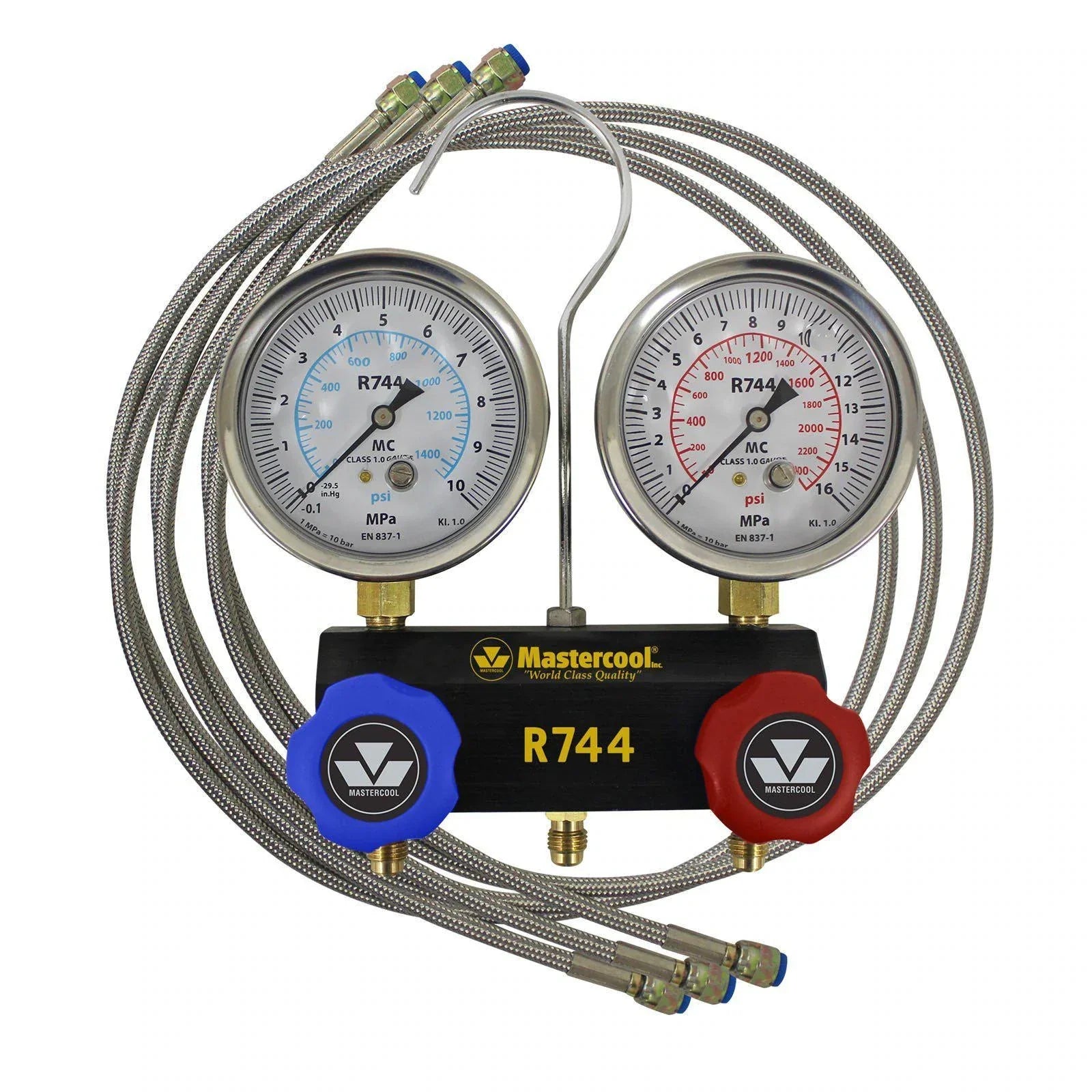
Analog gauges have been used for decades and remain popular for their simplicity and reliability. They do not rely on batteries and provide immediate visual readings.
Digital gauges, however, offer higher precision, data logging, and advanced diagnostics. They allow technicians to capture and analyse readings more effectively.
Digital gauges with Bluetooth can streamline workflows, especially for solo technicians working in tight spaces.
Display and Readability
Clear visibility is essential when working in bright sunlight or low-light environments. Gauges with backlit displays and large, easy-to-read numbers improve usability and reduce errors.
Accuracy
Accuracy is non-negotiable. Even small deviations can lead to incorrect charging and system imbalance. High-quality gauges maintain consistent accuracy over time, reducing the risk of misdiagnosis.
Additional Features
Modern gauges include features that improve workflow efficiency. These include hands-free hooks, protective cases, Bluetooth connectivity, and data logging capabilities.
These features are not just convenient. They reduce time on site and improve job quality.
Price and Warranty
While budget tools may seem appealing, investing in quality gauges pays off long term. Reliable tools reduce callbacks, improve efficiency, and last longer.
Comparison Table: HVAC Gauge Types
| Type | Best For | Strength | Limitation | Real-World Use |
|---|---|---|---|---|
| Analog Gauges | Basic servicing | Reliable and simple | Limited features | Quick residential checks |
| Digital Gauges | Advanced diagnostics | High precision | Requires power | Detailed system analysis |
| Bluetooth Gauges | Modern workflows | Remote monitoring | Battery dependency | Commercial and rooftop jobs |
Real Tradie Scenarios
On residential jobs in Sydney suburbs, analog gauges often provide quick, reliable readings for routine servicing. In Melbourne, where systems vary widely, digital gauges offer better diagnostics.
On commercial rooftops in Perth, Bluetooth gauges allow technicians to monitor systems remotely, reducing time spent climbing up and down ladders.
Each environment demands a different approach, and choosing the right gauge improves efficiency and safety.
Common Mistakes When Buying HVAC Gauges
Many technicians make the mistake of choosing gauges based on price alone. Others overlook refrigerant compatibility or fail to consider jobsite conditions.
Ignoring durability can also lead to frequent replacements. Choosing the right gauge from the start avoids these issues.
Best HVAC Gauges in Australia
Professional-grade gauges are designed to handle Australian conditions. They provide accurate readings, withstand harsh environments, and improve workflow efficiency.
👉 Explore best HVAC refrigerant gauges for Australian tradies and upgrade your toolkit.
Key Takeaways
HVAC gauges are essential for accurate diagnostics and system performance. Choosing the right gauge improves efficiency, reduces errors, and protects your reputation on site.
FAQs
Q: Are digital gauges better than analog?
Digital gauges offer more features, but analog gauges remain reliable.
Q: What refrigerants should my gauge support?
At minimum, R410A and R32.
Q: How often should gauges be calibrated?
At least once a year.
Q: Are Bluetooth gauges worth it?
Yes, especially for efficiency and remote monitoring.