
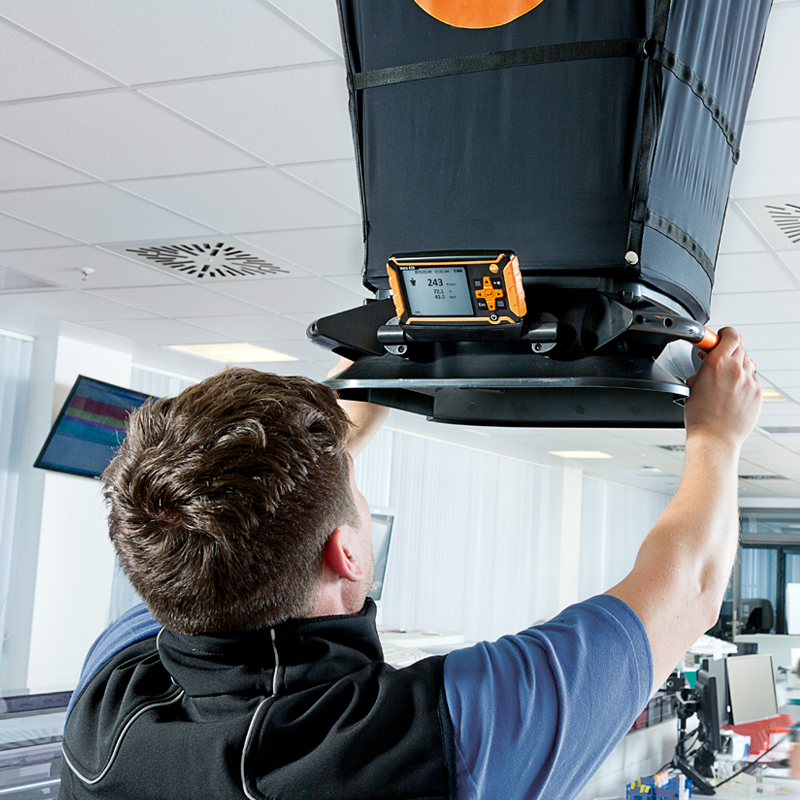
Learn why we need to have a balanced airflow in our house using the air balancing hood.
The process of evaluating and regulating an HVAC system to deliver the proper amount of air to each area of a building is air balancing. An air balancing hood is the most frequent equipment used in air balancing. It monitors the volume of air coming out of a diffuser. It discovers places in the system where it has limited flow.
Air balancing hoods give fast and accurate direct air volume assessments at diffusers and grilles. It's also simple to operate by one person, and come with various creative accessories to help you work more efficiently. Plus, it increases worker productivity by reducing time on the job site. It often results in increased profitability and assisting in creating a healthy and energy-efficient environment.
Why We Need A Balanced Air?

Air balancing ensures that all of the rooms in your building receive the appropriate amount of warm or cold air. It ensures that the entire facility is comfortable all year.
Uniform if a furnace or air conditioner is efficient and well-maintained, there's a risk it's not producing even airflow throughout the building. It's because the system relies on the ductwork of the building to distribute the heated or cooled air.
You can irregularly distribute air or create negative air pressure in the building due to problems with the system or the ductwork. As a result, certain rooms never attain a tolerable temperature, cold winds develop, and regions feel stuffy or humid compared to the rest of the structure.
Air balancing is a means of detecting faults with your heating and cooling system generating unequal airflow or negative air pressure. Once discovered, you can address these issues so that each space receives the proper amount of air. You will gain in a variety of ways.

Benefits of Air Balancing
- Better comfort: Better airflow implies more consistent temperatures throughout the structure and fewer chilly drafts from outside air being brought in. Comfort encourages productivity in business buildings and schools. Building residents will not need to wear jackets and sweaters only to use areas of the building that are always cold.
- Improved air quality indoors: Low airflow encourages contaminants like pollen and mould spores to accumulate indoors. It can also make a place feel stuffy and stale. Everyone in your building will breathe cleaner, healthier air if you have balanced airflow.
- Lower energy expenses: Once the temperature in one location never appears to be quite right, it's tempting to compensate by turning up the heat or turning down the A/C temperature across the building. It's a waste of energy. You won't have to do this after you've fixed the ventilation in your building. You can set energy-efficient thermostat temperatures while maintaining a comfortable environment in each room.
What Does Air Balancing Involve?
A specialist will bring in diagnostic equipment to test various areas of your system's functionality. Air balancing hoods are put over the air supply registers to measure the amount of air entering through. Technicians use manometers to detect any obstructions by measuring air pressure. They measure humidity levels by using hygrometers. Experts use the results of these tests to create a report that summarizes how well the unit is performing.
Due to air leakage, damaged ducts are a common source of airflow imbalances. You can mend small holes while you can replace collapsed flex ducts and seriously damaged fibreglass or sheet metal ducts if they are correctly fitted and sealed. Then, you can address the discovered issues.
In other circumstances, design errors cause the airflow's imbalances. Undersized ducts, extremely long duct lines, and duct runs with multiple abrupt curves are potential design faults. It's especially common in multi-story structures. While a comprehensive redesign isn't always feasible, you can usually redesign the most troublesome sections to ensure proper ventilation.
Blockages can also cause airflow imbalances. These are frequently caused by deteriorated insulation, or a foreign object pulled into the duct system, such as an outdated air filter. You can restore a room's airflow simply by removing the obstruction.
HVAC Shop Air Balancing Hood
Shop for quality air balancing hoods in Australia here at HVAC Shop. We offer TSI and cc and other hood and frame kits for you.
Testo

Testo is a well-known brand in the HVAC industry, with a reputation for adaptability and high-quality German engineering. Although Testo is a newcomer to the airflow industry, their primary product, the Testo 420 flow hood, puts the TSI series a run for its money. Testo also offers NIST certification for the flow hood and a variety of cloth sizes for measuring various grille diameters. Check out what this German powerhouse firm has to provide if you trust the Testo name and want an amazing flow instrument.
TSI

HVAC Shop also offers TSI brand air balancing hoods. The TAB and flow industry's most well-known and renowned name is TSI, which also owns the Alnor trademark. A TSI flow hood is one of the most precise and tried-and-true instruments available. The TSI and Alnor brands provide a wide range of air balancing tests, including normal and "Lo-Flo" flow measuring hoods. Every instrument comes with a NIST calibration certification, ensuring that the stated accuracy is backed by a government-approved calibration facility. This feature is very useful for technicians because of the slight changes in flow that cause the air balancing process. TSI Alnor also has a variety of flow hood fabric sizes for various air registers, measuring accessories such as velocity matrices, and portable instruments such as precision anemometers. In general, TSI Alnor is regarded as one of the most reliable names in airflow analysis and balancing.
Buy quality and authentic air balancing hoods in Australia only here at HVAC Shop. We can guarantee quality in our products to make your life easier.