
Find the Best Manometer for HVAC Techs!
Hey there, HVAC enthusiasts! Ready to dive into the amazing world of manometers? Whether you're a seasoned tech or just getting started, choosing the right manometer can make your job a breeze. So, grab your toolbox, kick back, and let’s explore everything you need to know to find the perfect manometer for you!
Table of Contents
- What Does a Manometer Do?
- Types of Manometers
- How to Use Different Types of Analog Manometers
- How to Use a Digital Manometer
- Where to Use Manometers
- How to Read a Manometer
- How to Make a Manometer
- Find the Best Manometer For You!
WHAT DOES A MANOMETER DO
The manometer is a device that uses a liquid column to measure pressure. Pressure, as we all know, is the force per unit area.
When it comes to detecting low air pressure accurately, nothing beats balancing a liquid column of fixed weight against it and then recording the height of the balanced liquid column.
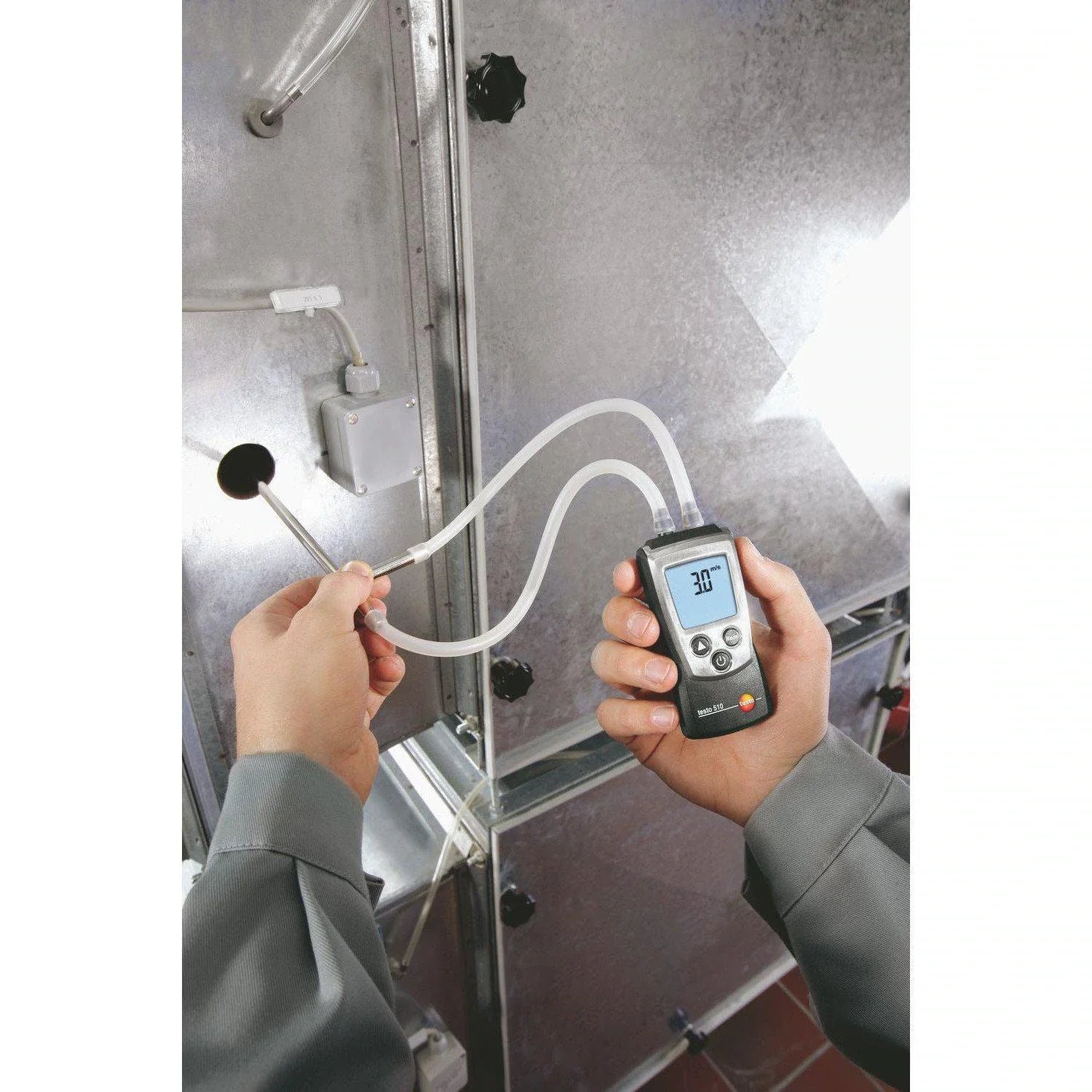
HVAC techs use manometers to measure duct static and differential pressures. To measure pressure, the first manometers used glass U-tubes filled with water.
TYPES OF MANOMETERS
A manometer is an HVAC equipment that measures the pressure exerted in a fluid column, which can be either liquid or gas. Manometers come in various shapes and sizes, and you can use them for multiple purposes. Techs use manometers to measure gas and liquid. In reality, we routinely measure gas pressure in the HVAC industry. You can now use electronic sensors in place of the fluid column in manometers. The first mass-production of these sensors was for the vehicle emissions control market.
Analog and digital manometers are the two most common varieties. Analog manometers are better when you want to get a "feel for the reading" by seeing the dial move. On the other hand, most technicians prefer digital manometers because they provide a constant reading without the need to squint and try to match up a needle with the numbers behind it (the parallax effect).
Analog Manometer
Analog manometers can use a fluid in a U-shaped tube to evaluate the pressure. When there is no pressure in an analog manometer, the liquid settles in the middle of the tube, indicating no pressure. The fluid moves up the scale behind it if the pressure is higher on one side of the tube; the movement of the fluid up the scale behind it reveals the air pressure. When balancing the liquid weight between two pressures, the U-tube manometer detects differential pressure. Less dense liquids, such as water, are widely employed to quantify minor pressure variations in the HVAC industry.
Certain technicians prefer analog manometers because they do not require a power supply. Unlike a battery-powered electronic manometer, they will not run out of power unexpectedly. Another reason why some professionals favour these meters is that they're simple to use and read.
A different technology is used in one of the classic analog manometers. A diaphragm is a sensitive component in the Dwyer Magnehelic(R). When pressure is applied to the diaphragm, the pointer of the Magnehelic(R) moves to show the pressure level being measured, thanks to a set of mechanical linkages, a magnet, and a helix as jewelled bearings.
Digital Manometer
Digital manometers, unlike analog manometers, don't measure pressure using hydrostatic equilibrium. A pressure sensor or transducer detects pressure in digital HVAC manometers. Pressure transducers translate measured pressure levels into an electrical signal, which can subsequently be utilized to determine the pressure.
Most technicians prefer digital manometers since they are more compact and easy to transport. Easy-to-read displays are also included on digital manometers, which help avoid mistakes. Another benefit of a digital manometer is that data can be captured (or logged) and communicated to computers or apps on phones and tablets via cable or Bluetooth. They also don't utilize any obnoxious liquids.
HOW TO USE DIFFERENT TYPES OF ANALOG MANOMETERS
U-Tube Analog Manometers
The notion of Hydrostatic Balance is used in analog manometers, which use a fluid confined in a U-shaped tube. If two ends of the tube are open to air pressure, the fluid will settle to the same height in each leg. However, if positive pressure is given to one of the U-shaped tube's legs, the liquid level will fall in that leg while rising in the other. The pressure will cause the fluid to descend in one leg and grow in the other until the weight of the fluid column formed by the applied pressure is sufficient to counteract the pressure value.
As a result, the vertical distance between the fluid levels in the tube's two legs is a measure of the pressure being applied. The pressure value (P) observed is a function of the fluid used in the manometer's height (h) and density (), with the value (g) indicating the gravitational constant. U tube manometers are one of the most frequent types of analog manometers.
Well-Type Analog Manometers
The well-type manometer, often known as a cistern manometer, is another analog manometer. The well-type manometer is similar to the U tube form, except that one of the U's legs has a substantially bigger cross-sectional area than the other. When exposed to pressure, this configuration causes the fluid level in the bigger leg to change less, effectively permitting the use of a single scale to acquire the pressure value rather than two scales in the U tube form.
Inclined Analog Manometers
Inclined manometers have a tube that doesn't sit vertically. But rather at a shallow inclination to the horizontal plane, as the name implies. This design allows the instrument to detect a little pressure change, improving sensitivity and resolution.
Absolute Manometer
An absolute manometer is another form of a manometer. Absolute manometers have a sealed leg that only exposes one portion of the manometer tube to the outside pressure. A vacuum situation prevails on the sealed side, which symbolizes absolute zero pressure enclosed by a mercury column. As a result, the manometer measures total pressure rather than gauge or differential pressure. This manometer can be either the good style or the U tube version described above. Professionals usually use absolute manometers to measure atmospheric pressure with mercury barometers.
HOW TO USE A DIGITAL MANOMETER

Digital manometers don't rely on the hydrostatic balance of fluids to estimate pressure. Instead, they have a pressure transducer, a device that can convert an experienced pressure level into an electrical signal with a characteristic value proportionate to, or a proxy for, the pressure magnitude. The elastic part of the transducer deflects under pressure. Then, it translates into an electrical parameter value that you can detect and calibrate to a pressure reading. Pressure transducers often have resistive, capacitive, or inductive electrical properties.
- The electrical resistance of a strain gauge changes because of resistive transducers.
- Capacitive transducers depend on variations in capacitance measured due to deformation shifting the relative positions of two capacitor plates.
- Inductive transducers change the linear motion of a connected ferromagnetic core inside a coil or inductor by deforming the elastic part. The induced electromagnetic fields and AC generated in the coil change due to this movement.
Additional pressure transducer styles, such as a Pirani gauge, thermocouple type transducer, and ionization gauge, measures very low pressures. Micromanometers are sometimes known as low-pressure manometers.
WHERE TO USE MANOMETERS
We use manometers to monitor pressure and flow rate in various industries. The following are some examples of common applications:
- Maintenance of HVAC systems
- Monitor weather and meteorological conditions
- Monitoring of gas pressure in pipe systems
- Measurements of fluid flow
- Blood pressure and other physiological measurements
- Monitors the operation of compressor systems
HOW TO READ A MANOMETER
Reading an Open-End Manometer
Step 1: Set the zero reference.
Because each end of each column is open to the air, the liquid inside each column is the same height. This happens because the pressure on both legs of this open-end manometer is equal. The tube establishes a zero reference because the liquid maintains at the same height on both legs.
Step 2: Measure Difference in Height
Assume it to be the zero point, and connect one leg to an unknown pressure while the other remains open to the air. The liquid will migrate away from the higher pressure source if the pressure between the two ends differs. (Assume that the higher pressure applies to the left part of the manometer in this case.) The liquid in the left leg decreases while the liquid in the right leg increases.
The liquid will continue to move as long as the liquid weight does not precisely balance the pressure. Make a note of the new levels with a marker. Calculate the distance between the two-column heights.

Step 3: Calculate Pressure Difference
It would help if you first converted non-metric units to metric units. Convert your manometer values to normal pressure units later.
The difference in forces per unit area of a manometer's liquid columns determines the resulting pressure, which is measured in newtons per square meter (pascals) or pounds per square inch (pounds per square inch) (psi).
You'll see that the manometer is typically employed to treat column level fluctuation as a single unit. It is displayed in centimetres or mercury inches at a specific temperature, which can then be translated to standard pressure units using a table.
Every pressure reading is a differential reading. Take any pressure as your reference, whether air pressure or 0 absolute pressure (an entire vacuum).
The measured pressure is the one that exceeds atmospheric pressure, which is 76 cmHg, 101.3 kPa, or 14.7 psi, with one end exposed to the atmosphere.
The pressure difference can be calculated using the formula below:
Δp = P2-P1 = ρgh
Formula Legend:
- Δp = Differential pressure
- ρ = density of the liquid (mercury) in the column
- g = acceleration due to gravity
- h = difference in the column levels
- P2 = pressure at the higher pressure end
- P1 = pressure at the lower pressure end
Reading a Close-Ended Manometer
Step 1: Mark Zero Difference
Like open-end manometers, the liquid has a level while at rest. As a reference point, this liquid level is used. It's worth mentioning that there's no direct air contact here.
Step 2: Measuring Liquid Travels
If you've ever used a barometer, you'll see that a manometer and a barometer are very similar. Because the distance the liquid travels inside the two arms of the U-tube, h, is precisely proportional to the container's gas pressure, it works like a barometer.
Fill the container with an unknown gas or liquid to determine the pressure. Apply positive pressure on one end (not the closed end). Keep an eye out for the reference to zero.
It causes the liquid in one leg to be pushed down, causing the liquid in the other leg to rise. You can measure the movement of the fluid in terms of distance—the height difference, h, between the zero reference point and the current height.
Step 3: Calculate Pressure Difference
All of the steps are identical to those of an open-end manometer. You can now proceed to the computations after converting to standard units.
The manometer reading is quite simple for closed-end manometers. You need to know the density, gravity's acceleration, and the height difference - and you're done!
You may quickly compute the pressure differential of any unknown gas or liquid using this easy method.
Δp = ρgh
Formula Legend:
Δp = Differential pressure
ρ = density of the liquid (mercury) in the column (at a particular temperature)
g = acceleration due to gravity (at a particular elevation and latitude)
h = difference in the column levels
Reading a Manometer If Vacuum is Applied
- The liquid in one leg of a U-tube manometer rises when you apply vacuum to one end. As a result, the liquid falls into the opposite leg.
- Using a zero reference, you calculate the height difference, h. The vacuum amount is calculated as the difference between the above and below zero values.
Reading a Reservoir Manometer
When you apply pressure to a reservoir manometer well, the liquid level drops significantly compared to the level rise.
Reservoir manometers, unlike U-tube manometers, have connection directions written on them. The scale graduations of a column are corrected to correct the drop. It allows for the formation of an absolute differential pressure reading.
The actions to take are as follows:
- Connect the well to the pressures, which are substantially greater than atmospheric pressures. Those with lower pressure than atmospheric pressure can directly connect to the manometer tube.
- When it comes to differential measurements, make sure the larger pressure is well connected to the manometer.
- When it comes to raised-well manometers, the well-connected can be used for vacuum and gauge measurements.
Reading a Digital Manometer

A digital manometer can overcome any limits that your liquid manometer has. They have outputs that govern how measurement data is transferred. They are easy to use and come in portable sizes.
When utilizing liquid manometers to measure pressure, you must manually correct for normal gravity and density conditions. This process is simplified with digital ones because you can overlook some corrective elements. You might balance out the rest afterwards for use within the software.
A digital manometer with dual ports requires swapping sensors to change measurements for absolute pressure and differential gauges.
Find the Best Manometer For You!
Check out our guide to the best analog and digital manometers if you're thinking about replacing your manometers. Before choosing the correct manometer for you, keep in mind what measurements you'll be reading the most.
Contact our staff to learn more about which manometer is best for your next project.