
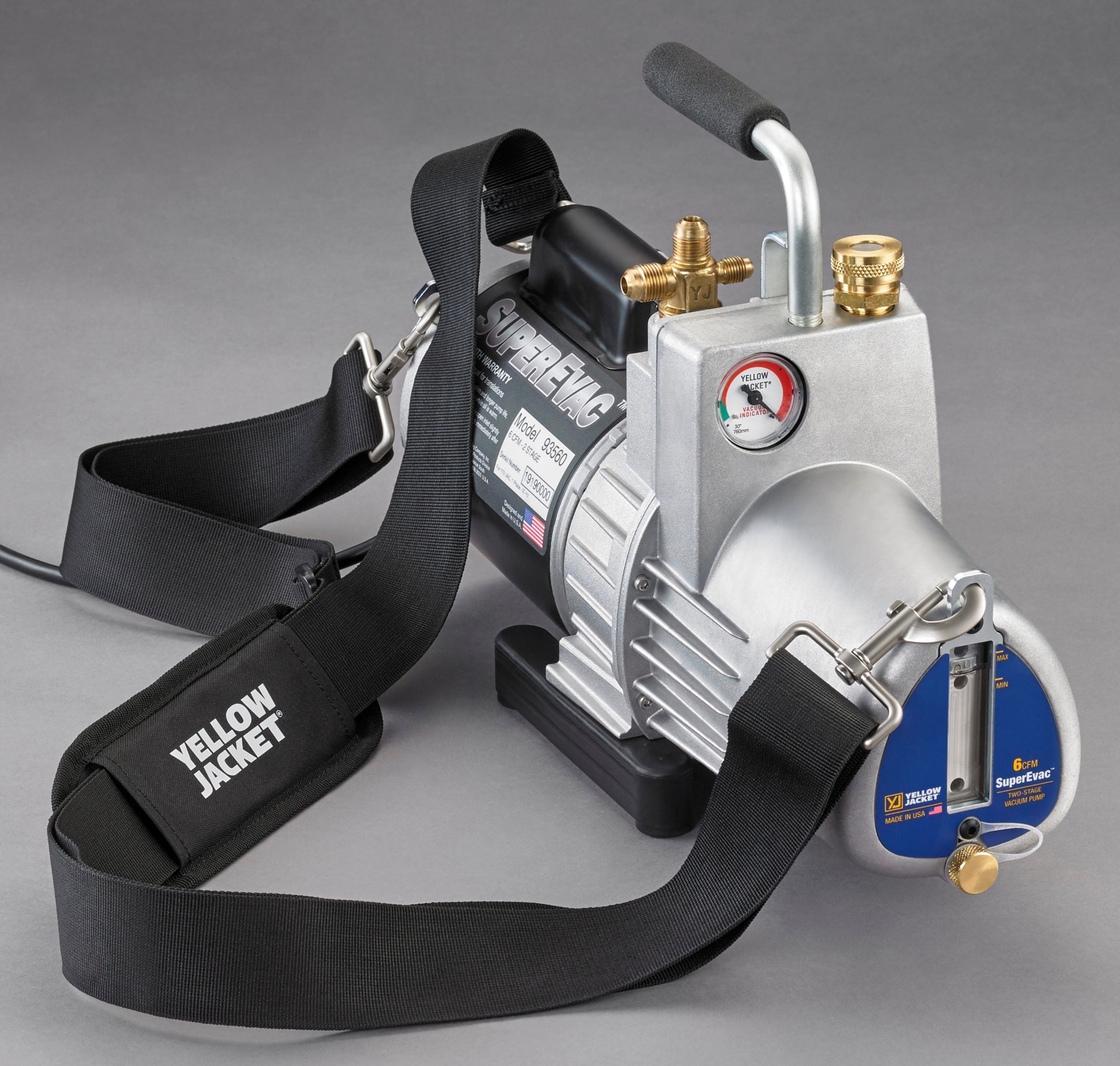
Yellow Jacket Vacuum Pumps: The Aussie Tech’s Reliable Choice
When you’re pulling down to deep vacuum on a tight deadline, your pump can’t be the weak link. Yellow Jacket vacuum pumps are known for durability, easy maintenance, and consistent performance—whether you’re servicing a split system in Sydney or commissioning a commercial chiller in Perth.

Why Techs Pick Yellow Jacket
- Proven reliability: Robust build with protection features designed for real jobsite conditions.
- Smart protection: Gas ballast and thermal overload safeguards help protect the motor and oil quality.
- Fast, clean maintenance: Large reservoir, easy-read sight glass, and simple oil changes keep you moving.
- Right size for the job: Multiple CFM options cover residential service through to larger commercial systems.
Popular Models (Benefit-Led)
Residential & Light Commercial
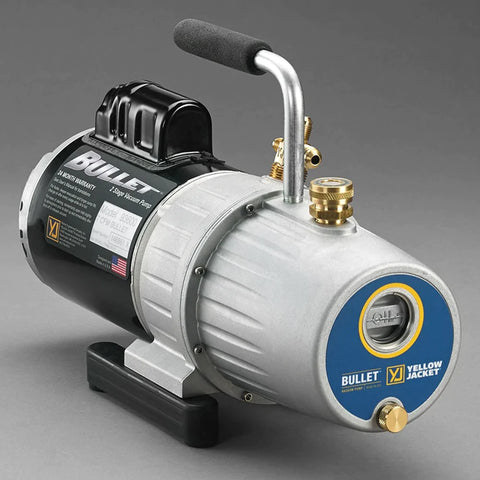
Yellow Jacket 3 CFM Bullet (93623) — compact and dependable for everyday call-outs and small systems.
Yellow Jacket 5 CFM Bullet (93625) — a great all-rounder that balances speed, weight, and price for most split-system and multi-head work.
Pro Speed for Busy Crews
Yellow Jacket 7 CFM Bullet (93620) — faster evacuation on bigger residential jobs and light commercial systems to free up time on site.
Heavy Hitter
Yellow Jacket 11 CFM SuperEvac (93598) — built for large refrigerant circuits and demanding commercial installs where speed matters.
Features That Make the Difference
- Gas ballast valve: Helps reduce moisture contamination for more stable vacuum performance.
- Thermal overload protection: Added safety margin under heavy load or hot conditions.
- Anti-backflow/anti-oil migration design: Protects the system if power is interrupted mid-pull.
- Service-friendly layout: Sight glass and accessible fill/drain points make oil changes quick between jobs.

Who It’s For
- Residential techs: Reliable day-in, day-out pulls on splits, cassettes, and heat pumps.
- Commercial contractors: Higher CFM options to accelerate evacuations on larger plant.
- Service managers: Lower downtime and simple maintenance = better utilisation across the team.
Quick Care Tips (Maximise Pump Life)
- Warm the pump for a few minutes, then open the gas ballast early in the pull to help drive off moisture.
- Use clean vacuum-rated oil; change when it darkens/clouds or after wet systems.
- Keep hose runs short with minimal fittings; use core-removal tools to speed evacuation.
- Store the pump upright and capped to keep dust and moisture out between jobs.

Why Yellow Jacket Pays Off
- Lower total cost of ownership: Durable components + quick serviceability = fewer replacements over time.
- Consistent field results: Trusted by techs for tight vacuums and fewer callbacks.
Ready to Choose?
- 3 CFM Bullet (93623) — compact everyday pump
- 5 CFM Bullet (93625) — most versatile all-rounder
- 7 CFM Bullet (93620) — faster turnarounds
- 11 CFM SuperEvac (93598) — commercial speed
Tip: Pair with quality vacuum hoses, core-removal tools, and a micron gauge for best results.
FAQs
What CFM do I need?
For single and multi-split systems, 3–5 CFM suits most jobs. Step up to 7–11 CFM for larger charge volumes or commercial plant to reduce evacuation time.
How often should I change the oil?
Check after every wet system. As a rule, change when oil looks cloudy or discoloured, or per manufacturer guidance during heavy use.
Do these pumps include gas ballast?
Current models feature gas ballast to help reduce moisture contamination during evacuation.
Can I run the pump in high ambient temps?
Yes—thermal protection helps, but ensure good airflow around the pump and follow duty recommendations.