
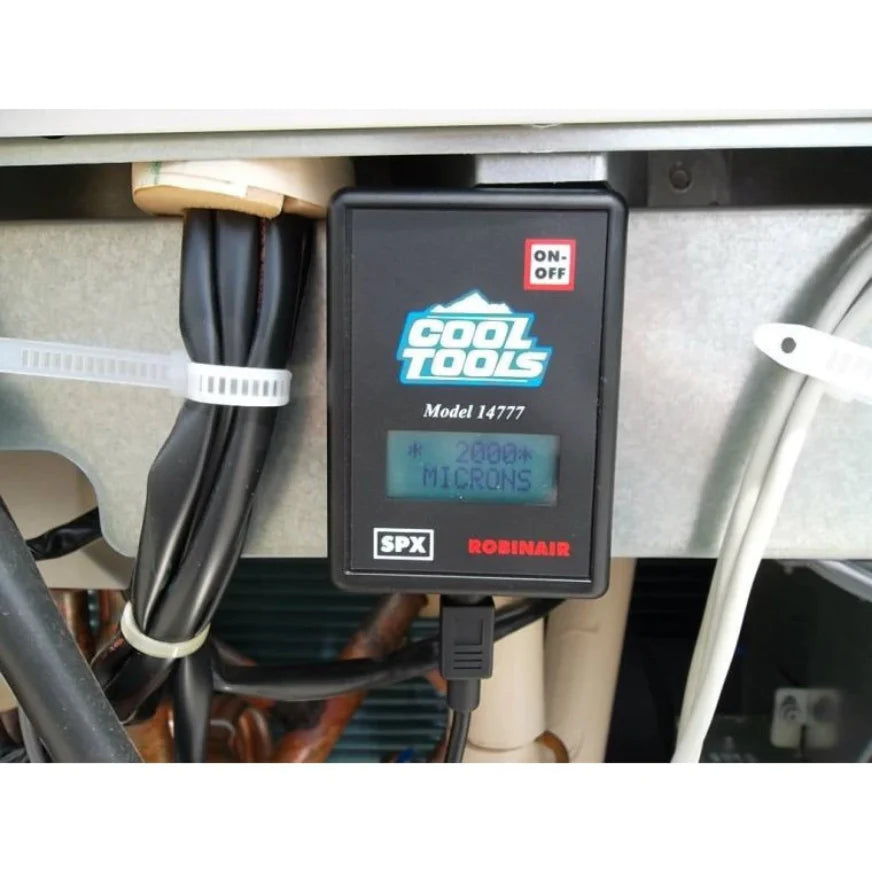
Vacuum Pressure Gauges: Your Essential HVAC Tools
In our world, pressure is an everyday phenomenon - we feel it in the atmosphere, in the water, and even in the vacuum. But how can you measure pressure, especially when dealing with HVAC systems or other intricate processes? Welcome to the comprehensive guide on vacuum pressure gauges, the unsung heroes of the HVAC world.
What is a Vacuum Gauge?
A vacuum gauge is an essential tool used to measure pressure in a vacuum—different from atmospheric or hydraulic pressure. In simpler terms, it tells us how much less the pressure inside a system is, compared to the regular atmospheric pressure. Whether you're an HVAC technician, a scientist, or a curious hobbyist, understanding the role of vacuum gauges is crucial.
Why is a Vacuum Gauge Important?
The answer lies in the nature of the systems they monitor. In HVAC systems, for instance, vacuum gauges help ensure refrigerants are adequately removed before charging the system. This is vital in achieving optimum performance, maintaining energy efficiency, and preventing damage or failure.
The Physics Behind Vacuum Gauges

Before we delve into different types of vacuum gauges, it's essential to understand how they work. Vacuum gauges, at their core, measure a difference. They compare the pressure in the system (or vacuum) to a reference pressure—usually atmospheric—and display the difference.
Different gauges use various methods to accomplish this, from mechanical techniques like Bourdon tubes, diaphragms, or capsules, to electronic techniques using thermocouples or ionization. This range of methods allows gauges to effectively measure pressure from high vacuum (very low pressure) to positive pressure situations.
Types of Vacuum Gauges
There are primarily three types of vacuum gauges:
-
Mechanical Gauges: These gauges physically respond to changes in pressure. For instance, a Bourdon tube gauge has a curved tube that straightens out when pressure decreases. Mechanical gauges are simple, robust, and don't need a power source, but they're less accurate at very low pressures.
-
Thermal Gauges: These gauges measure the rate at which heat is dissipated in a vacuum. Because this rate depends on the number of molecules present, it gives an accurate measure of vacuum pressure. Thermocouple and Pirani gauges fall under this category.
-
Ionization Gauges: These are the most sensitive and complex vacuum gauges. They ionize gas molecules and measure the resulting current, which is proportional to pressure. However, they require a good initial vacuum to operate effectively and are more susceptible to damage and contamination.
Choosing the Right Vacuum Gauge

The best gauge for you depends on your requirements. For instance, if you need to measure a high vacuum, such as in an HVAC system evacuation, a combination of a Pirani gauge for the rough vacuum (higher pressure) and an ionization gauge for the fine vacuum (lower pressure) might be the best fit.
Using a Vacuum Gauge in HVAC Systems
In HVAC applications, vacuum gauges are used primarily during system evacuation - a crucial process in the installation or servicing of a system. The evacuation removes air and moisture from the system, preventing efficiency loss, damage, and even system failure.
If you're an HVAC professional, having a reliable vacuum gauge can be the difference
between a job well done and a potential callback. An accurate vacuum gauge ensures that you have achieved a deep enough vacuum in the system. This is the only way to ensure all non-condensables, including oxygen and nitrogen, have been removed. Failing to do this can lead to premature failure of the system and significantly reduced performance.
Maintenance and Calibration
For any vacuum gauge to serve its purpose effectively, regular maintenance and calibration are key. Dirt, oil, and other contaminants can degrade performance over time, while mechanical and thermal gauges can drift from their original calibration due to wear and tear. To ensure reliable and accurate readings, it's recommended to clean your vacuum gauges regularly and have them calibrated by a professional at least once a year.
Ionization gauges require special care. Because they are sensitive to contamination, they should be operated only in clean environments and switched on only after achieving a suitable vacuum. Also, their ionization filaments can burn out with time, requiring replacements.
Additional Features to Look For

Modern vacuum gauges come with an array of additional features that can significantly improve their usability. Here are a few you might find useful:
-
Digital Display: Many vacuum gauges now feature digital displays that are easy to read and interpret.
-
Multiple Units: Vacuum pressure can be measured in different units like Pascal (Pa), Torr, or inches of Mercury (inHg). A gauge that can display multiple units can save you the hassle of manual conversions.
-
Data Logging: Some advanced vacuum gauges can log data over time. This can be incredibly useful for applications where you need to monitor pressure changes over extended periods.
-
Connectivity: Wi-Fi or Bluetooth-enabled vacuum gauges allow for remote monitoring and control. This can be especially useful in complex systems where the gauge isn't easily accessible.
The Future of Vacuum Gauges
As technology advances, so do vacuum gauges. We're seeing the rise of smart gauges, complete with wireless connectivity, intuitive interfaces, and sophisticated software, allowing for better data analysis and system control. We also anticipate that as HVAC systems become more complex and their efficiencies increase, the role of vacuum gauges in ensuring these efficiencies will only grow.
Final Words
To sum it up, vacuum pressure gauges are an indispensable tool in various fields, especially in the HVAC industry. They help ensure that HVAC systems are correctly installed, optimally functioning, and energy-efficient. Whether you're a professional technician or an enthusiastic DIYer, understanding vacuum gauges can help you better comprehend the intricate workings of these systems.
Remember, a vacuum gauge doesn't just measure vacuum pressure—it gives you insights into the state and health of your HVAC system. So next time you're working on an HVAC project, take a moment to appreciate this marvel of engineering.
A deeper understanding of vacuum gauges, their types, how they work, their usage, and maintenance can elevate your HVAC proficiency to a whole new level. As you continue your journey in the HVAC world, this knowledge will undoubtedly prove useful.
As we look forward to the future of vacuum gauges, we're confident that they will continue to evolve, providing more accurate readings, being easier to use, and perhaps offering features we can't even imagine yet. Until then, happy gauging!