
Reviewed by: HVAC Shop Technical Team
Published: Feb 2022
Last reviewed: April 2026
Cleaning Your Aircon Properly Starts with the Right Kit
If you have ever turned on an air conditioner and been hit with a musty smell, you already know the problem. A dirty aircon does not just cool poorly. It can spread dust, mould, and stale air through the room while using more power than it should.
That is why an aircon cleaning kit is not just a nice extra. It is one of the easiest ways to keep your system cleaner, healthier, and more efficient without making the job harder than it needs to be.
For Aussie homes, rentals, and small businesses, cleaning the unit properly can help protect indoor air quality, reduce wear on the system, and avoid bigger repair bills later. It is one of those maintenance jobs that feels small until you ignore it for too long.
👉 If you want the easiest place to start, browse the full air conditioner cleaning kits collection and build a simple setup that actually suits your system.
A dirty air conditioner can circulate mould spores, dust, and stale odours through the same air your family, staff, or tenants breathe every day.
The old version of this topic usually treated cleaning as a once-in-a-while chore. In real life, it is more useful than that. Regular cleaning can help improve airflow, lower strain on the unit, and keep the indoor side of the system from turning into a damp little breeding ground for grime.
This guide covers what an aircon cleaning kit actually helps you do, why regular cleaning matters, what parts of the unit need attention, what type of kit works best, and when cleaning is enough versus when you should call in a professional.
Why Cleaning Your Aircon Matters More Than Most People Realise
People usually think of air conditioning as simple comfort. Flick it on, cool the room down, move on with life. But the unit does a lot more than blow cold air. It constantly pulls in air, moves moisture, traps particles in filters, and cycles heat through coils and drain systems. Once grime builds up in those areas, the whole unit starts working harder.
That extra effort affects more than just performance. It can impact your power bills, your indoor air quality, your maintenance costs, and the overall life of the system.
Your air quality gets worse when the unit gets dirty
A mouldy or neglected air conditioner can blow contaminants back into the room. That may include mould spores, dust, bacteria, and stale odours. If anyone in the home or workplace already deals with allergies, asthma, or general respiratory sensitivity, this gets more important very quickly.
That is one reason an aircon cleaning kit makes sense. Instead of waiting until the smell becomes obvious, you can stay on top of the grime before it turns into a bigger hygiene problem.
The unit works harder than it should
When filters clog and coils get coated in dust and residue, airflow drops. Once airflow drops, the system has to work harder to do the same cooling job. That increases strain on internal components and usually pushes power use up too.
It is the same basic principle as trying to breathe through a blocked mask. The machine can still function, but it is doing more work for a worse result.
Maintenance now is cheaper than repairs later
Cleaning does not magically solve every air conditioning problem, but it does help prevent many avoidable ones. Dirt buildup, drain blockages, mould growth, restricted airflow, and dirty coils all increase the chance of bigger issues later.
A good cleaning kit costs far less than replacement parts, labour, or a full system breakdown in the middle of summer.
If the aircon smells bad every time it starts, do not just mask the smell. Clean the system properly. Odours are often a sign that moisture and grime have already built up inside.
What an Aircon Cleaning Kit Actually Helps You Do

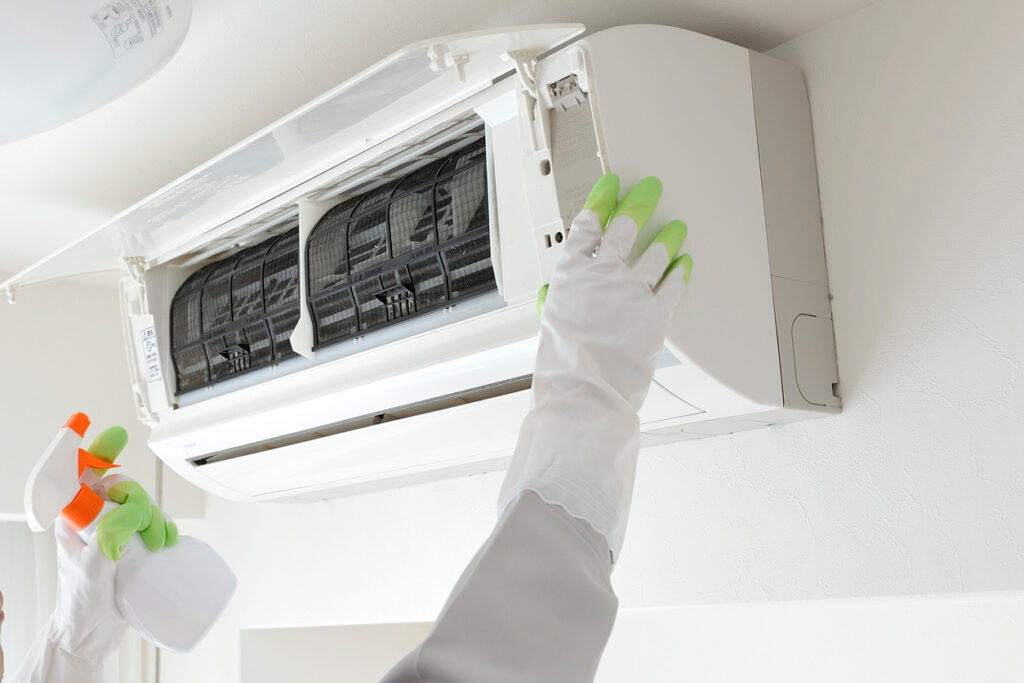
A proper aircon cleaning kit is there to make the job easier, cleaner, and safer. Instead of improvising with random spray bottles, towels, and guesses, you use products and tools designed for air conditioning components.
That matters because indoor units, coils, drains, and filters need cleaning — but they also need care. The wrong product can damage surfaces, leave residue, or create extra mess. The right kit helps you clean the right way.
A practical cleaning kit usually helps with:
- Capturing runoff during indoor unit cleaning
- Applying coil-safe cleaner to dirty surfaces
- Reducing mess around walls, floors, or furniture
- Making repeat cleaning quicker next time
- Keeping maintenance more consistent over time
That is why cleaning kits are useful not just for HVAC tradies, but also for landlords, facilities teams, and careful homeowners who want a more repeatable process.
👉 If you want a simple all-in-one place to look, start with the air conditioner cleaning kits range instead of piecing the whole job together from random items.
Aircon Cleaning Benefits You Can Actually Notice

There are plenty of claims floating around online about aircon cleaning, but the real value comes down to a few practical outcomes. These are the benefits people usually notice first once a system is cleaned properly and then kept maintained.
Your unit works more efficiently
Dirty filters and dust-covered coils make the aircon work harder. Once those parts are cleaned, airflow improves and the system usually responds faster. That means less strain on the unit during normal operation.
It is not magic. It is just a cleaner system doing the job it was meant to do.
Your power bills are easier to live with
A neglected air conditioner generally uses more energy than a clean one. If airflow is restricted, the unit has to run longer and push harder. In many homes and businesses, air conditioning already makes up a decent share of electricity use, so poor maintenance makes that problem worse.
Regular cleaning will not turn a bad system into a miracle saver, but it can stop it wasting power unnecessarily.
You reduce the chance of bigger breakdowns
Dust, grime, drain blockages, dirty evaporator coils, and neglected filters all increase the chance of future repair bills. Cleaning helps break that cycle before it becomes expensive.
It also makes it easier to spot other issues early. When the system is clean, you can see leaks, rust, damage, or wear more clearly than when everything is hidden behind dirt.
You get better indoor air quality
This is one of the most important reasons to clean an aircon properly. A dirty system can keep recirculating contamination through the room. A cleaner system is not the same as hospital-grade air, of course, but it does support a fresher and healthier indoor environment.
That matters at home, in offices, in rentals, and anywhere people spend a lot of time indoors.
Cleaning an Air Conditioner Means More Than Just Washing the Filter

One of the biggest misunderstandings around aircon maintenance is the idea that cleaning the filter means the whole job is done. The filter is important, but it is only one part of the system. Other parts need attention too.
Below is a practical breakdown of the areas that usually matter most.
Filters
Cleaning or replacing the filters is usually the first and most obvious step. Filters help stop dust, pollen, pet hair, and other particles from being recirculated back through the room. If the filter is blocked, airflow drops and the whole system suffers.
That is why regular filter cleaning is one of the best habits you can build.
Types of HVAC Filters
Different filters do different jobs. Some are cheap and basic. Others trap much finer particles.
Fibreglass filters
These are the budget option. They keep out bigger particles, but they do not do a great job with finer dust or allergens. They are simple and cheap, but not the strongest option if air quality is a priority.
Pleated filters
Pleated filters usually do a better job than fibreglass. They can help trap pollen, mould spores, and pet dander more effectively. For many homes and light commercial spaces, this is the more balanced choice.
HEPA filters
HEPA-style filtration is stronger again, especially if someone in the building has respiratory issues or allergies. The trade-off is that stronger filters can make it harder for some systems to pull air through if the system is not suited to them. That is why matching the filter to the system matters.
UV-based air cleaning add-ons
Some HVAC systems include UV components that target microbes rather than dust. They are not the same as a standard filter, but they can play a role in broader indoor air quality strategies.
The simple takeaway is this: use the right filter, keep it clean, and replace it before it becomes part of the problem.
Condensation Drains
Your air conditioner’s condensation drain can clog. When that happens, water may back up and spill where it should not. That can cause damage to walls, carpets, cabinetry, or ceilings depending on the type of system.
Drain issues are often made worse by insects, dirt, poor installation, age, or a lack of regular cleaning.
If the drain is blocked badly enough, it can also affect the unit’s ability to control humidity properly. That matters even more in humid Australian conditions.
If you see water leaking from the indoor head or notice signs of a blocked drain, it is often smarter to call in a professional rather than pushing the system further.
Coils
Coils are one of the most important parts of the cleaning process. Dust and residue on the evaporator coil can affect airflow, cooling performance, and energy use. Dirty coils make the whole system less effective.
This is where a proper aircon cleaning kit really proves its value. A coil-safe cleaner helps remove grime more effectively than a random household spray ever will.
When the coils are cleaner, the unit can absorb and move heat more efficiently. That supports better cooling and reduces unnecessary strain on the system.
What a Good Aircon Cleaning Kit Should Include
Not every cleaning kit is equally useful. Some are basic. Others are much better suited to real maintenance.
A practical kit for most users should help with four things:
- Safe cleaning of indoor aircon components
- Containment of runoff and mess
- Reasonable ease of use
- Repeatable maintenance over time
At a minimum, look for a setup that supports coil cleaning, drain management, and safe indoor handling.
You do not need the most complicated kit on earth. You just need one that lets you clean properly without turning the job into a mess.
Comparison Table: DIY Cleaning vs Neglect vs Professional Cleaning
| Approach | Upfront Cost | Convenience | System Health | Long-Term Value |
|---|---|---|---|---|
| Regular DIY cleaning with proper kit | Low to moderate | High once set up | Good | Strong |
| Do nothing until it smells or fails | Low at first | Feels easy short-term | Poor | Weak |
| Professional deep cleaning only | Higher | High for the owner | Very good | Strong when combined with routine upkeep |
For a lot of people, the smartest approach is not choosing between DIY and professional work. It is combining both. Use a cleaning kit for routine upkeep, then bring in a pro for periodic deeper servicing.
Routine upkeep does not replace a professional service forever, but it can reduce buildup between deeper clean intervals and help the unit stay healthier in the meantime.
How to Use an Aircon Cleaning Kit the Smart Way
Most people do not need a complicated process. They need a clear one.
Here is a simple approach that works for many split system cleaning jobs:
Step 1: Turn off the system
Always start with safety. Shut the power off before opening up the indoor unit.
Step 2: Remove and clean the filters
Take the filters out, wash them carefully, and let them dry fully before reinstalling them.
Step 3: Set up the cleaning bag if you are cleaning an indoor unit
This is where a dedicated kit becomes much easier than improvising. A proper bag helps catch runoff instead of letting dirty water drip down the wall or onto the floor.
Step 4: Apply a coil-safe cleaner
Use a cleaning product designed for air conditioning use. Let it do the work rather than flooding the unit with the wrong spray.
Step 5: Rinse or wipe according to the product instructions
Different products have different requirements. Follow the label properly instead of assuming every cleaner works the same way.
Step 6: Check the drain area and surrounding surfaces
Look for obvious buildup, blockages, or signs of recurring moisture.
Step 7: Reassemble and test
Once everything is dry and back in place, run the system and make sure airflow and odour levels have improved.
👉 For a faster, cleaner setup, start with the air conditioner cleaning kits range rather than trying to cobble together a DIY process from random products.
When DIY Cleaning Makes Sense — And When It Does Not
DIY aircon cleaning can absolutely be worthwhile, especially for routine maintenance. But it has limits.
DIY cleaning usually makes sense when:
- The issue is basic dust and light grime buildup
- You are doing regular upkeep between deeper services
- The system is otherwise working normally
- You have the right cleaner and containment setup
You should usually call a professional when:
- The system is leaking water badly
- The drain is fully blocked
- There is heavy mould deep inside the unit
- The system still performs badly after cleaning
- You suspect electrical or refrigerant issues
Cleaning kits are great tools, but they are not magic fixes for every kind of fault.
Cost vs Value: Why the Kit Pays for Itself
This is where the topic gets very practical.
People often hesitate over the cost of buying a proper cleaning kit. But compared with the cost of frequent call-outs, more serious repairs, or a badly performing system chewing through power, the value becomes easier to see.
A good kit can help you:
- Reduce repeat basic servicing costs
- Keep the system healthier between professional visits
- Avoid some preventable grime-related issues
- Maintain better indoor air quality
- Extend the useful life of the unit
That is a better way to think about it than simply asking whether the kit costs money. Of course it does. The real question is whether it helps stop bigger costs later.
When an Aircon Cleaning Kit Is Especially Useful
A cleaning kit makes even more sense in situations like these:
- Rental properties between tenants
- Small businesses that want better routine maintenance
- Homes in humid areas where mould risk is higher
- Split systems that run heavily through summer
- Households that care more about indoor air quality
In all of those cases, a kit helps turn “we should probably clean that” into an actual process that gets done.
Best Time of Year to Clean Your Aircon in Australia
There is never a bad time to clean a filthy system, but there are smarter times to be proactive.
For many Australian homes and workplaces, the best time to clean is before the high-use season really starts. That usually means cleaning before heavy summer demand and then checking again during or after the main season if usage has been intense.
If the unit runs hard year-round, a steadier maintenance schedule makes more sense than treating it as a once-a-year job.
Buy an Aircon Cleaning Kit from HVAC Shop
Here at HVAC Shop, the goal is simple: help households, landlords, tradies, and businesses keep HVAC systems working properly with gear that is practical to use.
A good cleaning kit saves time, reduces hassle, and helps you maintain the system properly instead of guessing your way through it. Whether you need a basic starting point or a more complete cleaning setup, the key is choosing equipment that fits the way the system is actually cleaned in real life.
👉 Browse the full air conditioner cleaning kits collection and find a setup that makes maintenance simpler, cleaner, and more repeatable.
If you want broader maintenance products as well, you can also explore the wider aircon cleaning kit range designed to support better upkeep across more than just a single cleaning job.
What the Rules and Safety Side Say
Even for basic cleaning, it is worth remembering that air conditioning work has a safety side. If the issue goes beyond routine cleaning and into electrical faults, refrigerant handling, or deeper technical servicing, the job should be handled appropriately.
For general workplace health and safety guidance in Australia, refer to Safe Work Australia. That is especially relevant in workplaces, rental maintenance settings, and any environment where non-routine work is being carried out.
Final Takeaway
Cleaning your aircon is important because the air you breathe matters, the system’s efficiency matters, and avoidable repair bills definitely matter.
A proper cleaning kit makes the job easier, cleaner, and more repeatable. Instead of waiting until the unit smells bad, struggles to cool, or starts causing complaints, you can stay on top of the problem early.
If you want a cleaner system, healthier air, and a smarter maintenance setup, start with the right gear and use it consistently.
👉 Ready to make the job easier? Shop the full air conditioner cleaning kits range today.